REVIEW · SEMINYAK
Exploring Bali in 3 Days: Discover Top Places in Bali
Book on Viator →Operated by Eco Bali Tours - Day Tours · Bookable on Viator
Three days in Bali can feel too short. This Seminyak-based plan strings together Ubud, volcano views, temples, and evening culture with an English-speaking driver and pickup.
I love the mix of classic icons and nature stops, like Sacred Monkey Forest, Kintamani’s highland views, and Tegalalang rice terraces. I also like that admission is listed as included for the main sights, which keeps the day’s momentum up. One consideration: it’s a lot of driving and back-to-back stops, so expect long days and photo breaks to be time-limited.
In This Review
- Key highlights you’ll care about before you go
- A fast Bali sampler from Seminyak: how the 3-day plan really works
- Day 1 in Ubud and the Highlands: monkeys, palace life, coffee, rice, waterfall
- Sacred Monkey Forest Sanctuary (Ubud)
- Ubud Palace
- Ubud Traditional Art Market
- Kintamani Highland (volcano viewpoints)
- Bali Pulina Coffee Plantation
- Tegalalang Rice Terrace
- Tegenungan Waterfall
- Day 1 takeaway
- Day 2 across Bedugul and the coast: temples, lakes, fruit market, and rice terraces
- Taman Ayun Temple
- Leke Leke Waterfall
- Ulun Danu Bratan Temple (lakeside)
- Pasar Candi Kuning fruit market
- Jatiluwih Green Land (rice terraces)
- Tanah Lot Temple
- Day 2 takeaway
- Day 3 at GWK, Uluwatu, and Jimbaran: culture after lunch and dinner by the sea
- Garuda Wisnu Kencana Cultural Park (GWK)
- Uluwatu Temple
- Kecak and Fire Dance
- Jimbaran Bay seafood dinner
- Day 3 takeaway
- The driver, the pace, and how to get better photos without wasting time
- Price and value: is $180 per person a fair deal for 3 days?
- Who should book this Bali highlights route (and who should skip it)
- Should you book Exploring Bali in 3 Days?
- FAQ
- FAQ
- What is the duration of this tour?
- Where is the tour based?
- What are the start and end times for each day?
- Which parts of Bali does the itinerary cover?
- Will I have an English-speaking driver?
- Are admissions/tickets included?
- Is the tour private?
- Do I get a mobile ticket?
- When will I receive confirmation?
- What is the cancellation policy?
Key highlights you’ll care about before you go
- English-speaking driver escort to explain what you’re seeing and help with great photo angles
- Admissions included at the listed stops on all three days
- Three different regions of Bali (central, western/north, and south) without planning a thing
- Ubud hits plus volcano and coffee, then rice terraces and waterfalls on day two
- Uluwatu + Kecak fire dance + Jimbaran seafood to cap the trip after lunch
- Private by your group, with mobile ticket convenience
A fast Bali sampler from Seminyak: how the 3-day plan really works
This tour is built for the reality of a short stay. You start with an early run on day one (08:00–18:00), do another full day (08:00–18:00), then finish with a later start on day three (13:00–21:00). That late start is a smart design choice: you get the big southern sights and the dance without rushing your morning.
The route is also geographically organized. Day one is central Bali (Ubud and surrounding highlights). Day two stretches toward the western/northern side (Bedugul area temples, lakeside scenery, and rice terraces), then swings back toward the coast with Tanah Lot. Day three focuses on the south and the Bukit Peninsula vibe: GWK Cultural Park, Uluwatu Temple, Kecak, and Jimbaran Bay.
Because the tour includes pickup and an English-speaking driver escort, you spend less time negotiating routes and more time at the places that matter. The trade-off is the usual Bali logistics truth: you’ll move. Expect traffic to be part of the rhythm, not an exception.
You can also read our reviews of more tours and experiences in Seminyak
Day 1 in Ubud and the Highlands: monkeys, palace life, coffee, rice, waterfall
Day one is basically a guided “greatest hits” of central Bali, starting with wildlife and ending with a waterfall stop. It’s a packed arc, but it’s the kind of mix that helps you get your bearings fast.
Sacred Monkey Forest Sanctuary (Ubud)
You begin at Sacred Monkey Forest Sanctuary, the Padangtegal area long-tail macaques are famous for. This is one of those stops where you’re not just looking at scenery—you’re watching behavior. The forest setting makes it feel less like a zoo and more like an everyday community space (with monkeys that clearly know they’re part of the show).
Practical tip: keep your hands and bags secure and watch where you’re standing. With long-tailed macaques around, small items can become interesting objects fast.
Ubud Palace
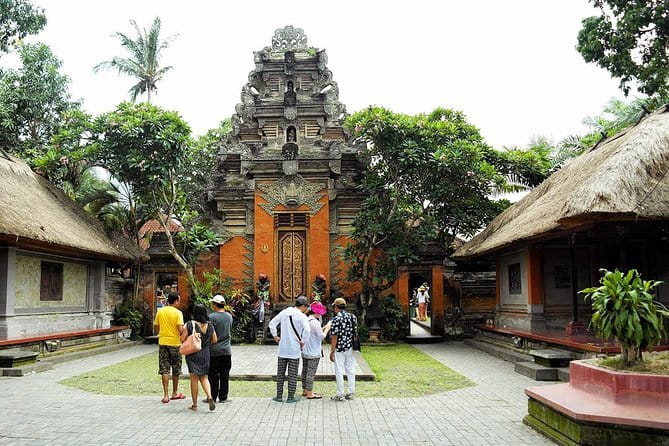
Next up is Ubud Palace (Puri Saren), right in central Ubud. It’s short on time (about 15 minutes), so think of it as a quick cultural anchor—an introduction to the area’s royal-era footprint—rather than a long, slow visit.
Ubud Traditional Art Market
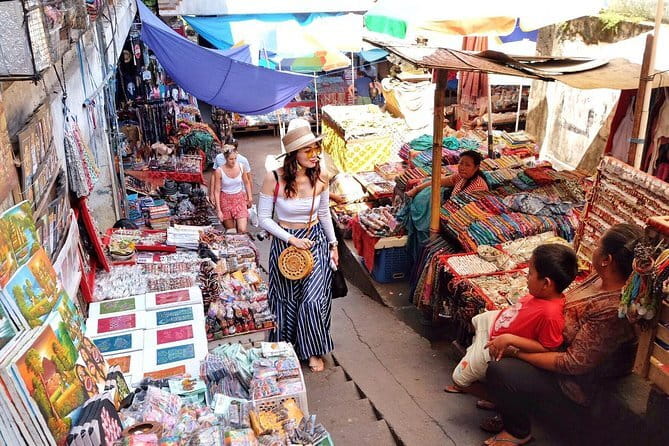
Then comes Ubud Traditional Art Market, a place where your brain can go into bargain-scanning mode. The market’s offerings range from silver jewelry and precious stones to batiks, T-shirts, sarongs, wood carvings, and cane work bags. With about an hour here, it’s enough time to browse without feeling trapped in one stall.
If you like taking home useful souvenirs (not just magnets), this is where you’ll find variety. Go with a simple rule: pick one or two things you’ll actually use, and don’t let the market’s size tempt you into buying duplicate clutter.

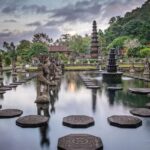
Kintamani Highland (volcano viewpoints)
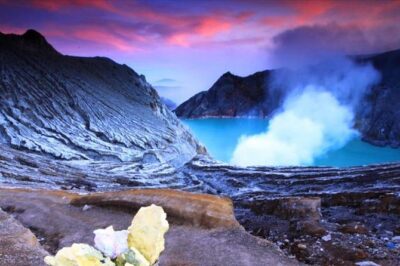
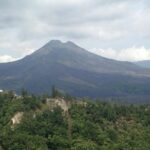
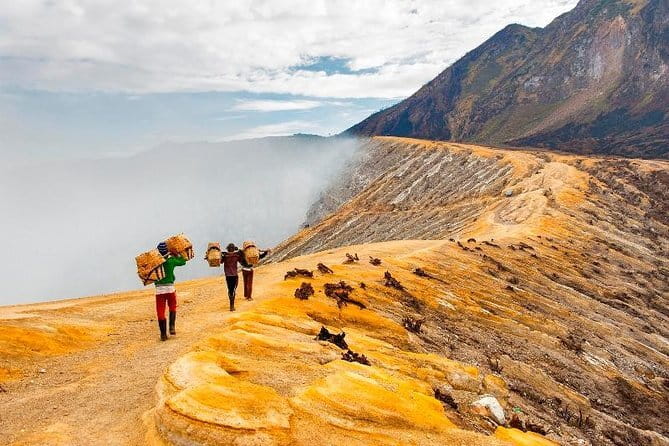
After the Ubud core, you jump toward Kintamani Highland for mountain-and-volcano views. The route notes the Kintamani area sits around 900 meters above sea level, which usually means the air feels different than the lowlands. It’s a good contrast day: you’ve gone from town culture to dramatic highland scenery.
This stop works well if you’re trying to understand Bali beyond beaches—how the island’s geography shapes the mood and daily life.
Bali Pulina Coffee Plantation
You’ll then visit Bali Pulina Coffee Plantation. This isn’t just a pretty roadside stop. It’s described as an agrotourism and farming area where you can see plantations including coffee arabica and coffee robusta, plus crops like pineapple, Balinese snake fruit (salak), potatoes, cacao, and jack fruit.
Even if coffee isn’t your main obsession, I like the way this stop broadens the day. It shifts you from sightseeing to how food (and coffee) grows on the island.
Tegalalang Rice Terrace
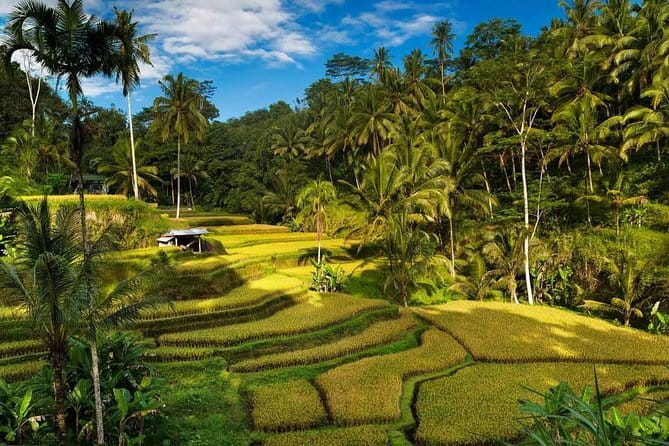
Tegalalang Rice Terrace is next, a classic Bali photo stop for a reason. The terraces spread down a valley, with that high roadside viewpoint that’s often cool and breezy. This is where the day’s visuals click into place: a mix of human-made farming patterns and tropical greenery.
Give yourself a little time to wander slowly. If you take the first “perfect” shot and leave, you’ll miss the better angles that pop up as you change your viewpoint.
Tegenungan Waterfall
Finally, you end day one with Tegenungan Waterfall. It’s positioned as a good nature stop if you’re staying around Ubud or Sukawati, and it’s conveniently placed halfway between those areas (as described in the route notes). With about a half hour here, it’s best as a quick reset before dinner.
Day 1 takeaway
Day one gives you a broad “Ubud-to-highlands” feel: macaques, palace architecture, market browsing, volcano views, coffee crops, and rice terraces, then waterfall scenery. If you want a trip that feels like you’re seeing real Bali variety in a short time, this first day does that job.
Day 2 across Bedugul and the coast: temples, lakes, fruit market, and rice terraces
Day two starts at 08:00 and also runs until around 18:00, but it changes tone. You get more water and cooler-air scenery—think temples by lakes, waterfall jungles, and mountain markets—then you end with the sea temple vibe of Tanah Lot.
Taman Ayun Temple
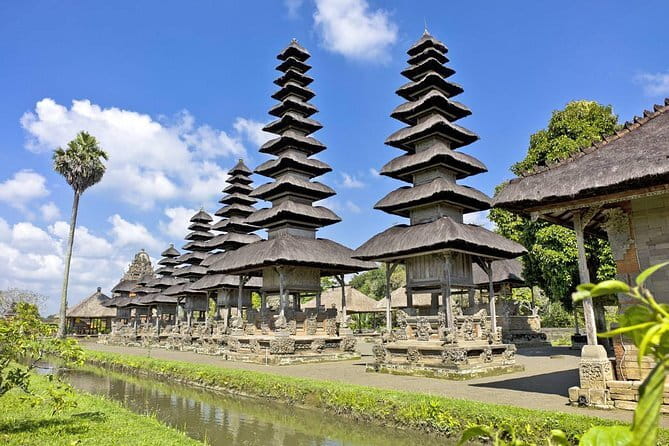
You begin with Taman Ayun Temple, described as a well-known attraction near Denpasar on the road toward Singaraja via Bedugul. Even on a short stop (around 30 minutes), temples like this teach you how Balinese worship spaces are designed: layered, landscaped, and built for everyday ceremonies, not just sightseeing.
Leke Leke Waterfall
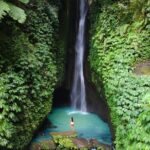
Next is Leke Leke Waterfall. The route notes it’s hidden in a rock crevice and may not look dramatic in some photos, but it’s described as a pretty big waterfall with jungle surroundings. This is one of those “in person” stops: the scale and sound land better when you’re there.
Practical note: the ground around waterfalls can be uneven. Wear shoes you trust.
Ulun Danu Bratan Temple (lakeside)
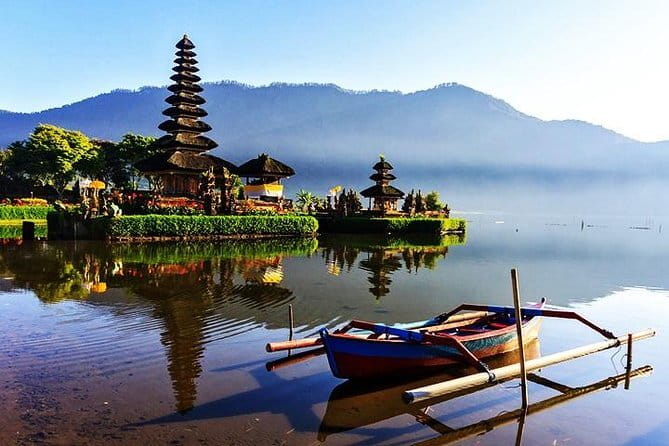
Ulun Danu Bratan Temple comes next, set at the lakeside of Beratan with hills as a backdrop. It’s also described as sitting in a plateau area with a cool atmosphere, which makes it feel like a real change of pace from the heat of the coast.
If you like scenery that feels calm and layered, this is the day’s mood-shifter.
Pasar Candi Kuning fruit market
Then you hit Pasar Candi Kuning (Candikuning Fruit Market). This is a traditional fruit and vegetable market in the mountain area of Bedugul, with produce displayed fresh. It’s only about 30 minutes, so treat it as a quick local flavor stop: see what people eat and sell up in the mountains.
Jatiluwih Green Land (rice terraces)
Jatiluwih Rice Terrace follows, known for big, open views across terraced slopes. The route describes the name meaning from “jati” (really) and “luwih” (special/good/beautiful). It’s the kind of place where you can walk a little and let your eyes follow the terraces outward.
Tanah Lot Temple
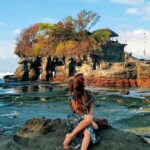
You end day two with Tanah Lot Temple, on a rocky island just off Bali’s southwest coast. It’s described as one of Bali’s sacred sea temples dedicated to guardian spirits of the sea, and it’s positioned dramatically against the ocean.
At this point in the schedule, sea temples are a nice counterweight to the inland days: less jungle sounds, more coastal wind, more horizon.
Day 2 takeaway
Day two is about atmosphere: cooler highlands, lakeside temple views, waterfall jungle energy, and rice terraces that feel larger and more expansive. It’s a great second-day formula if you want Bali to feel both spiritual and natural.
Day 3 at GWK, Uluwatu, and Jimbaran: culture after lunch and dinner by the sea
Day three starts later (13:00) and runs until about 21:00. That timing gives you a calmer first half day, then you hit the southern cluster where the sights are big and the evening payoff is real.
Garuda Wisnu Kencana Cultural Park (GWK)
You start at Garuda Wisnu Kencana Cultural Park (GWK). The highlight here is the Garuda Wisnu Kencana statue, described as standing tall at 121 meters. The route also frames it as a Hindu representation, which helps explain why it feels like more than just a photo object.
This stop is a strong “wow” transition. After two days of Ubud and highlands, the massive scale here resets your sense of Bali’s visual identity.
Uluwatu Temple
Next is Uluwatu Temple. The route notes it’s closely related with a holyman named Mpu Kuturan, who came to Bali in 1039 AD. That historical tie (even in a short visit) adds depth, because you’re not just looking at a temple—you’re looking at a religious site with long continuity.
Uluwatu also fits the schedule well: it’s the kind of place where timing matters because the coastline setting is part of the experience.
Kecak and Fire Dance
Then you get the performance: Kecak Dance and Fire Dance. The route explains it’s played by about 50 men shouting CHAK, with the theme story taken from the Ramayana. For many people, this is where Bali starts to feel like culture in motion rather than culture as architecture.
If you care about watching properly, arrive with enough time to find your view. Fire performances and crowd flow can be tighter than temples.
Jimbaran Bay seafood dinner
You finish at Jimbaran Bay, along the Jimbaran to Kedonganan Beach area. The route describes many cafes operated by local people, similar to a night market where you choose seafood options. This is a solid closing idea: you’ve done temples and dance, then you end with an easy, social dinner by the water.
I like this ending because it doesn’t require you to plan hard. You get the coast, you get food choices, and you don’t feel like the tour stops just because the itinerary ends.
Day 3 takeaway
Day three is built for evening energy: a cultural monument, a dramatic cliffside temple, a hypnotic dance, then a coastal seafood dinner. It’s also the most flexible feeling day because the start time is later.
The driver, the pace, and how to get better photos without wasting time

The tour’s biggest practical advantage is the English-speaking driver who escorts you between stops. That matters in Bali, where traffic and directions can change by the day.
The route also emphasizes that the driver shares local knowledge and helps show the best spot for photography. That’s not a small detail. If you’ve ever arrived at a famous viewpoint and spent 20 minutes wandering for the right angle, you know how quickly time disappears.
A simple strategy for this itinerary:
- Be ready when you are picked up, even if it’s early
- Keep camera setup simple at each stop
- Treat each stop as a focused visit, not a long independent adventure
One more reality check: because the day is structured around many stops, you might not get the slow wandering experience you’d get with a private driver for just one area. That’s fine if your goal is variety and getting a Bali overview fast.
Price and value: is $180 per person a fair deal for 3 days?
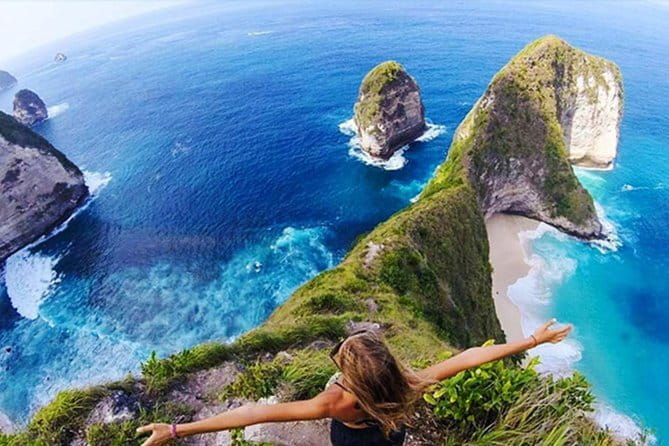
At $180.00 per person for about 3 days, this is positioned as a short, high-efficiency circuit. The real value angle here is not the sticker price—it’s what you’re getting packed into that price: pickup, an English-speaking driver escort, and admission tickets listed as included for the major sights.
Also, the tour is booked about 58 days in advance on average. That’s a hint this is a popular timing window for visitors who want a ready-made plan, especially when they don’t want to piece together multiple day trips.
Who pays for what in Bali? Usually, you either pay for a driver and admissions on top—or you do your own organizing and accept more friction. This route tries to reduce friction. If you like structure and you want a smooth, guided path through top sights, the value looks strong.
Who should book this Bali highlights route (and who should skip it)
This tour is a great fit for:
- People on a short Bali visit who still want to see Ubud, highlands/volcano views, temples, and a performance
- Anyone who prefers a guided route over route-planning
- Groups who want to travel as one unit rather than splitting into separate plans
It may not be the best fit if:
- You want long, slow visits with lots of free time to linger
- You’re sensitive to traffic-heavy days (the schedule is full enough that delays can cut into stop time)
- You only want one “deep” theme (like only beaches, or only temples)
Also, this is described as most people can participate, and it’s private for your group. So it can work well for families and friend groups who want flexibility inside a set plan.
Should you book Exploring Bali in 3 Days?
If your goal is to leave Bali feeling like you saw the island’s big personality—monkeys and markets in Ubud, volcano-and-rice views, Bedugul-style temple scenery, then Uluwatu and Kecak—this is a smart booking. The structure is clear: central Bali day one, western/north and coast day two, and southern highlights plus dinner day three.
I’d book it if you value organization, admission included, and an escort who can help with where to stand for photos. In the notes associated with this experience, the guide is praised by name (Made Pade) for kindness and for adapting to wishes, including helping with photography angles. That kind of hands-on attention is exactly what makes a packed itinerary feel easier.
I’d think twice if you hate tight scheduling or you want a slow travel pace. With so many stops, you’re buying a quick hit of variety—not a relaxed, one-area deep dive.
FAQ
FAQ
What is the duration of this tour?
The tour is listed as 3 days (approximately).
Where is the tour based?
The location is Seminyak, Indonesia, and pickup is offered.
What are the start and end times for each day?
Day 1 runs about 08:00 to 18:00, Day 2 runs about 08:00 to 18:00, and Day 3 runs about 13:00 to 21:00.
Which parts of Bali does the itinerary cover?
The description says Day 1 focuses on central Bali, Day 2 on the western part of Bali, and Day 3 on the southern part of Bali.
Will I have an English-speaking driver?
Yes. The tour is led by an English-speaking driver who escorts you to the places on the itinerary.
Are admissions/tickets included?
For the listed stops in the itinerary, admission tickets are shown as included.
Is the tour private?
Yes. It’s described as a private tour/activity, and only your group participates.
Do I get a mobile ticket?
Yes, the tour includes a mobile ticket.
When will I receive confirmation?
Confirmation is received at the time of booking.
What is the cancellation policy?
Free cancellation is available up to 24 hours in advance of the experience start time for a full refund. If you cancel less than 24 hours before, the amount paid is not refunded.