REVIEW · SEMINYAK
Ubud Village, Tegalalang Rice Terrace Swing, Tirta Empul Temple and Waterfafall
Book on Viator →Operated by Bali Sakti Tour · Bookable on Viator
Ubud hits different when you’re not stuck in one place. This private day packs rice-terrace views and temple sites into a logical route, with a waterfall stop that’s as much about the drive as the falls. I like that it moves at a human pace for a full 9 to 10 hours, and I really appreciate the practical touch of air-conditioned transport and bottled water. The one drawback: entrance fees aren’t included, so you’ll want to budget for tickets at each stop.
If you’re staying around Seminyak, this kind of loop is a smart way to see more Bali culture in less time. Your day starts at 9:00 am, and it’s built around iconic Ubud-area places—plus a temple and waterfall that give you a break from photo stops. One more consideration: the tour depends on good weather, so bring flexible expectations (and a rain layer).
In This Review
- Key highlights you’ll feel on the day
- Price and value: $32.24 per person for a full Ubud day
- Your exact route: how this day stays efficient
- Stop 1: Campuhan Ridge Walk and the meaning of the confluence
- Stop 2: Tegalalang rice terraces for the classic Ubud photos
- Stop 3: Tirta Empul Temple and the holy spring water
- Stop 4: Mount Kawi rock-cut shrines across the Pakerisan River
- Stop 5: Tibumana Waterfall and why the road is part of the show
- What makes this tour work: transport, timing, and pacing
- Price, entrance fees, and your best budgeting move
- Who should book this (and who might want another option)
- Weather and clothing: small prep that saves the day
- Should you book this Ubud day trip?
- FAQ
- What time does the tour start?
- How long is the tour?
- Is pickup included for travelers staying in Seminyak?
- Is this a private tour or a shared group tour?
- What’s included in the price?
- Are entrance fees included?
- Do I receive a ticket on my phone?
- Can most travelers participate?
- What happens if the weather is poor?
- What is the cancellation policy?
Key highlights you’ll feel on the day
- Private vehicle and WiFi: quieter rides, and you can plan photos or maps without draining your phone.
- A strong cultural mix: holy water at Tirta Empul and rock-cut shrines at Mount Kawi, not just scenic viewpoints.
- Campuhan Ridge Walk meaning: the “confluence” idea explains why locals care about this spot.
- Tegalalang rice terrace photo time: classic Ubud backdrops that are worth the stop length.
- Tibumana Waterfall feels local: the journey through village roads is part of the payoff.
- Driver support in rain: in at least one lived example, Wayan kept helping in wet weather, stepping out to manage umbrellas.
Price and value: $32.24 per person for a full Ubud day
At $32.24 per person, this tour is priced like a practical, do-the-day-right option rather than a luxury splurge. For most people, the value comes from the combination: multiple highlights across Ubud plus temple context, all in one 9 to 10 hour block.
What you’re paying for is the logistics. That includes an air-conditioned vehicle, private transportation (so you’re not crammed into a slow shared van), plus WiFi on board and bottled water. Those details sound small until you’re doing a long day in humid weather. Then they start to feel like comfort basics.
One budgeting note: entrance fees are not included. So if you hate surprise costs, set aside extra money for tickets at each site before you go. The tour itself already handles the route; you just handle the entry costs.
You can also read our reviews of more tours and experiences in Seminyak.


Your exact route: how this day stays efficient
This is a Ubud-area loop that makes sense geographically. You’ll move through:
1) A ridge walk that introduces Ubud’s spiritual geography
2) Tegalalang rice terraces for iconic photos
3) Tirta Empul Temple for holy spring water and purification pools
4) Mount Kawi for rock-cut shrines across the Pakerisan River
5) Tibumana Waterfall for views plus the ride through local roads
Each stop is roughly an hour. That’s long enough to walk around, take photos, and ask questions, without turning the day into a race.
And because it’s private (only your group), you can keep the pace realistic. If you need a bathroom break or a slower walk at one site, you’re not stuck waiting on a crowd.
Stop 1: Campuhan Ridge Walk and the meaning of the confluence
Campuhan is more than a walking path. The name connects to a Balinese concept: Campuhan means the confluence of two rivers, and that junction is spiritually significant for Balinese Hindus. The idea of energy centers tied to river points helps you understand why people treat this area with respect, not just as a scenic stroll.
What you’ll do here is simple: you get about an hour to walk the ridge. Since the site ties to Ubud’s beginnings when the area formed around that river junction in the 8th century, it helps to keep your mindset open. You’re not only looking at views; you’re learning why the place matters.
A practical tip: pack comfortable shoes. Ridge walks tend to be uneven in parts, and you’ll be glad you didn’t wear slippery sandals if conditions are damp.
Stop 2: Tegalalang rice terraces for the classic Ubud photos
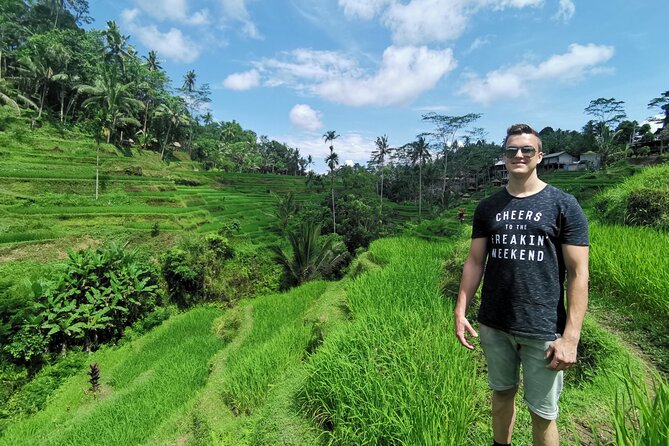
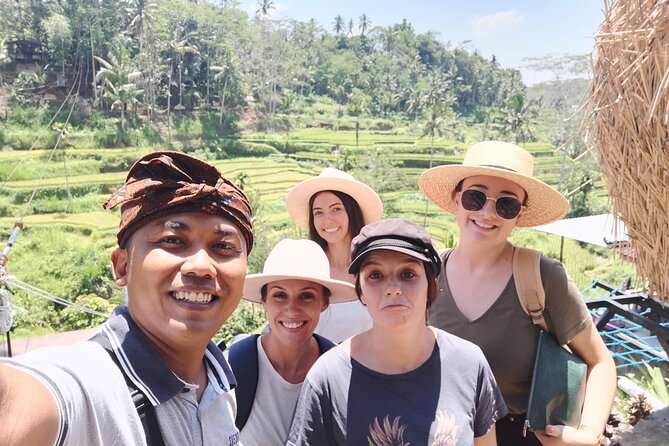
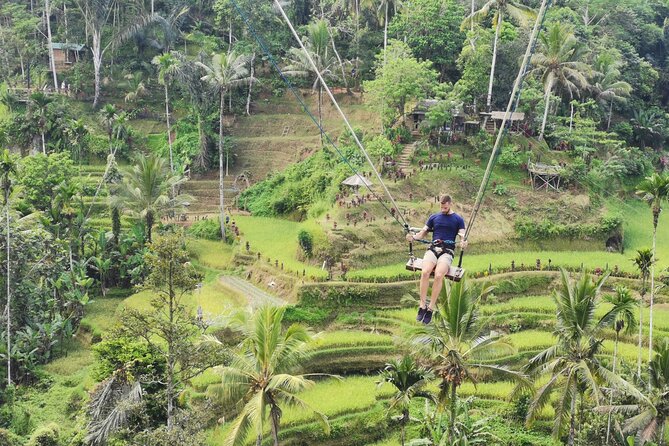
Then the day shifts hard into scenery. The Tegalalang rice terrace area is famous for backdrops, and the whole stop is built around that moment: walking in views of stepped fields and getting photos you’d want to frame.
This is the kind of stop where your timing matters. Go slowly. Take your time finding angles that don’t hide the terraces behind railings or crowds (if crowds are present, you’ll still have room to get good shots). Also, don’t treat it like a quick photo-only stop. One hour is enough to get your bearings and enjoy the way the terraces change depth as you move.
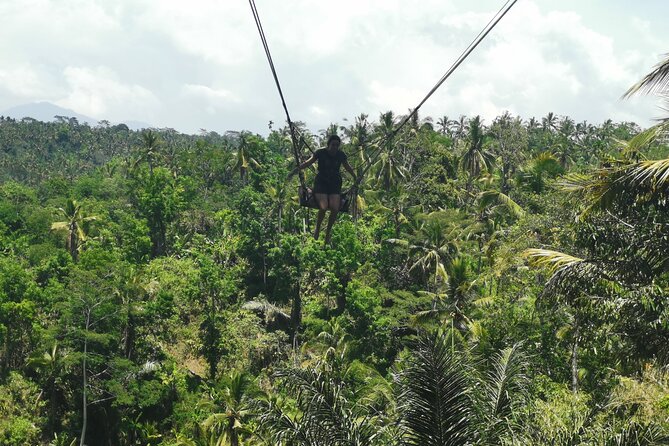
If the experience you booked includes the Tegalalang rice terrace swing aspect, think of this as your photo window in the exact zone where those viewpoints are typically found. Since entrance fees aren’t included, any extra on-site activity costs would be on you to handle at the location.
Stop 3: Tirta Empul Temple and the holy spring water
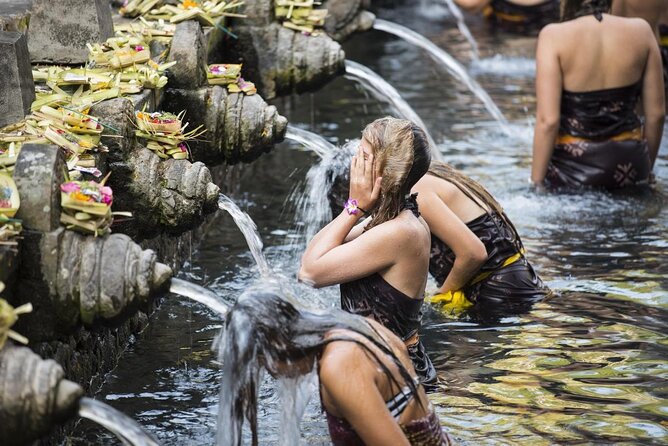
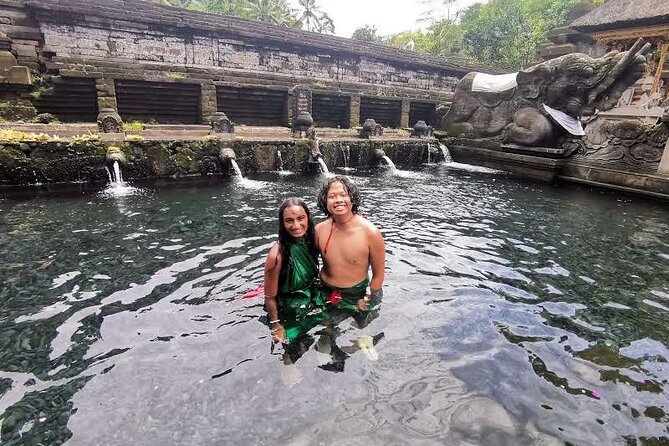
If you want a break from pure scenery, Tirta Empul Temple delivers. This is one of those places where the name tells you what to look for: Tirta Empul means holy spring water.
The temple was built in 960 AD, and the water passes through the temple into purification pools. Around these areas you’ll also find purification spaces, baths, and fish ponds—so it’s not just a single holy basin; it’s a whole system of water and ritual functions.
What I like about this stop is that it’s not vague. You’re given a reason to notice details: the temple’s purpose is tied directly to the spring water feeding the pools. That makes it easier to pay attention instead of zoning out while you take pictures.
A small caution: temples often have rules and areas where you should keep quiet and dress appropriately. The tour doesn’t list clothing rules, so use common sense—cover shoulders and knees if needed, and follow whatever guidance you see on-site.


Stop 4: Mount Kawi rock-cut shrines across the Pakerisan River
Next is Mount Kawi (Gunung Kawi), an 11th-century temple site in Tampaksiring. This one stands out because it’s carved into stone.
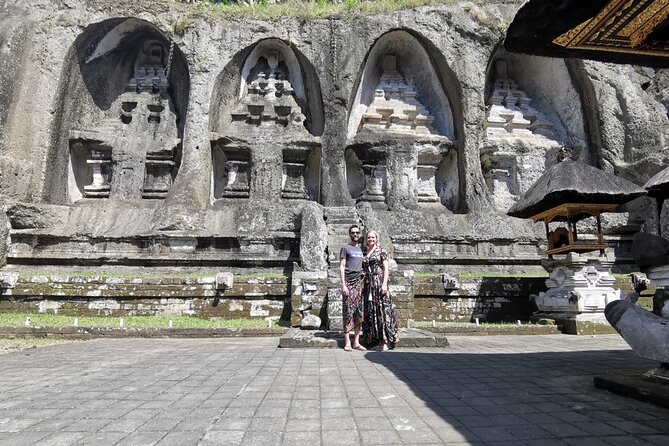
Here’s the key detail: Mount Kawi is spread across either side of the Pakerisan River, and it consists of 10 rock-cut shrines carved into 7-metre-high cliff walls. Those shrines sit in sheltered niches, which means you’ll likely notice caves or alcoves built into the cliff face rather than freestanding structures.
This stop feels different from the others. Instead of terraces and open walking paths, you’re dealing with architecture shaped by the terrain. The cliff-carving approach also makes it easier to understand why this place mattered: it’s dramatic, protected, and built for ritual spaces where water and stone meet.
Time-wise, plan for about an hour. You’ll want enough time to look carefully, not just snap one wide shot and move on.
Stop 5: Tibumana Waterfall and why the road is part of the show
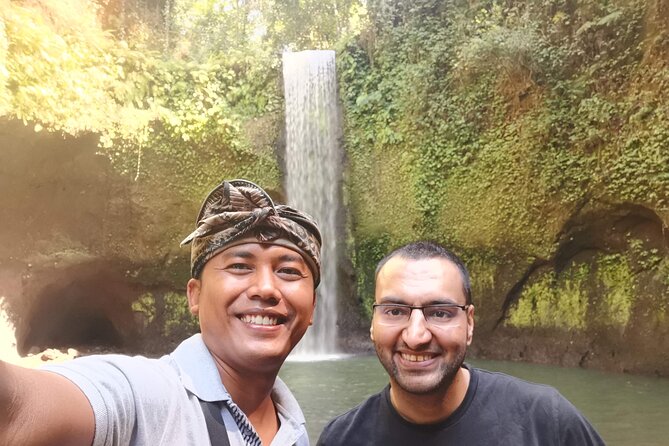
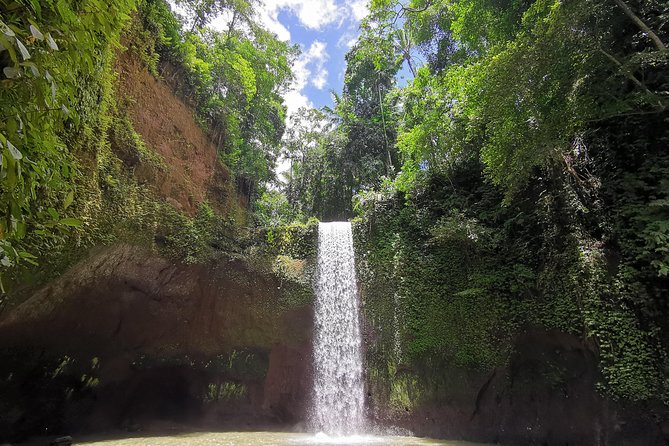
Finally, you end with Tibumana Waterfall. The falls are described as scenic but not overly spectacular. That’s actually a helpful way to set expectations. If you’re arriving hoping for a huge Hollywood waterfall moment, you might be slightly underwhelmed.
But the real payoff is the journey. You travel through charming villages with narrow roads, and the scenery shifts as you go—more green, more local feel, and less of the polished tourist path energy you might get closer to town.
So think of this as a gentle finale: a chance to stretch, take a few photos, and reset after temples and terraces. If rain shows up, you’ll be glad your transport is comfortable—and you’ll likely see how drivers handle wet roads more carefully.
What makes this tour work: transport, timing, and pacing
A day like this can fail for one simple reason: the ride. If you’re bouncing around on slow roads without comfort, you’ll feel it by stop two.
This tour’s setup helps. You get:
- Air-conditioned vehicle for the long connections between sites
- WiFi on board, useful for maps and quick planning
- Bottled water, so you’re not hunting down drinks every hour
- A private format that keeps your group’s pace realistic
And the timing is built around attention spans. Each stop is about one hour, which is enough to see what matters and not enough to make you dread the next transfer.
In at least one real example of driver care, Wayan stayed on top of wet weather needs by getting out to handle umbrellas. That kind of proactive support matters because it keeps the day moving instead of stopping every time the sky shifts.
Price, entrance fees, and your best budgeting move
Because entrance fees are not included, you’ll want to treat the tour price as the transport and guided routing value, not a total all-in ticket bundle.
A smart approach:
- Set aside extra funds for each site’s entry cost
- Keep a little cash or payment options available for on-site charges (I’m not naming specific methods because they can vary, but it’s the safest plan)
- Plan to start early with water and snacks if you know you’ll get hungry (the tour includes bottled water, not meals)
Also, you should know this experience is often booked with decent lead time. On average it’s booked about 41 days in advance, which suggests the route is popular in the Ubud season and around peak travel dates.
Who should book this (and who might want another option)
This is a great match if you want one day that feels like Ubud without staying in one neighborhood. You’ll like it if you:
- Want culture + scenery in the same outing
- Prefer a private car over crowded group tours
- Like temple context, not just quick photo stops
- Want a waterfall day that includes the route through villages, not just the view
It might be less ideal if you’re chasing only one type of experience—like purely beaches, purely shopping, or only the biggest waterfall in Bali. This day is balanced on purpose. That balance is the point.
Weather and clothing: small prep that saves the day
The tour notes that it requires good weather. That matters because at least one part of your day includes walking and another part includes driving on narrow roads.
For planning, I’d bring:
- Comfortable shoes for ridge walking and temple areas
- A light rain layer or compact umbrella option
- Sun protection for terrace photos
If the weather turns bad enough, the tour can be canceled due to poor conditions, with an option for a different date or a full refund. So don’t book this as the one and only day you can’t move.
Should you book this Ubud day trip?
Yes—if you want an efficient, meaningful Ubud route with a good mix of ridge views, rice terraces, Tirta Empul’s holy spring water, Mount Kawi’s cliff shrines, and Tibumana’s village-to-waterfall drive. The rating is strong at 4.9, and the value is real for a long day that covers several major sights with private comfort.
I’d skip or reconsider if entrance costs surprise you, or if you’re not interested in temples at all. The day isn’t just pretty pictures; it includes spiritual and historical context, and you’ll get the most from it when you’re open to that.
FAQ
What time does the tour start?
The tour starts at 9:00 am.
How long is the tour?
It runs about 9 to 10 hours.
Is pickup included for travelers staying in Seminyak?
Pickup is offered, and the tour is based in Seminyak.
Is this a private tour or a shared group tour?
It’s a private tour/activity, meaning only your group participates.
What’s included in the price?
Included are an air-conditioned vehicle, private transportation, WiFi on board, and bottled water.
Are entrance fees included?
No. Entrance fee(s) are not included.
Do I receive a ticket on my phone?
Yes, there is a mobile ticket.
Can most travelers participate?
Most travelers can participate.
What happens if the weather is poor?
This experience requires good weather. If it’s canceled due to poor weather, you’ll be offered a different date or a full refund.
What is the cancellation policy?
You can cancel for a full refund up to 24 hours in advance of the experience’s start time. If you cancel less than 24 hours before, the amount paid is not refunded.