REVIEW · SEMINYAK
Denpasar City Tour
Book on Viator →Operated by Tour East Indonesia · Bookable on Viator
Denpasar feels like Bali’s real-life stage. I love how the guide ties Puputan Square to the 1906 Badung vs Dutch story, and I like the way Pasar Badung lets you see everyday buying and bargaining up close. The main caution: public holidays and heavy rain can mean some stops are closed or harder to enjoy outside.
You’ll spend about 6 hours with an air-conditioned vehicle doing short hops across the city. That rhythm works well here: start with monuments, move to the museum, then hit the market, and wrap up at the Bali Art Center (Taman Budaya) with woodcarving and art.
This is also a fairly straightforward tour for your schedule and budget. Entrance fees are included, hotel pickup is offered around Seminyak and nearby areas, and the group is small (up to 15). Still, bring a plan for comfort in the heat, because you’ll walk in outdoor areas between stops.
In This Review
- Key highlights (what makes this Denpasar tour worth your time)
- Getting to Denpasar: pickup zones and what 6 hours feels like
- Puputan Square: Bali’s 1906 story in one city-center stop
- Bali Provincial State Museum (Negeri Propinsi Bali): masks, music, and ceremony models
- Pasar Badung: how to shop, bargain, and read a market like a local
- Bali Art Center (Taman Budaya): woodcarving, modern art, and architecture
- Price and value: what you get for $68.90
- Weather, timing, and comfort tips for Bali’s heat and rain
- What to bring (so the day feels smooth)
- Who this Denpasar city tour is best for
- Should you book this Denpasar City Tour?
- FAQ
- How long is the Denpasar City Tour?
- What stops are included?
- Is hotel pickup included, and where does it pick up from?
- Are entrance fees included?
- Is food included?
- Can I cancel for free?
Key highlights (what makes this Denpasar tour worth your time)
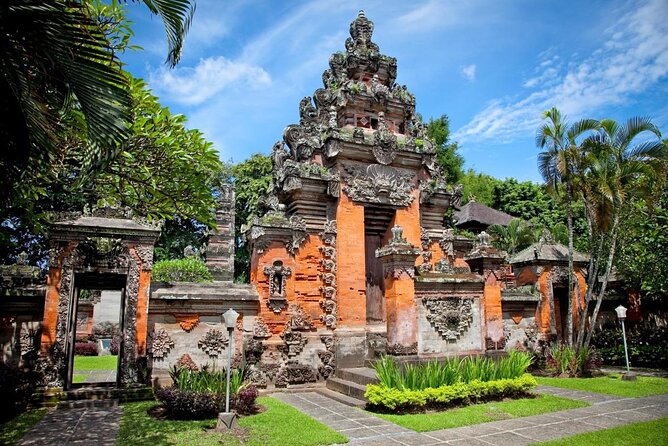
- Puputan Square and the 1906 memorial that marks the conflict involving the rajas of Badung and Dutch forces
- Bali Museum’s hands-on cultural themes, including masks, musical instruments, textiles, and models related to Balinese ceremonies
- Pasar Badung market time plus a practical supermarket stop where you can buy food items on your own
- Bali Art Center (Taman Budaya) for woodcarving displays and modern art in a traditional-style setting
- Small-group pacing (max 15) with an English-speaking licensed guide
- Hotel pickup and drop-off from major hotels in Kuta, Seminyak, Sanur, Jimbaran, and the Nusa Dua area
Getting to Denpasar: pickup zones and what 6 hours feels like
This tour runs out of Denpasar, but it’s built for people staying in southern Bali. If you’re in Seminyak (and also Kuta, Sanur, Jimbaran, or Nusa Dua), you can expect pickup from major hotels and a drop-off back at the end. You ride in an air-conditioned vehicle, which matters a lot once the day warms up.
The pace is half-day style, about 6 hours total. That usually means you’re not wandering for ages in any one place—just enough time to see what’s important and keep moving while your energy is still high. There’s also a practical rhythm here: monuments first, then museum, then market, then art.
One thing to remember: traffic can affect timing in Bali. So if you’re the type who likes strict schedules, keep a bit of buffer in your day.
You can also read our reviews of more city tours in Seminyak

Puputan Square: Bali’s 1906 story in one city-center stop
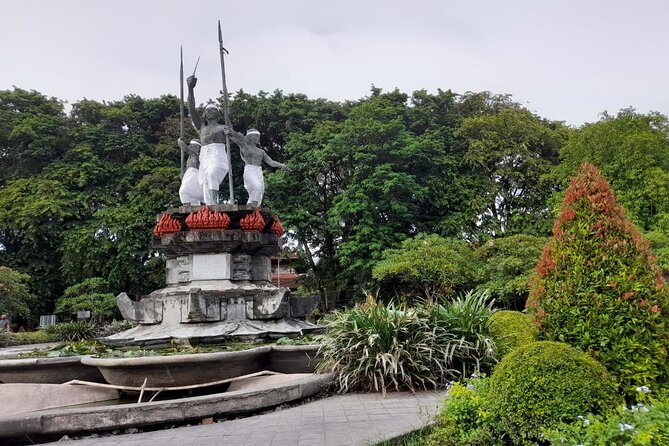
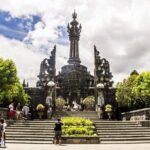
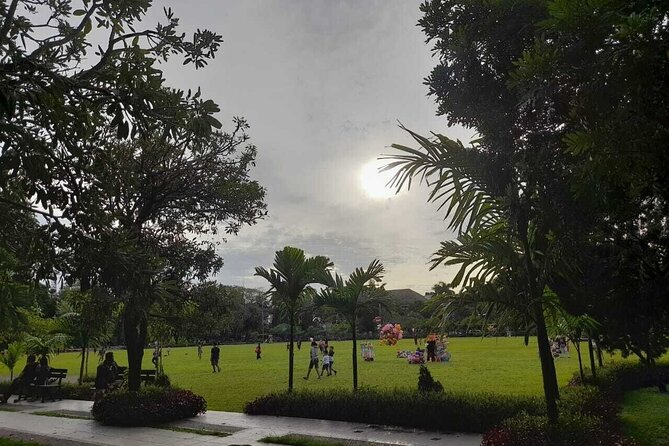
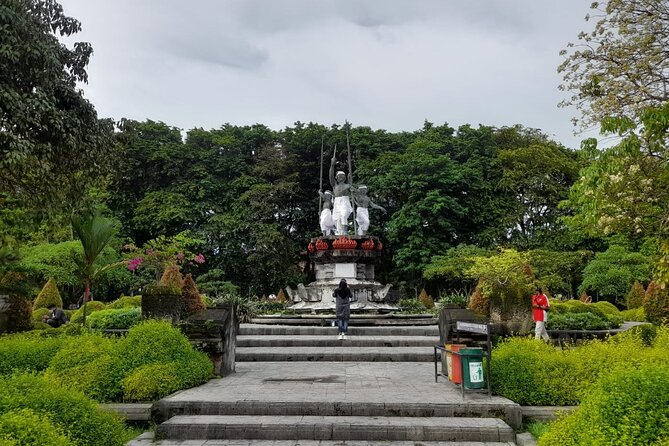
You start at Puputan Square, a central open space that’s familiar to locals. It’s a good first stop because the setting is simple and visual—you get oriented fast, and your guide can set the historical context without you needing to navigate complicated grounds.
What you’re looking at is the monument that commemorates a painful 1906 episode: the battle involving the rajas of Badung against invading Dutch forces. The memorial centers on a Balinese family’s heroism, and it’s the kind of stop where your guide’s explanation changes everything. Without context, it’s just a monument. With context, it becomes a key to understanding how people in Bali remember power, resistance, and colonial encounters.
This is also a place where you can see how Denpasar functions as a city, not just a stop on a map. Even if you only spend about an hour here, it gives your day a spine.
Practical note: if weather turns ugly, an open square is easy to reach but uncomfortable to linger in. I’d bring a compact umbrella or rain layer so you’re not stuck wishing you had one.
Bali Provincial State Museum (Negeri Propinsi Bali): masks, music, and ceremony models
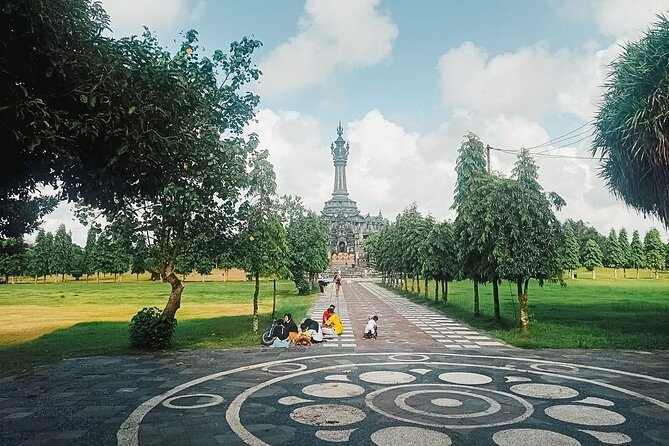
Next up is the Bali Provincial State Museum (Negeri Propinsi Bali), located close to the former royal palace area. This is one of those stops that makes sense even if you’re not a museum person, because it focuses on recognizable cultural themes—masks, instruments, textiles, sculptures, and paintings.
You typically have about 30–40 minutes, and inside the museum you’ll see artifacts spanning from prehistoric finds to early 20th-century art. Four main buildings organize the collection, so even a shorter visit doesn’t feel like you’re seeing random rooms. It feels curated by topic, even though you’re moving quickly.
Here’s what makes this museum especially useful for visitors: it explains how ceremonial life shapes art. You’ll run into exhibits tied to things like theatrical masks, musical instruments, and specific cultural models. One highlight your guide can point out includes scale models related to Balinese tooth filing, plus models connected to marriage and cremation events.
There’s also room for art that feels less formal and more everyday—textiles, ritual items, and objects that show how traditions carry forward. If you’re trying to understand Bali beyond beaches, this is a strong anchor.
Comfort heads-up: one caution that shows up in real-world experience is the museum’s steps. If you have mobility limits, you may find stair-heavy areas tiring. If that applies to you, tell your guide at the start. They can often help you adjust how you move through the buildings.
Pasar Badung: how to shop, bargain, and read a market like a local
After the museum, you hit Pasar Badung, Bali’s largest market focused on food and daily goods. This is the “move your feet, open your eyes” part of the tour. Plan on about 1 to 1.5 hours here depending on the day’s flow.
Pasar Badung is where locals come to sell and bargain. You’ll see piles of fruits, spices, and other edible goods sourced across the island. It’s not a museum display where everything stays still—this is active commerce. Your guide can help you interpret what you’re seeing, including how pricing and trading work day to day.
If you love markets, you’ll feel at ease quickly. If you don’t care about shopping, you can still get plenty out of the sensory education: the rhythms, the packaging style, the way items are grouped, and the human side of buying food for a household.
A key detail: after market time, the tour often includes a stop at a nearby supermarket—basically an Indonesian department-store setup—so you can buy items if you want. That shopping is at your own expense, and it’s separate from the market experience.
One more practical tip: this is one of the places where heat can sneak up on you. If you’re prone to getting sluggish in humidity, plan for a slower pace. Also, don’t plan on water being handed to you automatically; bring a bottle if you can, just to keep the day easy.
And if public holiday closures pop up, markets can be affected too. In those cases, a good guide usually tries to protect your time with reasonable alternatives nearby.
Bali Art Center (Taman Budaya): woodcarving, modern art, and architecture
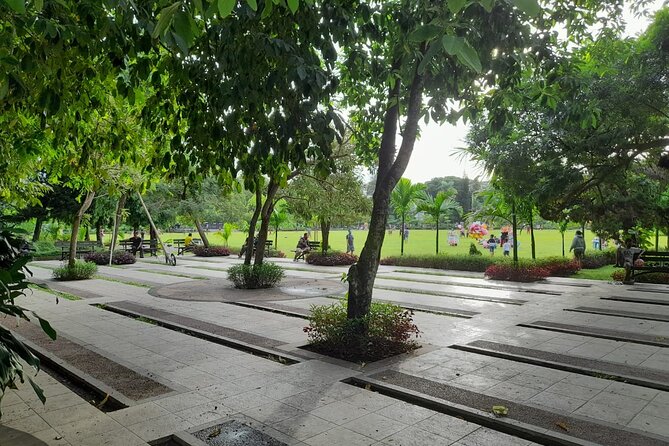
The final cultural stop is the Bali Art Center (Taman Budaya). This is where your day shifts from history and daily life into arts and design.
You’ll spend time in a traditional Balinese-style structure with a permanent collection that includes wood carvings and also modern art. There are also exhibits tied to architecture, so it’s not just objects you look at—it’s a chance to understand how form and function show up in Balinese spaces.
One part of this stop that’s especially practical for visitors: it’s a calmer environment compared to a market. After heat and crowds, you get a more controlled way to look, ask questions, and slow down.
If you’re the kind of traveler who likes to buy something small and meaningful, this is a better place to understand what you’re seeing before you shop. Even if you don’t buy, you’ll leave with clearer context for Balinese art at home—what’s decorative, what’s ceremonial, and what’s modern interpretation.



Price and value: what you get for $68.90
At $68.90 per person, this tour sits in the “good value if you want the structure” category. The standout value is that it bundles several costs that add up if you try to DIY:
- Hotel pickup and drop-off from major areas (Kuta, Seminyak, Sanur, Jimbaran, Nusa Dua)
- Entrance fees and taxes included
- An English-speaking licensed guide who translates the significance of what you’re seeing
- Air-conditioned transport for a full city circuit
Food and drinks are not included. That’s normal for this type of excursion, but it means you should budget for snacks and water on your own.
Where value can vary is in your personal interest mix. If you care most about beaches or only want one museum, the market portion might feel like a side quest. But if you want Denpasar as a real working city—history plus daily life—then the price becomes easier to justify.
Also, the tour is typically small (max 15), and it’s designed as half-day time. That’s a real benefit if you don’t want to lose an entire day to traffic and transfers.
Weather, timing, and comfort tips for Bali’s heat and rain
Bali weather can change fast. One experience you should plan for: public holidays can close specific places, and torrential rain can make outdoor walking uncomfortable. When that happens, the best version of this tour keeps you moving—using the guide’s judgment and local adjustments rather than just canceling the day.
Heat and humidity are the other big variable. There are days when you’ll finish with energy; other days you’ll feel like your body wants the bus again—quick. A smart move: dress in breathable layers, wear shoes you can tolerate on short walks, and treat this as a cultural circuit, not an all-day trek.
Season-wise, a practical tip from real timing: June to August is often the dry season, which makes outdoor parts easier.
If you’re traveling with someone who’s older or less steady on stairs, plan extra caution at indoor stops. Even if the museum is the main draw, steps can matter.
What to bring (so the day feels smooth)
You’ll be out for about 6 hours, with a mix of indoor rooms and outdoor city segments. Here’s what makes that easier:
- A light rain layer or umbrella for sudden showers
- Sun protection (hat/sunglasses) for the outdoor market and square
- Comfortable walking shoes
- A small personal snack and water, since food/drinks are not included
Also, bring your curiosity. This is one of those tours where your enjoyment grows when you ask questions. The guide’s job is to connect objects and places to meaning, so you’ll get more out of it if you’re willing to talk.
Who this Denpasar city tour is best for
This tour fits well if you want:
- A Denpasar-focused snapshot, not just a pass-through
- A blend of history (Puputan Square), culture (museum), and daily life (market)
- A guide-led explanation so you understand what you’re seeing—especially in the museum exhibits
You might not love it as much if:
- You hate markets and prefer to skip shopping areas
- You have limited mobility and don’t do well with stairs
- You’re traveling on a day when rain or closures can derail outdoor stops
For most people staying in Seminyak, it’s a strong way to spend a half-day and still have time for the rest of Bali’s evening plans.
Should you book this Denpasar City Tour?
Book it if you want a guided, value-based cultural loop with real Denpasar stops. The combination of Puputan Square, Bali Museum, and Pasar Badung gives you three different lenses on Bali—memory, art/ceremony, and everyday commerce—then the Bali Art Center gives you a final creative angle.
Skip it if you already have your Denpasar sights covered and you’d rather spend the day elsewhere, or if you know you won’t enjoy market wandering. In that case, you may be better off picking a more targeted museum-only or art-focused plan.
If you do book, treat it like a warm-weather city education. Dress for sun and rain, bring water, and keep your schedule flexible. That’s how you get the best version of Denpasar in one half-day.
FAQ
How long is the Denpasar City Tour?
The tour lasts about 6 hours.
What stops are included?
You’ll visit Puputan Square, Bali Provincial State Museum (Negeri Propinsi Bali), Pasar Badung, and the Bali Art Center (Taman Budaya).
Is hotel pickup included, and where does it pick up from?
Yes. Pickup and drop-off are included from major hotels in Kuta, Seminyak, Sanur, Jimbaran, and the Nusa Dua area.
Are entrance fees included?
Yes. All fees and taxes are included, and admissions for the stops are covered in the tour.
Is food included?
No. Food and drinks are not included. There’s time at Pasar Badung and also a supermarket stop where purchases are at your own expense.
Can I cancel for free?
Yes. You can cancel up to 24 hours in advance for a full refund. If you cancel less than 24 hours before the start time, you won’t get a refund.