REVIEW · UBUD
Make Traditional Bali Coconut Oil with a Balinese Family
Book on Viator →Operated by Taro Village Experience · Bookable on Viator
Coconut oil is made, not bought. In Delodsema village near Taro, north of Ubud, you spend about 1.5 hours with a Balinese family crafting traditional coconut oil step by step in their home. I love that it is genuinely hands-on, with clear explanations as you do the work, not just watch from the sidelines.
I also like the included coconut scrub massage (plus a warm welcome with herbal tea or coffee and Balinese cookies) because it turns the class into a proper reset. One consideration: if you want round-trip pickup from central Ubud, that’s an extra transport cost (IDR 350k), unless you upgrade for transfers when booking.
In This Review
- Key highlights at a glance
- A private Balinese coconut oil class in Delodsema (north of Ubud)
- The 90 minutes that actually feel like village time
- Coconut oil, Balinese style: why the steps take longer
- Coconut scrub massage: small ritual, big reset
- Herbal tea welcome and Balinese cookies: the friendly start
- Exploring rural village life (not just the oil)
- Optional silversmithing: a second souvenir if you want more
- Price and value: what $27 really includes
- Timing, pickup, and where the class actually meets
- Who should book this coconut oil workshop
- Quick tips to get the most out of the experience
- Should you book Traditional Bali Coconut Oil with a Balinese Family?
- FAQ
- Where does the coconut oil class take place?
- How long is the experience?
- Is this experience private?
- What do I get to do during the class?
- What’s included in the price?
- Is there an option to add silversmithing?
- Do I need to pay for transportation from Ubud?
- What is the meeting point address?
- Is the ticket mobile?
- What is the cancellation policy?
Key highlights at a glance

- Real hands-on coconut oil using the Balinese traditional method, with your finished bottle to take home
- Private experience in a small village (Delodsema has around 50 families) beyond the Ubud crowd
- Coconut scrub massage included while the oil process runs
- Welcome snacks and drinks: Balinese coffee or herbal tea, plus Balinese cookies
- Optional silversmithing class if you want a second souvenir beyond the oil
A private Balinese coconut oil class in Delodsema (north of Ubud)
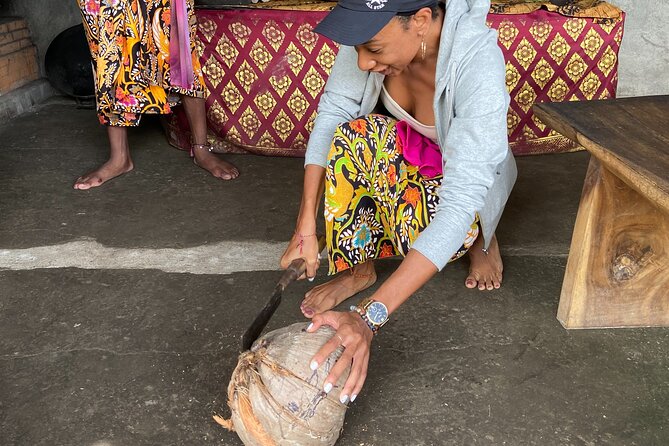
This is one of those Bali experiences that feels more like visiting a home than joining a show. The setting is Delodsema Village in Taro, about north of Ubud, and the experience runs with a private group format, so you’re not squeezed in with strangers.
What makes it especially appealing is the framing: you’re not only learning a recipe. You’re learning how rural Balinese daily life connects to what people make with their hands. The family involved here lives in the community (it’s described as a small village of about 50 families), so you get a real sense of pace and routine rather than a staged demo.
And yes, you’ll make coconut oil the traditional way. The process takes more than the clock time you might expect—so you’re not rushing through steps. That extra time matters, because it turns a “how-to” into something you’ll actually understand and remember.
You can also read our reviews of more tours and experiences in Ubud.



The 90 minutes that actually feel like village time
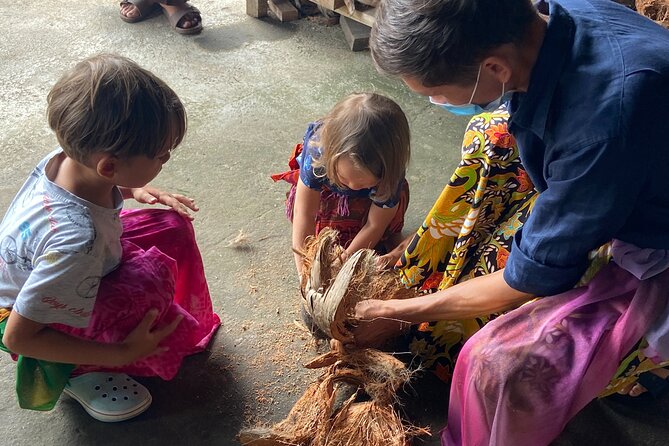
Your day starts with a simple welcome: herbal tea or coffee and Balinese cookies. Then you move into the main activity at the home base in Delodsema Village, where you’ll put on the provided Balinese sarong and get the tools and equipment you’ll need.
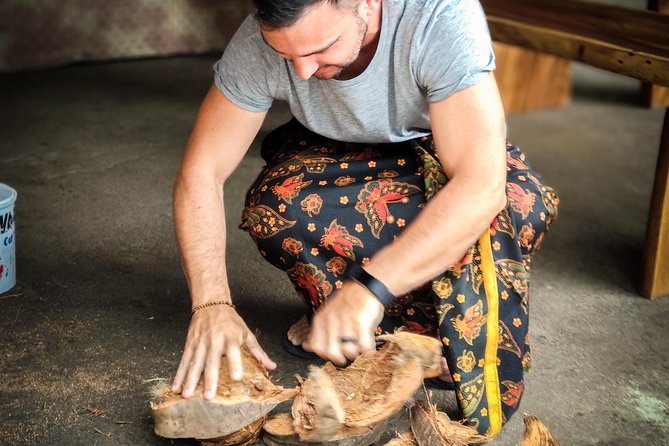
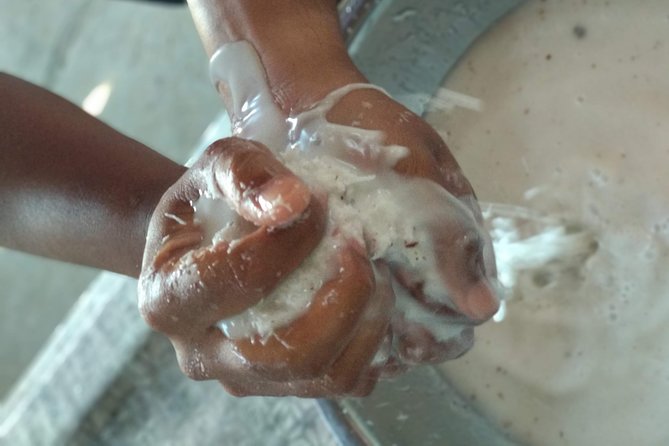
The coconut oil part is the core. You follow the Balinese process for creating coconut oil, step by step, with your host explaining what’s happening as you work. You’re also told ahead of time that it takes more than 1 to 1.5 hours to complete, so if you’re the type who likes neat schedules, plan for a little flexibility.
While the oil process is underway, the experience shifts gears in a smart way. You get a coconut scrub massage, which is included, and it helps you relax while things are working in the background. That keeps the class from feeling like a long wait, because you’re actively doing something (and feeling better) while the oil finishes.
After that, you head into the slower, more interesting moments: exploring local village life and how people live in a traditional Balinese house setting. This isn’t a “look and leave” stop. It’s framed as time to notice daily habits, what’s around the home, and what life looks like when you’re not in a resort bubble.
Coconut oil, Balinese style: why the steps take longer
The coconut oil-making process here is specifically described as the Balinese traditional method. That’s a big deal, because the “traditional” approach is usually slower and more hands-on than the shortcuts you might see elsewhere.
In practical terms, it means you’ll follow stages that take time—enough that the class pacing builds in breaks and activities (like the scrub massage and village exploration). If you only want a quick photo stop, this may feel like it takes a bit too long. But if you want to understand what you’re making and why it works, the longer timeline is the point.
You also get what you came for at the end: your coconut oil to take home as a souvenir. Even if you’ve seen coconut oil sold everywhere in Bali, making your own gives you the story behind the bottle. And in everyday terms, it’s a great gift for someone who actually uses coconut oil (skincare, hair, cooking, or just as a natural option).
Coconut scrub massage: small ritual, big reset
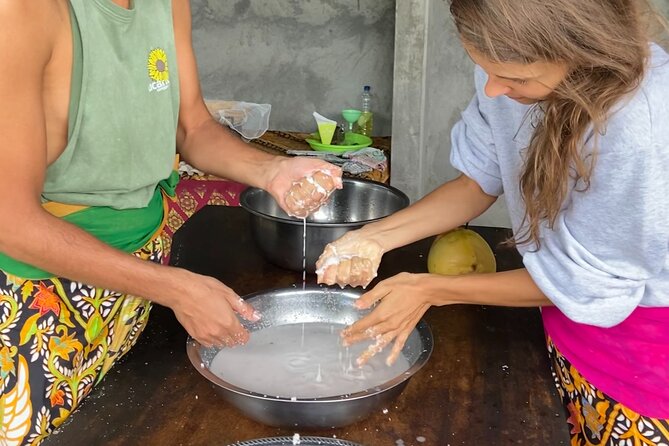
The massage component is one of the smartest inclusions in this experience. It doesn’t try to turn a coconut oil class into an all-day spa. Instead, it acts like a breather that matches the rhythm of the oil-making process.
You’ll do the coconut scrub massage while the oil takes its time. That combo is practical: you stay engaged, you get something tangible to feel, and you return to the class refreshed rather than waiting bored.
Also, this is one of those activities where expectations help. The scrub and massage are part of a hands-on, traditional setting, so you should plan for the session to be physical and tactile. Wear comfortable clothing and keep it simple. The provided sarong will help you settle in, but you’ll still want to feel comfortable moving around.
Herbal tea welcome and Balinese cookies: the friendly start
Before you even touch coconuts, the experience begins with a welcome drink and a snack. You can have Balinese coffee and/or herbal tea, along with Balinese cookies.
This matters more than it seems. In a rural home setting, a shared drink is a way to slow things down and make you part of the moment. It also helps set expectations: you’re not being rushed into an “activity mode.” You’re arriving, being welcomed, and then working together.
One bonus is the vibe of the place. The experience description emphasizes the family-run setting and time for conversation. Reviews also highlight how warm and welcoming the hosts are, including the feeling of being treated as a person, not a ticket number.



Exploring rural village life (not just the oil)
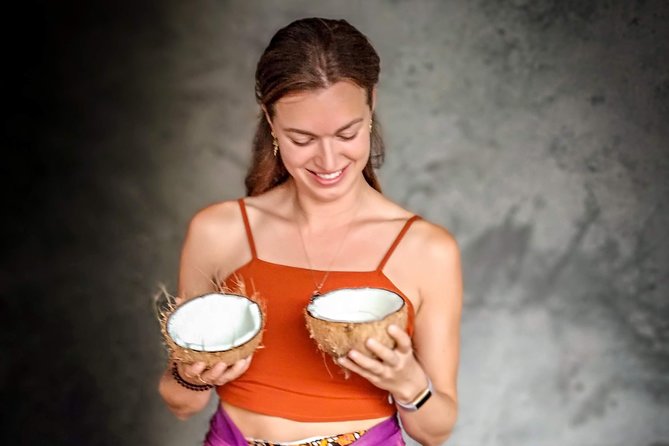
Once the oil-making steps are underway, you’ll also get time to explore local life. The experience includes seeing what local activities look like and learning about the traditional house style in the village.
A key detail: the village is small, and it’s described as a community with around 50 families. That size changes the feel of the visit. You get a more personal look at how things work day to day, rather than a quick “walk past a few spots” tour.
Some parts of day-to-day life can include little moments tied to the home itself—like eating fresh fruit from trees or interacting with animals around the property (those kinds of details show up in the experience stories). If you like travel that includes real routines, this is where it clicks.
Optional silversmithing: a second souvenir if you want more
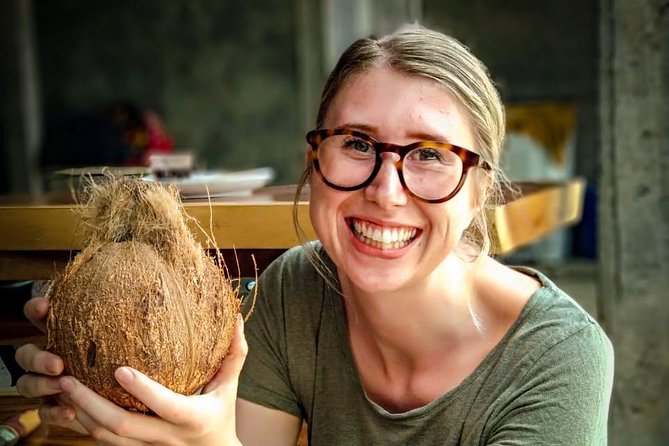
If you’re thinking you’d like more than one handmade keepsake, there’s an option to add a silversmithing class. The experience notes this as an additional upgrade, and it’s positioned as a way to create a unique souvenir beyond the coconut oil bottle.
This works well if:
- you want a hands-on second craft to balance the edible-natural souvenir, and
- you like learning skills that connect to local work, not just photos.
Because the silversmithing option is offered as an add-on, it’s easiest to decide based on your interests. If you’re mainly focused on coconut oil and rural life, you can keep it simple. If you know you’ll be happy spending more time making something, this can add a lot of value.
Price and value: what $27 really includes
At $27.00 per person, this class is priced like a single-activity experience—but it includes more than most.
Here’s what’s included:
- Balinese coffee and/or herbal tea
- Balinese cookies
- Tools and equipment for making coconut oil
- Free Wi‑Fi
- Balinese sarong
- Coconut scrub massage
- Your coconut oil to take home
That’s a lot of “extras” bundled into one price. In Bali, many stand-alone workshops either charge for the materials separately or exclude comfort items like food/drinks. Here, the class is set up so you’re fed and provided for while you learn and make.
What’s not included (and can affect your total cost):
- Transportation from central Ubud is charged IDR 350k round trip, unless you upgrade to include transfers.
So I’d think of it like this: the $27 covers the workshop and experience elements. Your real all-in cost depends on where you start from in Ubud and whether you add transfers.
Also note that the experience is private, so you’re not paying for “a thing,” then sharing it in a crowd. If you’re traveling as a couple or small family, that private format can make the value feel much stronger.
Timing, pickup, and where the class actually meets
The experience runs for about 1 hour 30 minutes (approx.), and the process itself takes more than 1 to 1.5 hours. That’s why it’s a good idea not to schedule a must-do appointment right after.
The meeting point is in Delodsema Village, Jl. Taman Gajah, Taro, Kec. Tegallalang, Kabupaten Gianyar, Bali 80561. The activity ends back at the meeting point.
There’s also a mobile ticket, and confirmation is received at booking time. If you’re planning your day around Ubud traffic, consider that the north side routes can change travel time depending on conditions.
If you do want round-trip pickup from central Ubud, the upgrade is the cleanest way to handle it. It reduces coordination work and helps you keep the experience feeling effortless.
Who should book this coconut oil workshop
This works best if you want Bali beyond the shopping streets and beyond the short “see and go” format.
It’s especially suited to:
- couples who want a quiet, meaningful activity with a real family setting
- solo travelers who enjoy one-on-one attention and a home environment
- families and kids, since it’s framed as fun, traditional, and educational
If you prefer nightlife, museums, or nonstop action, this might feel slower than your style. But if you like crafts, hands-on food-adjacent learning, and village life, it’s a very satisfying fit.
Quick tips to get the most out of the experience
- Bring a curious mindset. You’ll learn the steps, but the best part is how the process connects to everyday life.
- Wear comfortable clothes you don’t mind getting a bit involved. The scrub massage and hands-on work can be tactile.
- If you add silversmithing, plan on a longer time block and come ready to make multiple things.
- If central Ubud is your base, decide early about transfers so you don’t end up scrambling on timing.
Should you book Traditional Bali Coconut Oil with a Balinese Family?
Yes, if you want a hands-on cultural workshop that leads with traditional coconut oil, includes a real relaxation break (coconut scrub massage), and gives you time in a rural Balinese home setting. The value is strong for the price because it bundles food/drink, tools, sarong, and the finished product you take home.
I’d skip it only if you’re strictly short on time, or if you prefer fast, highly polished “tourist performance” experiences over a slower, family-run pace. If you like crafts and people-driven travel, this is the kind of Bali day you remember because you made something with your own hands.
FAQ
Where does the coconut oil class take place?
The class takes place in Delodsema Village, Taro, north of Ubud, in the Tegallalang area (Jl. Taman Gajah, Taro, Kec. Tegallalang, Kabupaten Gianyar, Bali 80561).
How long is the experience?
The duration is approximately 1 hour 30 minutes, though the coconut oil process itself can take more than 1 to 1.5 hours to complete.
Is this experience private?
Yes. It’s a private tour/activity, and only your group participates.
What do I get to do during the class?
You’ll learn the Balinese traditional process of making coconut oil by hand, enjoy a coconut scrub massage while waiting, and explore local village life and a traditional house setting.
What’s included in the price?
Included are Balinese coffee and/or herbal tea, Balinese cookies, tools and equipment for making coconut oil, free Wi‑Fi, a Balinese sarong, and you take your coconut oil home as a souvenir.
Is there an option to add silversmithing?
Yes. There is an option to upgrade to include a silversmithing class for an additional unique souvenir.
Do I need to pay for transportation from Ubud?
Transportation from central Ubud is not included and is charged IDR 350k round trip, unless you upgrade to include round-trip transfers.
What is the meeting point address?
The meeting point is Delodsema village, Jl. Taman Gajah, Taro, Kec. Tegallalang, Kabupaten Gianyar, Bali 80561, Indonesia.
Is the ticket mobile?
Yes. The experience includes a mobile ticket.
What is the cancellation policy?
You can cancel for free up to 24 hours in advance for a full refund. If you cancel less than 24 hours before the start time, the amount paid is not refunded.