REVIEW · UBUD
Canyoning Bali, Blue Gorge Canyon (Adventure, discovery, nature)
Book on Viator →Operated by Adventure and Spirit · Bookable on Viator
Blue water in a hidden gorge starts early. Blue Gorge Canyon in Bali mixes waterfall rappels with swimming, optional jumps, and jungle trekking that feels truly off the main path. It’s designed so even first-timers can try the big moments, with a pre-canyon training setup and the right gear.
What I like most is the “discovery” feel: you’re not just dropping into one view. You move through a real canyon route with 5 rappels and multiple chances to slide, swim, and jump into deep natural pools.
One thing to think about before you book: the start is at 6:00 am, and the activity depends on good weather, so you’ll want to be flexible if conditions change.
In This Review
- Key things to know before you go
- Why Blue Gorge Canyon feels different from other Bali canyon days
- The 6:00 am rhythm: pickup, basecamp, and why you start so early
- The training before the gorge: how novices get real confidence
- Getting wet the fun way: what you do once you’re in the gorge
- The waterfall rappels up to 12 meters: the real skill moment
- Optional jumps and deep pool landings: your adrenaline dial
- Gear and safety: what’s included (and why it’s not the place to cut corners)
- Food, showers, and the end-of-day reset
- Price and value: is $100 fair for what you get?
- Who Blue Gorge Canyon is best for (and who should think twice)
- Little practical tips that make your day smoother
- Should you book Blue Gorge Canyon from Ubud?
- FAQ
- What time does Blue Gorge Canyon start?
- How long is the canyoning experience?
- What activities are included in Blue Gorge Canyon?
- How many people are in a group?
- What’s included in the price?
- Is training provided if I’m a beginner?
- What should I bring or wear?
- What happens if the weather is bad?
- Is it refundable if I cancel?
Key things to know before you go
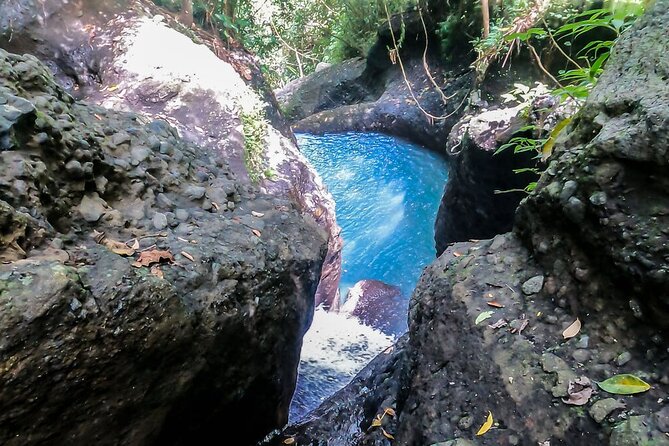
- Blue-green water depending on the sun means the gorge can look different from minute to minute.
- 5 waterfalls rappels up to 12 m gives you real abseiling moments, not just scenic stops.
- 7 jumps are optional, and some can be up to 7 m high.
- Beginner-friendly prep with ICOpro Canyoneer Initiation training before you go in.
- Small groups (max 12) make it easier to get coached and keep your pace.
- Free photos and video plus showers and lunch at the end mean less hassle for you.
Why Blue Gorge Canyon feels different from other Bali canyon days
Most Bali adventure trips are either mostly scenic or mostly adrenaline. Blue Gorge Canyon is both, but in a way that feels practical. The route is built around actual canyon movement: you swim sections, you handle the vertical parts with rappels, and you cross the gorge with a little hiking and shuffling on the way in and out.
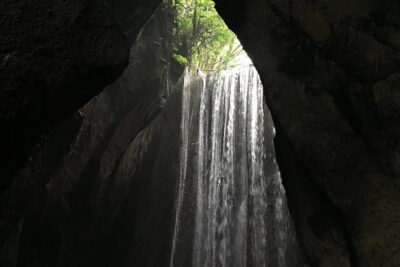
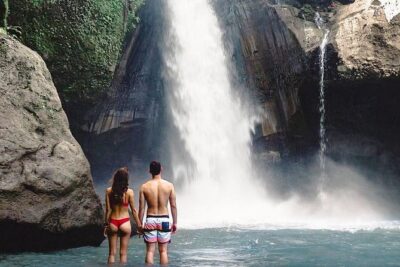
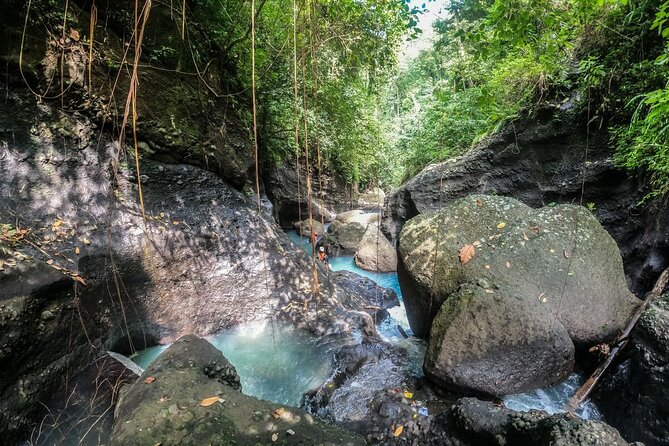
The selling point here is the hidden gorge with blue/green water that changes with the sun position. When light hits the water just right, the pools look almost unreal. Even if you’re not chasing Instagram color, it makes the whole canyon feel like a different planet compared with Bali’s more open waterfall spots.
Then there’s the balance of “doable” and “adventurous.” You’re not stuck watching from the sides. You’ll be actively involved—downclimbing, jumping where you want to, and abseiling where it counts—while the team keeps the safety rhythm tight.
You can also read our reviews of more tours and experiences in Ubud.


The 6:00 am rhythm: pickup, basecamp, and why you start so early
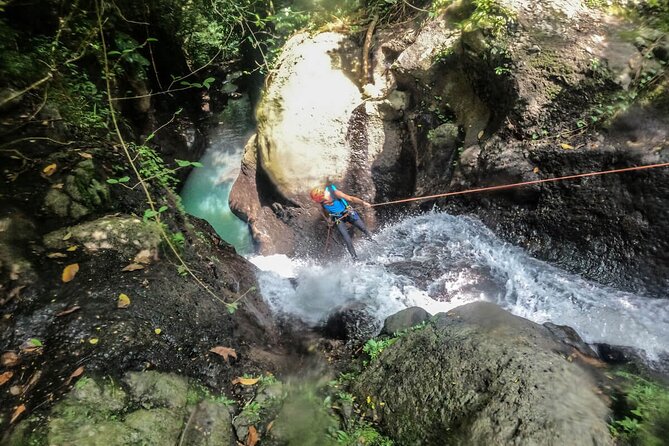
You’ll meet the day at 6:00 am. In Ubud, that early start is the tradeoff for getting cooler temps, better light conditions, and enough time for a full canyon route without rushing the training.
Pickup is offered from your accommodation in the specified area. From there, you drive to the basecamp where you handle the human basics first:
- registration
- coffee/tea and a light breakfast
- equipment fitting and canyon initiation training
That basecamp prep matters because canyoning isn’t just “put on a wetsuit and go.” You need the order of operations—how to clip in, how to descend, and what to expect when the route gets wet and slippery. The format here is structured around ICOpro standards, and you’ll get taught so you know what to do in the canyon.
After that, it’s about a 10-minute drive to the start point by local small truck, then a short downhill approach to the river. In plain terms: you walk a bit, you get to the water, and then the route begins.
The training before the gorge: how novices get real confidence
If you’re new to canyoning, this is where the day can either go great—or turn stressful. Here it’s built around a canyon initiation course: ICOpro Canyoneer Initiation (CAI) training.
In the equipment talk, you learn the core gear and abseiling basics before you ever reach the first rappel. In one group I saw, people went from nervous to comfortable fast once they understood how the system works and what movements to repeat. You’ll also get familiar with tools used for traction and descent—like crampons and the “pirana” reference people hear during instruction—so you’re not guessing when you’re already in the canyon air.
The best part isn’t just the technique. It’s the vibe: guides who encourage you step by step. The team is supervised by ICOpro instructors and assistants, and you can feel that difference when the canyon throws you wet footing and loud water.
You should still expect nerves, especially if you’re considering the higher optional jumps. But you’re not left alone to figure it out.
Getting wet the fun way: what you do once you’re in the gorge
The canyon route is built for movement. You’re not doing one single “wow moment” and then sitting around. You’re going through a sequence of sections—swimming, sliding, jumping (optional), and waterfall rappelling.
A few key “numbers” to keep in mind:
- total descent time is about 2.5 hours
- you’ll have an approach and return walk of 15 to 20 minutes
- you’ll do 5 rappels
- you’ll encounter 7 jumps that are optional
- rappels happen on waterfalls up to 12 m high
- jumps can be up to 7 m high (optional)
What this means in real life: your day is a rhythm of preparation, action, recovery. You spend time on vertical bits, then you switch to pool play and sliding. The optional jump line matters because it’s your choice of how much adrenaline you want that day.
And the jungle trekking pieces are not just a token walk. The gorge route includes natural scenery that you’ll actually feel—green walls, wet rock, and that soundscape where water dominates everything. It’s part of why the canyon feels like discovery instead of a single drop-and-run activity.
The waterfall rappels up to 12 meters: the real skill moment
Rappelling is where canyoning becomes canyoning. Blue Gorge Canyon includes abseiling waterfalls up to 12 m high, with 5 rappels total. That’s enough vertical time to make you feel the difference between “I watched someone do it” and “I’m actually doing it.”
The team provides the gear and supervision, and they teach you ahead of time so you know what the descent feels like. If you’re the type who thinks best when you get shown exactly what to do, you’ll likely appreciate how the instruction is structured before you enter.
Also, rappels here aren’t happening in a vacuum. You’ll be moving through a full route—so even if you’re not chasing the jump heights, you still get a solid vertical experience.

Optional jumps and deep pool landings: your adrenaline dial
The canyon includes 7 jumps that are optional, including jumps up to 7 m. Optional does not mean “pressure.” It means you can pick what matches your comfort level.
This matters if you’re going with teens or friends who have different comfort levels. You can take the safe option on one jump and choose to go higher later if you feel ready.
Practical tip: if you’re thinking about higher jumps, pay attention during the instruction and watch where others land. Pool depth and entry technique are crucial when you’re learning something new while wet rock tries to steal your balance.
Even if you skip the highest jump, you’ll still get the fun of canyoning: sliding, swimming, and bouncing between natural sections of water.
Gear and safety: what’s included (and why it’s not the place to cut corners)
You’re provided with all canyoning equipment using ICOpro and CE-standard gear. That includes technical items and canyoning ropes with international standard (including Korda’s rope). You’ll also get wetsuits and appropriate shoes as part of the kit, which is a big deal in Bali where water temperatures can feel cooler than expected once you’re moving in shade.
Safety coverage is also built into the package. You get accident insurance up to USD 10,000 per person. That doesn’t remove risk, but it tells you this is treated as a real technical activity—not just a casual tour.
And the group size cap of 12 helps with safety too. It’s easier for instructors to keep an eye on everyone when the canyon is active and the route has multiple steps.
Food, showers, and the end-of-day reset
Canyoning is physical. So the “what happens after” matters, and this tour covers a lot of that.
After you finish the canyon, you return to basecamp for:
- shower / shampoo / soap / towel
- lunch
- fruits
- tea/coffee/water and snacks
Breakfast is also included at basecamp, plus coffee/tea and a light breakfast before you gear up. Lunch can be vegetarian or vegan, so you should be able to plan your day without hunting for food afterward.
There’s also free photos and video. If you hate juggling your camera in wet conditions, this is a nice safety net. If you do plan to keep copies yourself, note that a USB or memory card is not included.
Price and value: is $100 fair for what you get?
For about 3 hours, $100 sounds simple. But the real question is what you’re paying for: technique, gear, supervision, and the whole sequence—training, canyon time, and post-canyon food and showers.
Here’s what you get that pushes this above the “cheap thrill” category:
- pickup and drop-off (in the specified area)
- ICOpro training (CAI initiation) plus instructor supervision
- full canyoning equipment (ICOpro/CE standard)
- technical rope and branded gear
- accident insurance up to USD 10,000
- breakfast, lunch, fruits, and drinks
- shower kit and towel
- free photos and video
You are paying for a real activity with real coaching. If you’ve ever done a “self-guided” adventure where you end up doing your own safety math, you’ll feel the difference here. The price makes sense when you treat canyoning as a guided sport, not a sightseeing bus stop.
Who Blue Gorge Canyon is best for (and who should think twice)
This experience is described as accessible to most travelers, and the structure backs that up. If you’re healthy enough for wet hiking, you can likely handle it.
It fits especially well if:
- you want a first canyoning day with training before the action
- you like waterfalls but want to do more than take photos
- you’re traveling with teens or a mixed group and want options with optional jumps
- you want value for money with meals, shower, and gear included
You may want to think twice if:
- you hate early mornings (6:00 am is non-negotiable)
- you’re uncomfortable with heights or the idea of rappelling
- you don’t want to get wet and muddy (even if you skip jumps, canyoning still means water and slick rock)
- weather changes make you inflexible—this activity requires good weather
Little practical tips that make your day smoother
You’ll have a much better time if you treat the day like a sport and not a casual walk:
- pack a plan for your clothes after. you’ll get a shower and towel, but you’ll still want something dry to put on
- bring swimwear and sunscreen (sunscreen isn’t included)
- if you want to keep photo/video files, bring a USB or memory card since it’s not included
- arrive ready for instruction. the training is part of the fun, because it turns the canyon from scary to doable
Also, remember that optional jumps are optional. You don’t need to prove anything. When you choose your level, you’ll feel more relaxed for the rappels and slides.
Should you book Blue Gorge Canyon from Ubud?
If you want a canyon day in Bali that feels like discovery—jungle, waterfalls, swimming pools, and guided rappels—this is a strong pick. The combination of 5 rappels, optional jump choices up to 7 m, and proper ICOpro-led training makes it a smart way to try canyoning without going in blind.
Book it if you’re excited by action and you can handle getting wet early. Consider another option only if heights and rappelling scare you too much, or if your schedule can’t handle a weather-dependent start.
If you do book, look for the team energy. Guides like Rama and Jess (and their support crew) are part of why people feel safe and happy through the whole route.
FAQ
What time does Blue Gorge Canyon start?
The start time is 6:00 am.
How long is the canyoning experience?
It lasts about 3 hours total, with descent around 2.5 hours plus an approach and return walk of 15 to 20 minutes.
What activities are included in Blue Gorge Canyon?
You’ll do canyoning with swimming in natural pools, slides, optional jumps, and waterfall rappels. There are 5 rappels and 7 jumps (optional). Waterfall rappels can be up to 12 m high, and optional jumps can be up to 7 m.
How many people are in a group?
The maximum group size is 12 travelers.
What’s included in the price?
Pickup and drop-off (in the specified area), all canyoning equipment, ICOpro/CE-standard gear, instructor supervision, ICOpro Canyoneer Initiation training, breakfast and lunch (vegetarian or vegan available), fruits, tea/coffee/water and snacks, shower items (shampoo/soap/towel), accident insurance up to USD 10,000 per person, and free photos and video.
Is training provided if I’m a beginner?
Yes. You get ICOpro Canyoneer Initiation (CAI) training and canyon initiation training before you start the canyon so you know what to do in the route.
What should I bring or wear?
Swimwear, change of clothes, and sunscreen are not included, and camera or memory/USB for photos and video are also not included. You will be provided wetsuits and canyoning equipment.
What happens if the weather is bad?
This experience requires good weather. If it’s canceled due to poor weather, you’ll be offered a different date or a full refund.
Is it refundable if I cancel?
Yes. You can cancel for free up to 24 hours in advance for a full refund.