REVIEW · NUSA DUA
Day Trip: Ubud Monkey Forest, Rice Terrace, Temple and Waterfall
Book on Viator →Operated by Bali Natural Tours · Bookable on Viator
Ubud hits different when you skip the logistics. This Balinese day trip blends religion and everyday life with two showstopper views: Tegalalang rice terraces and the Tegenungan waterfall. I like how the schedule stays balanced, pairing those big scenery moments with quieter context at temples and local craft stops, all led by a local guide.
My second big win is the convenience. Door-to-door transport from the Nusa Dua area (and nearby spots) plus an English-speaking driver means you’re not figuring out local rides for an 8-hour route. One thing to consider: the popular sights mean Monkey Forest and Tegenungan can feel busy, and the day moves at a steady clip.
In This Review
- Key highlights (the stuff that matters)
- Price and value for an 8-hour Ubud day from Nusa Dua
- Door-to-door pickup: how it saves your energy (and your schedule)
- Tegenungan Waterfall: what to expect at the 15–20 meter stop
- Sacred Monkey Forest Sanctuary: close-up temples and macaque reality
- Tegalalang rice terraces: how the view connects to rice planting
- Tirta Empul water temple: why Bali’s worship includes water spaces
- Craft villages and the family-compound vibe: batik, wood art, and silver
- Timing, pacing, and comfort: making the most of a full day
- Who this tour fits best (and who should think twice)
- The guiding factor: why the experience feels memorable
- Should you book this Ubud Monkey Forest, Rice Terrace, Temple and Waterfall day trip?
- FAQ
- What time does the tour start?
- How long is the tour?
- How much does it cost, and what’s included in the price?
- Are meals included?
- Is the waterfall swimable?
- What dress code should I follow?
- Is this tour private?
Key highlights (the stuff that matters)
- Door-to-door pickup and drop-off from the Nusa Dua area and many nearby beach towns
- Admission fees included for each major stop (so you’re not doing surprise add-ons)
- Tegenungan waterfall with about 15–20 meters of drop and a swim option when conditions are clear
- Ubud Monkey Forest Sanctuary with gray macaques roaming among Hindu temples
- Tegalalang rice terraces and traditional rice planting viewpoints
- Craft villages plus Tirta Empul: batik/handweaving, wood arts, silver crafting, and a water temple complex
Price and value for an 8-hour Ubud day from Nusa Dua
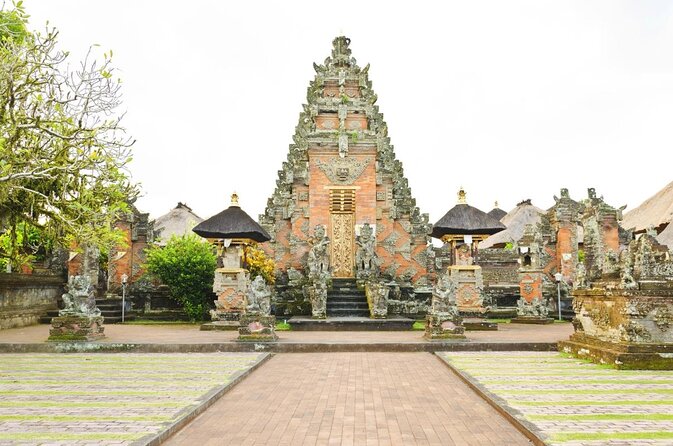
At $37 per person for about 8 hours, this trip can feel like a smart use of time—especially if you’re staying in or near Nusa Dua and don’t want to spend your day routing transport across the island. The best part isn’t just the hourly coverage; it’s what’s wrapped into the price.
You’re getting round-trip hotel transport, mineral water, parking fees, petrol, and an English-speaking driver. On top of that, the big attractions each include their entrance fees. For a Ubud circuit with several paid sites, that inclusion often makes the math easier than piecing things together on your own.
There’s also mention of group discounts, which can help if you’re traveling with friends or family. And while pricing can vary by season, the fact this is commonly booked about 10 days in advance tells me it’s a popular way to do Ubud without committing to a multi-day stay.
You can also read our reviews of more tours and experiences in Nusa Dua


Door-to-door pickup: how it saves your energy (and your schedule)
Starting around 8:30 am, this is built to get you out the door early enough to see the highlights, yet not so early that you’ll hate your life before breakfast.
The pickup coverage is broad. If you’re in Seminyak, Legian, Kuta, Tuban, Jimbaran, Sanur, Tanah Lot, Ubud, Tanjung Benoa, Nusa Dua, Benoa Port, or nearby areas, you’re in the supported zone. That matters because Ubud traffic can be unpredictable; being scheduled with a driver and parking handled usually keeps the day on track.
Inside, you’re in an air-conditioned vehicle, which is a comfort win in Bali’s heat. The tour also includes mineral water, so you don’t have to scramble for hydration right when you’re about to walk a temple or view terraces.
Practical takeaway: if you hate wasting time figuring out logistics, you’ll like how this format keeps your brain free for the sights.
Tegenungan Waterfall: what to expect at the 15–20 meter stop
The day opens with Tegenungan Waterfall. It’s described as a waterfall with heavy water and an approximate height of 15–20 meters, and it’s close enough to be a common stop for tourists.
You get about 1 hour, and it includes admission. The important detail is the swim note: you can swim when water conditions are clear. That means you should treat swimming as a maybe, not a promise. If the water isn’t right, you’ll still have time for photos and a cool-down from the ride.
What I’d pay attention to:
- Crowd mood: since it’s a popular waterfall, expect people around the viewing areas.
- Water conditions: if you’re hoping to swim, you’ll want to check what’s allowed on the day.
- Time allocation: 1 hour goes fast. The goal is “see it, enjoy it,” not linger all afternoon.
If you want a natural highlight early in the day before you move into temples and forests, this stop is a strong opener.
Sacred Monkey Forest Sanctuary: close-up temples and macaque reality
Next up is the Sacred Monkey Forest Sanctuary. This is where the trip shifts from scenery to animal-and-religion atmosphere. The core image here is gray macaques moving through a forest setting, with Hindu temples inside the grounds.
You get about 2 hours, and admission is included. That time matters. Monkey Forest isn’t just a quick walk-through; it’s a place where you’ll want time to slow down, observe temple structures, and watch how the macaques behave around people and pathways.
A key consideration: because macaques roam freely among temple areas, you’ll want to be mentally prepared for them being part of the environment. That means staying alert, keeping things secure, and not treating the experience like a zoo visit where animals are separated.
Also keep an eye on your comfort level. If you’re uneasy around wildlife or dislike crowded walkways, this is the stop that can feel like the biggest “adjustment.” If you’re fine with it, it’s one of the most memorable parts of the whole day.
Tegalalang rice terraces: how the view connects to rice planting
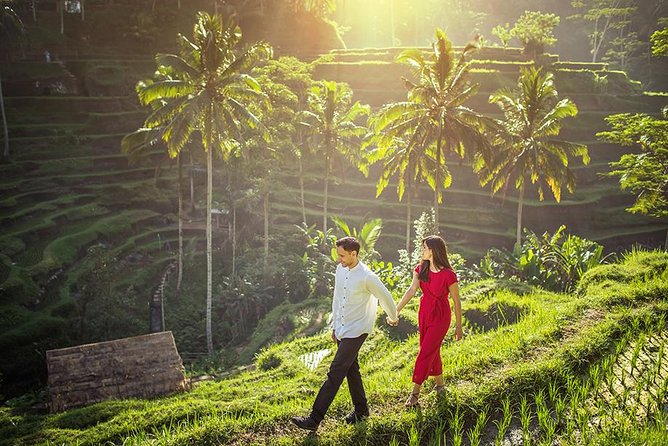
Then you reach Tegalalang Rice Terrace, one of Bali’s famous rice-field scenes. You get about 1 hour, with admission included.
What makes Tegalalang special here is the emphasis on the terraced rice fields and the traditional way of planting rice. So it’s not just a photo backdrop. A good local guide helps you connect what you’re seeing—terraces, water management patterns, and planting methods—to how the system supports daily life in Bali.
You’ll likely notice viewpoints and the layered terraces dropping toward the valley. This is also a stop where you can slow down because the place naturally invites pausing: you’ll be looking, spotting patterns, and taking in the geometry of terraces.
If you’re the type who likes learning as you look, this is a highlight. If you only want the prettiest angle with minimal explanation, you can still enjoy it—but you’ll get more out of it when your guide points out what’s happening behind the scenery.

Tirta Empul water temple: why Bali’s worship includes water spaces
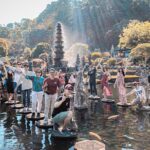
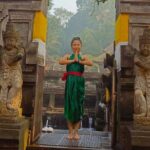
After the terraces, the route takes you to Tirta Empul Temple (Pura Tirta Empul). The tour frames it as a Hindu Balinese water temple near Tampaksiring.
You get about 1 hour, and entrance is included. Inside the temple compound, you’ll find the petirtaan, described as a bathing structure. That detail matters, because it tells you this place isn’t just a view of temple buildings—it’s a functioning water-based temple environment.
Because this stop is centered on water, it can be a refreshing change of pace from the outdoors. It also gives you a different lens for understanding Bali: religion here isn’t only on altars and statues. It shows up in the way water is used within the sacred grounds.
Practical note: this is still a temple environment, so dress and respectful behavior matter. The tour’s smart casual dress code gives you a starting point.
Craft villages and the family-compound vibe: batik, wood art, and silver
One of the best reasons to book this exact circuit is the variety of human-scale stops. You’re not only seeing monuments; you’re seeing what people actually make and how communities live.
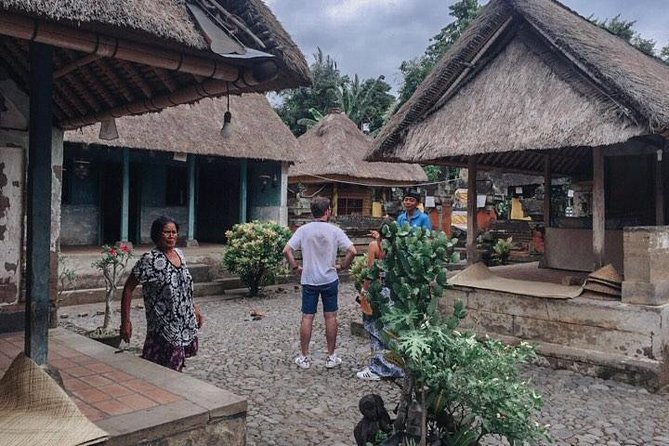
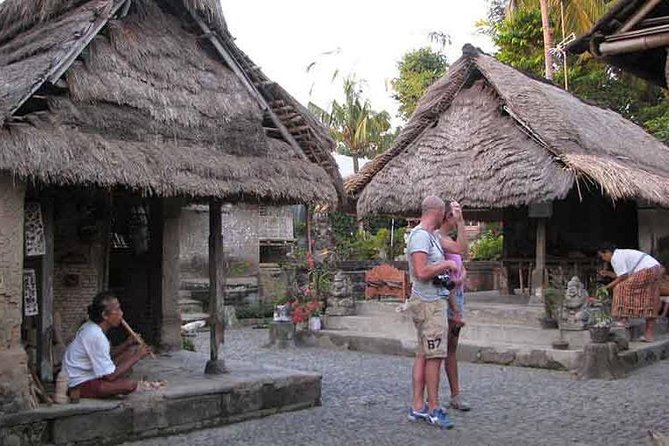
The tour description includes a typical family compound, plus crafts villages and plantations and coffee production. Even without a long break at each place, the sequence helps you understand Bali as a living culture, not just a checklist of sights.
You’ll also hit craft-focused areas:
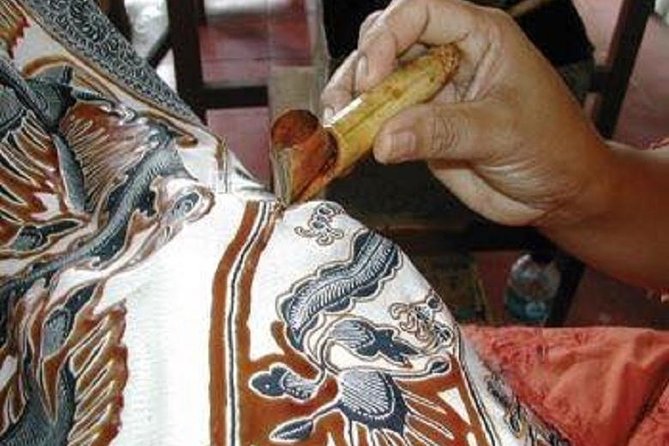
- Tohpati village: known for handicraft and handweaving batik, with scenic views of Tohpati.
- Mas village: recognized for its arts, especially wooden arts, sometimes described as an artistic countryside area.
- A stop for the biggest silver crafting in Bali, giving you a look at metalwork culture in a very practical, shopping-friendly way.
Here’s the value in doing these stops on a guided day: your guide helps connect the craft to place. Instead of wandering into shops and hoping you interpret what you see, you’re given context for why certain materials and techniques matter locally.
Also, if you like gifts you can actually use—shawls, small batik items, or jewelry—this kind of route is efficient. You get a chance to shop without turning the day into a full shopping trip.
Timing, pacing, and comfort: making the most of a full day
This is an 8-hour style tour with multiple stops that each get around 1 hour (and the Monkey Forest gets 2 hours). That pacing is great for first-time visitors, but it does mean you won’t have hours to linger at just one place.
To enjoy it, I’d plan your day around three things:
- Hydration and heat management: you’ll have mineral water, but you’ll still be moving in tropical temperatures.
- Smart casual clothing: it’s required, and it also helps you feel appropriate for temple visits.
- Switching modes fast: waterfall outdoors, forest with macaques, then temples and craft villages. Your body needs quick transitions, not long stays.
One more thought: since Tegenungan and Monkey Forest are popular, go in expecting more people at those stops. That doesn’t ruin the experience; it just changes how you navigate.
Who this tour fits best (and who should think twice)
This trip is a strong match if you want:
- a culture-and-scenery combo in one day,
- an easy way to reach Ubud from Nusa Dua without planning transportation,
- temples, traditional rice systems, and craft culture—not just a single sightseeing loop.
It’s also a decent family option since the minimum age is 5 years. Still, keep in mind that Monkey Forest involves close presence of macaques in temple grounds, which can be a lot for very young kids or for anyone who dislikes animals.
Think twice if you want a slower day with fewer stops and more downtime. This is designed for coverage, and a steady schedule isn’t the same as a relaxed one.
The guiding factor: why the experience feels memorable
One standout in the provided feedback is how the guides show up as real helpers. The tone is consistent: guides are described as kind and helpful, and they help make the day feel genuinely memorable.
That matters more than you might think. When you’re bouncing between temples, forests, terraces, and craft villages, a guide who’s good at explaining what you’re looking at—and handling the flow—turns a list of stops into a coherent story.
Even if you’re mostly there for the views, you’ll still benefit from having someone connect the dots between rice terraces, sacred spaces like Tirta Empul, and daily-life crafts.
Should you book this Ubud Monkey Forest, Rice Terrace, Temple and Waterfall day trip?
Yes, I’d book it if you’re staying in Nusa Dua (or nearby) and want a tight, well-rounded Ubud day that covers the big visual hits—Tegalalang, Tegenungan—and adds real cultural anchors like Tirta Empul and craft villages. The value is strongest because transport and entrance fees are included, and the route is structured for an efficient 8-hour visit.
I’d skip (or swap) if you’re specifically looking for long, quiet time in just one place, or if wildlife-in-forest settings are a hard no for you. This tour is a “see a lot” day, with the best parts coming from how the stops connect.
If that sounds like your style, this is a practical way to get a true feel for Balinese life in a single day.
FAQ
What time does the tour start?
The start time is 8:30 am.
How long is the tour?
The duration is about 8 hours.
How much does it cost, and what’s included in the price?
It costs $37.00 per person and includes hotel pickup and drop-off (in the listed areas), an English-speaking driver, petrol, parking fee, mineral water, air-conditioned comfort, and entrance fees.
Are meals included?
No. Meals are not included, and you’ll also have personal expenses and optional items to pay for separately.
Is the waterfall swimable?
You can swim at Tegenungan when the water conditions are clear. If conditions aren’t right, swimming may not be possible.
What dress code should I follow?
Dress code is smart casual.
Is this tour private?
Yes. It’s listed as a private tour/activity, meaning only your group will participate.