REVIEW · UBUD
Day with a Balinese Family in a Village
Book on Viator →Operated by MyTravel Indonesia · Bookable on Viator
Rice fields and family meals beat any checklist. This Ubud-area village day is interesting because you walk through working countryside, then sit down with a real Balinese household to understand how daily life, food, and faith connect. You’ll spend time observing rice cultivation methods up close as part of the morning rhythm.
I also like the hands-on craft: making coconut oil and learning how Balinese families create offerings from leaves and plant fibers, with explanations of what they mean. And yes, there’s a proper homemade meal—prepared over a wood fire—plus coffee or tea.
One consideration: it’s a 6-hour format with outdoor walking and standing, and the group is capped at max 5. If you want a mostly air-conditioned, sit-straight agenda, this may feel more “hands-on day” than “tour show.”
In This Review
- Key Highlights You’ll Care About
- Why This Balinese Family Day Feels Like Real Life, Not a Performance
- From Coco Supermarket to the Village: How the Morning Flows
- Rice Fields Walk: Seeing Rice Cultivation as a Daily System
- Coconut Oil Making: A Food and Body-Care Skill in One
- Offerings Workshop: Leaves, Plant Fibers, and Meaning
- Wood-Fire Lunch and Homemade Coffee: Eating Like the Household
- The Guide and Family Hosts: Why Language Matters
- Transportation, Timing, and Pace: What Six Hours Actually Feels Like
- Price and Value: Why $72.08 Can Make Sense
- Who This Tour Suits Best (and Who Might Not Love It)
- What to Bring (So Your Day Stays Easy)
- Should You Book This Bali Family Day?
- FAQ
- How long is the village experience near Ubud?
- What time does the tour start?
- Where is the meeting point?
- Is pickup available?
- What’s included in the price?
- Is admission included?
- Is tipping included?
- How big is the group?
- What language is the guide?
- What’s the cancellation policy?
Key Highlights You’ll Care About
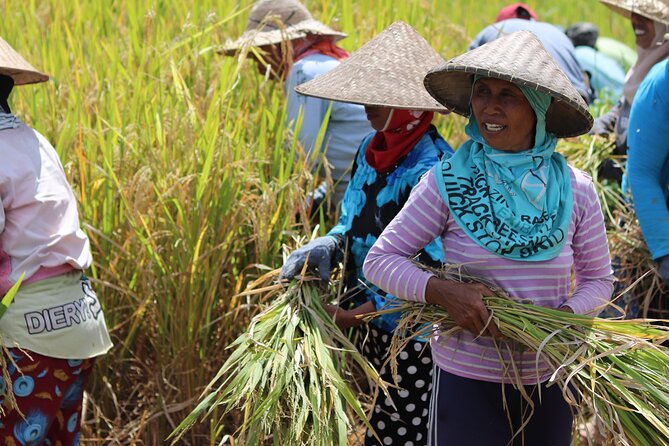
- A family welcomes you into daily routines in and around their home and fields
- Rice cultivation walk focused on how rice is grown and tended
- Coconut oil production you can see and help with, for cooking and massages
- Offerings-making workshop with guidance on materials and meaning
- Wood-fire lunch plus coffee or tea included (no hunting for food)
- Small group with a French/English speaking guide to keep questions flowing
Why This Balinese Family Day Feels Like Real Life, Not a Performance
If you’re tired of “look, photo, move on” sightseeing, this is the opposite. The day is built around a Balinese family’s normal pace: walking between fields and plantations, working with plants, and preparing food in a household setting. You’re not just watching from the sidelines—you’re guided through what each step is for and why it matters.
The other big difference is the variety packed into six hours without turning chaotic. You get nature (rice fields), craft (coconut oil and offerings), and food (wood-fire lunch and coffee). That mix is what makes it feel like a full day of understanding, not a half-hour highlight.
The small group size helps too. With a maximum of 5 travelers, you’re more likely to get direct answers and actually ask follow-up questions—especially if you choose the French or English speaking guide option.
You can also read our reviews of more tours and experiences in Ubud.



From Coco Supermarket to the Village: How the Morning Flows
The experience starts at 8:30 am and meets at Coco Supermarket, Jalan Raya Pengosekan, Ubud. The tour notes that pickup is offered, so you can avoid the stress of getting yourselves to the meeting point—useful if you’re juggling scooters, drivers, or heat.
You’ll travel by air-conditioned vehicle, and the day loops back to the same meeting point at the end. That matters more than it sounds. A lot of Ubud excursions start feeling like logistics marathons. Here, the transportation plan is straightforward: you start together, you do the village day, then you return together.
Also, you’ll get a mobile ticket, so you’re not dealing with printouts. Confirmation is received at booking, which helps if you’re building your Bali schedule tightly.
Rice Fields Walk: Seeing Rice Cultivation as a Daily System
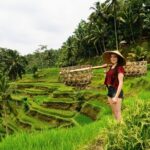
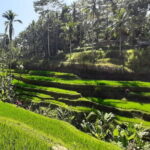
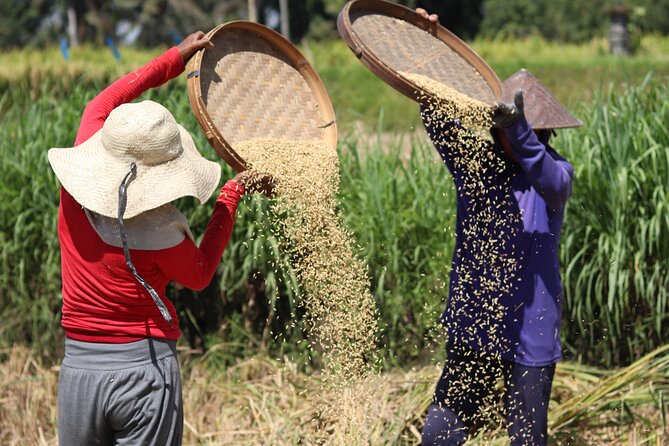
The morning begins with a walk in the rice fields to understand daily village life and how rice is cultivated. The focus isn’t on big scenery only—it’s on methods. That’s a smart approach because rice isn’t one neat process. Different steps and different practices shape what grows well and when.
As you move through the fields, you’ll notice how the work connects to time. Rice cultivation is repetitive, but it’s also attentive. The family world here is built around caring for plants, tracking growth, and keeping up with the rhythms of the land.
This part is also where you get the “feel” of the place. A village day isn’t just what you do with your hands later—it’s how you see the everyday environment first. If you’re curious about agriculture and how people live beyond the resort bubble, this is usually the section that sticks in your memory.
Practical tip: wear shoes suitable for walking outside. The day includes walking through working countryside, so comfortable grip helps.
Coconut Oil Making: A Food and Body-Care Skill in One
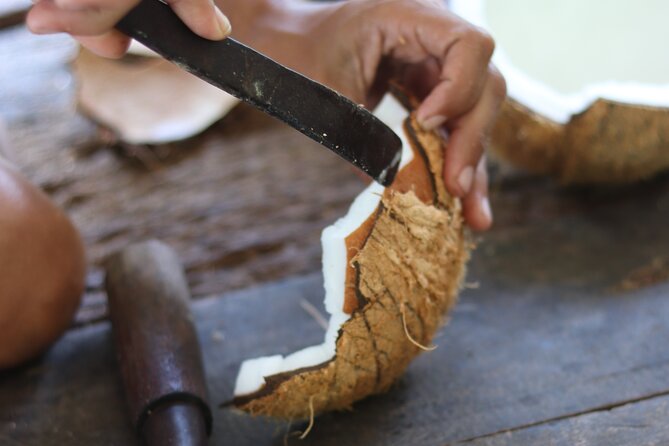
Next comes artisanal coconut oil production. This is the kind of craft that sounds simple until you see the steps and understand the time behind it. Coconut oil in Bali isn’t just a kitchen ingredient. It can also be used for massages, so it sits in that overlap between practical cooking and everyday self-care.
What I like about this segment is that it connects to how households actually use products. You’re not learning a “tourist demonstration.” You’re learning a small-batch process that serves multiple needs—flavor and function.
Because the tour is family-led, you’ll likely get an explanation of what they use the oil for and how it fits into routines. That context is what makes a craft feel meaningful rather than just hands busy for an hour.
If you enjoy food origins—how ingredients transform—you’ll appreciate that coconut oil is treated like a local specialty, not an imported product with a fancy label.
Offerings Workshop: Leaves, Plant Fibers, and Meaning
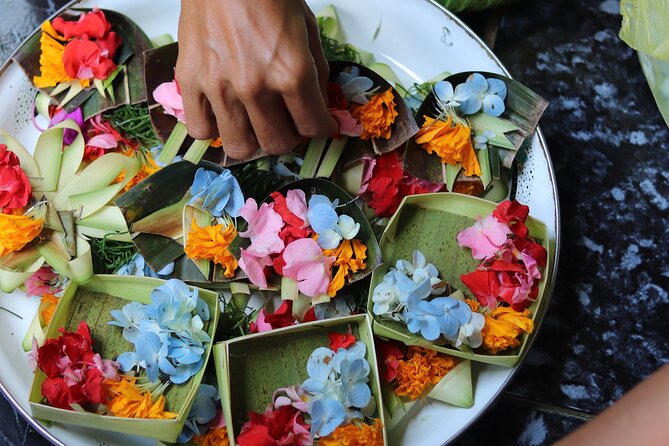
One of the most memorable parts of the day is learning how to make Balinese offerings. You’ll be guided to intertwine leaves and plant fibers to create different forms, and you’ll also discover the meanings behind what you’re making.
This is where the day becomes more than agriculture and food. Offerings are part of daily spirituality and community life. Even if you don’t follow every belief system, you can still understand the logic: caring, giving, and maintaining relationships with the spiritual side of life.
I like that the tour doesn’t treat offerings like a costume craft. The materials matter—leaves and fibers aren’t decorative on their own; they’re chosen for what they represent and how they’re made. And the fact that you learn the meaning helps you avoid the common mistake of viewing religious items as just souvenirs.
What to expect: some steps may be fiddly. That’s normal. The point is participation and understanding, not perfection.



Wood-Fire Lunch and Homemade Coffee: Eating Like the Household
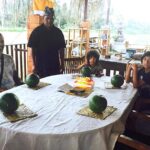
Lunch is included, and it’s described as local lunch at the inhabitant’s house, with the meal prepared over a wood fire. That’s a big deal for value. A wood-fire home-cooked meal beats the typical “quick stop” approach you see on many tours, where lunch is an afterthought.
You’ll also have coffee and/or tea. The experience notes homemade coffee, which is often where you realize how local ingredients and techniques can change the taste, even without fancy branding.
What makes this lunch section worth slowing down for is setting. You’re not eating on a bus or in a mall café between attractions. You’re eating in the same place where the afternoon crafts are rooted—surrounded by the environment and routines you observed earlier.
Dietary info isn’t specified in the tour details you provided. If you have allergies or strong dietary limits, plan ahead and ask before booking so the hosts can confirm what works.
The Guide and Family Hosts: Why Language Matters
The experience includes a French or English speaking guide, and that language support is one of the key reasons this tour works well for most people. If you can understand the explanations while you’re learning coconut oil or offerings, the day becomes a story you follow instead of a series of disconnected tasks.
Past experiences with this provider have highlighted hosts named Gaia and Ganyar, and a driver named Sywa described as attentive and punctual. You might not get the same people each time, but it gives you a sense of the personalities this operator tends to work with: friendly, humorous, and willing to answer questions.
Even if your Bali vocabulary is limited, you can still get a lot from structured guidance. The crafts and the meal create natural moments for questions: What is this plant? How is this used? Why does this form matter?
Group cap at 5 travelers keeps the conversation from getting drowned out.
Transportation, Timing, and Pace: What Six Hours Actually Feels Like
The day runs about 6 hours. That timing is long enough to go beyond the surface, but not so long that you lose the energy to enjoy it. Still, it’s not a short walk-and-go.
You’ll start around 8:30 am, then move from rice fields to coconut oil production, then to lunch, and finally to offerings-making. The exact order is built for flow: see the land, learn a household process, eat, then connect craft to meaning.
The air-conditioned vehicle helps you reset between outdoor sections. But the core of the day is still active: walking and participating. If you prefer minimal movement, consider whether this format matches your energy level.
Also remember: admission ticket is listed as free and a donation is included. That combination suggests you’re not paying extra at every step, which makes budgeting simpler.
Price and Value: Why $72.08 Can Make Sense
At $72.08 per person, this isn’t a dirt-cheap half-hour snack tour. But the price lines up with what you’re actually getting.
Included:
- Lunch plus coffee and/or tea
- Air-conditioned vehicle
- Guide (French or English)
- All fees and taxes
- Donation
- Admission ticket free
- Pickup offered
Not included:
- Tip
So your money supports more than a guide. You’re paying for transport, food, guided learning, and a donation built into the experience. The result is that your day is more predictable. You won’t be scrambling for lunch options or spending extra to cover the “cost of doing the activity.”
One more point: it’s often booked in advance (about 36 days on average). That’s usually a sign it’s popular with people who want something more meaningful than the standard Ubud circuit—especially for couples, solo travelers, and families looking for a cultural day.
Who This Tour Suits Best (and Who Might Not Love It)
This works well for:
- People who want a hands-on culture day with crafts and food
- Visitors who enjoy agriculture and daily village life
- Families with kids who can handle guided interaction (the experience has been recommended specifically for children in past outings)
- Anyone who values a small group and Q&A time
You might skip it if:
- You want a highly structured “museum-style” experience with lots of seats and minimal participation
- You’re looking for a long, luxury-style comfort day
- Your schedule is so tight that a 6-hour block feels painful
What to Bring (So Your Day Stays Easy)
The tour details don’t list a strict kit, but the activities tell you what to prepare for: walking in rice fields and participating in plant-based crafts.
Bring:
- Comfortable walking shoes
- Lightweight, breathable clothing for outdoor time
- A small amount of cash for your tip (since tips aren’t included)
If you use a service animal, you’ll be happy to know the experience allows service animals.
Should You Book This Bali Family Day?
Yes, if you want a Ubud-area day that focuses on daily life—rice cultivation, coconut oil making, offerings, and a wood-fire lunch—led by a family and explained by a French/English speaking guide. The small group size and the included meal make it feel like actual value, not just a paid stop.
If you’re booking because you want a relaxed, mostly-transport-and-view day, rethink it. This is a participation day. You’ll be walking, learning, and getting your hands involved with offerings and household crafts.
My rule of thumb: book it when you’re ready to slow down for a real household rhythm. Skip it if your perfect Bali day is mostly scenic drives and zero hands-on work.
FAQ
How long is the village experience near Ubud?
It’s approximately 6 hours.
What time does the tour start?
Start time is 8:30 am.
Where is the meeting point?
The meeting point is Coco Supermarket, Jalan Raya Pengosekan, Ubud, Bali 80571, Indonesia.
Is pickup available?
Yes, pickup is offered.
What’s included in the price?
Lunch, coffee and/or tea, air-conditioned vehicle, all fees and taxes, donation, and a French or English speaking guide.
Is admission included?
Admission ticket is listed as free.
Is tipping included?
No. Tip is not included.
How big is the group?
The maximum group size is 5 travelers.
What language is the guide?
The guide is French or English speaking.
What’s the cancellation policy?
Free cancellation is available. You can cancel up to 24 hours in advance for a full refund (local time). If you cancel less than 24 hours before, it won’t be refunded.