REVIEW · UBUD
Bali Fruit Carving Class
Book on Viator →Operated by Wandernesia · Bookable on Viator
Fruit becomes art in Bali. This fruit carving class in Lodtunduh turns fresh produce into flowers, animals, and even names, with patient coaching. I especially like the hands-on practice and the calm pace. The setting also includes rice-field views, which make the whole morning feel easy and creative.
One thing to plan for: fruit carving takes steady hands. Even though the class welcomes ages 4–65, you’ll get the best results if you’re willing to slow down and focus on precision.
In This Review
- Key Highlights Worth Knowing
- Fruit Carving in Ubud: Why This Feels Like a Real Skill
- Lodtunduh Meeting Point: Getting Oriented in WS Art Studio
- Your First Fruit Cuts: What the Teacher Leads You Through
- Making Flowers, Animals, and Names (Yes, Names): The 2-Hour Flow
- Snacks, Tea, and Rice-Field Views: The Part People Remember
- Price and Value: Why $39 Works Here
- Who Should Book This Fruit Carving Class in Ubud
- Practical Tips for Your Morning at 10:00 am
- Should You Book Bali Fruit Carving in Lodtunduh?
- FAQ
- FAQ
- How long is the Bali fruit carving class?
- What time does the class start?
- Where is the meeting point?
- What is the group size?
- What’s included in the price?
- Is transportation included?
- Is the class suitable for children?
- Is this experience refundable?
Key Highlights Worth Knowing
- Small group of up to 10: you get more attention while you learn cutting techniques
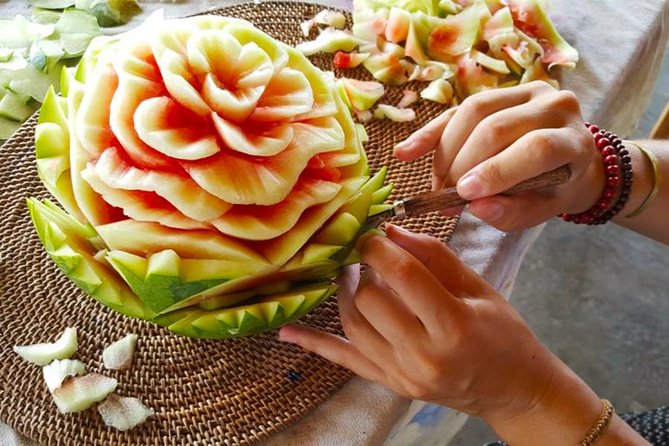
- Hands-on fruit art: make flower, animal, and name designs on fruits like watermelon and papaya
- Tools and materials included: you don’t need to bring anything to start
- Views that calm the mind: rice-field scenery adds a relaxing backdrop to the class
- Snack and welcome drink: a break is built into the experience, not bolted on later
- Certificate at the end: you leave with something tangible besides photos
Fruit Carving in Ubud: Why This Feels Like a Real Skill
Bali does plenty of things well. But fruit carving hits a sweet spot: it’s creative, it’s edible, and it teaches a technique you can repeat later. In this class, you’re not just watching someone cut. You’re learning the steps, practicing your own cuts, and building designs on fruit like watermelon and papaya.
I like experiences where the effort you put in shows up right away. Here, your “canvas” is already colorful, juicy, and forgiving compared with harder materials. You’ll learn how to turn simple shapes into recognizable details, like petals on a flower or lines that make an insect look alive. If you’re the type who enjoys making things with your hands, this is a very satisfying way to spend a morning.
There’s also a practical side. The class format is short—about 2 hours—so you’re not sacrificing your whole day. And because the group is limited to 10 travelers, the teacher can guide you step-by-step without turning it into a factory line. For $39, you’re paying for instruction plus all the fruit carving setup (equipment, materials), with refreshments and a certificate included. That’s good value compared to DIY when you’d still need tools and guidance.
You can also read our reviews of more tours and experiences in Ubud


Lodtunduh Meeting Point: Getting Oriented in WS Art Studio
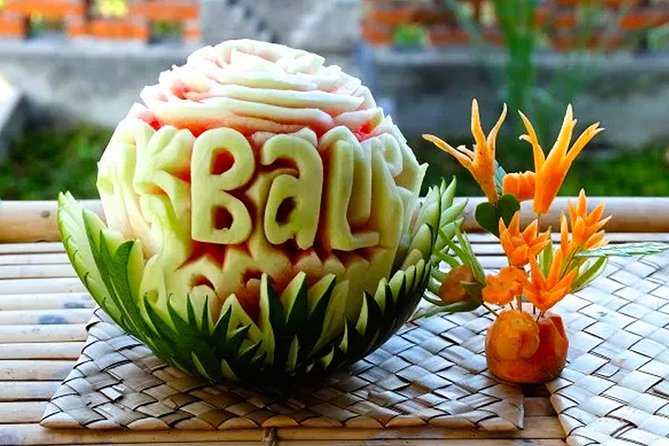
The class meets at WS Art Studio Balinese Handicrafts in Lodtunduh, Ubud (address: C7X4+JFP, Lodtunduh, Ubud, Gianyar Regency, Bali 80571). The good news is it’s described as an easy-to-locate studio, so you’re not doing a scavenger hunt before you even start carving.
Start time is 10:00 am, so plan to arrive a little early. You’ll need time for check-in and for that first sip and snack before the carving begins. The experience also uses a mobile ticket, which is convenient if you’re already juggling photos, reservations, and maps on your phone.
One more practical note: transport service isn’t included. The tour says you’re near public transportation, which helps if you’re already using local options, rideshares, or taxis. If you’re staying far from Ubud/Lodtunduh, just assume you’ll handle getting yourself to the studio on your own.
When you arrive, the atmosphere matters. The class benefits from calm surroundings, including views of the rice fields. That kind of scenery doesn’t teach you the carving, but it changes your mood. You’re more likely to slow down, take your time, and enjoy the process instead of rushing through it.
Your First Fruit Cuts: What the Teacher Leads You Through
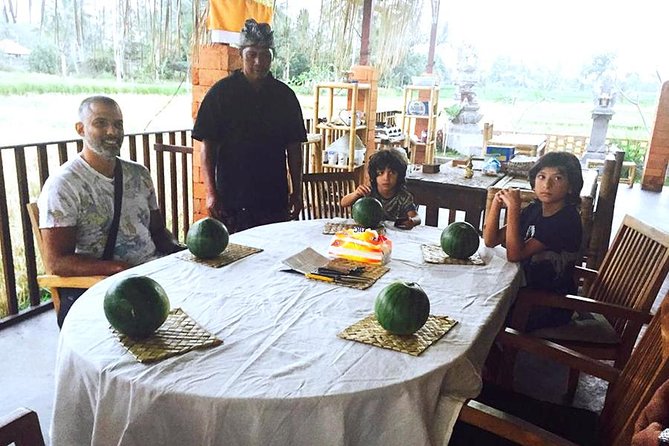
Fruit carving sounds fancy, but it’s built on basics: controlling your knife, making clean cuts, and understanding how fruit changes as you work. The teacher guides the class through the technique, and then you practice as you go.
Here’s what you can expect your instruction to focus on:
- Getting comfortable with the carving tools and safe, steady hand positions
- Learning how to shape a starting section of the fruit into a base for a design
- Turning that base into recognizable forms, like flowers and animals
- Using smaller, more detailed cuts to add lines and textures
You’ll work with fruits like watermelon and papaya, plus other options mentioned for the class such as carrots and melons. That variety matters. Watermelon is juicy and wide; papaya is softer; carrots give you a different feel and structure. Switching fruit helps you learn how the technique adapts, not just memorizing one trick.
The whole point is patience. You’re carving, not sculpting with power tools. If you go in expecting instant results, you may feel frustrated. But if you treat it like a skill-building workshop—slow, careful, and guided—you’ll likely find yourself improving quickly within the session.
Making Flowers, Animals, and Names (Yes, Names): The 2-Hour Flow
The class is about 2 hours total. It’s structured enough to keep things moving, but relaxed enough to let you actually practice. The biggest “aha” moment in a fruit carving class is realizing that detailed designs come from small repeated steps, not one magic cut.
During the session, you’ll have the chance to create:
- A flower design
- Animal-inspired shapes (think insects and small creatures rather than complex realism)
- Personal designs, including your name on fruit like watermelons
That name option is more fun than it sounds. It forces you to slow down and think about spacing and symmetry, which is where carving technique really shows. It’s also a great way to end up with a souvenir that feels personal, not generic.
You’re not doing this alone. You’ll be coached as you practice, and the small group size helps a lot. If you’re stuck, you can get a nudge without waiting for a long queue. That matters in a skill class, because the gap between messing up and correcting it is usually just a technique cue.
Also, the fruits aren’t just for show. This is a “food as art” class, so you’ll get to enjoy the snack break during the session. One review highlights that the morning tea was delicious, which matches the “welcome drink” included in the package. In other words: you’re not sitting there hungry while your hands learn.
Snacks, Tea, and Rice-Field Views: The Part People Remember
Most carving classes are judged by what you create. This one earns extra points for the experience around it. The package includes a welcome drink and a traditional snack, plus all the carving equipment and materials. Add the calming setting, and you get a full two hours that feels thoughtful rather than rushed.
The rice-field views are a real perk. Fruit carving requires focus, and scenery like that helps you stay patient. You’re less likely to feel trapped indoors, and the whole session feels more like a local workshop than a timed activity.
Then there’s the little finishing touch: a certificate. It’s not life-changing, but it does make the class feel complete. You can also use it as proof you tried the thing you didn’t think you could do.
If you’re the type who likes your Bali activities to be hands-on, calm, and not overly performative, this fits. You get a skill, you get something to show for it, and you get fed.






Price and Value: Why $39 Works Here
At $39 per person, the key question is what you’re actually buying: instruction, tools, ingredients, and time. Here, you get:
- Equipment and materials included
- A welcome drink and traditional snack
- A certificate
- A small group capped at 10 travelers
In many parts of Bali, you can find cheaper “show-and-tell” style activities. This isn’t that. You’re paying for the learning component, plus the setup. If you tried to replicate this later, you’d likely spend money on tools and still miss the teacher’s technique cues.
The class also runs about 2 hours, which is a smart length. It’s long enough to learn something real, but short enough to still keep your day flexible. Start at 10:00 am, finish back at the meeting point, and you still have the afternoon for other plans.
One small consideration: if you want guaranteed transportation, you’ll need to arrange it yourself because transport service isn’t included. That cost can change the real “all-in” price depending on where you’re staying.
Who Should Book This Fruit Carving Class in Ubud
This class is built for a wide range of ages: 4–65. It’s also listed as most travelers can participate. That tells you the format isn’t overly technical or restricted.
You’ll probably love it if you:
- Want a hands-on Bali activity that isn’t just watching
- Like making something you can eat, share, or keep as a memory
- Enjoy learning small skills that transfer to other foods and crafts
- Want a small group setting with more teacher attention
It may not be the best choice if you:
- Hate taking your time or dislike careful, precise work
- Want a fast “I’m done in 20 minutes” activity
- Are expecting a highly complex carving style with advanced tools (this is more about learning core technique and making neat designs within the session)
The class is also ideal for families when adults can help guide the kids through patience and steady hand control. If you’re traveling as a couple or solo, it’s still a friendly pace, and the small group keeps it social without feeling crowded.
Practical Tips for Your Morning at 10:00 am
You start at 10:00 am at the studio in Lodtunduh. Because transport service isn’t included, I’d plan your route the day before if you’re not already in the area. Being near public transportation helps, but you don’t want to arrive late and stress yourself before you pick up a carving knife.
A few practical thoughts:
- Arrive a bit early so you can settle in before the session starts
- Wear something comfortable you don’t mind getting a tiny bit close to food (even though the class provides materials)
- Bring your phone for photos, but focus first on the cuts—you’ll want clean steps more than perfect shots
- Expect to spend the full time learning and practicing, not just viewing demonstrations
The class ends back at the meeting point. So after you finish, you can head straight back to Ubud for lunch, go for a walk, or line up another activity without guessing where you’ll be dropped off.
Should You Book Bali Fruit Carving in Lodtunduh?
Book it if you want a real skill, not just a quick activity. The small group size, materials and equipment provided, and the calm rice-field setting make it feel worth the $39 price tag. You’ll also leave with a certificate and at least one fruit creation that feels personal—especially if you try the name carving option.
Skip it only if precision and patience sound like your worst nightmare. Fruit carving rewards slow focus. If you’re willing to take your time and learn, this is one of those Bali experiences that makes you think, I can actually do that.
FAQ
FAQ
How long is the Bali fruit carving class?
The class runs for about 2 hours.
What time does the class start?
The start time is 10:00 am.
Where is the meeting point?
You meet at WS Art Studio Balinese Handicrafts (C7X4+JFP), Lodtunduh, Ubud, Gianyar Regency, Bali 80571, Indonesia.
What is the group size?
The class has a maximum of 10 travelers.
What’s included in the price?
The package includes a certificate, a welcome drink, a traditional snack, equipment, and materials.
Is transportation included?
No. Transport service is not included.
Is the class suitable for children?
Yes. The class is listed for ages 4–65.
Is this experience refundable?
No. It is non-refundable and cannot be changed for any reason.