REVIEW · UBUD
East Bali and Lempuyang Temple Tour
Book on Viator →Operated by Padi Bali Driver · Bookable on Viator
Four stops, one big view. This East Bali day tour is built around three very different sights, starting with the famous Lempuyang Temple area and its high-mountain scenery, then moving on to the former royal water palace at Tirta Gangga, and finishing with community life in Tenganan. It’s the kind of route that saves you from logistics stress while still giving you real visual variety.
I love the way the day flows with a private setup and a guide/driver like Nyoman (including Nyoman Warnita), who’s known for keeping timing on track and speaking good English. I also like the practical mix of included and free entry: Lempuyang’s ticket is included, while Tirta Gangga and Tenganan admissions are listed as free, so you get more value than you’d expect for a one-day loop. One thing to keep in mind: the Lempuyang stop is short (about 3 minutes), and the whole outing depends on good weather, so you’ll want to stay flexible.
In This Review
- Key points to know before you go
- Why East Bali looks and feels different
- Price and what $73 really buys
- The morning start: 8:00 am and how the pacing works
- Lempuyang Temple: your Gates of Heaven photo window
- Tirta Gangga: stepping stones in a former royal water palace
- Tenganan Traditional Village: one of Bali’s oldest community layouts
- The driver-guide factor: Nyoman’s timing and careful style
- What the order of stops means for your day
- Weather matters more than you think
- Who this tour suits best
- Should you book this East Bali and Lempuyang Temple Tour?
- FAQ
- What time does the East Bali and Lempuyang Temple tour start?
- Is pickup included?
- Is this tour private?
- How long is the tour?
- Which attractions have admission included or free?
- What happens if the weather is bad?
- Can I cancel for free?
Key points to know before you go
- Lempuyang’s famous viewpoint comes first, with a tight photo window so you can still move on to the next two stops
- Nyoman is a big part of the experience, praised for timing, clear English, and careful driving
- Two attractions have free admission (Tirta Gangga and Tenganan), which makes the $73 price feel more reasonable
- A private group setup means you’re not stuck waiting on a long line of random tour partners
- The day is paced for a full loop (about 8 hours, starting at 8:00 am) rather than lingering at one place
Why East Bali looks and feels different
East Bali has a different rhythm than the Ubud area. Instead of only temples clustered close together, you get a bigger sense of distance and change in scenery as the day moves from mountain air down toward water and then into a long-established village community.
This tour’s structure helps you experience that “shift” in a single day. You start at a high view-point temple, then you go to water palace stepping-stones, and finally you slow down for village life at Tenganan. If you’re the type who gets bored doing the same kind of stop over and over, this route keeps you visually awake.
Also, because it’s private, your time doesn’t turn into a group-whack-a-mole. You’re still sharing roads and public spaces, but the pacing is controlled by your driver/guide.
You can also read our reviews of more tours and experiences in Ubud.



Price and what $73 really buys
At $73 per person, this isn’t a throwaway, quick-hit add-on. It’s positioned like a full-day experience: about 8 hours, an 8:00 am start, pickup offered, and a driver/guide handling the day’s movement between three key East Bali stops.
What makes the price feel more fair is the split between included and free entry:
- Lempuyang Temple admission is included
- Tirta Gangga admission is free
- Tenganan admission is free
Even if you’re not chasing value spreadsheets, that matters. You don’t want to do a beautiful “big name” temple and then get surprised by paying for extra admissions you didn’t plan on. Here, the cost structure lines up well with the main highlights.
One more practical point: it’s often booked around 48 days in advance on average. That doesn’t mean it’s impossible to find later, but it’s a hint that people do plan this route ahead—especially if they want good timing and reliable weather windows.
The morning start: 8:00 am and how the pacing works
You begin at 8:00 am, and the total time is listed at about 8 hours. That schedule matters because Lempuyang is a “timing-sensitive” kind of stop. Shorter temple visits work best when you arrive ready: camera charged, water bottle handled, and shoes sorted.
The overall pace is clearly designed for three different atmospheres without stretching the day into an all-nighter. You’ll likely feel the day is active, not laid-back. If you want hours and hours at a single location, you may wish you had more time. If you want variety in one pass, the pacing makes sense.
And because pickup is offered and it’s described as near public transportation, you’re usually not stuck hunting for a remote meeting point—at least compared with tours that feel hard to reach.
Lempuyang Temple: your Gates of Heaven photo window
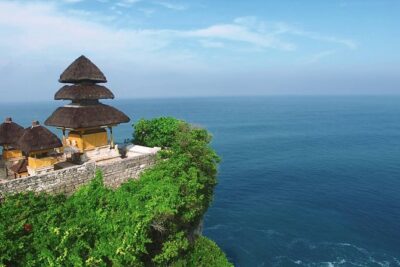
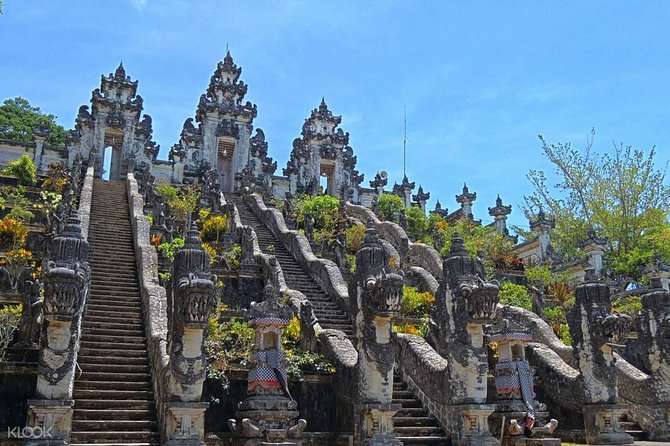
Lempuyang Temple is known for the view often nicknamed Gates of Heaven, and it sits at about 1,775 meters above sea level. That elevation is part of the magic: you get mountain-scale scenery and that dramatic temple framing people come for.
The tour’s first stop is scheduled for a quick 3 minutes, with the admission ticket included. Three minutes sounds ultra-short, but it’s the kind of short that can work if you know what you’re doing:
- You go straight for the framing spot
- You take photos in the best angle you can manage
- Then you move on without turning the whole day into a waiting game
One thing I’d treat as non-negotiable: don’t rush your mindset even if the time is short. The temple is also a working, cultural space, and you’ll see offerings made there. That means you should stay respectful, keep your pace calm, and aim for good photos without turning it into a loud free-for-all.
A quick consideration: because the time is tight, if you’re hoping for long chats, slow walking, and zero crowd pressure, this segment may feel more like a photo sprint than a contemplative visit. If your priority is getting the iconic viewpoint while still seeing the rest of East Bali, this is exactly the right structure.
Tirta Gangga: stepping stones in a former royal water palace
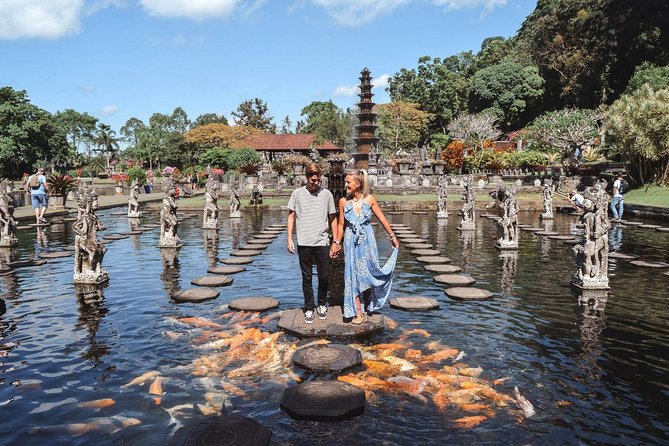
Next up is Tirta Gangga, a former royal palace in eastern Bali. This is the “cool down and look longer” stop compared with Lempuyang. The visit is about 1 hour, with admission free.
This place is famous for the water setting and the stepping stones that lead around a centerpiece area. Even if you don’t plan to spend your whole time walking around, the layout is the point. It’s built for photos, but it’s also a visual experience: symmetry, water reflections, and stone paths that create strong lines for your pictures.
Practical advice: plan for a little extra time just to appreciate how the light hits the water and stones. A short stop can turn into a fast blur if you only think “I need the photo.” I’d recommend treating this as a moment to slow your eyes down—look at the paths, the edges, the center, then take your photos.
Also, since the itinerary keeps moving, you shouldn’t expect this to feel like a museum with deep explanations. You’ll get enough guidance to orient yourself, but the value here is the visual setting and the change of pace.


Tenganan Traditional Village: one of Bali’s oldest community layouts
The day ends at Tenganan, described as a traditional village in the east part of Bali and one of the oldest ancient villages in the region. You get about 2 hours here, and admission is free.
This stop gives you something the other two don’t: a sense of how people live and organize daily life. Instead of focusing only on a monument or water architecture, you’re watching a community structure that’s meant to be lived in and maintained.
Two hours is a good timeframe for this kind of visit. It’s long enough to walk and observe without feeling rushed out the door. It’s also long enough that you can pause, look closely at what’s happening around you, and decide where you want to spend attention—rather than doing the fast “see it, leave it” checklist.
The main consideration is simple: village visits ask for patience. You may need to be okay with watching more than shooting, and with keeping your questions respectful. If you like cultural observation that feels grounded instead of staged, this is the part of the tour that usually satisfies people the most.
The driver-guide factor: Nyoman’s timing and careful style
A big part of this experience isn’t just the sights. It’s the person moving you between them.
The name that comes up with strong praise is Nyoman, including Nyoman Warnita. People specifically mention that he:
- knows timings to go places
- keeps the day on schedule and drops you at the right times
- speaks good English
- drives conservatively (a helpful detail when you’re trying to stay calm and comfortable on curvy routes)
Even without extra drama, timing can make or break a day like this. If you show up late, your photo window at Lempuyang can get harder, and your water palace time can feel squeezed. A guide who understands pacing turns your itinerary from a list into a smooth experience.
If English support matters to you—especially for understanding what you’re seeing and what to do next—this is a tour that looks like it delivers that through the guide’s communication.
What the order of stops means for your day
This tour is not random. The order helps you manage energy and expectations.
- Lempuyang first works because it’s the most iconic, elevation-heavy, and timing-dependent stop.
- Tirta Gangga second shifts you into a calmer, scenic water setting for about an hour.
- Tenganan last gives you the cultural finish, with enough time (about 2 hours) to slow down.
By ending with a village, you leave with a human-scale impression, not just more architecture. If you like trips that give you a balance of wow views plus real-world context, this sequence is a practical win.
Weather matters more than you think
This experience requires good weather. That’s not just a bland warning. At least one stop is a high-altitude viewpoint, and the beauty of the day depends on visibility. If weather is poor, you’ll be offered a different date or a full refund.
My advice: treat the weather line as part of your planning. If you’re coming during a season where storms are common, build in flexibility. If you’re only in Bali for a single tight window, you’ll want to be honest with yourself about risk tolerance.
Who this tour suits best
This is a good fit if you:
- want three different East Bali experiences in one day
- care about the Gates of Heaven photo but also want more than just one temple
- appreciate clear English guidance and smooth timing
- prefer private tour pacing instead of getting lost in a large group schedule
It might be less ideal if you:
- hate tight photo windows (Lempuyang is about 3 minutes)
- want long, slow exploration at a single attraction
- are hoping for a purely flexible, wander-at-will day with no fixed order
Should you book this East Bali and Lempuyang Temple Tour?
If your goal is a high-impact day that hits the big East Bali highlights efficiently, I’d say it’s worth booking. The included Lempuyang admission, the free entries at Tirta Gangga and Tenganan, and the private feel add up to a day that doesn’t just look good on paper—it runs in a way that respects your time.
Book it if you want iconic views plus a cultural close at Tenganan, and if you’re comfortable with a quick, focused photo moment at Lempuyang. Skip it only if you need lots of time to linger at each stop or you’re traveling with a very strict schedule that can’t handle weather-based changes.
FAQ
What time does the East Bali and Lempuyang Temple tour start?
The tour starts at 8:00 am.
Is pickup included?
Yes, pickup is offered.
Is this tour private?
Yes. It’s listed as a private tour/activity, meaning only your group participates.
How long is the tour?
The duration is about 8 hours.
Which attractions have admission included or free?
Lempuyang Temple includes the admission ticket. Tirta Gangga and Tenganan are listed as admission free.
What happens if the weather is bad?
The experience requires good weather. If it’s canceled due to poor weather, you’ll be offered a different date or a full refund.
Can I cancel for free?
Yes. You can cancel up to 24 hours in advance for a full refund. If you cancel less than 24 hours before the start time, the amount paid isn’t refunded.