REVIEW · UBUD
Traditional Balinese Meal in Ubud in Dewa’s Family Village Home
Book on Viator →Operated by Traveling Spoon · Bookable on Viator
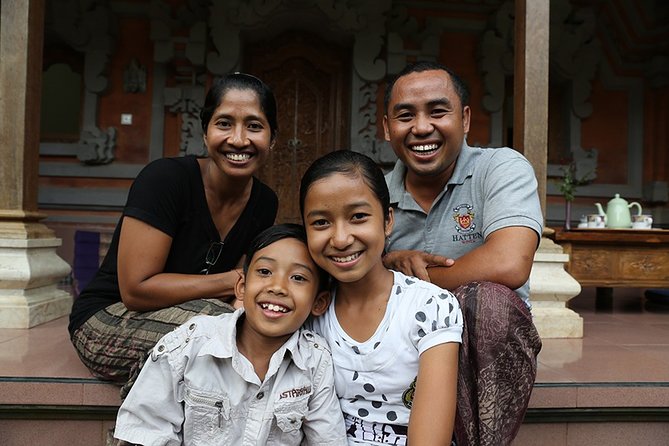
Balinese food tastes different when it comes from a home. This private Ubud dinner with Dewa and Jero takes you into a real family compound in the terraced hills north of Ubud, where the cooking is plain old daily life, not a staged show. You’ll start with pick-up, visit the spice and fruit area, tour the compound, then eat a traditional feast that can include pepes ikan and bumbu kuning.
Two things I really like about it are the farm-to-table focus and the inside look at how a Balinese walled family home works. The meal can lean on homegrown ingredients and you’ll hear the hows and whys behind the flavors, not just the names of dishes.
One possible drawback: the hosts won’t sit and share the meal at the dining table with you. Their family spirituality includes eating in a more personal, reflective way, so if you’re hoping for constant conversation while you eat, this may feel a bit quieter than you expect.
In This Review
- Key takeaways before you go
- A Balinese home meal in Ubud that feels like real life
- How the evening flows: pickup, the spice walk, and the compound tour
- The family compound: where the culture becomes visible
- Spices, fruit, and plants you can name (and later buy)
- What you’ll likely eat: Balinese dishes with real character
- The dining setup: you eat your meal, they focus on spirituality
- Cooking knowledge without a typical cooking class feel
- Price and value: is $56 per person worth it?
- Practical advice: how to get the most from the evening
- Who should book this and who might skip it
- Should you book Dewa and Jero’s traditional home dinner?
- FAQ
- Is pickup included?
- How long does the experience last?
- What do I need to bring or do for tickets?
- Is this a private experience?
- Can I request a vegetarian meal?
- Are beverages included?
- What is the cancellation window?
Key takeaways before you go
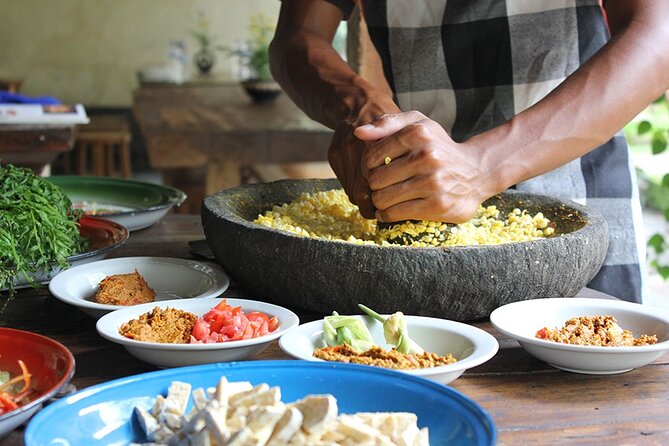
- Home-style dishes: Expect flavors like pepes ikan, bumbu kuning, bregedel, and jukut urab.
- A real family compound tour: Pavilions around a central courtyard means you’ll see how the place is actually used.
- Spices and medicinal plants: You’ll learn what’s grown and why it matters, from galangal to nutmeg.
- Private and flexible: It’s just your group, so you can ask questions without feeling rushed.
- Meditation-style dining: You eat on your own while the focus shifts inward, not toward hosting at the table.
- Clear pickup rules for Ubud: Pickup/drop-off is for Ubud hotels, with a specific meeting point if you’re staying outside.
A Balinese home meal in Ubud that feels like real life
If you’ve eaten in Bali, you know the food can be great. But a restaurant meal is built for repeat customers. This is different. You’re invited into a Balinese family compound, in the foothills north of Ubud, where the day starts with plants, herbs, and family routines.
The biggest value here is context. You don’t just get to taste Balinese food. You learn how ingredients show up from the garden and how spices shape daily cooking. That changes the way you’ll eat after this night, because you’ll start spotting flavors you used to treat as mystery sauces.
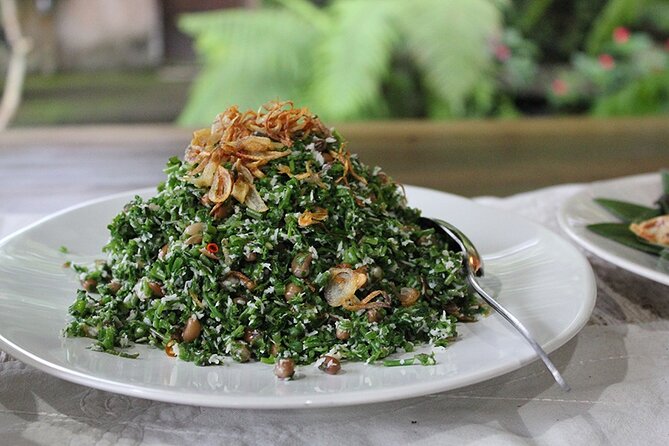
And yes, it’s also a very pleasant dinner. The dishes listed for this experience are classics: delicate pepes ikan (grilled tuna wrapped in banana leaf), bumbu kuning (chicken in turmeric and coconut milk sauce), bregedel (corn fritters), and jukut urab (seasonal vegetables with grated coconut and fried shallots). This is comfort food with a lot of personality.
You can also read our reviews of more tours and experiences in Ubud.



How the evening flows: pickup, the spice walk, and the compound tour
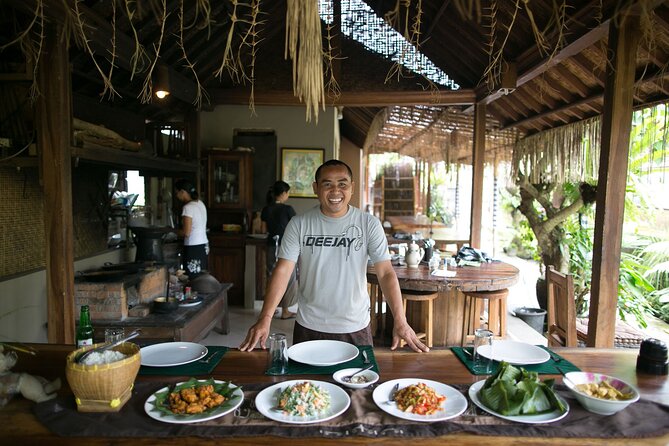
The experience starts with pick-up from your Ubud hotel (only if your hotel is in their pickup list). From there, you head to your host’s area in Keliki, near Ubud. Even though the drive is short enough to keep it relaxed, the change in surroundings is the point: terraces, greenery, and the kind of village setting where you notice the pace of daily life.
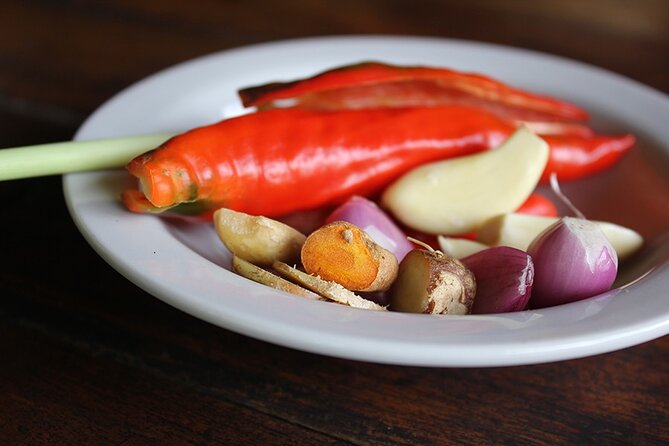
Near the home, you’ll spend time with exotic Balinese fruits, herbs, and spices. The focus isn’t only on taste. You also learn about medicinal properties—things like galangal, cloves, cacao, and nutmeg. If you like cooking, this is where the meal starts to make sense. Those ingredients aren’t random. They’re used because they behave in specific ways.
Then you take a walk into the family compound. The layout is the familiar Balinese pattern: several open pavilions around a central courtyard. It helps you understand why families build this way. The space isn’t just for looks; it’s for living, gathering, and observing daily rituals.
The family compound: where the culture becomes visible
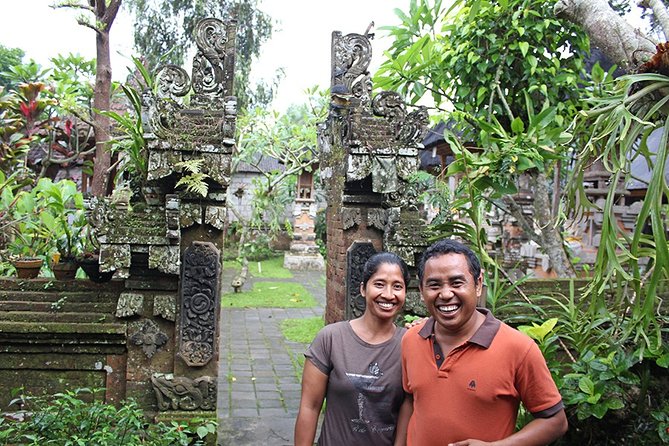
A lot of Bali experiences show you temples from the outside. This one shows you a living compound from the inside. That matters because Balinese life is built around relationships—to land, family, and spirituality.
When you tour the walled family area, you’re not just seeing buildings. You’re seeing how people organize their day. Open pavilions mean airflow and shade. A central courtyard gives the space a natural gathering point. And family spaces like temples are part of the rhythm, not a separate attraction.
The tour also sets you up for better eating. When you know what a spice garden represents, you’re less likely to treat the food like it came from a factory. You start tasting with attention.
Spices, fruit, and plants you can name (and later buy)
This part is quietly one of the best. You’ll see items you might only recognize from a spice shelf back home. Instead of tasting sauces as a blur, you learn individual players in the flavor lineup.
The list of plants mentioned for this experience includes galangal, cloves, cacao, and nutmeg. You’ll also learn about their medicinal properties. Even if you don’t plan to use that info medically, it helps you respect why Balinese cooks reach for these ingredients.
A practical tip: if you’re the kind of person who likes to recreate recipes, bring a small notebook or notes app. Write down names you can’t pronounce. Later, when you’re shopping for spices, you’ll remember exactly what you saw.
What you’ll likely eat: Balinese dishes with real character
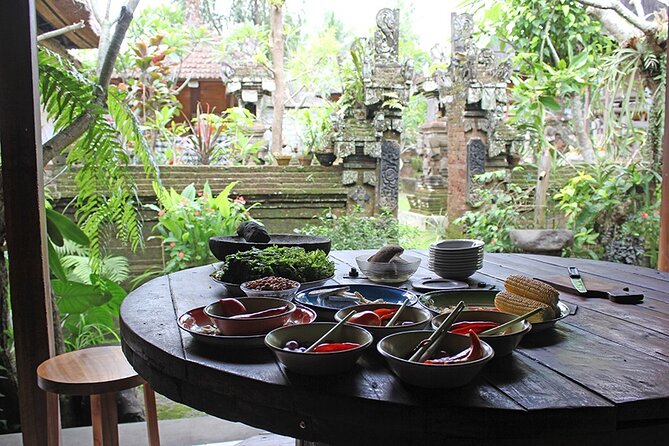
This dinner is a homecooked Balinese feast. The menu can vary, but the featured dishes are classic. Here’s what they suggest about the meal you’ll be served.
Pepes ikan (grilled tuna in banana leaves)
Pepes is all about gentle cooking and fragrance. Banana leaf acts like both wrapper and flavor maker. Expect a tender fish with a soft, herbal aroma.
Bumbu kuning (chicken in turmeric and coconut milk sauce)
This is the kind of sauce that makes you understand why turmeric is so important here. Coconut milk rounds it out; turmeric gives it warmth and color. If you like curry-style food but want something less heavy, this is a strong candidate.
Bregedel (corn fritters)
These are satisfying and comforting. Corn fritters usually bring a sweet-savory feel and a crunchy texture. They’re the kind of dish that makes you reach for another bite even when you’re already full.
Jukut urab (seasonal vegetables with grated coconut and fried shallots)
This dish usually balances soft vegetables with crunchy fried shallots and rich coconut. It’s a reminder that Balinese meals often treat vegetables with the same respect as meat.
And you’ll have beverages with the meal. You’re also served in a way that matches family tradition, so it feels like dinner, not a restaurant performance.



The dining setup: you eat your meal, they focus on spirituality
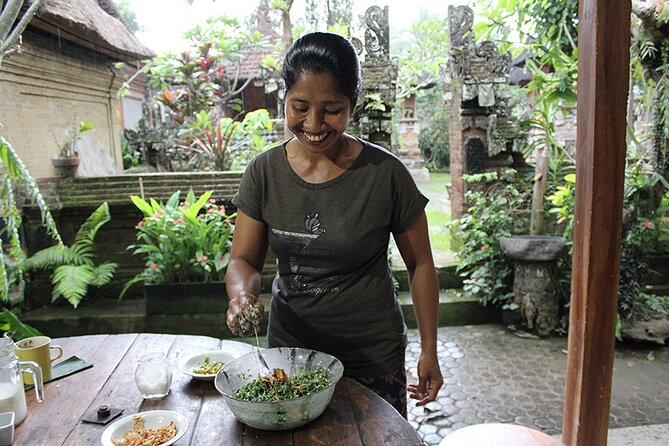
Here’s a key detail you should know before you go: the hosts won’t share the meal with you at the dining table. Their family tradition includes a spirituality component, where people eat on their own and focus on meditation to create a positive state of mind.
That doesn’t mean the evening is awkward. It means the energy shifts. You may have conversation earlier—during the spice walk, compound tour, or cooking explanations—but once the meal starts, you’re not necessarily in a sit-down chat situation.
If you like reflective travel and you’re okay with a quieter dinner pace, you’ll probably enjoy this a lot. If you want a dinner where the host treats it like a guided tasting with back-and-forth conversation the whole time, plan for a different vibe.
Cooking knowledge without a typical cooking class feel
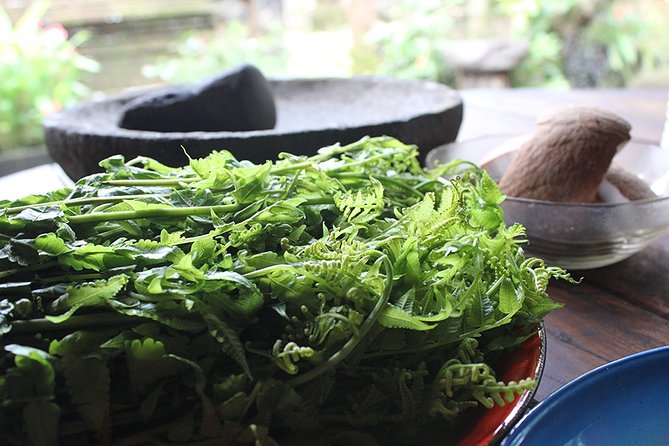
Despite being billed as a meal experience, you’re not just eating and walking away. You get explanations about ingredients and how the family uses what grows nearby. Some experiences in this setup also include an ingredient shopping moment or a more hands-on explanation style from a family member—often a host figure named Putu in real-world bookings.
So even if you don’t walk out with a full recipe lesson like a formal cooking class, you can leave with something more useful: a clearer idea of what makes Balinese flavor work. That’s valuable if you cook at home.
Price and value: is $56 per person worth it?
$56 per person sounds steep until you factor in what’s included. You’re paying for a private in-home dinner experience with host hosting, in-home meal, beverages, and hotel pickup/drop-off for Ubud hotels. Gratuities are included too, which reduces the annoying parts of travel spending.
You’re also paying for access. This isn’t an open event in a public venue. It’s a family compound, guided by the people who live there. That kind of access tends to cost more than a standard class because it’s small, personal, and time-specific.
One more thing: the experience is listed as being booked on average about 18 days in advance. That’s a decent clue that spots can fill, especially for private evenings. If your trip dates are fixed, I’d book sooner rather than later.
Practical advice: how to get the most from the evening
This is a home visit. That means basic respect goes a long way.
- Dress comfortably and modestly since you’ll be moving through a family setting.
- Be ready for a quieter meal during the dining portion due to the family approach to eating and meditation.
- Ask about vegetarian needs early if you’re booking vegetarian. A vegetarian option is available, but you should mention it at booking.
- Bring curiosity, not expectations. This is about learning and tasting in context, not forcing the evening into a typical show-and-tell style.
If you have dietary restrictions beyond vegetarian (allergies, no fish, halal preferences), the safe move is to contact the operator ahead of time. The data here only confirms a vegetarian option, not broader substitutions.
Who should book this and who might skip it
This experience is a great match if you want:
- Authentic Balinese home cooking instead of restaurant-only flavors
- A private evening with real family context
- A food night that includes spices, garden learning, and compound touring
It’s probably less ideal if:
- You need a highly social host at the table throughout the meal
- You’re only interested in a cooking lesson where you do every step yourself
Should you book Dewa and Jero’s traditional home dinner?
I think it’s a strong yes for most people who enjoy food and culture. You get a clear sense of how ingredients are chosen, you eat dishes that represent Balinese cooking well, and you spend time inside a family compound that isn’t built for tourists.
The decision comes down to one expectation: you should be okay with the dining portion being more personal and less host-led. If that sounds fine, you’ll likely leave with both better memories and better taste instincts.
If you’re in Ubud and want one meal to anchor your trip, this is a good one to choose.
FAQ
Is pickup included?
Pickup and drop-off are included for Ubud hotels only. If your hotel is not in Ubud, you’ll meet Dewa at Alam Sari Resort, Jl. Raya Keliki, Keliki.
How long does the experience last?
It lasts about 2 hours.
What do I need to bring or do for tickets?
You’ll receive a mobile ticket.
Is this a private experience?
Yes. It’s private, and only your group participates.
Can I request a vegetarian meal?
Yes. A vegetarian option is available if you advise at the time of booking.
Are beverages included?
Yes, beverages are included.
What is the cancellation window?
Free cancellation is available up to 24 hours in advance for a full refund.