REVIEW · KUTA
Besakih Temple Tour,Kehen Temple,Tirta Empul,Goa Gajah Temple
Book on Viator →Operated by Sari Nusa Penida Tour · Bookable on Viator
Bali temples hit different when you visit them in the same day. You’ll see worshippers at Tirta Empul purifying in sacred springs, then move on to the island’s big ceremonial sites like Besakih on the slopes of Mount Agung. I like that this is set up as a private, driver-led circuit so you spend energy on temples, not on traffic math.
The best parts for me are twofold: you get strong cultural contrast in one outing, and the trip is built around private round-trip transfers from your Ubud or south Bali hotel. One thing to consider is that it’s a long day with a lot of driving and some stair climbing, so comfortable shoes matter more than you think.
In This Review
- What makes this tour feel efficient (even when it’s full)
- Key things you’ll notice right away
- Temples That Cover a Big Slice of Bali
- Kehen Temple: Royal Bangli on a Hillside
- Besakih Temple Complex: The Mother Temple on Mount Agung Slopes
- Tirta Empul: Watching Purification at the Sacred Springs
- Gunung Kawi Sebatu: 11th-Century Shrines and Stair-Down Reality
- Goa Gajah (Elephant Cave): Carvings, Age, and a Different Kind of Temple
- Price and Logistics: What $51 Gets You (And What It Doesn’t)
- The Driver Factor: When Mr. Agus Makes It Make Sense
- What to Bring for a Temple Day That Includes Steps
- Is This the Right Fit for You?
- Should You Book This Temples Circuit?
- FAQ
- What temples are included in this tour?
- How long does the tour take?
- Does the tour include pickup and drop-off?
- Are entrance fees included?
- Is lunch included?
- What’s included in the price besides transportation?
- Do I need good physical fitness?
- Do I need a sarong for temples?
- Is this tour private or shared?
- What happens if weather is poor?
What makes this tour feel efficient (even when it’s full)

This is the kind of tour that works when you want variety without the stress of self-driving on narrow roads. A professional English-speaking driver handles the transfers in an air-conditioned vehicle, and the pacing keeps you moving between major Hindu sites while still giving time to look, read, and take photos.
There’s also a real practical upside: bottled water and parking are handled, and the tour includes the vehicle and the driver so you can treat this as one clear cost. The catch is that entrance fees and lunch/snacks are not included, so you’ll want to plan a budget for tiket masuk and something to eat along the way.
Key things you’ll notice right away
- Private round-trip transfers from Ubud or south Bali hotels, so you don’t wrestle with route-finding
- Tirta Empul’s purification ritual area, where you’ll see people wash under the springs
- Besakih’s Mother Temple complex as Bali’s most important ceremonial site on the volcano slopes
- Kehen Temple’s royal-Bangli vibe from the 11th century, built into a hillside setting
- Goa Gajah carvings and Elephant Cave atmosphere, with a strong archaeological feel
- A driver who can actually explain what you’re seeing, including the helpful Mr. Agus
You can also read our reviews of more tours and experiences in Kuta.



Temples That Cover a Big Slice of Bali
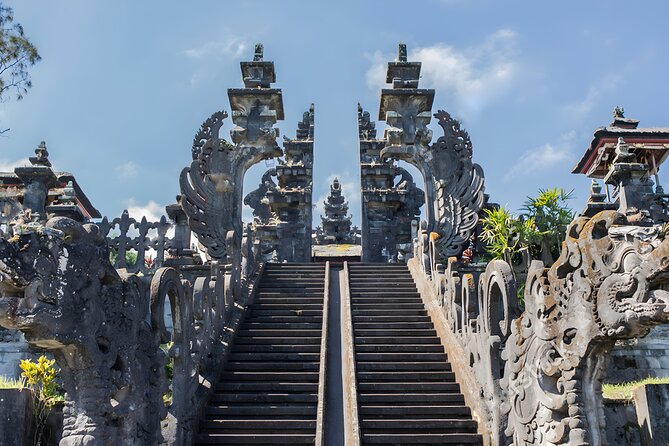
If your Bali plan includes temples, this kind of day tour is a smart move. You’re not just visiting one landmark. You’re stacking several key Hindu sites that each feel different—setting, architecture, and the way people use the spaces.
The format matters. You get an air-conditioned vehicle and a driver who’s there from start to finish, so you can focus on where you are rather than how to get there. That means less time asking directions and more time noticing details: where worshippers stand, how shrines sit within the landscape, and how Bali’s Hindu culture plays out in daily ritual—not just in staged tourism.
The day is around 10 hours, and that time adds up fast. Expect a full schedule, plus the reality of Bali traffic between sites. If you’re the type who hates being in the car, plan for the long stretch up front and keep your schedule flexible afterward.
Kehen Temple: Royal Bangli on a Hillside
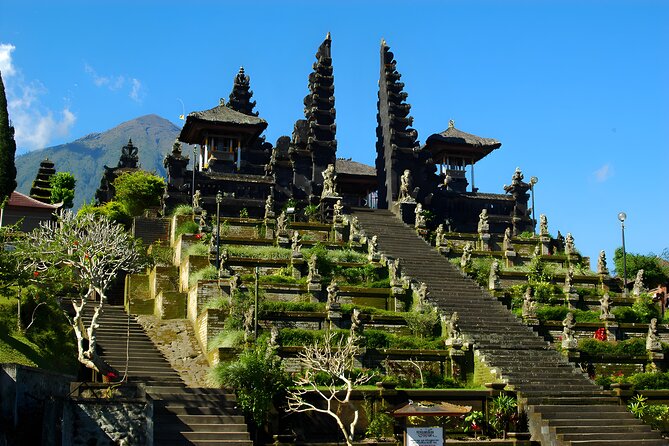
Your first stop is Kehen Temple, a site tied to Bali’s 11th-century royal kingdom of Bangli. You’ll feel the difference right away: instead of the huge, iconic scale of Besakih, Kehen comes with a more compact, grounded presence.
This is the kind of temple where you can slow down and actually observe. Stonework and shrine placement follow a hierarchy, and the hillside setting makes the whole area feel layered. There’s also a nice “starter” aspect to beginning here. You warm up your eye for details before hitting the larger ceremonial complexes later.
Keep your expectations realistic for time. This stop is short—about 30 minutes—so you’ll want to decide fast what you care about most. If you love architecture, look for the layout and entrances first. If you prefer the human side, watch how people move through the sacred zones.
One more practical note: the tour doesn’t include admission fees, so factor in tiket masuk wisata for each site. Bring cash or payment method your driver can help you use at the right moments.
Besakih Temple Complex: The Mother Temple on Mount Agung Slopes
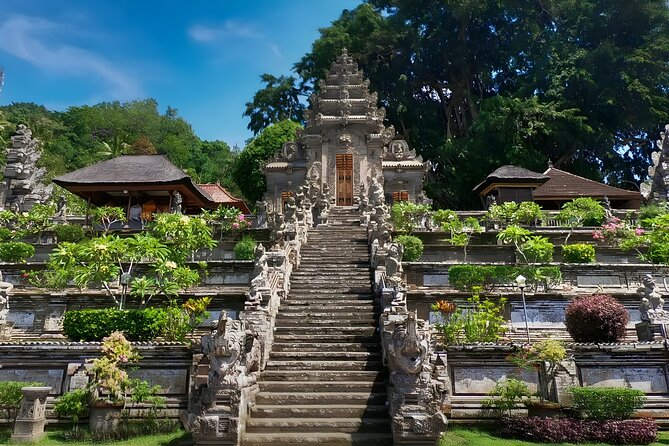
Besakih is the headliner for many first-time Bali temple visits, and this tour gives it serious time—around 45 minutes. You’ll be stepping into Bali’s “Mother Temple” energy, with a complex that includes the central shrine (Penataran Besakih) and multiple supporting temples.
What makes Besakih special is not just size. It’s the way it sits on volcano slopes, so the setting feels tied to the land itself. You can see how Bali’s faith works with geography, not against it. The temple complex is busy with devotion, and even if you’re not religious, you can still appreciate the structure and purpose.
This stop also tends to be the most visually intense. There’s a lot to take in—courtyards, shrine layers, and all the ways worshippers interact with the space. Your driver and guide style can help here, since explanations can turn a pile of buildings into a sense of order and meaning.
The drawback? Besakih is part of a temple circuit where walking and transitions can add up. Even with a time limit, you’ll likely spend part of your visit moving between vantage points. Wear shoes you can trust, and don’t plan on museum-level pacing.
Tirta Empul: Watching Purification at the Sacred Springs
Then you get to Tirta Empul, one of the most meaningful experiences in this whole lineup. The temple is built around a holy mountain spring, and the main attraction is right there in action: people purifying themselves under the springs.
You’ll likely feel two things at once. First is the cultural intensity—this is not a silent, empty “look but don’t touch” moment. Second is the clarity of the ritual. You can see the pattern: wash, pray, move to the next area. It’s easy to understand even if you don’t speak the language.
This stop lasts about 45 minutes, which is a good balance. Long enough to observe and take photos from appropriate spots, not so long that it turns into standing in the heat without a purpose. Still, plan for sun and crowds, especially if you visit during busier hours.
Also, bring respectful body-language. If worshippers are in the middle of ritual spaces, you’ll want to keep a little distance and avoid blocking flows. A driver who understands the rhythm of temples can help here by guiding you where it’s easier to look without crowding.




Gunung Kawi Sebatu: 11th-Century Shrines and Stair-Down Reality
Gunung Kawi Sebatu is described as a rocky temple and archaeological site, and the big practical detail is how you reach it: you walk down into the valley on hundreds of steps. That alone shapes your whole experience.
In theory, this is a cooler, calmer change of pace after the bigger temple complexes. In practice, it’s physically demanding. You’ll want moderate fitness for a stop like this. This is where the “stair-heavy” part of the day becomes real, not just a warning.
The reward can be worth it. Once you’re down, the shrines and setting can feel more intimate. You’re not just looking at a grand complex from a distance—you’re moving into the space that gives these sites their atmosphere.
Because the stop is around 30 minutes, there’s little margin for moving slow. If you want photos, pick your viewpoint early. If you need breaks, be honest about it and take them before you run out of energy and time.
Goa Gajah (Elephant Cave): Carvings, Age, and a Different Kind of Temple
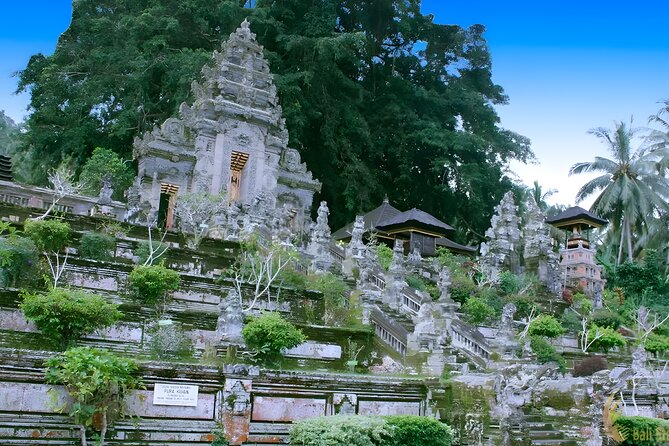
Goa Gajah—Elephant Cave—is one of those stops that feels both ancient and strangely cinematic. It’s an archaeological site with elaborate carvings, and it’s located on the cooler western edge of Bedulu Village, about six kilometers out of central Ubud.
This stop is around 30 minutes, and that’s enough to get a clear sense of the site’s mood. The cave name is tied to the stonework and iconic features that people come to see. Even if you’re not a deep-stone-archaeology person, the carvings help you connect to the site’s history and craftsmanship.
One small tip: go with the expectation that this is less about walking a large open temple complex and more about focusing on what’s in front of you. Use your time to notice the details rather than trying to cover every corner.
And because your day already includes stairs at Gunung Kawi Sebatu, this is a good counterweight. It’s another sacred/archaeological zone, but not necessarily the same intensity as descending a lot of steps.
Price and Logistics: What $51 Gets You (And What It Doesn’t)
At about $51.29 per person, this tour can be a strong value if you’re comparing it to the cost of paying multiple guides, handling transport, and spending your day on navigation stress.
You do get several real essentials included:
- bottled water
- air-conditioned vehicle
- private transportation
- professional English-speaking driver
- petrol and parking
But here’s the part you should plan around: entrance fees are excluded, and lunch and snacks are not included. That’s common for temple tours, but it still affects your budget and your day. If you show up hungry, you’ll rush food. If you forget entrance fees, you lose time waiting.
Also, your day is private—you’ll be in a group only with your own party. That’s the best scenario for asking your driver questions and getting flexible pacing for photos or brief breaks.
About timing: it’s booked in advance on average about a month ahead. If your dates are tight, booking earlier usually makes sense, because temple circuits are popular.
The Driver Factor: When Mr. Agus Makes It Make Sense
A tour like this lives or dies by the person behind the wheel. You’ll likely get a very smooth day if your driver is calm, careful, and good at explaining what you’re seeing.
In one highlight from real-world experience, a driver named Mr. Agus was described as helpful and fun to be with, and the sites came with clear temple history and context. That’s important. Without explanation, temples can blur together into “pretty buildings.” With guidance, you start noticing what belongs where and why each site matters.
Even if you’re a confident traveler, the driver’s job is more than transportation. It’s keeping the day moving, getting you to the right entrances, and helping you navigate sacred spaces without accidental disrespect or bottlenecks.
And yes, expect the drive itself to take time. One review note—cut out last temples if you want less driving—matches the reality: this is a full route, and the car time is a real ingredient.
What to Bring for a Temple Day That Includes Steps
The tour is best for people with moderate physical fitness. You’ll be walking and climbing stairs at more than one site, and Gunung Kawi Sebatu is the big one.
Here’s what I’d plan for in your daypack:
- comfortable shoes with grip for steps
- a sarong for temple entry (one guide tip here is that a sarong is required for entrance into Hindu temples)
- bottled water for the road
- sun protection since outdoor sections are likely
Also, think about your “temple pace.” If you try to see everything at full tilt, you’ll pay for it later. Instead, pick a few priorities at each stop: one architectural detail, one devotional scene, and one photo viewpoint.
Is This the Right Fit for You?
This is a great choice if you want a temple-heavy day without the stress of self-driving. It also works well if you prefer a private setup—just your group—so you can ask questions and keep your own pace.
You’ll probably enjoy it most if:
- you like culture and religious sites with real-world ritual
- you’re okay with a long day and a fair amount of walking
- you want a driver who can explain what you’re seeing
You might not love it if:
- you hate being in a car for hours
- stairs and uneven stone are a challenge for you
- you prefer a slow, one-site-per-half-day schedule
Should You Book This Temples Circuit?
I’d book this if your Bali trip needs a high-impact temple day and you don’t want to juggle logistics. The mix here is strong: Kehen for royal-era atmosphere, Besakih for the Mother Temple scale, Tirta Empul for the purification ritual, Gunung Kawi Sebatu for stair-down shrines, and Goa Gajah for carved archaeological drama.
If you’re on the fence, decide based on two things: how you handle stairs, and how you feel about a long, driving-heavy itinerary. If either answer is tough, consider trimming expectations or choosing fewer stops on a shorter outing.
FAQ
What temples are included in this tour?
You’ll visit Kehen Temple, Besakih Temple, Tirta Empul Temple, Gunung Kawi Sebatu Temple, and Goa Gajah Temple (Elephant Cave).
How long does the tour take?
The duration is approximately 10 hours.
Does the tour include pickup and drop-off?
Yes. Private round-trip transfers are offered from Ubud and south Bali hotels.
Are entrance fees included?
No. The package excludes entrance fees.
Is lunch included?
No. Lunch is not included. Snacks are also not included.
What’s included in the price besides transportation?
Bottled water, an air-conditioned vehicle, private transportation, a professional English-speaking driver, petrol, and parking fee are included.
Do I need good physical fitness?
The tour notes that travelers should have a moderate physical fitness level, since the day involves walking and stairs.
Do I need a sarong for temples?
Yes. A sarong is required for entrance into Hindu temples.
Is this tour private or shared?
It’s private. Only your group will participate.
What happens if weather is poor?
This experience requires good weather. If it’s canceled due to poor weather, you’ll be offered a different date or a full refund.