REVIEW · UBUD
Best of Ubud’s Highlights Full-Day Tour
Book on Viator →Operated by Bali 4U Tours · Bookable on Viator
Ubud in one long, well-run day. This full-day route is built around big-name sights—private transport plus admission included—so you spend less time sorting tickets and more time seeing what makes Ubud tick. I like the mix of stops (waterfall, ancient temple, rice terraces, and the Monkey Forest), and I like how the pace stays steady without long transfer headaches. One catch: it packs a lot into about nine hours, so if you want to linger for hours at one place, you may feel slightly time-pressed.
What really makes it feel low-stress is the setup: an air-conditioned vehicle, hotel pickup, and an English-speaking guide who also drives. You’re not trying to read schedules or figure out which road is faster in Ubud traffic. And with bottled water, parking, and fuel included, you can budget the day without constant add-ons.
It’s also the kind of tour where the guide matters. Names like Dastra, Arde, and Tedek show up in the guide feedback, and the common thread is clear: friendly explanations, quick answers, and a calm presence when the sights get busy. If that’s your style, this is a strong pick.
In This Review
- Key highlights worth prioritizing
- Price and value: why $51.65 can work
- Getting around Ubud without burning your morning
- Celuk Village: gold and silver jewelry, plus other art options
- Tegenungan Waterfall: jungle greenery and a one-hour reset
- Goa Gajah (Elephant Cave): an 11th-century temple complex
- Tegalalang Rice Terrace: classic views with quick time in the fields
- Sacred Monkey Forest Sanctuary: more than 1,049 long-tailed monkeys
- Ubud Center free time: Art market, palace, and Saraswati Temple
- Optional add-ons: what can fit if you have time
- How the guide makes this tour feel like a win
- Who should book this Ubud highlights tour (and who might not)
- Should you book? My decision rule
- FAQ
- What time does the tour start, and how long is it?
- Do I have to buy tickets for each attraction?
- Is transportation included, and where do you pick up from?
- What’s included in the price?
- What isn’t included?
- Can I cancel and still get a full refund?
Key highlights worth prioritizing
- Admission is included, so you skip the ticket hassle at each main stop
- Private, air-conditioned pickup and drop-off from multiple Bali areas
- A steady route of hour-long stops, including Celuk, Tegenungan Waterfall, Goa Gajah, Tegalalang, and Monkey Forest
- A dedicated hour of self-time in Ubud Center for the art market area
- A guide who can explain what you’re seeing, not just point and move on
- Monkey Forest is a show in itself, with more than 1,049 long-tailed monkeys living there
Price and value: why $51.65 can work
At $51.65 per person for a roughly nine-hour day, this tour isn’t about cutting corners. It’s priced like a practical solution: you’re paying for private transport, an English-speaking guide (who also drives), and entry fees wrapped into the cost.
The best value piece is that admission is included at the listed stops (Celuk Village, Tegenungan Waterfall, Goa Gajah, Tegalalang Rice Terrace, and Sacred Monkey Forest Sanctuary). For many people, that alone saves time and reduces the stress of standing around or figuring out what’s included where.
What you still need to plan for: food and drink are not included, and gratuities are optional. So I usually think of this as a ticket-and-transport day. If you plan one decent meal during the Ubud Center free time, you’ll be set.
Also, private tours can vary wildly in what’s folded in. Here, bottled water, parking fees, and gas/petrol are included, which quietly matters when you’re moving between sites in one day.
You can also read our reviews of more tours and experiences in Ubud



Getting around Ubud without burning your morning
The tour starts at 8:30 am, and your only job is to be ready in your hotel lobby at the scheduled pickup time. Pickup is offered from a wide set of areas: Sanur, Ubud, Kuta/Legian, Seminyak, Canggu, Jimbaran, Nusa Dua, Benoa, and Denpasar.
Because it’s a private tour, you’re not waiting for other groups to show up or playing taxi roulette with partial directions. And because the guide is also the driver, the day stays simple: you follow the route, you get explanations, and you’re back on the road quickly between sites.
One realistic consideration: Ubud traffic can slow things down. The itinerary is structured with about an hour per stop, but it’s still nine hours total. That means you get variety, not deep study at each location.
Celuk Village: gold and silver jewelry, plus other art options
Stop one is Celuk Village, famous for its gold and silver jewelry. The visit is about one hour with admission included.
What I like about starting here: it sets the tone for Ubud. You’re not only seeing temples and views first thing—you’re also seeing how the island turns craft into daily life. And Celuk isn’t the only option in the art-village mix. The tour notes three well-known art villages: Celuk (gold and silver jewelry), Mas (sculptures/carvings), and Batuan (art village reputation tied to its style).
If you’re even a little curious about how local artistry shows up in what you see later (temple carvings, ornament patterns, offerings), this first stop helps you connect the dots. If your focus is purely photos, this can still be worthwhile because the metalwork details are easy to spot and slow you down in a good way.
Tegenungan Waterfall: jungle greenery and a one-hour reset
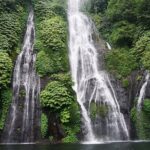
Next up is Tegenungan Waterfall, again with about one hour on site and admission included. This waterfall is described as sitting in a lush jungle setting, with a green valley panorama framed by cascading water.
I like this stop because it’s a change of tempo. Rice terraces and temple courtyards can be visually similar in the way they feel. A waterfall is different: you get motion, sound, and that sense of open space around the falls.
Practical note: waterfalls also mean humidity and slippery footing can be part of the experience. Bring footwear that feels secure and keep an eye on your step. The time is short, so you’ll likely focus on a few viewpoints and then move on.
Goa Gajah (Elephant Cave): an 11th-century temple complex
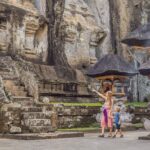
Then you hit history in a very physical way: Goa Gajah, also called the Elephant Cave Temple. The tour notes it dates back to the 11th century and includes about one hour here with admission included.
The standout details from the description are what you’ll actually notice once you arrive: a big temple complex with an ancient cave, a bathing pool, fountains, and stone-cut stupas.
This is also the kind of stop where a good guide changes the experience. In the feedback you’ll see repeated praise for guides who explain the purpose of temples and how people use them. Standing in front of a cave-temple complex is one thing. Understanding what you’re looking at—and why certain spaces are built the way they are—makes the hour feel earned.
If you’re coming at this as a first-timer, this is a smart anchor. You get a tangible sense of Balinese religious architecture and spiritual design rather than only scenic stops.



Tegalalang Rice Terrace: classic views with quick time in the fields
The next highlight is Tegalalang Rice Terrace. You’ll get about one hour, admission included.
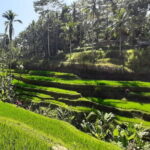
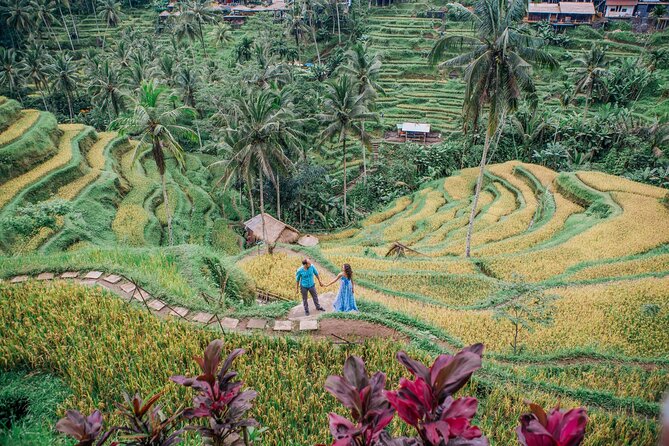
Here the emphasis is on the valley view: rice fields spread down the slopes, with the scenic outlook stretching away across the paddies. This is the kind of place where you’ll take photos, yes—but it’s also where you can understand how the terrain shapes farming life. The description makes it clear this isn’t just a wall of scenery. It’s a view with depth.
Because your time is limited, I suggest picking one main viewpoint and then walking a little to find your second angle. Use the hour to get the “big view” plus one quieter perspective before the day moves you on.
Sacred Monkey Forest Sanctuary: more than 1,049 long-tailed monkeys
Stop five is Sacred Monkey Forest Sanctuary. The tour describes it as the natural habitat of Balinese long-tailed monkeys (Macaca fascicularis) and notes more than 1,049 monkeys live freely in the sanctuary.
This is one of those places where the hour can feel short simply because the animals are constantly doing something. The sanctuary isn’t a zoo. It’s a forest with monkeys sharing the space with visitors.
A helpful way to approach it: plan to watch first, wander second. Look for behavior patterns—groups moving together, smaller monkeys climbing and pausing, and moments when monkeys come close enough that you’ll want to pause and watch how they interact with the environment.
The best part of having a guide here is context. The descriptions and guide praise point toward explanations that help you understand the sanctuary beyond the cute factor. Even if you’re not a nature person, monkey forest can still become the emotional highlight of the day.
Ubud Center free time: Art market, palace, and Saraswati Temple
After five main stops, the tour gives you one hour of free time in Ubud Center (self-visit). The focus is the Ubud Traditional Art Market area, plus nearby sights including Ubud/Puri Saren Palace and Saraswati Temple.
This hour is smart. It’s your chance to do two things the guided portion doesn’t always allow:
- follow your own pace
- grab souvenirs or snacks without a guide steering you
If you want a practical mini-itinerary inside that hour, aim for the palace/temple area first, then use the market time for browsing. It’s also the easiest moment to split: you might want to see the temple setting, while your travel partner wants market time.
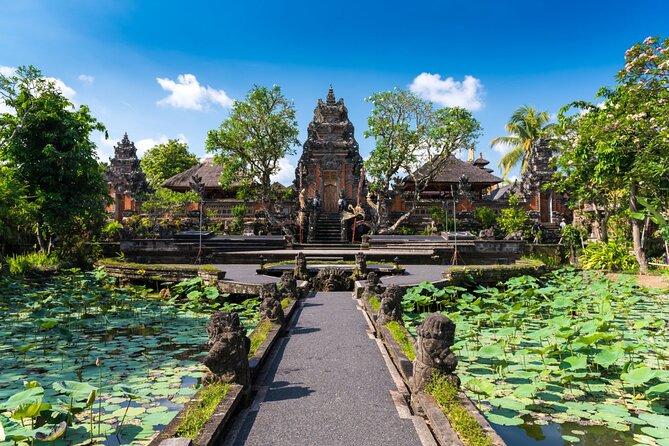
The tour schedule also lists an optional historical landmark tied to the 1800s that can be paired with the market and Saraswati Temple, if time allows. Another optional stop includes a lotus-pond temple setting that’s described as featuring pink lotuses in a beautiful foyer.
Optional add-ons: what can fit if you have time
Because this is a full-day highlights program, optional stops appear if timing works out. The tour describes a range of choices around Ubud, including:
- Kajeng Rice Fields Walk, mentioned as a loop taking about 45 minutes
- A holy spring temple with ponds and pools filled with clear spring water
- An ancient rock-cut temple complex described as 11th century with multiple rock-cut shrines
- A hidden waterfall option near Tegalalang village
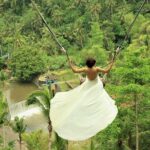
- A swing park with views over palm valley and a river below
Some temple visits in the wider itinerary mention sarongs required for entrance. If you think you’ll add a temple stop, it’s worth having a sarong or planning for what you’ll use to cover up appropriately.
A key practical point: optional stops change the character of the day. If you keep the core highlights only, you’re likely to feel less rushed. If you add a walk or swing park, expect that the day becomes more active and the timing becomes tighter.
How the guide makes this tour feel like a win
The tour is guided, but it’s not loud about it. The strongest feedback pattern is about guides being friendly, attentive, and willing to answer questions.
Names that show up in the guide feedback include Dastra, Arde, and Tedek. Each is praised for being prompt and for going beyond just reciting facts. The themes are consistent:
- explaining the purpose of what you’re seeing, especially temples
- answering questions about Balinese culture
- keeping the day fun without turning it into a lecture
This matters because many of the sites on your list can look similar if you don’t know what you’re looking at. A cave-temple complex, a rice terrace, and a monkey forest all have their own logic. When your guide brings that context, the hour stops feel more meaningful.
Also, a driver-guide helps you avoid the small friction of switching between people—your timing stays cleaner, and you spend less energy figuring out where to go next.
Who should book this Ubud highlights tour (and who might not)
I’d book this if:
- it’s your first time in Ubud and you want the main hits in one day
- you hate wasting time on ticket lines or transit planning
- you like variety: crafts, waterfall, ancient temple, rice terrace, and a monkey sanctuary
- you want a guide to explain the culture, not just take you from A to B
I might skip or modify if:
- you prefer slow travel and long, quiet time at fewer places
- you’re sensitive to a packed schedule (nine hours with many stops can feel like a sprint)
- you’re mainly shopping or only want viewpoints, since temples and the sanctuary take real attention too
The sweet spot is a traveler who wants structure, comfort, and a strong overview—then maybe later in your trip you return to the one or two places you liked most for deeper time.
Should you book? My decision rule
Book it if your main goal is a stress-free, ticket-included highlights day with private A/C transport and real explanations. The price makes sense because it covers admissions plus the hard part: getting around.
Don’t book it if you’re the type who needs hours to “soak in” each site. This itinerary is designed for momentum. You’ll see a lot, but you won’t have unlimited time to wander endlessly at every stop.
FAQ
What time does the tour start, and how long is it?
The tour starts at 8:30 am and lasts about 9 hours.
Do I have to buy tickets for each attraction?
No. Entry or admission fees are included for the main listed stops, so you can avoid the ticket-buying hassle.
Is transportation included, and where do you pick up from?
Yes. You get a private air-conditioned vehicle with pickup and drop-off from Sanur, Ubud, Kuta/Legian, Seminyak, Canggu, Jimbaran, Nusa Dua, Benoa, and Denpasar.
What’s included in the price?
Included items are the private air-conditioned vehicle, English-speaking guide (who also drives), entry/admission fees, bottled water, parking fees, and gas/petrol.
What isn’t included?
Food and drink are not included, and gratuities are optional.
Can I cancel and still get a full refund?
Yes. Free cancellation is available up to 24 hours before the experience start time for a full refund.