REVIEW · UBUD
Kintamani Down Hill Cycling
Book on Viator →Operated by bali journey experience · Bookable on Viator
Downhill cycling meets real Balinese daily life. You roll from Bayung Gede in Kintamani toward Ubud, but the real hook is stopping in a village school and stepping into a Balinese compound.
I love the new bikes and helmets, which make the ride feel safe and easy even on a long coast. I also love the cultural pacing: clear, practical context for what you’re seeing—school life and the meaning behind local architecture.
One consideration: the day needs moderate fitness and steady balance, since you’re cycling on paths and roads, not a closed track.
In This Review
- Key highlights worth planning for
- Kintamani to Ubud cycling with actual village stops
- Pickup, bikes, and how the day flows
- Bayung Gede start: views before you even get moving
- Village school: daily education you can actually observe
- Traditional Balinese compound: philosophy and design in everyday form
- The main ride: villages, farms, jungle paths, and rice fields
- Lunch with a view: the payoff after the ride
- Price and value: is $33.60 a good deal?
- Who should book this Kintamani downhill ride
- What to bring, so the ride feels easy
- Should you book Kintamani Down Hill Cycling?
Key highlights worth planning for
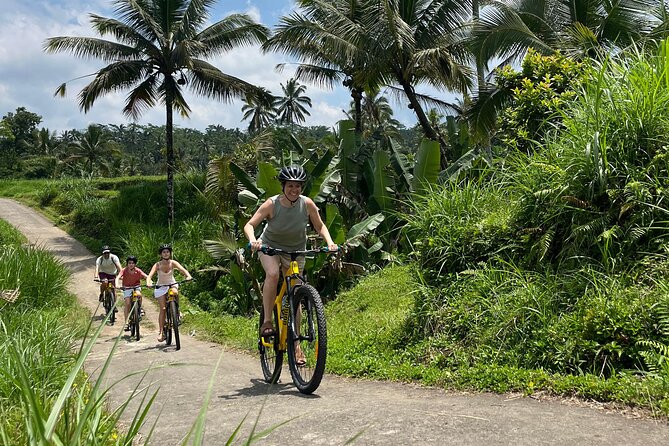
- Downhill cycling does most of the work: expect an easy-to-moderate ride where pedaling feels optional in places
- A real village school stop: you’ll see everyday education, not a staged performance
- Balinese compound visit with culture in plain language: philosophy, architecture, and traditions in context
- Lunch is part of the experience, not an afterthought: you eat with views and time to reset
- Small-group feel (up to 30): easier navigation, more personal attention when you want it
- Guides who handle details and photos: in the past, guides like Eka and Niko have been praised for patience and know-how
Kintamani to Ubud cycling with actual village stops
This is not just a “bike through pretty scenery” day. Yes, you get classic Ubud-area views as you ride downhill from the Kintamani side. But the thing that makes this tour feel different is how it blends active adventure with direct cultural contact—including a local school and a stop inside a traditional Balinese compound.
The format works well if you like your travel days with some movement, but you also want to learn what’s behind the postcard. The cultural stops aren’t random quick photo ops either. They’re tied to daily life: how school happens, how family compounds function, and how Balinese beliefs show up in everyday design and routine.
And the ride itself? The downhill vibe means you’re not doing a hard training session. People often describe it as fun and not overly exhausting—though you still need to be comfortable riding for hours.
You can also read our reviews of more cycling tours in Ubud


Pickup, bikes, and how the day flows
The day starts with pickup offered (and there’s also shuttle service in the Ubud area included). You’ll head to the starting area near Bayung Gede, Kintamani. If you’re staying around central Ubud, this matters: you don’t have to figure out inter-regency transport on your own.
Once you’re at the start, the tour keeps things moving. You’ll get your bike and helmet (this has been specifically praised as new and well set up). Helmets aren’t optional here. Wear yours snug, keep your chin strap right, and you’ll feel more relaxed for the ride.
The day is built around rhythm:
1) you ride,
2) you stop for a meaningful cultural moment,
3) you ride again,
4) you finish with lunch and then return to the end point.
It’s the kind of schedule that helps you avoid that travel stress where you’re always waiting. Also, it’s easier to enjoy the ride when you’re not constantly wondering what comes next.
One more practical note: the tour runs with a maximum of 30 travelers, so it’s not a chaotic bus parade. That doesn’t mean it’s private, but it does mean you should feel like you’re part of a guided group, not a crowd.
Bayung Gede start: views before you even get moving
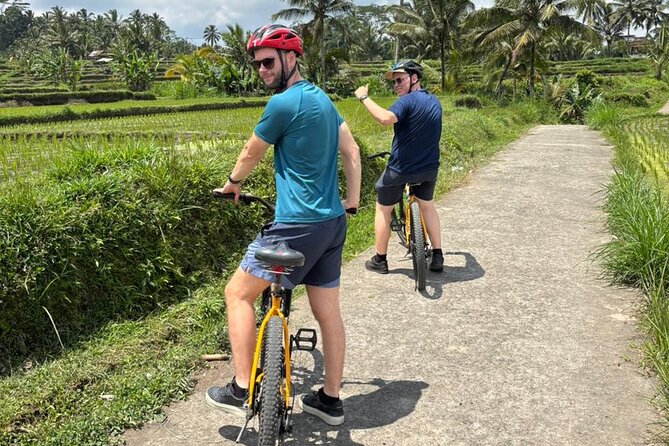
Starting near Bayung Gede (in the Kintamani area) sets the tone. Even before you feel the downhill advantage, you’re already in a different mood than you get in central Ubud. The air tends to feel fresh, and the whole area has that “edge of the island” sense—views open up, and you start to understand why Kintamani is such a popular base.
From here, the downhill structure makes a difference. A lot of cycling tours make you earn the views with hard pedaling. This one is built to be more forgiving. Reviews mention that cycling energy doesn’t feel like the main job. In other words: you can enjoy the ride without arriving at your hotel looking like you wrestled a motorbike.
Still, start smart. The biggest risk on downhill days is not fitness—it’s losing focus. Keep your eyes forward, trust your brakes, and let your guide set the pace.
Village school: daily education you can actually observe
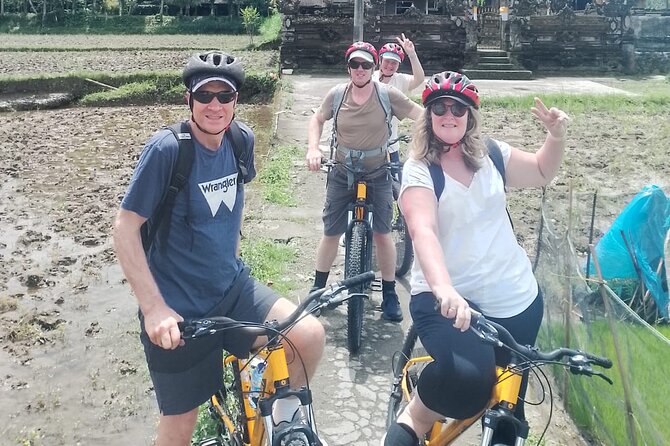
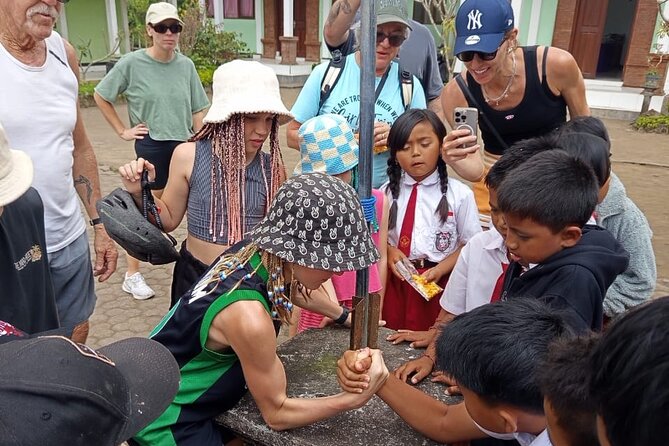
One of the first stops is a local school. This isn’t presented as a tourist show. You’ll see children in their classes and get a sense of what education looks like in a Balinese village.
This stop is valuable because it grounds the day. After you’ve been cycling through fields and paths, you come to a place that explains how communities keep going day to day. It’s also a nice reality check if you’re only seeing Bali through temples and craft shops.
A couple of practical tips help you enjoy it respectfully:
- Stay aware that you’re a visitor. Keep photos focused on what’s allowed and avoid lingering too long.
- Listen to the guide’s explanations. The goal isn’t to memorize facts—it’s to understand how the school fits into village life.
Also, since this is a short stop (not a full guided tour of the whole school system), manage expectations. If you want deep education policy detail, you may wish you had more time. But if you want a grounded moment that makes the day feel human, it works.
Traditional Balinese compound: philosophy and design in everyday form
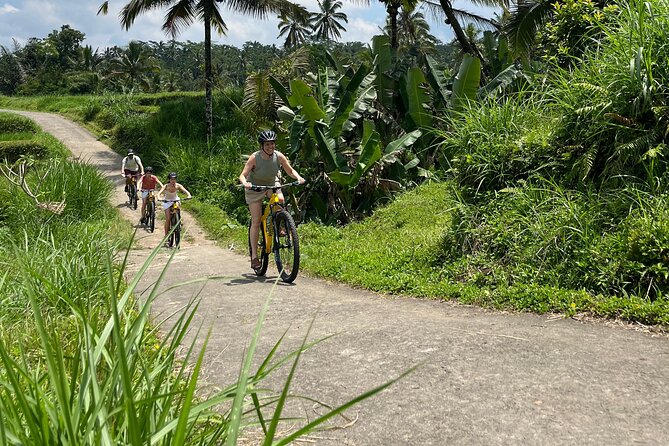
Next comes a visit to a traditional Balinese compound. This is where you start connecting dots. Instead of learning culture as trivia, you’re seeing how beliefs and daily habits show up in the spaces people live and work in.
The compound stop focuses on:
- Balinese philosophy
- architecture
- cultural traditions that shape daily life
That trio matters. Architecture is one thing. Philosophy is another. But when you learn how the two relate, the compound stops feel less like museum pieces and more like a living system.
It also helps explain why Balinese daily life is so ritual-centered without turning it into a lecture. Even if your knowledge of Hindu-Balinese concepts is basic, a good guide can make it feel understandable. Past comments highlight guides like Eka for being kind and professional, and guides like Niko for being patient and helpful with explanations and photos.
Pro tip: ask questions if your guide invites it. This is the moment where your curiosity will pay off most, because it’s interactive and tied directly to what you’re standing in.





The main ride: villages, farms, jungle paths, and rice fields
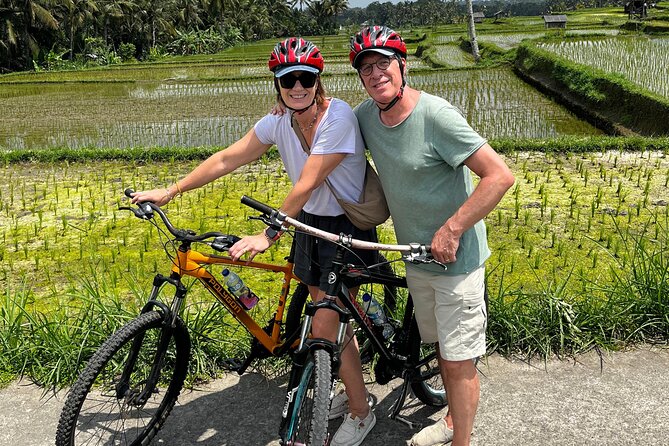
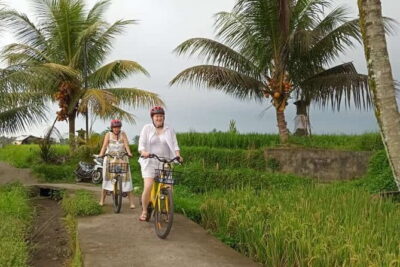
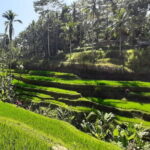
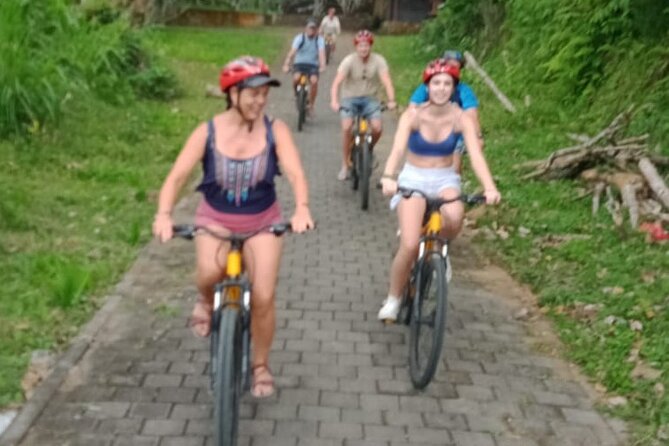
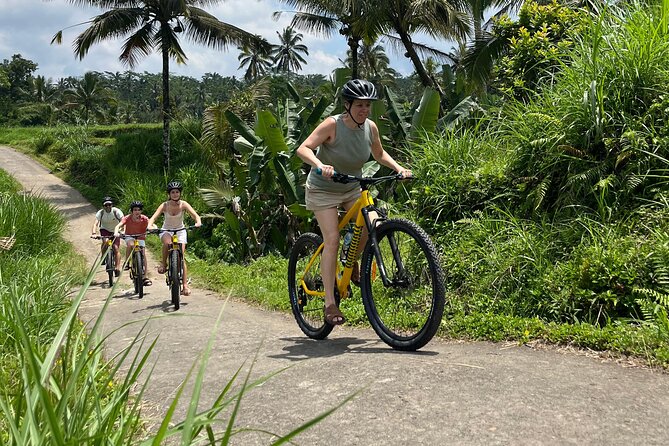
The cycling route is built to show you Ubud’s countryside from angles most people skip. You move through villages, ride past farms, and pass through jungle-like sections and rice paddies—the iconic view people come to Ubud for.
Downhill doesn’t mean stop-start chaos. The ride is usually smooth in the sense that the terrain does a lot of the work. Reviews describe it as exhilarating and fun, with people saying it doesn’t require too much effort because it’s downhill.
That said, don’t assume it’s effortless in every moment. You’ll still need:
- balanced posture,
- steady hands,
- attention on turns and uneven ground.
If your goal is photos, you’ll get chances. Guides are often praised for taking good pictures and being patient, which helps when you’re trying to frame the rice terraces and village details without holding up the group too long.
Also, a reality check: some people feel the cultural stops take time away from cycling. If you prefer pure riding time, you may wish the stops lasted longer. But you’re trading that for the richer story behind what you’re seeing, and that trade is the reason this tour stands out.
Lunch with a view: the payoff after the ride
At the finish point, lunch awaits. And yes, this part really is part of the experience. The food is served with an impressive view, which makes the meal feel earned and calming after the motion.
Lunch matters on this tour because it resets your energy. Even when the cycling is downhill, you’re still outside, sweating a bit, and spending a few hours on your feet and bike seat. Having a proper meal in the middle of the day is what keeps you from fading early.
Included basics:
- lunch
- bottled water
Some guides also add small extras depending on the day and route—there are mentions of coffee and tea tasting as part of the overall experience. Don’t bank on it as guaranteed, but it’s a nice bonus if it happens.
When you finish lunch, the tour heads back toward the end point. The experience includes shuttle service in the Ubud area, so your day doesn’t end with you trying to sort transport while your legs are cooling down.
Price and value: is $33.60 a good deal?
At about $33.60 per person, this is priced in the “grab it if you like active culture” category. Here’s why it can feel like good value:
You get more than a bike:
- bike experience with a downhill route
- lunch
- bottled water
- entrance fees (entrance fee is listed as included)
- shuttle service in the Ubud area
- a mobile ticket, plus confirmation at booking
And the ride comes with a cultural framework you don’t usually get at this price point. Many budget tours focus on getting you from point A to point B. This one adds a school and a compound—small stops, but meaningful ones.
The only way the value doesn’t feel great is if you’re purely in “max cycling time” mode. If you’re counting minutes and want the longest possible ride with zero detours, you might see the stops as less than you hoped. For many people, though, that’s the exact reason they recommend it so strongly.
Who should book this Kintamani downhill ride
This tour is ideal if:
- you want an active day without extreme fitness demands
- you like learning culture through real settings, not just staged temple stops
- you’re curious about village life, including how schooling and family compounds work
- you want a relaxed downhill cycling day with views that feel worth the effort
It’s less ideal if:
- you want a super long, nonstop cycling session
- you’re uncomfortable riding for hours on outdoor paths and roads (even downhill)
- you dislike shorter cultural stops that break up the ride
The tour asks for moderate physical fitness. That usually translates to: you can handle a few hours of movement, basic balance, and outdoor heat. It’s not framed as a beginner-free-for-all, but the downhill helps make it approachable.
It also helps if you travel with family. Reviews explicitly mention it being suitable for families and easy on energy because it’s downhill. If you’re bringing kids or older adults, you’ll want to judge the group’s comfort with riding time and road conditions—but the overall design is friendly.
What to bring, so the ride feels easy
You’ll get bottled water, but you still should bring a few basics so your day stays smooth:
- sunscreen and a hat (sun outside is no joke)
- a light layer (some areas can feel cooler depending on the day)
- comfortable closed-toe shoes you trust on bike pedals and uneven ground
- a small bag you can keep secure while riding
- your mobile ticket (you’ll have it, but keep your phone handy)
And one more mindset tip: let the downhill set the pace. The fastest way to have a stressful ride is trying to force it. Instead, focus on staying relaxed, looking ahead, and enjoying the views as they roll by.
Should you book Kintamani Down Hill Cycling?
If you’re balancing Bali bucket-list sights with a day that actually feels like you stepped into village life, I’d book it. The combination is the point: downhill cycling plus a school visit plus a traditional compound plus lunch with views.
You might skip it if you only care about maximum time on the bike and aren’t interested in short cultural stops. Also, if you have serious mobility limits or zero comfort with outdoor riding, treat the moderate fitness requirement as real.
One practical reason to lean toward booking: the tour has free cancellation, with full refund if you cancel at least 24 hours before the experience starts. That gives you room to plan confidently.
If your idea of a great travel day is movement, learning, and a meal you can actually enjoy afterward, this is a smart pick for Ubud.