REVIEW · UBUD
Sidemen Trekking Through Rice Terraces and Villages
Book on Viator →Operated by Sidemen Guide Trekking and Scooter Tour · Bookable on Viator
Rice fields can teach you more than museums.
This Sidemen trek in East Bali follows irrigation channels, crosses a wooden bridge used by locals, and threads through village life toward the big views near Mount Agung. You’ll start at the village market area and walk through working rice terraces and small temple stops along the way.
I really like the focus on the how, not just the scenery—especially the Subak irrigation system and the practical route along water channels. And guide Wayan is a big reason this experience earns such strong marks, with his stories about rice culture, plants, and what daily work looks like on the ground.
One possible drawback: depending on timing, some paddies can be harvested and look less lush than you imagined. If green rice is your only priority, keep your expectations flexible.
In This Review
- Key things that make this trek worth it
- Sidemen trek value: why this 1-hour walk hits hard
- Start at 7:00 am in Sidemen: the meeting point that keeps things simple
- Rice terraces and Subak of Ogang: the part you’ll actually remember
- Following irrigation channels and crossing the wooden bridge
- Temples on the walk: small stops with big meaning
- Mount Agung viewpoints: why the morning timing helps
- The guide matters: Wayan’s local storytelling
- What’s included (and what you’ll probably add)
- Who this Sidemen trek fits best
- Weather and the one drawback to plan around
- Practical advice before you go
- FAQ
- How long is the Sidemen rice terrace trekking experience?
- What time does the tour start?
- Where is the meeting point?
- Is hotel pickup included?
- What’s included in the price?
- Is this a private tour?
- Do I need a printed ticket?
- Can I cancel for free?
- Should you book the Sidemen trek?
Key things that make this trek worth it
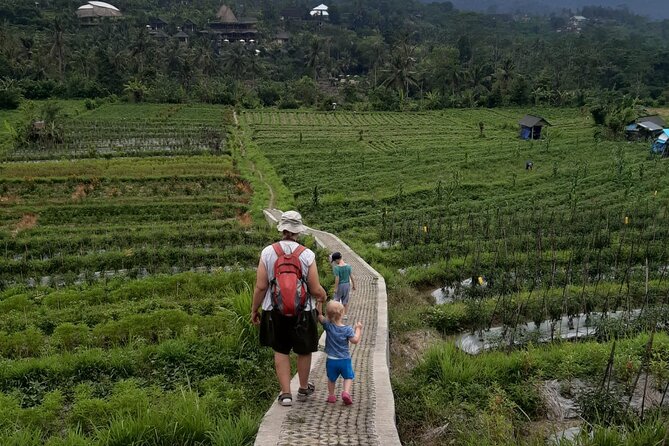
- Subak irrigation in real life: You’ll walk near the water system that keeps Bali’s rice farming going.
- Village crossings, not tourist shortcuts: A wooden bridge is shared by locals and motorbikes.
- Temple moments along the route: Expect small stops where daily religion and farming meet.
- Mount Agung viewing angles: The trek is timed and paced for countryside views as you go.
- Wayan’s local teaching style: He’s known for clear answers about rice, plants, and how work happens.
Sidemen trek value: why this 1-hour walk hits hard
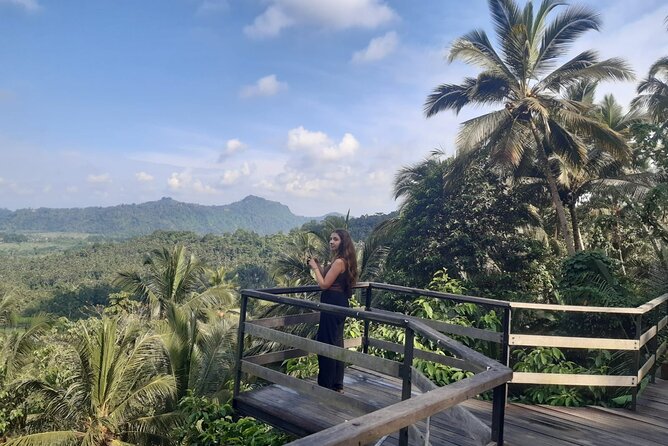
This is one of those Bali activities that feels small on paper but lands big in your head. The price is low enough that you can treat it like a morning “field lesson,” not a major splurge, and you still get a guide plus bottled water.
Even though the trek is listed at about 1 hour, it doesn’t feel rushed the way some quick tours do. The walking path is designed to show you how Sidemen works day to day—rice farming, irrigation, temples, and the human scale of village life.
You’ll also appreciate that it’s private. You and your group move at a pace that makes sense for questions and short photo stops, without getting swallowed by a large crowd.
You can also read our reviews of more hiking tours in Ubud

Start at 7:00 am in Sidemen: the meeting point that keeps things simple
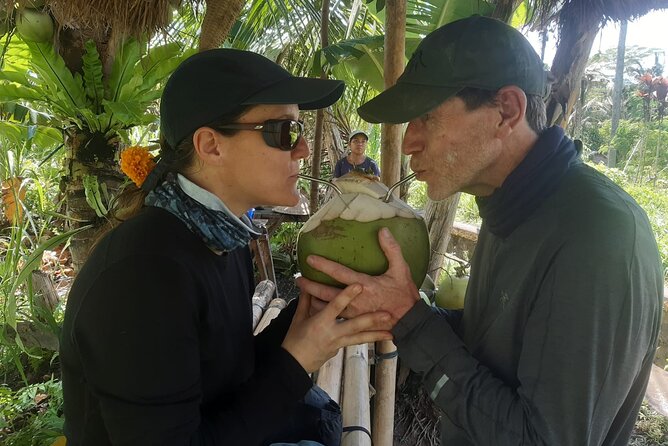
You’ll meet at the Sidemen Rice Terrace area (SIDEMEN RICE TERRACE, GCJP+77P, Jl. Sidemen – Sangkan Gn., Sangkan Gn., Kec. Sidemen). The start time is 7:00 am, and the activity ends back at the same meeting point.
Why this matters: a morning start helps you catch farming activity while it still feels calm and walkable. And since you end where you begin, there’s no confusing “drop-off and good luck” feeling.
Pickup is optional—so if you’re staying outside the easiest access areas, it can be worth selecting hotel pickup and drop-off. If you don’t, the listing notes it’s near public transportation, which gives you flexibility.
Rice terraces and Subak of Ogang: the part you’ll actually remember
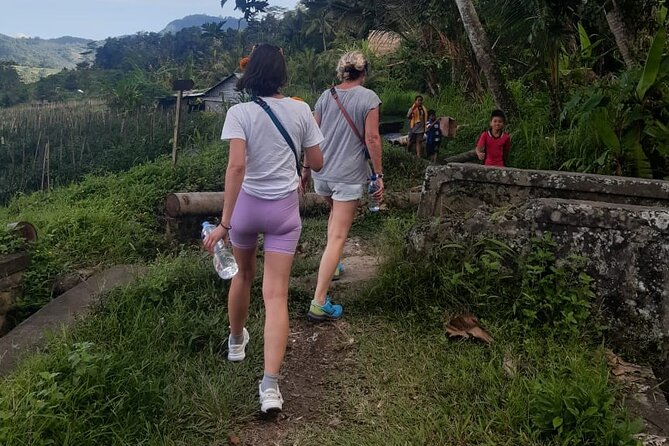
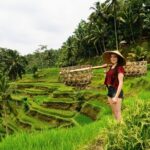
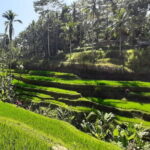
The main draw here is the chance to see Bali’s rice system up close, not as a photo backdrop. You’ll follow irrigation channels and pass through sections tied to the Subak of Ogang, which is the local organization behind how water is managed for farming.
If you’ve ever wondered why rice terraces in Bali look the way they do, this is the practical answer. The terraces aren’t just “pretty steps.” They’re part of a working water network, managed with timing, shared rules, and daily attention.
Along the trek route, you’ll see the farming rhythm: from plowing and planting to harvesting. Of course, what you see at any exact moment depends on the season and what’s been cut recently. That’s the one thing I’d keep in mind—this is a working landscape, not a staged set.
Following irrigation channels and crossing the wooden bridge
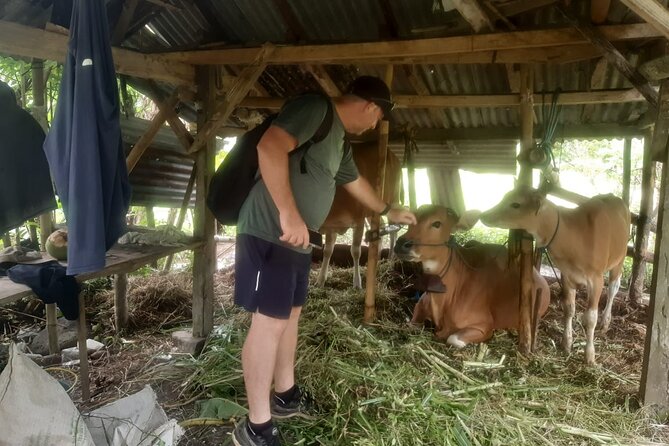
One of my favorite details is the route style. You’re not only walking past paddies; you’re walking near the plumbing of rice farming—those narrow water channels that connect field to field.
And yes, there’s a wooden bridge that’s shared by locals and motorbikes. That single detail makes it feel real fast. You get the sense that the trek path overlaps with daily village travel, not a sealed-off tourist lane.
Practical note: crossing sections can be uneven and a bit slippery if the weather has been wet. Plan on taking your time here and letting the guide set the pace.
Temples on the walk: small stops with big meaning
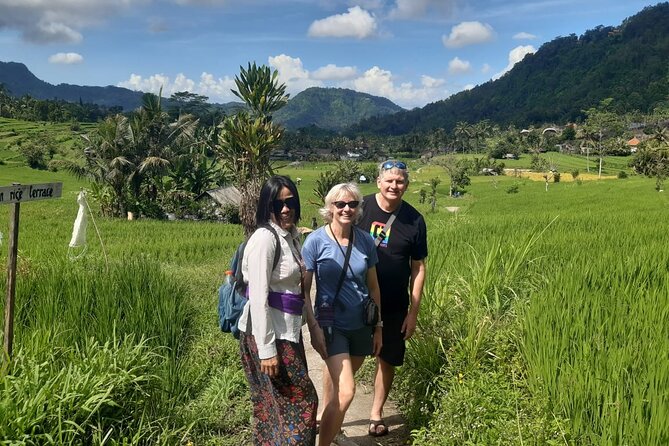
The trek includes temple passing points along the route. You may not spend long sitting in one place, but those pauses help you understand what rice farming means in this setting: it isn’t just agriculture, it’s tied to spiritual life.
This also changes how you look at the fields. Instead of seeing terraces as isolated scenery, you start noticing how households, places of worship, and farming decisions share the same space.
If you’re the type who likes context while you walk, these temple moments are a quiet win.





Mount Agung viewpoints: why the morning timing helps
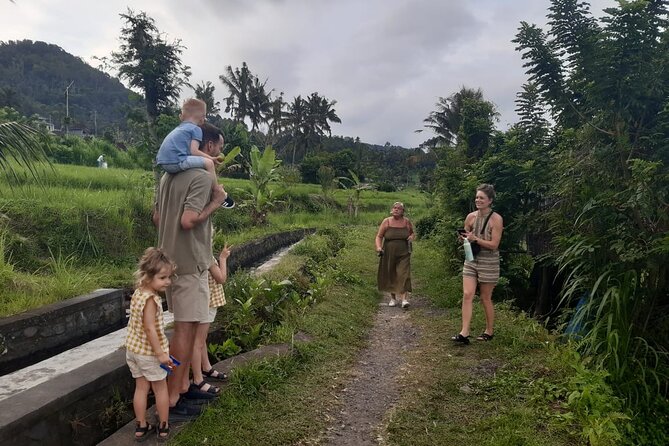
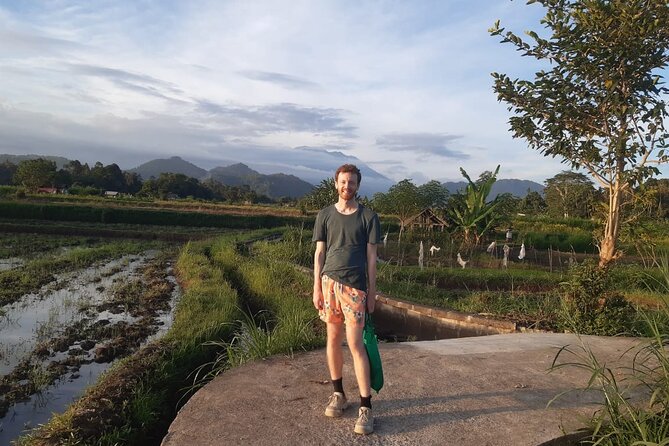
As you trek, the direction and path give you viewpoints toward Mount Agung. You’re not hiking for hours for a summit moment here. The goal is to show you countryside lines, the valley feel, and the sense of scale—while still staying close to village life.
The early start plays into this. In the morning, the area often feels clearer and calmer, and the walk doesn’t compete with harsh midday heat.
If you’re hoping for dramatic mountain photos, this is where you should slow down and let the guide point out where the best angles typically are along the route.
The guide matters: Wayan’s local storytelling
If you take only one thing from this review, take this: the guide can turn a “walk in the fields” into something you actually talk about later.
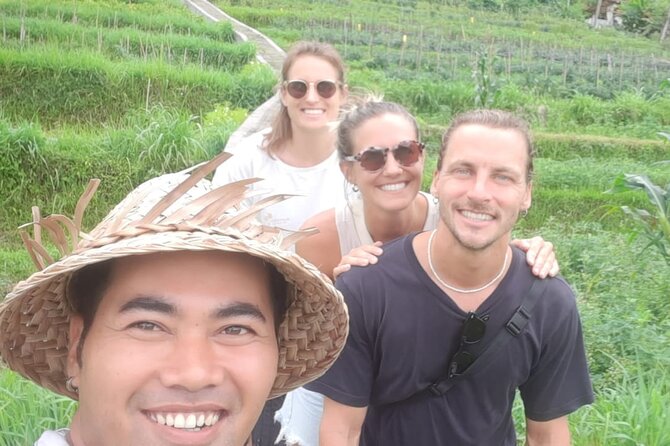
Wayan is repeatedly highlighted for being fun, knowledgeable about rice culture and local plants, and genuinely interested in answering questions. That matters more than it sounds. When you ask what you’re seeing—how the rice lifecycle works, what specific plants are, why the channels matter—you don’t just get an answer. You get a way of looking.
He’s also described as especially kind and supportive for families, including helping someone traveling with a toddler. That’s a strong sign that this trekking style is flexible for different needs and not only for hardcore hikers.
And one more detail that stands out: in rain, Wayan reportedly checked that people had coats and helped them navigate muddy sections without making it a big deal. That’s the kind of calm competence you want from a local.
What’s included (and what you’ll probably add)
Included:
- Bottled water
- Trekking guide
- Hotel pick up and drop off (optional)
Not included:
- Tips
For budgeting, this is a big deal. At $9.80 per person, you’re paying for the guide’s time and the organized trek, with water taken care of. Since tips aren’t included, I’d set aside a little cash for the guide if the experience matches your expectations. Even a small tip can feel meaningful when you’ve got a guide who answers questions and keeps you comfortable.
Also, the listing includes a mobile ticket, which is easy if you’re traveling light on paperwork.
Who this Sidemen trek fits best
This is a great fit if you want:
- A low-cost morning activity in East Bali
- A walk that includes rice farming context, not only photos
- A private format where you can ask questions
- A local-led route through the real rhythm of village life
It’s also a good choice if you’re not looking for a long hike. With the trek listed at about 1 hour, it’s manageable even if you’ve got other plans that day.
If you’re a serious trail person chasing distance and elevation, you might find this too short. But if your goal is learning, breathing, and seeing how rice farming actually works, this hits the sweet spot.
Weather and the one drawback to plan around
Let’s be honest: sometimes your rice views may not look Instagram-perfect. If paddies are harvested, the fields can look less green than you hoped. That can reduce the wow factor if you’re only here for a fully lush rice panorama.
The good news is that the trek is still about understanding the system. Even with less green visible, you can still learn about the farming cycle, water management, and how village life keeps moving through the seasons.
Rain is another practical consideration. One person described getting wet and muddy, and the guide helped them through it. If you’re visiting during wetter periods, bring a rain layer you can handle outdoors and expect the ground to get slippery.
Practical advice before you go
This trek starts early at 7:00 am, so plan your day around that. If you’re coming from Ubud, give yourself enough time to reach Sidemen without stress.
Since it’s described as suitable for most travelers, it’s not a technical hike. Still, you’ll be walking on uneven ground near fields and irrigation areas. Comfortable, grippy footwear will make the whole experience smoother—especially near the bridge.
Finally, treat the guide like a walking classroom. If you’re curious about rice, plants, or the Subak system, ask. That’s where this trek becomes more than a photo stop.
FAQ
How long is the Sidemen rice terrace trekking experience?
The trek is listed at about 1 hour.
What time does the tour start?
The start time is 7:00 am.
Where is the meeting point?
You’ll meet at SIDEMEN RICE TERRACE (GCJP+77P), Jl. Sidemen – Sangkan Gn., Sangkan Gn., Kec. Sidemen, Kabupaten Karangasem, Bali 80864.
Is hotel pickup included?
Hotel pickup and drop-off is optional.
What’s included in the price?
It includes a trekking guide and bottled water.
Is this a private tour?
Yes. It’s listed as private, so only your group participates.
Do I need a printed ticket?
No. It uses a mobile ticket.
Can I cancel for free?
Yes. Free cancellation is available. You can cancel up to 24 hours in advance for a full refund.
Should you book the Sidemen trek?
If you want a budget-friendly morning walk that teaches you how Sidemen’s rice farming actually works, I’d book it. The value is strong for the price: guide time, bottled water, and a private pace, all focused on the Subak irrigation and real village routing (including that shared wooden bridge).
I’d hesitate only if you’re planning your trip around a single look—like fully green rice terraces no matter what. Because this is a working area, timing affects what you see. If you’re flexible and curious, that’s exactly when this trek becomes memorable.