REVIEW · UBUD
Skip the Line Tirta Empul Temple Entrance Ticket All Inclusive
Book on Viator →Operated by Seminyak Tour Driver Bali · Bookable on Viator
Tirta Empul is where the ritual does the talking. This experience pairs skip-the-line entry with a guide-led blessing at the sacred springs, plus private transfers from your Ubud address so your day doesn’t get eaten by traffic. I like that it’s built around respect and clarity, including temple attire and offerings. One big consideration: women on their period aren’t allowed to enter the temple.
For most people, this is a straightforward way to do Tirta Empul without stress. The group stays small (up to 14), the guide speaks English, and you’ll walk through the temple areas with help on what to do and where to go. The main downside to plan around is timing: the trip is listed as about 1–3 hours, but real travel time can run longer depending on where you’re staying and road conditions.
In This Review
- Key things that make this Tirta Empul experience worth your time
- Tirta Empul’s holy water blessing: the real reason to go
- Private pickup from your Ubud address (and what’s included on the ride)
- Skip-the-line entry: how to think about it (and what to expect)
- How the temple visit is handled with a guide (and why it helps)
- Sarong, sash, and offerings: what to know before you arrive
- Timing realities: the 1–3 hour listing vs real road time
- Small group size (max 14): what it changes on the ground
- Price and value: is about $29.54 a fair deal?
- Should you book this Tirta Empul skip-the-line tour?
- FAQ
- Is the admission ticket included?
- Do I get a sarong and sash for the temple?
- Are Hindu offerings included?
- Does the tour include pickup and drop-off?
- Is Wi‑Fi included?
- How long does the tour take?
- How big is the group?
- What happens if the tour is canceled due to weather?
- Is free cancellation available?
Key things that make this Tirta Empul experience worth your time

- Guided holy-water blessing so you know what’s happening at each holy spring
- Sarong and sash loan plus Hindu offerings included, so you don’t scramble at the entrance
- Private pickup and drop-off from Ubud to reduce hassle and wasted time
- Small group size (max 14) which keeps it easier to move and ask questions
- English-speaking professional escort who can explain temple layout and ceremony flow
Tirta Empul’s holy water blessing: the real reason to go
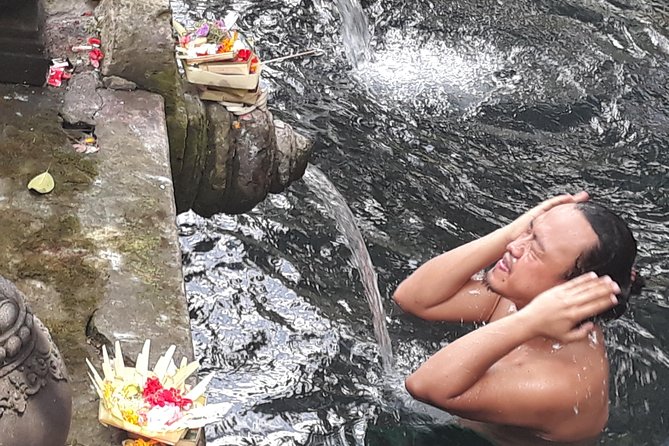
Tirta Empul is known for its sacred spring blessings, and this tour is built around that core moment. You’re not just dropping into a viewpoint. You’re doing the ceremony with guidance, including the chance to participate in a blessing ritual at the holy water area.
The temple visit follows a logical path through the grounds, starting from the first gate and moving toward the middle areas and the main temple area labeled as utama mandala. That matters because Tirta Empul can feel busy and confusing on your own. With an escort, you get help with flow and timing, plus practical guidance on what you’ll see and why different springs are part of the practice.
Another thing I like: your guide is expected to explain the meaning and significance of the different holy springs and how the ritual works. In the feedback tied to this kind of booking, guides such as Wayan, Moyo, Made, Katut, and Gusti are singled out for ceremony explanations, patience, and photo help. You may not need “photo support,” but it’s a real quality-of-day advantage when someone helps you position yourself without interrupting the ritual.
You should go into this expecting a spiritually focused experience with rules and quiet moments, not a quick sightseeing stop.
You can also read our reviews of more tours and experiences in Ubud



Private pickup from your Ubud address (and what’s included on the ride)
The most practical part of this package is the private transfer. You arrange pickup from your own Ubud address (the provider notes complimentary pickup and drop-off from your hotel/villa/apartment lobby area, and requests you share your location). That alone can make your day feel calmer, because you’re not coordinating shared transport or figuring out timing on the fly.
The tour also includes bottled water. That’s a small thing, but at the end of a temple visit—when you’ve moved around and stayed focused—it matters.
About Wi‑Fi: it’s listed as included (onboard Wi‑Fi). At the same time, one response from the experience provider clarifies that Wi‑Fi may not be available in the car, while Wi‑Fi is available in the temple common area. Bottom line: don’t plan your whole trip around in-car Wi‑Fi. If it works, great; if it doesn’t, you still have a place at the temple where internet access is said to be available.
One more thing I like: the service includes transportation so you can drop the guesswork. Tirta Empul isn’t far in theory, but in practice you want your day mapped out so you can stay present for the ritual.
Skip-the-line entry: how to think about it (and what to expect)
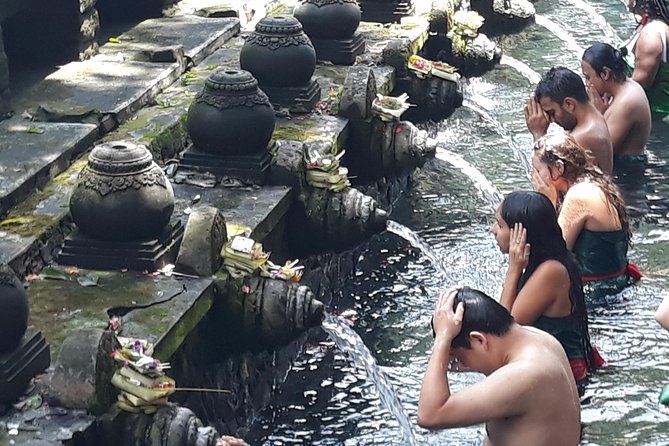
This package is marketed as skip the line. Here’s the honest way to think about it: Tirta Empul can have variable crowd patterns, and lines aren’t always the same level of chaos on every day and at every hour.
One schedule experience included in the booking feedback notes that there was no meaningful line to skip. That tells me skip-the-line here is likely about having entry priority or smoother access rather than a guaranteed empty line.
So what you can realistically expect:
- Faster entry than doing it totally on your own
- Less time waiting in the entry phase
- A smoother start so you can get to the ceremony part while you still have energy
If you want the best odds of a low-stress visit, the “go early” strategy shows up again and again in feedback. The general pattern: early timing reduces crowd friction and makes it easier to focus on the ceremony rather than negotiating your way through other people’s schedules.
How the temple visit is handled with a guide (and why it helps)
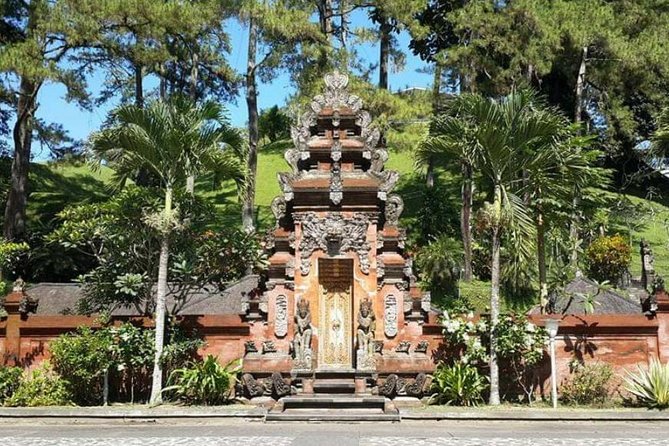
You’re going with an escort who’s there for the meaning, the order, and the practical steps. The guide is described as English speaking, and the tour emphasizes professional guidance through the temple grounds.
During the visit, you’ll be guided to the appropriate temple areas and you’ll learn about Balinese Hindu beliefs and rituals as part of the blessing process. In the feedback, multiple guides are praised for explaining:
- what different holy springs represent
- what you’re meant to do during the blessing
- how to move through the space without getting lost or missing a step
Some of the named guide examples include Kadek Nanda (praised for answering lots of questions), Pak de duren (friendly assistance), and Putu (helpful navigation and ceremony context). Again, you can’t guarantee the same person, but the pattern is clear: the best versions of this tour come with a guide who helps you understand the ceremony instead of just getting you through the gates.
Also, the guide support tends to reduce the “temple scramble” feeling. Even if you’re comfortable on your own, Tirta Empul’s layout and rules can make it hard to figure out what’s acceptable and what isn’t while you’re standing in a crowd. Having someone who can point you to the right spots changes the day from stressful to focused.
Sarong, sash, and offerings: what to know before you arrive
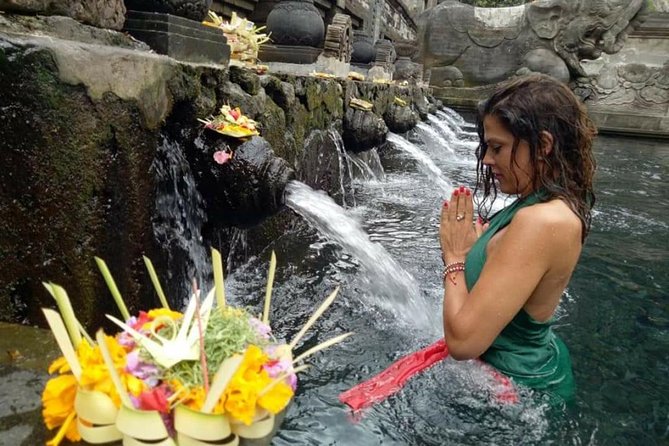
This tour includes a Balinese sarong and sash (loaned to you) and Hindu offerings as part of the experience. That’s a real value add because temple attire and offerings can be a last-minute hassle if you’re not prepared.
It also means the ritual participation is less about shopping and more about participation. You get help with what to do with the items and when to use them during the holy water blessing.
There’s also an important rule you must plan around: women on their period are not allowed to visit the temple. If that applies to you, you’ll need to consider a different activity on the same day.
One more practical note: the tour mentions women who can’t enter should avoid the temple visit, not just “skip the blessing part.” It’s a temple rule, not a comfort preference.
If you want your experience to feel respectful rather than rushed, treat the ceremony as the main event. Wear the provided attire properly, follow your guide’s cues, and keep your focus on the holy-water segment rather than trying to turn it into a photo marathon.
You can also read our reviews of more tours and experiences in Ubud


Timing realities: the 1–3 hour listing vs real road time
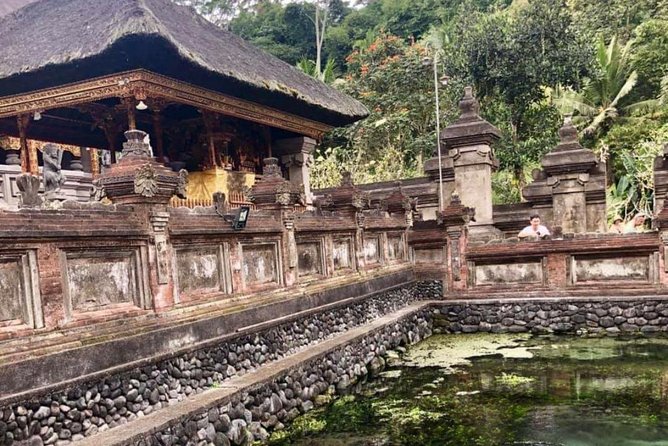
The duration is listed as about 1 to 3 hours. That’s often enough for some temple visits when you’re close to the site and traffic is light—but with private pickup and door-to-door timing, your actual experience can stretch.
One booking schedule example reported roughly:
- about two hours to get there
- about an hour and a half at the temple
- about two hours to get back
That’s a reminder to build a buffer into your day. If you have strict plans later (dinner reservations, a show start time, a flight window), plan conservatively. With private transfers, you’ll be paying for convenience, but the road still sets the pace.
If you can choose timing, going early is a smart move for comfort. Early arrival tends to reduce crowd pressure, and it also makes the ceremony feel less like a timeline you’re racing through.
If you’re traveling with people who hate unpredictability, make sure you give yourself enough breathing room in your schedule.
Small group size (max 14): what it changes on the ground
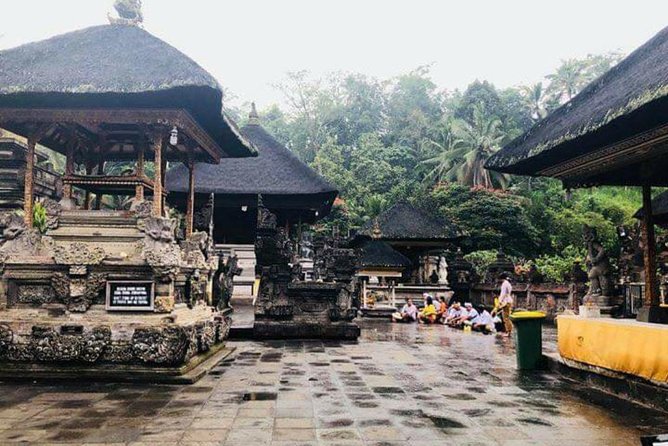
This isn’t an enormous bus tour. The group size is capped at 14 people, which matters at a temple.
With a smaller group:
- you’re more likely to keep moving without long bottlenecks
- you can ask questions without waiting your turn for the guide
- the escort can help with pacing and ceremony steps
In feedback tied to this tour style, the best experiences are often credited to the guide’s ability to explain and to manage the flow so you don’t feel rushed. A smaller group supports that kind of pacing.
Also, because this is private transfers plus a small group, you get a hybrid feel: you’re not stuck waiting on strangers forever, but you also have the social safety of doing it with a group.
If you want a calm day that still includes guidance, this group cap is a selling point.
Price and value: is about $29.54 a fair deal?
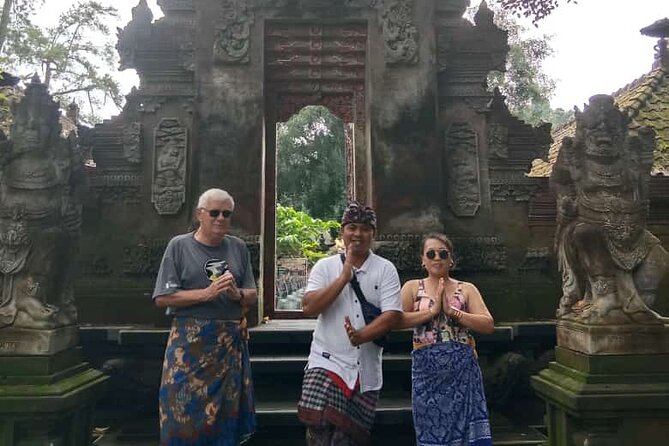
At $29.54 per person, this package can be strong value if you’re the type of traveler who values time and guidance.
Here’s what you’re getting that often costs extra if you book pieces separately:
- Admission included
- Skip-the-line access (or at least smoother entry access)
- Sarong and sash loan
- Hindu offerings
- English-speaking escort
- Private pickup and drop-off from Ubud
- Bottled water
- Mobile ticket
Where the value math gets interesting is the private transfer. If you’ve ever tried to arrange temple transport with limited time, you know how much planning headaches can cost you. This turns that into a single, predictable plan.
One thing to watch: the “1–3 hours” expectation can be optimistic. If you end up with longer road time, your per-hour value depends on what you care about. If the real goal is the ceremony and you want an easy, organized path, the price still makes sense. If you’re trying to squeeze it into a tight schedule, you may want to budget extra time.
Should you book this Tirta Empul skip-the-line tour?
Book it if you want a spiritually focused Tirta Empul visit with help. This is best for you if:
- you prefer private transfers over shared logistics
- you want a guide who can explain the ritual and holy-spring meaning
- you’d rather not handle sarongs/offering basics on your own
- you appreciate early-entry comfort and a smoother flow through the temple
Consider skipping or adjusting if:
- the temple rule applies to you (women on their period can’t enter)
- you’re on an ultra-tight timeline and can’t absorb possible longer drive time
- you’re expecting in-car Wi‑Fi to reliably work (it’s listed, but there’s ambiguity)
If you go in with respect, follow your guide’s pace, and give yourself buffer time, this is the kind of Bali day trip that stays with you for the right reasons.
FAQ
Is the admission ticket included?
Yes. Admission is included in the package price.
Do I get a sarong and sash for the temple?
Yes. The tour includes the loan of a Balinese sarong and sash.
Are Hindu offerings included?
Yes. Hindu offerings are included as part of the experience.
Does the tour include pickup and drop-off?
Yes. Complimentary pickup and drop-off are included from your hotel/villa/apartment lobby area in the Ubud area. You should provide your location before the start.
Is Wi‑Fi included?
Wi‑Fi is listed as included (onboard). There is also information provided that Wi‑Fi is available in the temple common area, so don’t rely only on in-car Wi‑Fi.
How long does the tour take?
It’s listed as about 1 to 3 hours, though actual time can vary based on driving time and your pace at the temple.
How big is the group?
The maximum group size is 14 people.
What happens if the tour is canceled due to weather?
The experience requires good weather. If it’s canceled due to poor weather, you’ll be offered a different date or a full refund.
Is free cancellation available?
Yes. Free cancellation is available up to 24 hours in advance for a full refund.