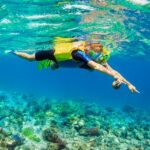
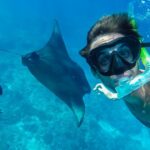
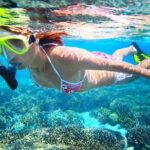
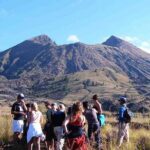
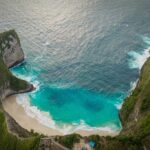
Manta rays and logistics, handled in one smooth day. This Bali-to-Nusa Lembongan snorkeling trip focuses on Manta Bay for your best chance at manta rays, with extra stops around Nusa Penida so the day doesn’t feel like a one-stop dash.
I like how easy it is to join even if you are not a strong swimmer—you’ll get safety gear and a guide-instructor. I also like the small-group feel (max 40) plus the crew’s friendly, organized vibe, including clear guidance once you’re in the water.
One thing to plan for: the day can include waiting and transfer time, so your actual time snorkeling may feel shorter than you expect. Also, boat seating matters for shade, especially if you end up near the front.
In This Review
- Key highlights if you want mantas and good organization
- Why Manta Bay (and the season) matters for manta rays
- Sanur to Nusa Penida in 5–6 hours: what the timing really feels like
- Stop-by-stop: Manta Bay, Crystal Bay, Gamat Bay, and the mangroves
- Stop 1: Sanur Harbour (and that sunrise-port feeling)
- Stop 2: Jungut Batu port area (Lembongan side connection)
- Stop 3: Manta Bay snorkeling (the reason you came)
- Stop 4: Crystal Bay (pelagic fish and open-water visitors)
- Stop 5: Gamat Bay (reef life, caves, and invertebrates)
- Stop 6: Mangrove Point on Nusa Lembongan (roots, shade, and animals)
- Stop 7 & 8: Jungut Batu Beach and return to Sanur
- Guides, snorkeling coaching, and how safety actually shows up
- The boat, shade, and why you may feel limited snorkeling time
- Price and logistics: is $70 good value for Bali manta-ray snorkeling?
- What’s provided, what to bring, and what to skip
- Should you book this Bali swim-with-manta-rays snorkeling day trip?
- FAQ
- Where is the meeting point for the tour?
- What time does the tour meet in Bali?
- How long is the snorkeling day trip?
- Is hotel pickup included, and which areas have free service?
- What does the tour cost per person?
- Are manta ray sightings guaranteed?
- Can non-swimmers join this snorkeling trip?
- What happens if the weather is poor?
Key highlights if you want mantas and good organization
- Manta Bay is the main event, with clear-water conditions and a high chance of manta-ray sightings
- Safety-first snorkeling with guides who run the session so non-swimmers can still participate
- Small-group cap (40 people max) helps keep the day under control
- Good value at $70 when pickup is included and you get admission tickets on key stops
- You may receive snorkeling photos and video, which saves you from chasing your own shots all day
- Nusa Penida variety: Crystal Bay and Gamat Bay add marine-life chances beyond just mantas
Why Manta Bay (and the season) matters for manta rays
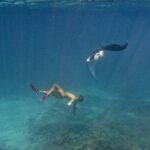
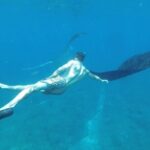
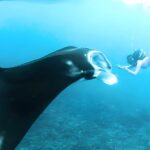
Manta rays show up best when the sea is calm and the water is clear. The best window for snorkeling with mantas around Nusa Lembongan is from March to November. In that period, visibility is typically better, and the chances of manta rays coming near the surface improve because they feed on plankton in the area.
This matters for your planning because manta-ray snorkeling isn’t about forcing an animal to perform. It’s about being at the right spot, under the right conditions, at the right time. Even with a great operator and a solid location like Manta Bay, sightings are never guaranteed—manta rays are living in their natural habitat.
The upside? If you do get mantas, it tends to be a special kind of close and calm. These are giant but gentle animals, and the goal is to watch them while you snorkel without messing with their routine.
You can also read our reviews of more snorkeling tours in Kuta
Sanur to Nusa Penida in 5–6 hours: what the timing really feels like
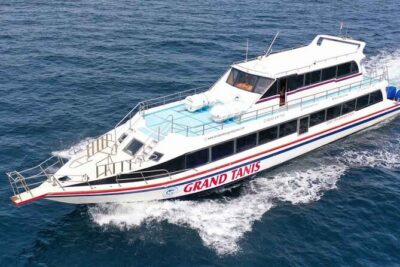
This trip is built around a fast-boat route from Bali to the Lembongan side, then movements across Nusa Penida by water and short land stretches. The whole outing runs about 5 to 6 hours (approx.), and pickup is offered for many areas.
Here’s the flow you’ll feel on the day:
- You meet at Sanur and check in around the departure time.
- You take the fast boat (Sanur Harbour to the Lembongan area).
- You spend time at key snorkeling sites around Nusa Penida, then head back the same way.
In practice, the day can feel like it has more “getting there” moments than you’d expect. One of the most common frustrations with manta-day trips is that transfers and waiting can eat into water time. So I’d go in with a calm mindset: even if Manta Bay is the main goal, the schedule includes moving between ports and sites.
Stop-by-stop: Manta Bay, Crystal Bay, Gamat Bay, and the mangroves
The itinerary is designed to hit multiple marine areas, but Manta Bay is the star. The other stops can be great for fish variety, turtles, and pelagic life when conditions cooperate.
Stop 1: Sanur Harbour (and that sunrise-port feeling)
You start at Arthamas Express Fast Boat at the Sanur Harbour area. Sanur itself is known for lovely sunrise views and the look of two iconic lighthouses, and it’s a nice place to get your bearings before you head out.
This first stage is also where you might do check-in and meet the rest of your group. If your schedule is tight back in Bali, plan to be ready early.
Stop 2: Jungut Batu port area (Lembongan side connection)
After you cross, you’ll connect through the Jungut Batu port area. It’s basically the handoff point that keeps the route organized as you transfer toward the next part of the day.
This stop is short, so don’t expect it to be a sightseeing moment. Think of it as a clean logistics bridge.
You can also read our reviews of more tours and experiences in Kuta

Stop 3: Manta Bay snorkeling (the reason you came)
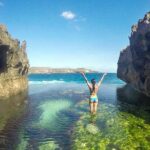
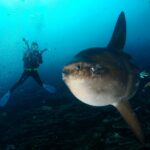
This is where you’ll spend about 30 minutes snorkeling at Manta Bay. The site is on the southeast coast of Nusa Lembongan and is known for clear water and lots of marine life.
A few practical notes that help your odds:
- Follow your guide’s positioning. Manta rays often come in based on currents and where plankton floats.
- Keep your movement slow once you’re in the water. Sudden splashes can scare fish and make it harder for you to spot mantas calmly.
- Have your camera ready, but don’t let it fully take over your attention. First, look with your eyes; then shoot.
Also, admissions are included here, which helps keep the total cost more predictable.
Stop 4: Crystal Bay (pelagic fish and open-water visitors)
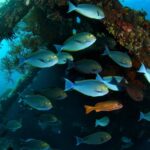
Next is Crystal Bay Nusa Penida for about 30 minutes. This stop is described as a place with pelagic fish, sharks, stingrays, sunfish, and turtles. If manta rays don’t show up, this is the kind of stop that can still keep the water time exciting.
Admission here is listed as free, which again supports the idea that the day is built as a multi-site snorkeling route rather than a single short stop.
Stop 5: Gamat Bay (reef life, caves, and invertebrates)
You’ll also spend around 30 minutes at Gamat Bay. It’s known to divers and described as having beauty and current strength in the area, while the water is also described as calm with caves and crevices and lots of reef fish and invertebrates.
If you’re a newer snorkeler, stay close to your guide and don’t drift far. Caves and crevices are fun to look at, but they can also make you forget your orientation. You want to be present, not wandering.
Stop 6: Mangrove Point on Nusa Lembongan (roots, shade, and animals)
Then there’s Mangrove Point on Nusa Lembongan, about 30 minutes. This is for observing mangrove roots and the animals that live in the forest.
One review comment suggests the mangrove stop might not be special enough if you mainly care about marine life. So I’d treat this as a light break between water segments—not as the highlight.
Stop 7 & 8: Jungut Batu Beach and return to Sanur
You’ll reconnect through the Jungut Batu Beach port area and cross back, arriving at Sanur Harbour. If you’re in the pickup/drop service zones, you’ll be met by a driver and escorted back.
Guides, snorkeling coaching, and how safety actually shows up
This trip leans hard on guided snorkeling. Even if you don’t consider yourself a confident swimmer, you can still join because the operator provides safety equipment and has guides who act like instructor-level coaches.
That’s not a small detail. With manta-ray snorkeling, you’re dealing with open-water conditions and animal spotting. A clear briefing, good in-water direction, and watchful guide attention are what turn a nervous start into a relaxed session.
If you get the guide named Nova, you’re in good shape. One review specifically calls him brilliant and highlights that the crew kept things friendly and well organized.
Also, the crew’s safety priority comes through in how they manage the group and the snorkeling flow. This is one of those tours where you don’t want to improvise your own plan. You’ll have a better day when you stick to the session plan.
The boat, shade, and why you may feel limited snorkeling time
Fast boats can be fun. They can also be sweaty. Boat comfort and shade are real factors here.
One review mentioned being seated toward the front of the boat with less shade under the roof. If shade matters to you, aim to pick a spot under the roof when boarding, or at least avoid the most exposed rows.
Timing-wise, the advertised day trip length is about 5–6 hours, but water time can vary based on conditions and how the day unfolds. If you’re the kind of person who gets antsy when schedules stretch, I’d mentally budget for waiting and transitions. Your best move is to keep the day goal simple: get to Manta Bay, snorkel calmly, then enjoy the extra bays if conditions are good.
Price and logistics: is $70 good value for Bali manta-ray snorkeling?
At $70 per person, this isn’t the cheapest way to see mantas—but it also isn’t wild money for a day trip that includes fast-boat travel and organized multi-stop snorkeling.
What you should consider about the value:
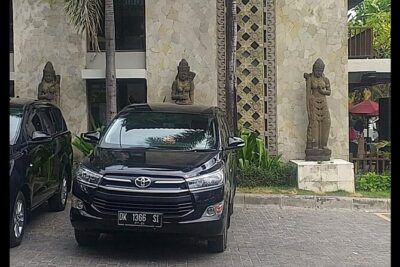
- Pickup is included for many popular Bali areas (Kuta, Legian, Seminyak, Petitenget, Jimbaran, Nusa Dua, Sanur). That can easily be the biggest money-saver if you’re staying outside central Bali traffic chaos.
- You’ll get mobile ticketing and a route that’s organized through ports, so you’re not piecing together ferries yourself.
- Admissions are listed as included for multiple stops (including Sanur Harbour ferry segments and key snorkeling/port stops), which helps the total feel more complete than a bare-bones tour.
- The max group size is 40, which usually means less crowding and better guide attention.
Costs to watch: hotel transfer is not automatically included if you’re outside the free pickup/drop zones. If you’re in places like Kerobokan, Canggu, outside the Ubud center, Uluwatu, South Nusa Dua, Padang2, Balangan, Bingin, or Tanah Lot, there’s an additional charge listed as IDR 450,000 per car return paid by cash.
So, if you’re staying in the included pickup zones, this often feels like a straightforward deal. If you’re outside them, the final cost can creep up once you add the transfer fee.
What’s provided, what to bring, and what to skip
You’ll want to pack for a saltwater, sun-heavy day. The tour asks you to bring:
- Comfortable clothing
- A change of clothes
- Comfortable footwear
- Sunscreen
- Camera
- Cash or credit card for self-expenses
A few smart habits:
- Bring sunscreen you trust. Reapplying at sea is annoying, so pick something effective.
- Pack your change of clothes in a way you can grab fast after you snorkel.
- Keep your camera secured. One wipeout on a wet boat and you’ll be buying a new one.
Also, the tour is weather-dependent. Good weather is required, and if conditions are poor, you’ll be offered a different date or a full refund.
Should you book this Bali swim-with-manta-rays snorkeling day trip?
If you want the best shot at manta rays without doing a DIY ferry puzzle, I think this is a strong option. It’s practical, guided, and built around Manta Bay, with extra marine-life stops in case conditions shift.
Book it if:
- You want manta-ray snorkeling from Bali with pickup available
- You’d rather follow a plan than figure out ports and timing on your own
- You care about safety coaching, especially if you’re not an ultra-confident swimmer
- You like the idea of more than one bay, not just one quick snorkeling moment
Skip or reconsider if:
- You hate waiting and schedule padding. The day can involve transfers and downtime, so your time in the water might feel shorter than the full-day label.
- You mainly want one thing and one thing only. If your only goal is mantas, understand that sightings aren’t guaranteed, and the non-manta stops (like mangroves) may not feel worth your time.
Bottom line: for most people, this is a sensible “manta rays first” day trip with organization that reduces stress. Just go in expecting nature’s reality—manta rays are the guests, not the itinerary.
FAQ
Where is the meeting point for the tour?
The meeting point is at Arthamas Express Fast Boat, Pertokoan Arcade, Jl. Matahari Terbit No. 4, Sanur Kaja, Denpasar Selatan, Kota Denpasar, Bali 80227, Indonesia.
What time does the tour meet in Bali?
Meeting is at 08.30 AM at Sanur Harbour Bali.
How long is the snorkeling day trip?
It runs about 5 to 6 hours (approx.).
Is hotel pickup included, and which areas have free service?
Free pick up and drop service area is listed for Kuta, Legian, Seminyak, Petitenget, Jimbaran, Nusa Dua, and Sanur. Outside those areas, an additional charge of IDR 450,000 per car return applies (paid by cash).
What does the tour cost per person?
The price is $70.00 per person.
Are manta ray sightings guaranteed?
No. Sightings are not guaranteed because manta rays are in their natural habitat and their presence can vary with environmental factors.
Can non-swimmers join this snorkeling trip?
Yes. Non-swimmers can snorkel because the tour provides safety equipment and snorkeling guides who act as instructors.
What happens if the weather is poor?
This experience requires good weather. If it’s canceled due to poor weather, you’ll be offered a different date or a full refund.