REVIEW · UBUD
Ubud Guided Walking Tour
Book on Viator →Operated by Ubud Story Walks · Bookable on Viator
A good walk in Ubud can teach you the town fast. This one ties together temples, art, and royal sites in about three hours, with guide-led stories that help the details click. I like the small group size (up to 8) because questions feel welcome, not rushed. Guides such as Windari and Ira are especially good at turning facts into street-level understanding, and the route keeps moving so you don’t just hop between landmarks. One possible drawback: you’ll be dealing with uneven temple stairs, steep bits, and patchy sidewalks, so you need solid comfort walking for the full stretch.
It also feels personal. You get local insight plus a mix of well-known stops and a less public-feeling final compound. The tour runs rain or shine, and in severe weather they’ll call you ahead of time, so plan to stay flexible rather than hoping for perfect skies.
In This Review
- Key things to know before you go
- A 3-hour Ubud Story Walk that starts at Cantina Rooftop
- Gunung Lebah Temple: where the story begins (and stairs are real)
- Campuhan Ridge Walk and the Dutch colonial thread
- Museum Puri Lukisan: art, exchange, and why Ubud got noticed
- Ubud Palace courtyards: royalty, architecture, and cremation rituals
- Puri Kantor and the Prince of Ubud connection
- What you get for $28.36: value and included tickets
- Pace, weather, and your shoes: the real-world logistics
- Who should book this Ubud guided walking tour?
- Should you book? My quick decision guide
- FAQ
- FAQ
- How long is the Ubud Guided Walking Tour?
- What is the price per person?
- What’s included in the tour?
- Where do I meet and where does the tour end?
- Is hotel pickup or drop-off included?
- What should I know about fitness and walking?
- What happens if it rains?
- Is the ticket mobile?
- Can I cancel for free?
Key things to know before you go

- Small group (max 8) means more interaction and a calmer pace.
- Three hours on foot includes uneven stairs and steep gradients, so wear good shoes.
- Museum Puri Lukisan ticket included (Rp 95,000) and short guided time at each stop.
- Special access to a Balinese compound and the Puri Kantor area at the end.
- Rain or shine, with advance calls for severe downpours.
- Bring a reusable bottle for water refills to cut plastic use in Bali’s rivers.
A 3-hour Ubud Story Walk that starts at Cantina Rooftop

This walking tour is built for getting oriented. You meet at Cantina Rooftop Restaurant in Ubud, then finish at Puri Kantor on Jl. Suweta. There’s no pickup or drop-off from your hotel, so you’ll want to plan a simple start point near Ubud central and figure out your end-of-walk transport afterward.
The route is timed to keep you from standing around. Expect about three hours of walking plus short guided stops, with a good rhythm: learn for a bit, see something real, then move on. That structure is a big part of the value—especially if you’re only in Ubud a short time and don’t want to waste half a day doing a loose “wander and guess.”
I also appreciate the ticket setup. You get a mobile ticket, and confirmation comes at booking time, so there’s less fuss the day of. It’s the kind of guided route where the guide helps you connect dots: why these sites look the way they do, and how the different eras of influence shaped Ubud into what it is today.
You can also read our reviews of more walking tours in Ubud



Gunung Lebah Temple: where the story begins (and stairs are real)
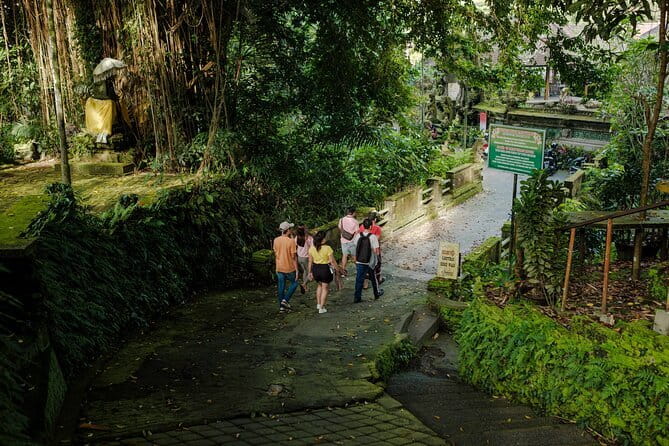
Your first stop is Gunung Lebah Temple, one of Ubud’s oldest temples. The guide explains the arrival of Hinduism in Bali and walks you through architectural features plus the role the temple has in community life. This is a smart opener because it frames what you’re about to see, from spiritual design to daily practice.
Timing is short—about 20 minutes—and that’s enough for the essentials when you have a good guide. If you tend to ignore temple details, this stop will likely change your approach. The key is that you don’t just look; you learn what to look for.
Practical note: temple sites mean physical unevenness. The tour description is clear that you should be prepared for uneven temple stairs and gradients. If you’re someone who’s comfortable with uphill steps and irregular surfaces, you’ll likely be fine. If not, factor in slower movement and take breaks when the group pauses.
Campuhan Ridge Walk and the Dutch colonial thread
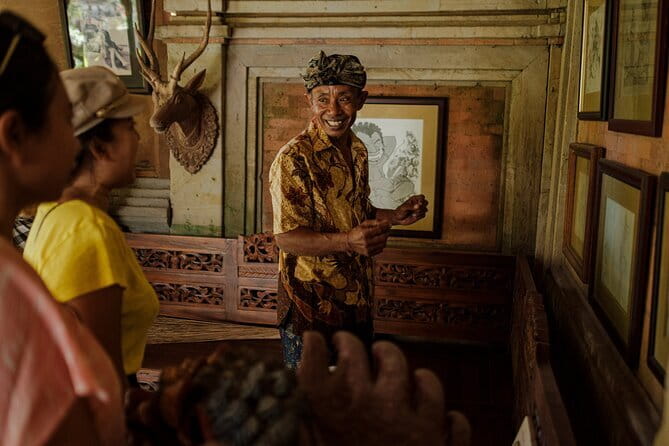
Next comes the Campuhan Ridge Walk, including a modest bridge linked to the Dutch colonial era. The guide uses this stretch to talk about Indonesia’s layered history, including the Dutch East India Company’s role in colonization and how colonial policies shaped the landscape of daily life.
This part is less about buying tickets and more about interpretation. Ridge walks can feel like “pretty views plus photos,” but here the goal is to understand why this area sits where it does in the wider story of Ubud and Bali. You’ll get the kind of explanation that makes it easier to connect what you see now to what the past set in motion.
This stop is also about pace. It’s listed at about 20 minutes, so it’s a manageable break in the tour. You’ll still be walking, though, and you’ll want to keep an eye on your footing on the path and around any uneven edges.
One more plus: the route keeps history moving forward. After a religious foundation in Stop 1, this offers a different lens—political and economic power—so Ubud doesn’t get reduced to only one theme.
Museum Puri Lukisan: art, exchange, and why Ubud got noticed

Then you shift from temples and colonial stories into art at Museum Puri Lukisan—called Ubud’s oldest art museum. You get about 45 minutes here, and it’s one of the strongest “why Ubud is Ubud” stops.
The guided focus is on collaboration between 20th-century Balinese artists and Western artists. The point isn’t just that art was made; it’s why the exchange mattered for Ubud’s reputation and how the town became a draw for people looking for something specific in Bali. This is the kind of explanation that helps you understand Ubud as a cultural hub, not just a convenient base for day trips.
In my opinion, this stop is where you start to feel the tour’s payoff. If the earlier stops teach you how to read religious space and history, this one teaches you how the modern art world intersected with local creativity. The guide’s job is to connect the dots—what changed, what stayed, and how Ubud’s identity took shape in the 1900s.
If you like museums but hate long, slow pacing, you’ll probably appreciate the guided time box. You get enough to feel oriented without getting stuck for an hour and a half of staring at labels.
Ubud Palace courtyards: royalty, architecture, and cremation rituals
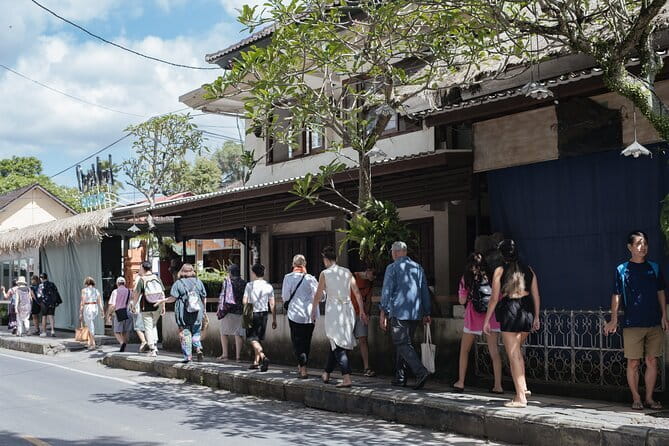
After the museum, the tour moves to Ubud Palace, focusing on the outer courtyards rather than the entire palace complex. You’ll learn about the historical and modern roles of Balinese royalty, plus how palace architecture fits into what the palace represents.
You’ll also hear about traditional cremation rituals. That’s not a random trivia topic—it’s tied to the beliefs and ceremonial life that surround the palace and its status. When a guide handles this well, the courtyard stop becomes more than “look at the pretty buildings.” It starts to feel like you’re observing the structure of authority and tradition in physical form.
Timing is short at about 15 minutes, which means you’ll want to stay attentive rather than wandering off. This is also a good moment to ask questions. A few well-placed questions can help you connect what you saw at the museum with what you see in the palace space.
Like the temple earlier, the palace area can involve uneven ground and steps depending on where you stand and how the group moves, so keep your shoes sensible. You’re not in “long hike” territory, but Ubud’s historic areas are often not flat.
You can also read our reviews of more guided tours in Ubud





Puri Kantor and the Prince of Ubud connection

The final stop is Puri Kantor. Here you get special access to a Balinese compound tied to Tjokorde Gede Raka Sukawati, the Prince of Ubud. The guide also connects him to the broader picture through his role as a co-founder of the Pitamaha Foundation.
This ending matters. Earlier stops give you public-facing context—temples, museum, palace. Ending with a compound gives you a different feeling: you’re not just passing monuments, you’re getting invited into a space that carries ongoing local meaning. The tour description specifically calls out exclusive access, and that matches what you want from a guided walk in a place where not every door is open.
You’ll spend about 20 minutes here. That’s enough for a guided walkthrough and explanation, plus a little time for questions. If you’re the type who likes the human side of history, this stop is where the tour tends to land hardest because it ties names and roles to how Ubud’s cultural landscape evolved.
It also explains why the guides are so often praised for being friendly and responsive. In a setting like this, you get the chance to ask real questions about what you’re seeing and not just listen to a script.
What you get for $28.36: value and included tickets

At $28.36 per person for about three hours, the value hinges on two things: what’s included, and how the guide uses the time.
Included items you should know:
- A local English-speaking guide (and an Indonesian guide option)
- Admission ticket(s) included for the listed stops
- Museum Puri Lukisan entrance ticket (Rp 95,000)
- Special access to a Balinese compound
- Local discounts
You’re not paying extra for museum entry here, at least for Puri Lukisan, which is a real cost driver in many tours. You’re also getting the guide’s translation of context—how Hinduism arrived, what Dutch colonial influence did, why the art world shaped Ubud’s image, and how royal roles show up in architecture and ritual.
Local discounts are a nice bonus if you plan to spend nearby after the tour, though the specifics aren’t listed. Still, it’s a sign the provider is plugged into local partners, not just running a generic walk.
Finally, small-group limits (up to 8 travelers) often justify price in places like Ubud. If you want personal attention—especially for questions—you’re paying for that time, not just the route.
Pace, weather, and your shoes: the real-world logistics

This is a walking tour in an urban, historic area. That means uneven surfaces are part of the deal. The tour is clear that it takes place around historic landmarks, and you won’t be able to change things like temple stairs, steep gradients, and patchy sidewalks.
So here’s how I’d think about it: if you can comfortably climb steps without white-knuckling it, you’re probably a match. You also need to be okay walking around town for up to three hours. If you’re dealing with mobility limits, you might find the route challenging even if the group moves thoughtfully.
Weather-wise, it’s rain or shine. If conditions turn severe—an intense downpour—they’ll call you before the start. That’s the practical approach in Bali. You should still plan for humidity, and build in some flexibility around timing.
Bring a reusable bottle, too. The environmental commitment here is to reduce plastic in Bali’s rivers through bottle refills. It’s a small effort that fits the “respect the place” vibe that makes Ubud feel better for everyone.
Group size and vibe also matter. With a maximum of 8 travelers, you’re less likely to feel like a nameless passenger in a line. Guides like Windari and Ira are highlighted for story skills and for answering questions in a way that makes the history feel usable.
Who should book this Ubud guided walking tour?
Book this if you want:
- A first serious Ubud activity that helps you understand the town fast
- A guide who tells stories in a way that makes your next stop easier to enjoy
- Short, focused time at multiple key sites, instead of one long museum day
- A more personal feel (small group) rather than a big bus-style tour
Skip it if:
- You can’t handle uneven stairs or steep sections
- You want a fully flexible self-paced walk with no guided structure
It also works well for couples, solo travelers, and anyone who likes asking questions. The format supports interaction, and the stops are arranged so you can connect religion, colonial history, art, and royal life without feeling overwhelmed.
Should you book? My quick decision guide
If you’re in Ubud for a short stay, this tour is a strong way to get your bearings. The route is compact but not shallow: temple basics, a ridge-walk history angle, a museum focused on artist collaboration, palace life with ritual context, and a special-access ending at Puri Kantor.
The main decision point is your comfort with uneven steps and walking for up to three hours. If that’s fine, the guide-led pacing and included tickets make the price feel fair. If stairs are a problem, you may want to choose a different style of sightseeing.
In short: this is a guided walk for people who want to understand Ubud, not just take photos.
FAQ
FAQ
How long is the Ubud Guided Walking Tour?
The tour runs for about 3 hours (approx.).
What is the price per person?
It costs $28.36 per person.
What’s included in the tour?
You get a local English-speaking guide, an expertly guided walking tour, admission ticket(s) for the included stops, Museum Puri Lukisan entrance ticket (Rp 95,000), special access to a Balinese compound, and local discounts.
Where do I meet and where does the tour end?
You start at Cantina Rooftop Restaurant | UbudSayan, Ubud, Gianyar Regency, Bali. The tour ends at Puri Kantor, Jl. Suweta No.1, Ubud.
Is hotel pickup or drop-off included?
No. The tour does not provide pickup or drop-offs from your accommodation.
What should I know about fitness and walking?
The tour takes place around historic landmarks with uneven temple stairs, steep gradients, and patchy sidewalks. You should be physically capable of climbing steps and walking around an urban environment for up to 3 hours.
What happens if it rains?
The tour operates rain or shine. If conditions are severe, such as an intense downpour, you’ll be called before the start time.
Is the ticket mobile?
Yes. The tour uses a mobile ticket.
Can I cancel for free?
Yes. You can cancel for a full refund up to 24 hours in advance. If you cancel less than 24 hours before the start time, the amount paid is not refunded.