REVIEW · UBUD
From Ubud : Ubud Balinese cooking class with Market tour
Book on Viator →Operated by Wayan Aris · Bookable on Viator
Ubud is full of food experiences, but this one wins because you begin with ingredients and end by actually eating what you cook. I like the way the session blends a market tour with practical cooking instruction, so you’re not just memorizing recipes—you’re learning why Balinese flavors work.
Two things I really like: you get a small-group setup (max 12 people), and the lesson is hands-on from the spice-paste stage onward. You’ll also get a meal you can taste right away, not just samples at the end.
One possible drawback to plan for: the cooking runs with a heavy spice approach. Even if you like heat, you may find some dishes tough to finish as served, so it’s smart to speak up early about your spice tolerance.
In This Review
- Key highlights worth your time
- Why this Ubud cooking class feels like a family kitchen
- Morning-only market tour in Tampaksiring: get ingredients first
- Rice paddies with Subak-style farming: a scenic, useful pause
- Afternoon-only canang offering: learning the food-ritual connection
- Spice paste first: the method behind Balinese flavor
- The 9-recipe cooking session: from classic dishes to repeatable skills
- Buffet lunch (or dinner) and the PDF recipe handoff
- Pickup and drop-off in Ubud center: convenient, but there’s a boundary
- Price and value: is $58 actually a good deal?
- The main thing to watch: spice level and pace
- Who this is best for (and who should reconsider)
- Should you book this Ubud Balinese cooking class with market tour?
- FAQ
- How long is the Balinese cooking class experience in Ubud?
- Is hotel pickup included?
- Does the market tour happen every day?
- Do you visit rice paddies?
- What happens in the afternoon class?
- How many recipes will I learn?
- Is there an included meal?
- Is the group small?
- What should I bring or plan for?
- Can I request a vegetarian option?
- Is there free cancellation?
Key highlights worth your time
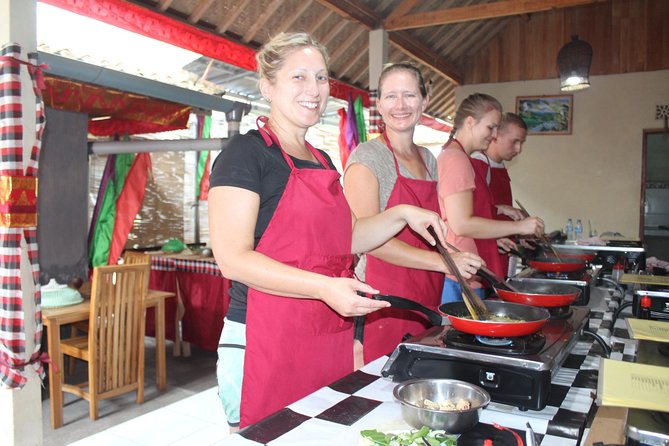
- Small group size (max 12): more attention while you cook, not just watch.
- Market + rice paddies (morning only): see where ingredients and local farming practices fit into daily life.
- Spice paste foundation: you learn the base sauce approach that drives many dishes.
- 9-recipe cooking session: you’ll cook enough to take the techniques home, not just one or two dishes.
- Canang offering (afternoon only): a chance to connect food culture with Balinese ritual.
- Printable recipe PDF: you leave with copies of the 9 recipes to recreate later.
Why this Ubud cooking class feels like a family kitchen
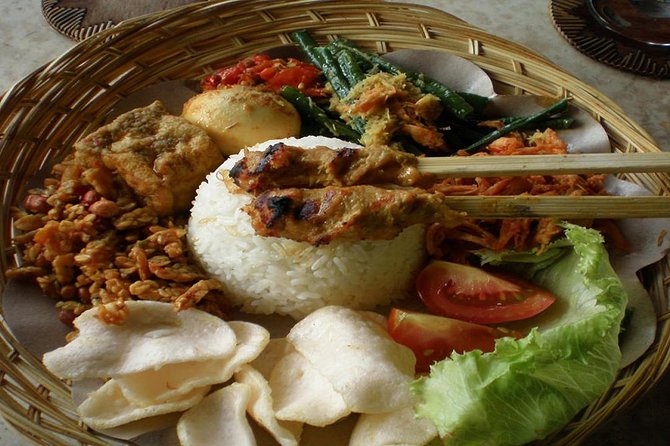
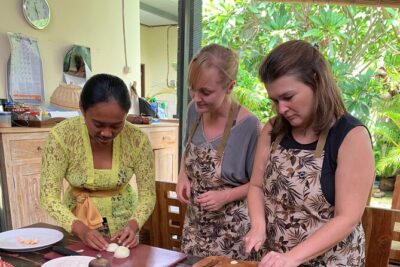
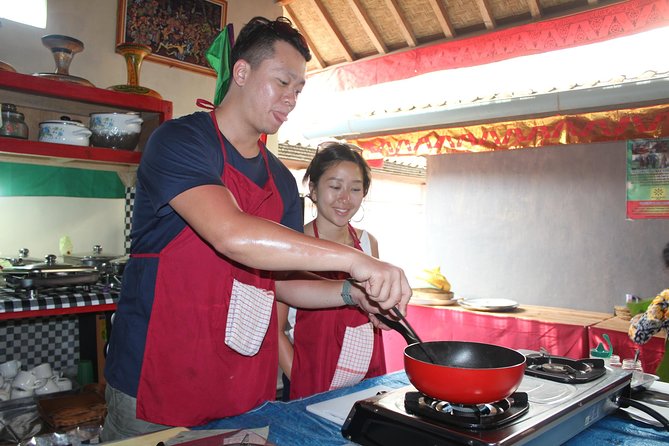
This is hosted by Wayan Aris, and you feel the family-style energy in the way the class is run. Even with a structured plan, the pace doesn’t feel like a factory demo. You’re cooking in the open-air style that Balinese families use, and the group stays small enough that you can ask questions without feeling rushed.
There’s also a clear teaching rhythm: you’ll start with a welcome drink (cold ice tea), then move into the core flavor work—how Balinese spice paste becomes the base for multiple dishes. That matters because a lot of cooking classes give you a list of ingredients. This one gives you a method.
Finally, the food is treated as something you share. You finish with a buffet-style lunch (or dinner depending on your class time), and you actually get to sit and eat what you made as a group.
You can also read our reviews of more shopping tours in Ubud
Morning-only market tour in Tampaksiring: get ingredients first
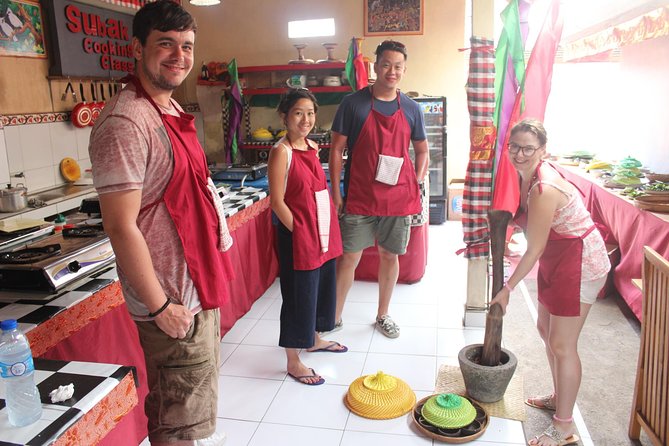
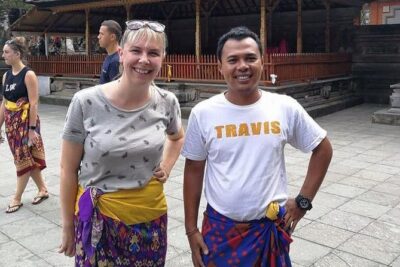
If you book the morning class, the day starts with a local market visit in the Tampaksiring village area. This stop is more than a quick walk for photos. It’s where you learn what people buy for everyday cooking and which ingredients matter for balancing the final dish.
A few practical tips help you get more from the market:
- Go with a curious mindset and ask why certain items are used, especially around spice blends and aromatics.
- Keep your cash handy for any extra purchases you might want during the market stop.
- Be ready for a lot of sensory input—market food has strong smells, bright colors, and plenty going on around you.
One reason this market piece stands out is that it connects directly to what you cook. You’re not learning ingredients in isolation. You’re seeing them first, then turning that knowledge into the spice paste foundation back at the cooking area.
Rice paddies with Subak-style farming: a scenic, useful pause
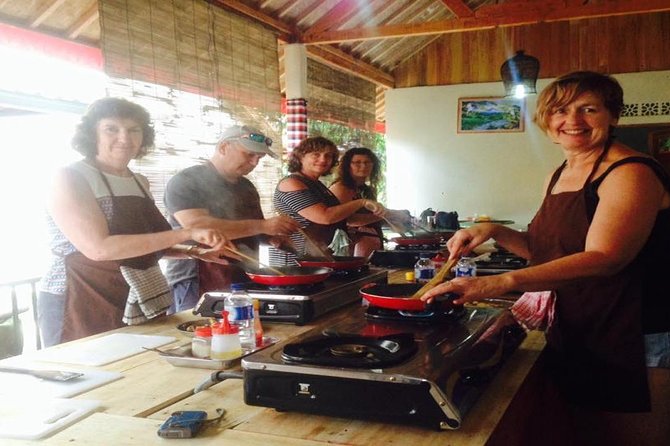
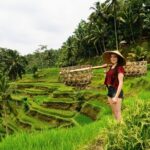
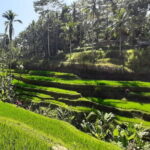
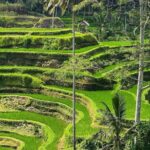
Also in the morning class, you’ll visit rice paddies. This is a classic Ubud contrast: you leave the market energy and take a slower look at how food grows.
It’s not just scenery. When you see rice cultivation up close, it makes the later cooking feel more grounded. Balinese meals rely heavily on rice, and seeing how local farming works adds context to why certain dishes fit so naturally into daily life.
Time-wise, plan for this as a real stop, not a two-minute viewpoint. If you’re someone who likes understanding where ingredients come from, this part earns its place in the schedule.
Afternoon-only canang offering: learning the food-ritual connection
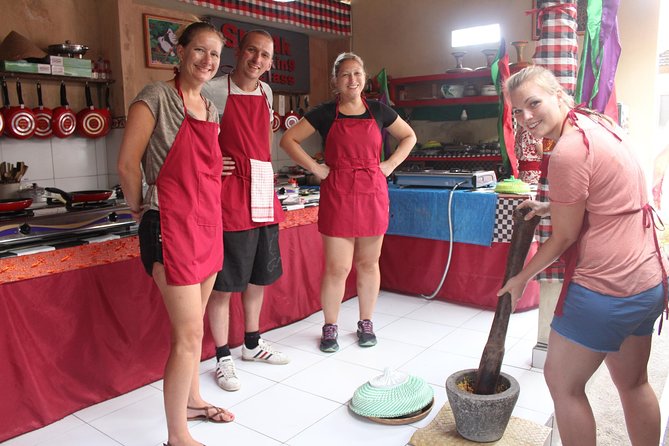
If you book the afternoon class, you’ll make canang offerings. This is the moment where the experience becomes more cultural than purely culinary.
Offering-making matters here because it links Balinese life, religion, and food habits. Even if you don’t consider yourself a ritual person, watching the steps and learning how these offerings connect to daily routines can change how you think about meals.
As with any cultural activity, go with a calm, respectful attitude and follow the guide’s pace. Photos can be part of the experience, but what’s more important is doing it right—so you can understand the process, not just capture it.
Spice paste first: the method behind Balinese flavor
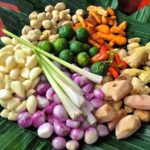
This class is built around one key idea: balance comes from your foundation. You’ll make Balinese spice paste that serves as a base (sauce) for many of the dishes you cook.
If you’re worried about not knowing Balinese ingredients, this is where the class helps the most. The instruction is structured so you can recreate the technique even if you’ve never touched these spices before.
Expect the teaching to focus on how the paste functions, not just which items go into it. Once you grasp that base approach, many dishes start to make sense—why one dish tastes warm, another feels more savory, and another reads like it has layered depth.
You can also read our reviews of more tours and experiences in Ubud


The 9-recipe cooking session: from classic dishes to repeatable skills
The cooking portion covers 9 Balinese recipes. The class description gives examples like fried tempe, Balinese chicken, and vegetable soup—plus other local favorites—so you’ll get a mix of savory mains and comforting dishes, not just one specialty.
What I like about a multi-recipe plan is that it teaches you how one technique travels across dishes. Instead of being overwhelmed by nine separate processes, you’ll keep returning to that spice-paste logic and adapting it for different flavors and textures.
Two practical things to remember:
- You’ll be cooking in a lively setting, so wear something comfortable and easy to move in. The tour notes mention a normal uniform—follow that guidance if they provide one.
- Bring your phone or camera. There are moments set up for photos, and it’s nice to have visuals for the recipes PDF later.
Buffet lunch (or dinner) and the PDF recipe handoff
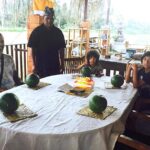
One of the best parts is that you don’t just cook—you get to eat in a proper buffet lunch at a Balinese house setup, with food tasting during the session. This gives you a chance to compare what you cooked versus what it should taste like once balanced.
Afterward, you’ll receive a PDF set of the recipes—9 copies of the Balinese recipes you made. That turns the class from a one-time experience into something you can actually repeat later.
Here’s how I’d use the PDF when you get home:
- Take a photo of any key steps during your cooking, then match them to the PDF directions.
- Write down your own spice-tweak notes while the flavors are still fresh in your memory.
- Plan one dish you can execute without buying an entire specialty pantry.
Pickup and drop-off in Ubud center: convenient, but there’s a boundary
For convenience, hotel pickup and drop-off are included—but only for Ubud center. You’ll ride in an air-conditioned vehicle with a driver, and you’ll also have a local guide.
If your hotel is outside Ubud center, you’ll likely face additional charges for transport. The tour data is explicit that drop-off and pickup outside the area cost extra, unless you request it in advance.
Also keep in mind:
- You may want cash on hand for extra costs or any extra purchases during the day.
- Time management is tighter in a 5-hour plan, so being close to the center makes everything easier.
Price and value: is $58 actually a good deal?
For $58 and about 5 hours, the value is pretty strong if you care about hands-on learning, not just a quick taste. Here’s what’s included in a way that directly affects your experience:
- Hotel pickup/drop-off (Ubud center only)
- A local guide and driver, plus bottled water and a welcome drink
- Food tasting plus a buffet meal (lunch or dinner depending on timing)
- The cooking instruction for 9 recipes, plus a recipe PDF handoff
- An air-conditioned vehicle
That combination—transport, guided cultural stops, and multi-dish cooking with take-home recipes—normally adds up to much more in Ubud.
Where the price can feel “off” is if you’re extremely sensitive to spicy food. Since the class is known for being fairly spicy, you might need to manage your expectations and communicate early.
The main thing to watch: spice level and pace
I’m glad the class is active, but one review highlighted that presentation can feel rushed or mechanical at points. That’s not a reason to avoid the experience entirely, but it is a reason to show up ready to focus.
The bigger real-world issue is heat. One participant noted the food was too spicy even for spice lovers, which can make the buffet part less enjoyable if you can’t slow it down or adjust.
If you go, do this:
- Mention your spice tolerance at the start of the cooking portion.
- Taste as you go, and ask how to balance or reduce heat if possible.
- Don’t plan to treat everything on the buffet as automatically “one bite only.” Some dishes may take time to eat comfortably.
Who this is best for (and who should reconsider)
This class is a great fit if you:
- Want a hands-on Balinese cooking experience with real technique, not just watching
- Like pairing food with culture—market stops, farming context, and canang offerings (depending on class time)
- Prefer small groups where you can ask questions
- Want a take-home tool (the PDF) rather than only photos
You might rethink it if:
- You know you struggle with very spicy food and don’t want to ask for adjustments
- You prefer a slower, more relaxed teaching style and dislike any pace that feels structured
Families can work well here too, since the format is active and teaches multiple dishes you can eat together—just keep an eye on spice tolerance for kids.
Should you book this Ubud Balinese cooking class with market tour?
If your priority is learning Balinese flavor basics through real cooking—especially how spice paste becomes the base for many dishes—this is a solid choice. The small group size, the inclusion of a market (morning) and rice paddies (morning), plus canang offerings (afternoon), and the 9-recipe PDF make the value feel practical.
Book it if you’re curious, hungry to learn, and willing to communicate about spice level. Skip it (or go with a backup plan) if you’re very heat-sensitive or you know fast pacing stresses you out.
FAQ
How long is the Balinese cooking class experience in Ubud?
It’s approximately 5 hours.
Is hotel pickup included?
Yes, hotel pickup and drop-off are included for hotels in Ubud center.
Does the market tour happen every day?
No. The traditional market visit is included only for the morning class.
Do you visit rice paddies?
Yes, the rice paddies visit is for the morning class.
What happens in the afternoon class?
In the afternoon, you make canang offerings.
How many recipes will I learn?
You’ll cook 9 Balinese recipes, and you’ll receive a PDF copy of the recipes.
Is there an included meal?
Yes. You’ll have buffet food to taste and a buffet lunch or dinner depending on the class time.
Is the group small?
Yes. The maximum group size is 12 travelers.
What should I bring or plan for?
Bring cash for any extra purchases and for additional transport charges if your pickup/drop-off is outside Ubud center. Also bring your camera/phone for photos.
Can I request a vegetarian option?
Yes. If you want vegetarian food, you should put the request in one day before the class.
Is there free cancellation?
Yes, you can cancel up to 24 hours in advance for a full refund.