REVIEW · UBUD
Balinese Ubud cooking school (9 Dish Cooking and Market Tour)
Book on Viator →Operated by Wayan Aris · Bookable on Viator
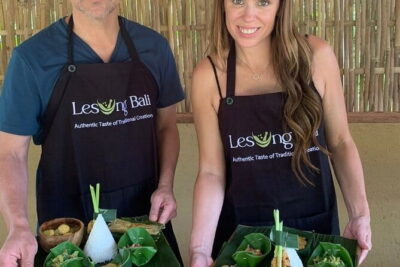
Cooking in Ubud beats another food tour because you leave with nine Balinese dishes and a pile of take-home recipes. I like that the class uses ingredients and tools you probably won’t find at home, and I also like the optional morning market and rice-field parts that explain how Bali eats beyond just the plate. One consideration: pickup is only included around Ubud—if you’re staying outside the area, you’ll want to budget extra transport time and cost.
I also appreciate how the day is paced for a small group (max 14). You cook at stations with step-by-step help from the team, and you’ll sit down to a lunch or dinner buffet made from what you prepared—so you’re not spending the whole time watching. The schedule can feel like a lot in five hours, so if you want a slow, super-quiet experience, plan to bring your patience (and an empty stomach).
In This Review
- Key takeaways before you book
- How this Ubud cooking class works in real life
- The itinerary: market mornings and village afternoons
- Start point and timing
- Morning option: traditional market + rice paddies
- Afternoon option: rice-field learning can switch, offerings may appear
- Cooking nine Balinese dishes (and not just tasting)
- The regular menu you might cook
- The vegetarian menu you might cook
- Why the nine-dish approach is actually useful
- Market stops: how to shop like locals (without buying junk)
- Rice fields and Balinese food culture: the context piece
- What the kitchen setup feels like
- Price and value: what $58 buys you
- Who should book this cooking school in Ubud
- Practical tips before you go
- Should you book the 9 Dish Cooking and Market Tour?
- FAQ
- How long is the Ubud 9 dish cooking class and market tour?
- Is pickup included?
- Will I visit the market?
- How many dishes will I cook?
- Is there a vegetarian menu?
- What’s included in the price?
Key takeaways before you book
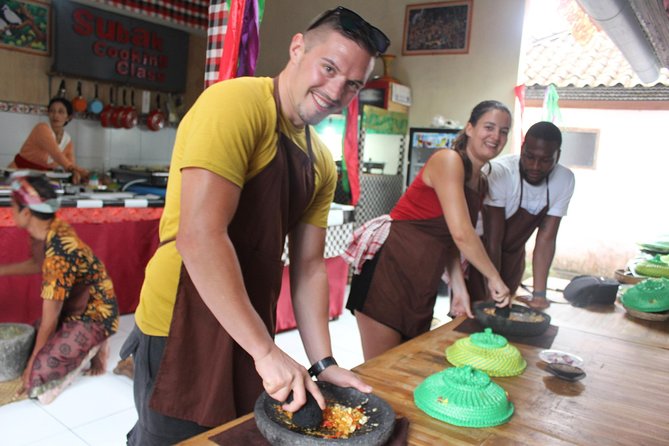
- Nine recipes, one session: You’re making far more than the typical class that turns into three dishes plus photos.
- Morning = market + rice: Choose the morning option if you want a traditional market stop and a rice paddies visit.
- Real ingredients, not just substitutions: Expect local spice pastes and flavors that are hard to mimic at home.
- Regular or vegetarian menus: You can pick your path and still cook the same set of dishes.
- Small group feel: Up to 14 people, with enough attention from the staff to keep things moving.
- Take-home recipe copy: You get a recipe sheet to recreate the dishes later.
How this Ubud cooking class works in real life
This is a Balinese cooking school experience in Ubud built around one idea: you learn by doing. The format mixes three parts—culture stops, market learning, and hands-on cooking—then finishes with the meal you cooked. The tour runs about five hours, and the price is listed at $58, which is a big part of why it feels like good value if you actually cook along and eat what you make.
The class is offered in regular and vegetarian versions. Either way, you’re cooking nine Balinese classics, plus you’ll get food tasting during the day. You also get access to kitchen equipment, mineral water, and a copy of the recipes to take home.
One more practical detail that matters: the experience provider/host listed is Wayan Aris, and the kitchen teaching is often led by a chef (names you might hear include Yogi). Guides you might meet on the cultural stops can also vary (you’ll see names like Tata, Wayan, Putu, and Gus tied to instruction and explanations). In other words, you’re not just sent to a kitchen—you’re walking through the process with local help.
You can also read our reviews of more shopping tours in Ubud
The itinerary: market mornings and village afternoons
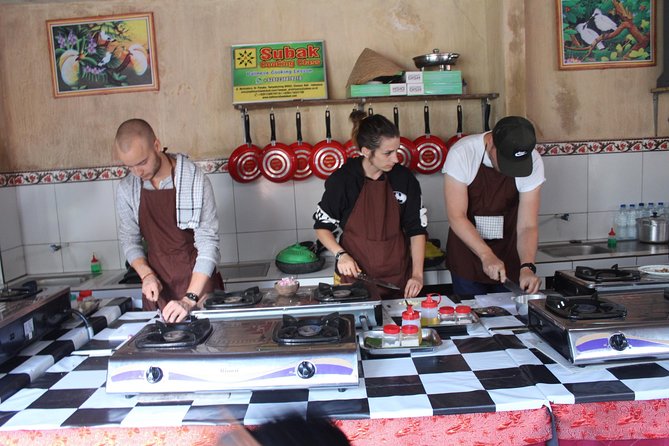
The exact stops depend on which option you choose, but the core flow stays similar: pickup (within Ubud), a cultural component, then cooking with a guided recipe walk-through.
Start point and timing
The activity starts back at the Ubud Palace area, and it ends there too. If you’re using the class, keep an eye on timing and have your reservation ready. You’ll also be asked to bring a camera. If you’re outside Ubud and need pickup, the listing says you must request it with extra charges (so don’t assume it’s automatic).
Morning option: traditional market + rice paddies
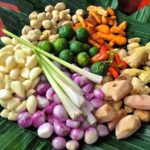
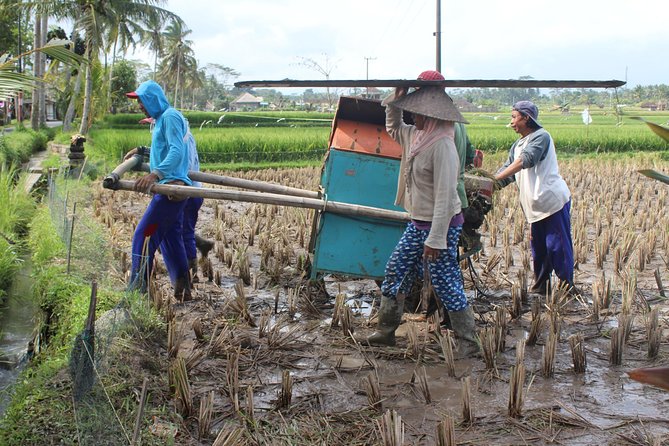
If you select the morning class, you get a traditional market visit with a guide. This is one of the most useful parts for anyone who wants to cook Balinese food later, because you start seeing how people shop—what they buy fresh, what they use for sauces and spice pastes, and how ingredients connect to daily meals.
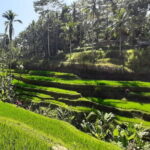
After the market, you’ll visit rice fields (the listing notes this as part of the morning option). You learn how rice is grown in Bali and what kinds of rice exist locally, plus the harvest timing. Even if you’re not a rice nerd, it helps you understand why rice sits at the center of meals here.
Afternoon option: rice-field learning can switch, offerings may appear
The afternoon version is described as including a local Balinese house visit and a specific extra activity: making Balinese offering. The notes say the offering-making is for the afternoon option only. If offerings and temple customs interest you, this is worth choosing for the cultural piece, even if the market stop is tied to mornings.
You can also read our reviews of more tours and experiences in Ubud




Cooking nine Balinese dishes (and not just tasting)
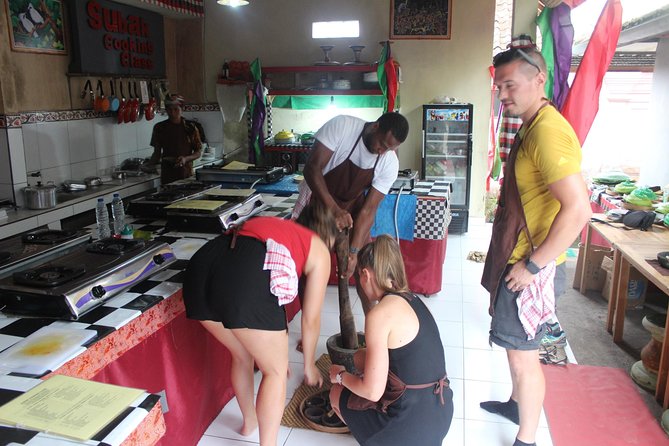
This is the heart of the experience: you cook at least nine recipes of Balinese food classics, step by step. The listing emphasizes that the team is there to guide you through preparation and cooking, and that you can learn the recipes to make at home for lunch or dinner.
What makes this class different from the many “chef demo + cook two things” styles is the range. You’ll move across flavors that define Balinese cuisine: coconut-based sauces, spice pastes, grilled banana leaf packets, raw chili-coconut mixes, and sticky palm sugar desserts.
The regular menu you might cook
If you choose regular, the menu lists these dishes:
- Soup Sayur Bali: Balinese vegetable soup
- Ayam santan bumbu Bali: fried chicken with coconut milk spice flavors
- Tempe manis: sweet fried tempe
- Sate lilit Bali: Balinese chicken satay (often spiced and mixed)
- Pepes ayam: grilled/steamed chicken in banana leaf
- Lawar Bali: mixed vegetables with Balinese spices
- Sambal matah: raw spices with coconut oil
- Base gede: basic spices paste (this is a foundation dish)
- Klepon cake: boiled sticky flour balls with palm sugar
All main courses are served with white rice. That matters because a lot of Balinese flavor comes from how sauces and sides act together with plain rice.
The vegetarian menu you might cook
For vegetarian, the listing swaps in plant-based versions:
- Soup Sayur Bali
- Tofu bumbu Bali
- Tempe manis
- Sate tempeh with peanut sauce
- Pepes tofu grilled or steamed in banana leaf
- Lawar Bali (still based on vegetables and Balinese spices)
- Sambal matah
- Base gede
- Klepon cake
Vegetarian cooking here isn’t treated like a token option. You still cook the same structure of Balinese flavors—spice paste, raw chili mix, banana leaf style cooking, and a sweet sticky dessert.
Why the nine-dish approach is actually useful
If you’ve ever tried to recreate a foreign dish at home, you know the problem: one sauce isn’t enough. One curry doesn’t teach the spice logic.
This class tries to solve that with repeated technique. You practice spice paste building (like base gede), raw chili blending (like sambal matah), and banana leaf cooking (like pepes). Then you eat the full set together at the end, which helps you understand how the flavors relate, not just how each dish tastes alone.
Market stops: how to shop like locals (without buying junk)
On the morning market visit, you’re not just looking at colorful stalls. You’re learning what people actually buy and why. The tour notes that you’ll explore how sellers and buyers move through the market, including fruits, vegetables, sweets, and cooking ingredients.
One practical tip for getting value from the market portion: if you have a grocery store habit at home, try to ignore it. Instead, focus on the ingredients you can realistically source where you live, and take mental notes on which spice blends and preparation styles made the dishes taste Balinese.
Also, markets are often where you’ll spot ingredients you might not know how to cook with. If you plan to cook later, ask about what a spice paste is for, or which ingredient gives the dish its signature aroma. This is the part of the day that makes your recipe copy feel less like a list and more like a cooking map.
Rice fields and Balinese food culture: the context piece
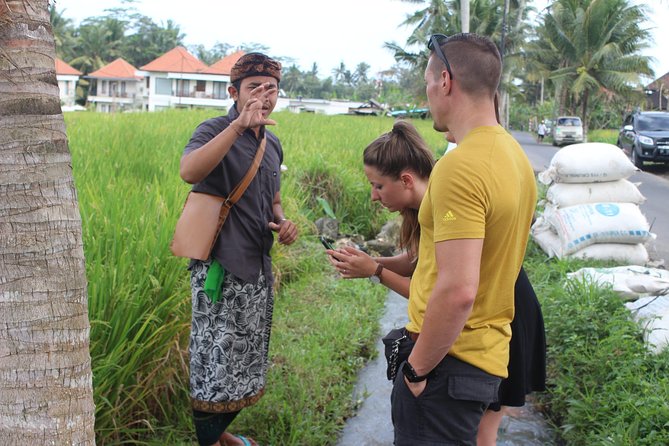
The rice-field visit adds meaning to what you’re cooking. You’re not just learning recipes; you’re seeing a basic food system that shaped Bali’s daily meals. The notes mention learning how rice is grown, the types of rice, and harvest timing.
Even a short cultural stop can change how you cook. When you understand that rice isn’t an afterthought, you’re more likely to treat it as part of the meal—especially since the menu explicitly pairs the main dishes with white rice. Your plate isn’t trying to replace rice with something else. It’s designed to work with it.
What the kitchen setup feels like
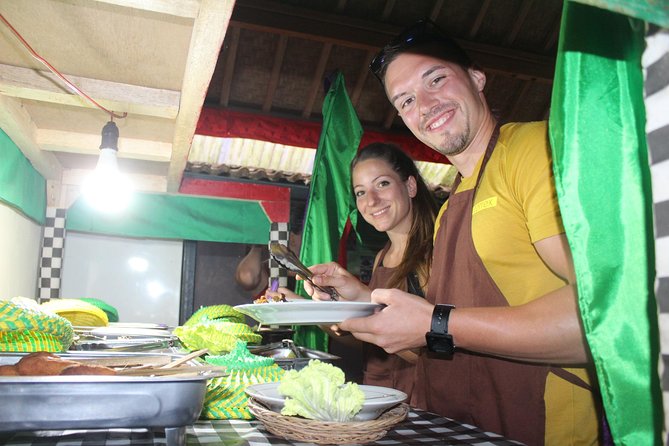
The school runs with a real teaching rhythm. The info says equipment and ingredients are provided, plus you get mineral water, recipe copies, tasting, and the meal. The group size (max 14) matters because it keeps attention practical rather than rushed.
One thing I appreciate about this kind of setup is that it reduces stress. You’re not hunting tools, tracking down ingredients, or trying to translate cooking steps. You’re cooking with a guide who can course-correct if you’re unsure.
That said, one consideration: to fit nine dishes into a five-hour window, some prep may be staged in advance. That’s not a bad thing, but if your dream is totally raw, unassisted improvisation, you might feel like it’s more guided than you expected. The flip side is that you’ll leave confident you can repeat the dishes later.
Price and value: what $58 buys you
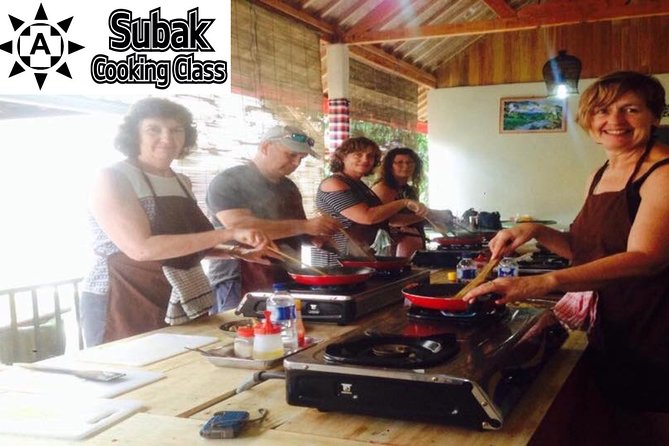
At $58 for about five hours, you’re paying for more than a cooking demo. Your money is covering:
- pickup and drop-off within Ubud only
- a market visit (morning option) and a rice paddies visit
- kitchen equipment and ingredients
- recipe copy
- food tasting
- and a lunch or dinner buffet featuring the dishes you made
When you compare this to classes that only cover a couple dishes and skip the market component, the value gets clearer. The biggest difference is output: you’re not leaving with two recipes and a craving. You’re leaving with a full spread and a shopping-and-cooking logic that you can repeat.
If you’re staying outside Ubud, the listing says there will be additional transport charges. That doesn’t automatically make the deal bad, but it can shrink the value if your ride costs more than you planned. If you’re trying to keep costs tight, base yourself in or near Ubud.
Who should book this cooking school in Ubud
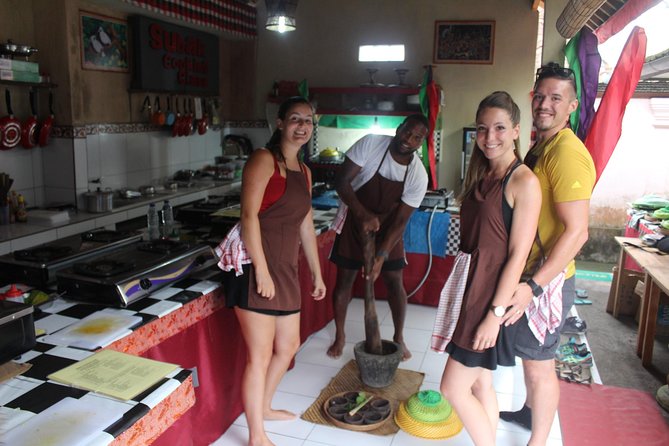
This fits best if you:
- love food and want a hands-on class, not just watching
- want to cook Balinese dishes at home (your recipe copy will actually help)
- are choosing between several Bali cooking options and want a bigger dish count
- care about cultural context—market and rice farming make the food feel grounded
It may feel less ideal if you:
- want an ultra-private experience (it’s limited to max 14, but still a group)
- need a slow, low-paced day (five hours with nine dishes is fast by design)
- are very far from Ubud and don’t want extra transport costs
Practical tips before you go
- Choose regular vs vegetarian in advance so you cook the right set of dishes.
- If you want the market, book the morning option (the notes say the traditional market visit is for morning).
- Bring a camera—the day includes market, rice fields, and cultural stops.
- If you’re outside the Ubud area, plan for extra transport charges and bring cash for additional transport costs if needed.
- Wear normal clothing appropriate for a cooking environment; you’ll be in a kitchen and doing hands-on work.
Should you book the 9 Dish Cooking and Market Tour?
If you’re the type of person who wants to cook after the trip—not just eat while you’re there—this is a strong pick. The nine-dish format plus the morning market and rice-field context is the combo that makes this feel like more than a class.
Book it if you’ll use the recipes and you like learning how ingredients connect to culture. Skip it only if you’re expecting a super-private custom lesson or you already know you won’t cook Balinese food again after returning home.
FAQ
How long is the Ubud 9 dish cooking class and market tour?
It runs about 5 hours.
Is pickup included?
Pickup and drop-off are included only for the Ubud area. If you’re staying outside Ubud, additional charges apply and you need to request it.
Will I visit the market?
Yes, but specifically the traditional market visit is for the morning class.
How many dishes will I cook?
You’ll prepare at least nine Balinese recipes as part of the class.
Is there a vegetarian menu?
Yes. You can choose regular or vegetarian, and the listed menu changes to tofu and tempeh versions of some dishes.
What’s included in the price?
The price includes mineral water, kitchen equipment, recipe copy, food tasting, and lunch or dinner buffet, plus local guides/host support, and (depending on the option) market and rice paddies visits.