REVIEW · UBUD
Balinese Cooking class with traditional morning market visit
Book on Viator →Operated by Bali Ubud Tour · Bookable on Viator
A market morning plus real Balinese cooking skills. In Ubud, this class pairs a traditional morning market with a chef-led workshop, so you shop for ingredients before you cook. You’ll also learn how Balinese offerings work, including canang, not just how to follow a recipe.
I especially like two things. First, it’s a true small-group format (up to 8), so chefs like Wayan and Dewa can answer questions without rushing you. Second, you don’t just learn—you cook several dishes and then sit down to eat what you made.
One possible drawback: it runs about 6 hours, and it starts early enough that you’ll want a calm plan before and after.
In This Review
- Quick hit key points
- From Hotel Pickup to the Ubud Market: why the day works
- Choosing Ingredients at the Traditional Morning Market
- Laplapan Village and the Canang Offering Lesson
- The Cooking Class: small group, real chef coaching
- The Meal You Eat: sit down, enjoy your results
- Price and value at $35 for a Ubud food day
- Who this Balinese market-to-cooking class is best for
- Should you book it? My practical decision guide
- FAQ
- How long is the Balinese cooking class with morning market visit?
- What does the $35 price include?
- Do I get hotel pickup in Ubud?
- How big are the groups?
- Can the class accommodate vegetarian or dietary needs?
- Is there free cancellation?
Quick hit key points
- Morning market ingredient shopping so cooking starts with real choices, not a pre-picked list
- Canang offerings included before the stove time
- Small group size (8 max) for hands-on help and quick answers
- Air-conditioned pickup and transport from your hotel
- Lots of food, not just one dish with a sit-down meal at the end
From Hotel Pickup to the Ubud Market: why the day works
This experience is built around a simple idea: if you want to cook Balinese food, start with the ingredients as locals see them. You’ll get hotel pickup and travel in an air-conditioned vehicle to the morning market first, which keeps the day from turning into one long sweaty slog. It also means you’re not trying to figure out routes or timing on your own before a class.
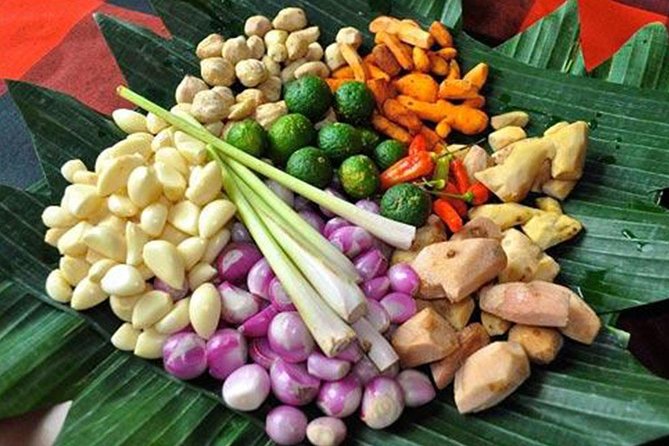
Once you arrive, you’re not just browsing. You’re learning how ingredients get chosen—what herbs look like, how spices smell, and what everyday cooking ingredients you actually use here. That’s the kind of knowledge that makes the dishes easier to reproduce at home later.
The workshop side is in the Ubud area, described as a jungle-style setting in the tour overview, which fits the vibe of the day. Expect a warm, welcoming atmosphere once the group arrives—one of the reasons people keep rating this so highly.
You can also read our reviews of more shopping tours in Ubud
Choosing Ingredients at the Traditional Morning Market
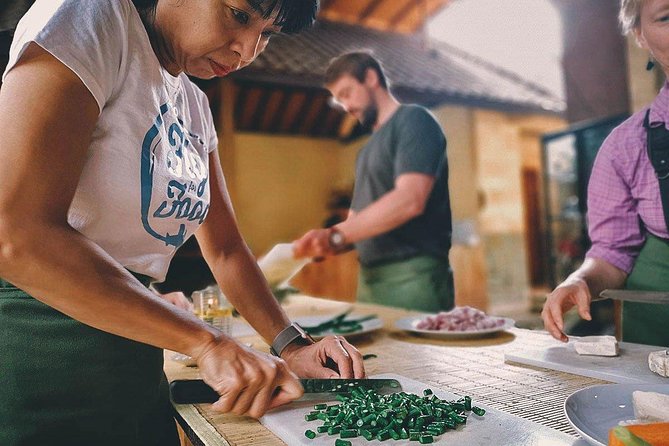
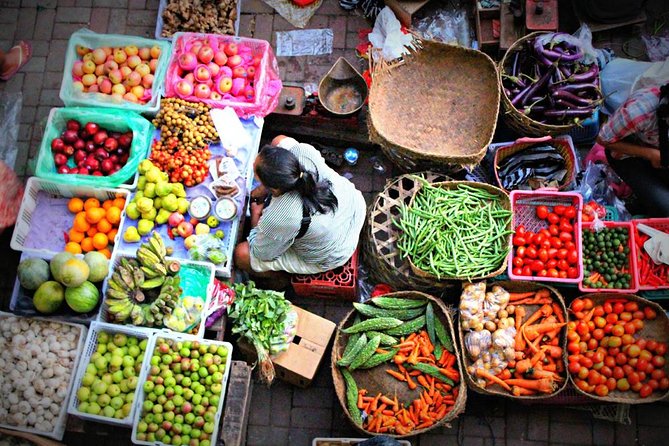
The market visit is the heart of the cultural part. You’ll walk through stalls that show vegetables, herbs, meat, and spices, and you’ll get to pick what goes into your cooking class. For a food lover, it’s not just educational—it’s practical. When you can connect what you bought to what ends up on your plate, the whole class clicks.
A lot of the charm here is the sensory education. People mention tasting unfamiliar items with guidance, and that tasting-only moment is actually useful. You learn what flavors the market is pointing you toward, so your cooking choices feel less like random steps and more like building a real Bali profile.
You’ll also hear explanations about what ingredients are used for and how they fit into Balinese cooking. That matters because Balinese flavors often come from the mix—spices plus aromatics plus the way everything gets processed—so seeing the ingredients up close is the fast route to understanding.
Practical tip: because this is a market, come hungry and ready to smell things. If you’re picky, don’t worry too much—many classes in Bali build in flexibility, and this one has a reputation for adapting to needs.
Laplapan Village and the Canang Offering Lesson
After the market, you head toward a traditional village area called Laplapan. You’ll get a warm welcome on arrival, which helps shift the mood from food browsing to cultural participation.
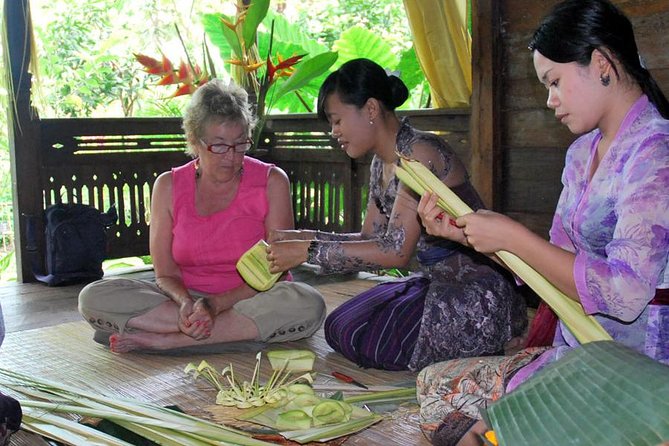
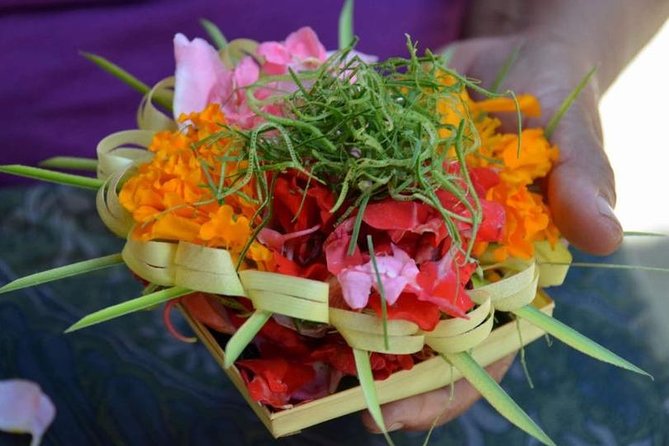
Then the program adds something you don’t always see in cooking classes: the process of making Balinese offerings. You’ll learn how to make canang and other offering equipment before you start cooking. This isn’t a random extra craft. In Balinese daily life, offerings connect food, spirituality, and community. Learning the basics gives you context for why the cuisine feels the way it does—why certain herbs and preparations matter.
In reviews, people specifically mention learning how to make offerings themselves, even putting the pieces together during the session. That hands-on element is what makes the lesson memorable. You’re not just watching someone do it—you’re doing it with help.
The Cooking Class: small group, real chef coaching
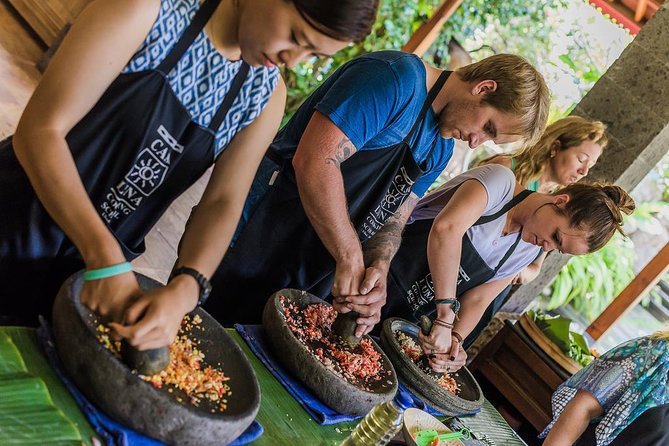
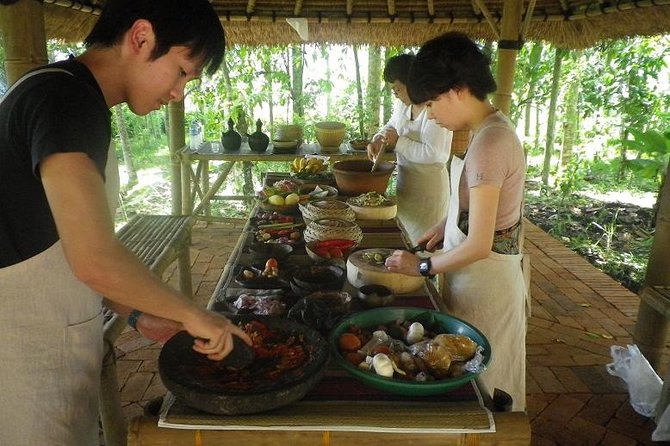
Now for the part you came for: cooking. The class is chef-led and designed to be interactive. You’ll prep starters, main courses, and dessert with guidance and assistance as you go. Since the group is max 8 travelers, you’re more likely to get direct help when your knife work, mixing, or timing needs a tweak.
Many people talk about how many dishes they made in one morning or afternoon block. Some reviews mention preparing around nine dishes, and others highlight that the class feels well organized rather than chaotic. You can expect a mix of hands-on work and some smart prep behind the scenes to keep things moving. One review notes that certain items were pre-prepped to make the schedule work, so you spend your energy cooking instead of waiting.
The atmosphere in the kitchen matters too. Reviews describe the cooking place as clean and efficient, and the staff as warm and funny. One name that comes up repeatedly is Wayan, and another is Dewa. Even when different teachers are involved, the pattern is the same: you get patient coaching, answers to questions, and a class that doesn’t feel like you’re being herded through.
If you’re doing this as your first cooking class anywhere, you’ll likely appreciate that the steps are explained clearly and the pace stays friendly. It’s not just a show. You’re learning technique, not memorizing a menu.
The Meal You Eat: sit down, enjoy your results
The best part of any cooking class is the moment you taste what you made—especially when you’ve already spent time selecting ingredients and building offerings. Here, the payoff is a sit-down meal featuring the dishes you cooked.
Reviews mention that the final spread can be stunning and that there’s plenty to eat—enough that the day feels substantial rather than like a quick snack workshop. People also mention a welcome drink and snacks early on, so you’re not arriving starving and then waiting hours to taste.
There’s also a practical benefit: you’re eating food while it’s still fresh and while the cooking process is still in your memory. That makes it much easier to connect flavor to technique later when you try again.
Another plus: many participants say they leave with a recipe book or recipes to recreate the dishes at home. Since you’ll have seen the ingredients at the market and cooked them with guidance, those recipes become usable instead of just pretty keepsakes.
You can also read our reviews of more tours and experiences in Ubud





Price and value at $35 for a Ubud food day
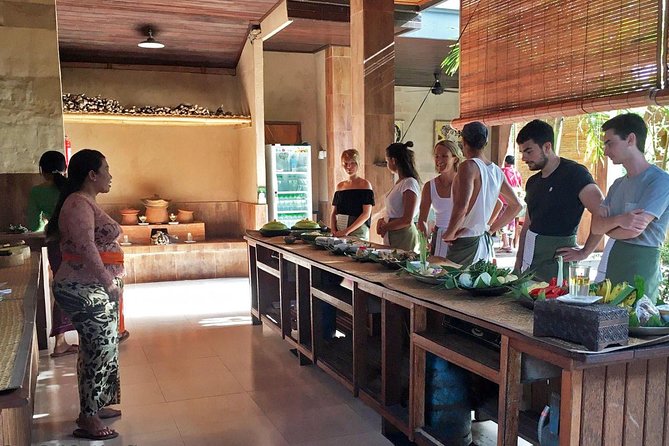
At $35 per person for about 6 hours, this is priced like a solid value experience rather than a luxury add-on. You’re getting:
- hotel pickup and air-conditioned transport
- a morning market ingredient selection
- a cultural offering-making lesson (including canang)
- chef-led cooking instruction with equipment and class fees
- a sit-down meal you helped create
A lot of cooking classes only cover the workshop. This one starts earlier with the market, which is where the knowledge becomes transferable. Even if you cook only a few of the dishes later, you’ll likely remember the scent-and-flavor logic you learned while choosing ingredients.
You can also see why it stays popular: it’s small group (8 max), and reviews rate it extremely high for both teaching and hospitality. One driver named Awan shows up in reviews too, which hints that the full chain—pickup to kitchen—gets handled with care.
If you’re budgeting, the key “value” factor is time and completeness. For $35, you’re not spending a half day just watching. You’re shopping, cooking, and eating as part of one organized flow.
Who this Balinese market-to-cooking class is best for
This class fits best if you’re the kind of traveler who wants hands-on culture, not just photos. It’s ideal for:
- foodies who want to understand the ingredients behind Balinese dishes
- first-timers to cooking classes who want structure and support
- travelers who like small groups and personal attention
- anyone curious about Balinese offering traditions, not just cuisine
If you hate hands-on activities, this may feel like work. But most people who book it seem to enjoy the mix of cooking prep, market walking, and doing the offerings with guidance.
Also, if you have dietary needs, there’s good news in the reviews. Vegetarian options were mentioned, and the instructor adapted to dietary requirements for at least some participants. Still, you’ll want to confirm your needs when you book so the menu can fit you.
Should you book it? My practical decision guide
Book this if you want a real Balinese food day that starts at the market, includes offerings, and ends with you eating what you cooked. The small-group format and the emphasis on market ingredient choice are the two things that make this feel more authentic than many generic cooking tours.
Skip it (or at least reconsider) if you want a purely relaxed sightseeing morning. This is interactive. You’ll be cooking and participating, not just watching someone cook in silence.
If you’re trying to pick one “food experience” in Ubud, this is a strong choice because it connects the dots: ingredient sourcing, cultural context (canang offerings), and cooking technique. And at $35, it’s the kind of outing that gives you skills you can actually use at home—plus a recipe book to help you remember.
FAQ
How long is the Balinese cooking class with morning market visit?
It runs for about 6 hours (approx.).
What does the $35 price include?
The price includes cooking equipment, air-conditioned vehicle transport, cooking class fees, and taxes. A sit-down meal is part of the experience.
Do I get hotel pickup in Ubud?
Yes. Pickup from your hotel is offered, and air-conditioned transport from your hotel to the market and workshop is included.
How big are the groups?
The tour has a maximum group size of 8 travelers.
Can the class accommodate vegetarian or dietary needs?
Vegetarian options were mentioned in reviews, and the instructor adapted to dietary requirements for at least some participants.
Is there free cancellation?
Yes, you can cancel for a full refund up to 24 hours in advance of the experience start time. After that point, the amount paid is not refunded.