REVIEW · UBUD
Gianyar Market Visit & Cooking Class in Ubud with Kadek & Putu
Book on Viator →Operated by Traveling Spoon · Bookable on Viator
Bali food lessons start with a market basket, not a menu. This Ubud cooking class takes you to the Gianyar market with Kadek and then into their family compound with Putu to cook traditional Balinese dishes from scratch. You’ll learn what local fruit, vegetables, and herbs actually do in Balinese cooking, then you’ll sit down and eat the results.
I especially liked two things: the hands-on way you chop and cook (not just watch), and the ingredient-first approach Putu uses, breaking down what goes into each dish. The only real consideration is timing and energy: four hours is long enough that you’ll be walking a local market and cooking right after, so come ready to focus and sweat a little.
In This Review
- Key things you’ll notice on this class
- From Ubud pickup to Gianyar market: how the day gets real fast
- The family compound kitchen: where Putu’s teaching style matters
- What you’ll cook (and what it teaches you)
- The meal part: you get to actually enjoy it, not rush past it
- Price and value: what $80 really buys you
- Who this cooking class is best for (and who should look elsewhere)
- Practical tips before you go
- Should you book Gianyar Market Visit & Cooking Class with Kadek & Putu?
Key things you’ll notice on this class
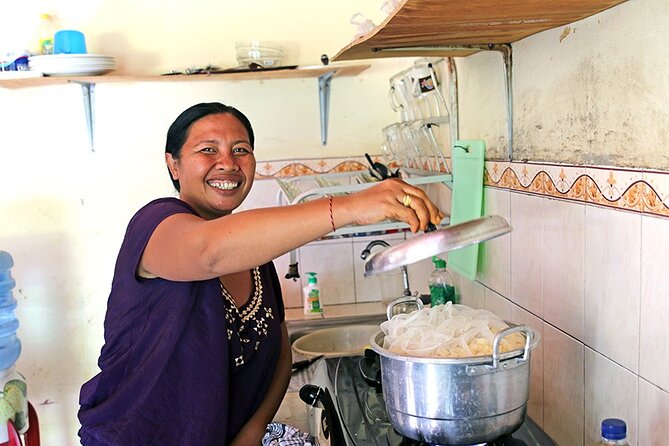
- Gianyar market shopping first: you pick local ingredients used in Balinese recipes, not random “tour food.”
- Kadek and Putu teach side-by-side: you get both the market context and the cooking guidance.
- Hands-on cooking from chopping to finishing: you do the work, then you eat the payoff.
- Seasonal menu flexibility: the exact dishes and ingredient choices may change by what’s available.
- Real-family meal structure: you cook, then enjoy a proper Balinese sit-down meal together.
- Vegetarian option available: you can request vegetarian preferences when booking.
From Ubud pickup to Gianyar market: how the day gets real fast
Most cooking classes start with a kitchen. This one starts with your eyes and your senses. Kadek picks you up from your Ubud hotel and drives you to the Gianyar market, where you’ll see the fruits, vegetables, and herbs that show up again and again in Balinese cooking.
I like this approach because it cuts through the usual guessing. Instead of thinking of recipes as fixed lists, you start to understand how local markets shape flavor: what’s in season, what’s locally grown or commonly sold, and what ingredients the cuisine relies on day to day.
The market stop also helps you get comfortable with the pace of a working community. It’s not a museum set. Expect lots of stalls, lots of choices, and plenty of everyday food energy. Even if you’re not the type to love shopping, you’ll have a purpose here: you’re looking for ingredients tied to what you’ll cook later.
One extra nice option: if you’re interested, Kadek can show how he grows local fruits and vegetables at home, a few doors down from Putu’s place. You may also get to try fresh juice made from just-picked seasonal fruit like mulberry, passion fruit, papaya, mango, or jackfruit—depending on what’s currently available.
You can also read our reviews of more shopping tours in Ubud

The family compound kitchen: where Putu’s teaching style matters
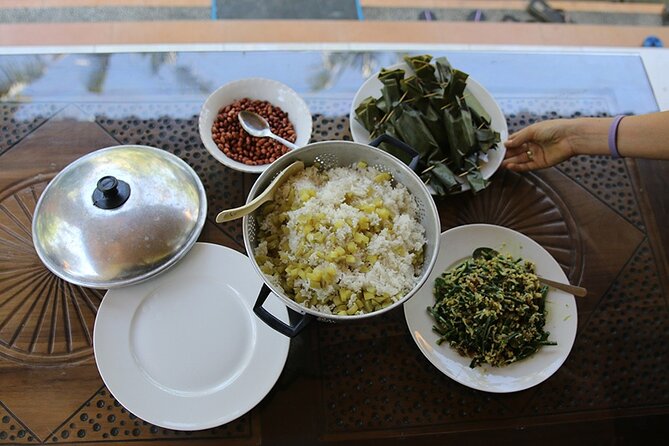
After the market, you head to their home. This is a family compound, not a showroom kitchen, and that matters. The cooking setup feels lived-in, and Putu’s guidance is practical. From what’s described, the class isn’t about memorizing steps. It’s about understanding ingredients—what they are, what they do, and how to use them in real cooking.
In particular, I like the ingredient breakdown mentioned in the reviews. That’s the difference between making one dish once versus being able to remake a similar flavor at home. If you’re serious about cooking, this helps you transfer skills across countries.
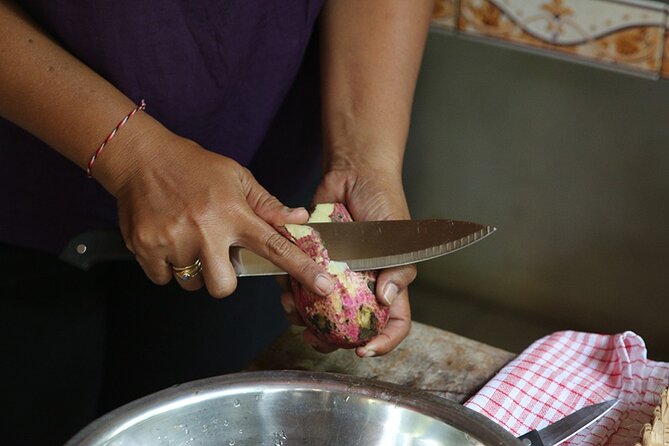
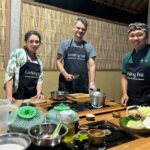
You’ll cook traditional Balinese dishes from scratch with the family. That usually means you’re doing the physical tasks—chopping, mixing, and putting dishes together—not only following a script. One review highlighted that the class runs full hands-on from chopping all the way to cooking, and that matches the structure: learn, then work, then eat.
Also, the tour is private for your group, so you’re not squeezed into a crowd. If you want to ask questions or adjust for dietary needs, the format makes it easier to get personal attention.
What you’ll cook (and what it teaches you)
The menu can vary with the season, but you can plan around the kinds of dishes and the general flow: savory plates first, then dessert.
Here’s what the class commonly includes:
- Piquant chicken satay: a classic, flavor-forward dish that shows how Balinese seasoning and grilling-style presentation come together.
- Fresh vegetable soup: a way to learn balance—vegetables plus aromatic flavor building rather than just heat.
- Stir-fried vegetables: short, high-flavor cooking where the ingredients and timing both matter.
- Steamed fish: lighter than many meat dishes, but still full of local seasoning logic.
- Rice: a foundation dish in Bali, and usually part of the meal structure.
- Dessert options: either black sticky rice pudding with fresh coconut cream or fried banana with grated fresh coconut and palm sugar.
What this teaches you is how Balinese meals are designed to work as a set. You’re not just cooking one hero dish. You’re making several components that contrast in texture (satay vs. soup), temperature and prep style (fried banana vs. steamed fish), and sweetness level (palm sugar coconut notes at the end).
If you’re thinking ahead for cooking at home, this variety is useful. When you’ve made five dishes in one lesson, you start spotting patterns: similar herbs showing up across recipes, sweet notes appearing in dessert without needing a complicated technique, and savory spice building that repeats.
The meal part: you get to actually enjoy it, not rush past it
After the cooking, you eat your meal in the family setting. This is one of the best parts of cooking classes that don’t feel like a performance. You’re not tasting a few bites and being herded to the next activity. You sit down and enjoy what you made.
The included meal is described as an authentic Balinese spread, and it can include alcoholic beverages as part of the experience. That’s a small detail, but it changes the vibe: it feels like a real meal with conversation, not just a cooking lesson checkmark.
One reason this works well is that you’re tasting with fresh context. You remember what you chopped, what you simmered, and what you adjusted. So when you take a bite of something like the chicken satay or the vegetable soup, you understand why the flavor lands the way it does.
Also, if you request a vegetarian option at booking, the class can be adapted. Just plan to communicate your needs when reserving, because the menu can vary based on season and availability.
Price and value: what $80 really buys you
At $80 per person for about four hours, this class looks expensive at first glance—until you break down what’s included.
You’re getting:
- A private market visit plus cooking class inside a family home
- A homecooked Balinese meal with dessert
- Pickup and drop-off to Ubud hotels only
- Alcoholic beverages included
- A structured teaching experience focused on cooking from scratch
In other words, you’re paying for more than cooking instructions. You’re paying for local guidance, market access to ingredients, time in a real kitchen environment, and the meal itself. Many cooking classes teach, but they don’t always connect you closely to where ingredients come from. Here, the market visit is part of the learning, not a warm-up.
If you’re staying in or near Ubud, the included transport to your hotel can also help the value feel more “all-in.” The only caveat is the transport boundary: pickup/drop-off is for Ubud hotels, and there’s an additional charge if your hotel sits outside Ubud. If you’re outside the main area, factor that in before booking so you know your real total.
You can also read our reviews of more tours and experiences in Ubud





Who this cooking class is best for (and who should look elsewhere)
This is a strong match if:
- You want authentic Balinese dishes you can recreate later.
- You like cooking and don’t mind being hands-on.
- You’re curious about local ingredients and how Balinese flavors are built.
- You’d enjoy a family-style meal setting with guided attention from Kadek and Putu.
It may not be the best match if:
- You hate markets or prefer sightseeing to shopping.
- You want a short, low-effort activity. Four hours of market + cooking means you’ll stay busy.
- You’re expecting a huge variety of international menu options. This class focuses on Balinese cooking, and the menu may shift with season.
If you’re a vegetarian (or cooking for someone who is), this class is specifically described as having a vegetarian option, as long as you request it during booking. That’s a big plus compared to classes that only offer a vague “no meat” substitution.
Practical tips before you go
A few small things will make the day smoother:
- Wear clothes you’re fine getting used in a working home and kitchen setting.
- Plan for active time in a cozy, busy market atmosphere—meaning you’ll be moving, choosing ingredients, and staying alert to cues.
- Bring a positive attitude about seasonality. Since the menu varies, your dishes may not match every single dish description exactly, but the cooking lesson stays true to the tradition.
- If you have allergies or specific dietary restrictions, advise the host when booking so they can plan the menu accordingly.
And since Putu’s class style is hands-on and ingredient-focused, come with questions in mind. Even basic ones like what to replace a particular ingredient with at home can help you turn this into a real skill, not a one-day memory.
Should you book Gianyar Market Visit & Cooking Class with Kadek & Putu?
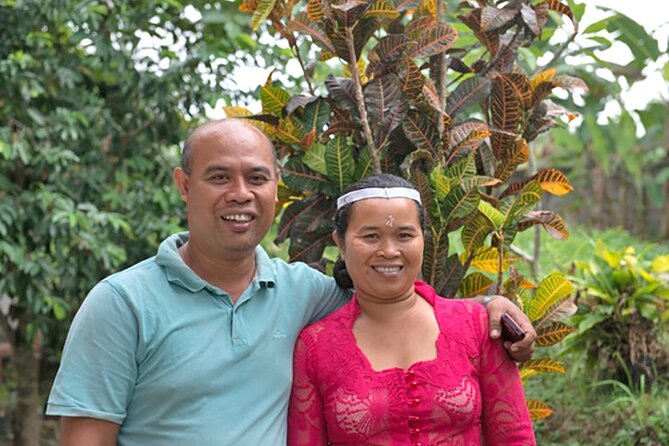
I’d book this if your goal is to go home with real cooking know-how and a clear sense of how Balinese dishes are built. The strongest selling points are the ingredient-first market visit, the hands-on cooking led by Putu, and the fact that you eat what you make in a family setting.
If you’re mainly looking for a passive cultural show, you may find it too active. But if you want to shop for ingredients, cook from scratch, and build repeatable flavor patterns, this is exactly the kind of experience that pays off after you’re back in your own kitchen.
If you’re in Ubud soon and you like food that feels like it comes from daily life—not a staged set—this one is worth your time.