REVIEW · UBUD
Half Day Cycling Tour ( Manual Bike )
Book on Viator →Operated by Greenbike Adventure · Bookable on Viator
Downhill cycling in Bali is a cheat code. This half-day manual bike tour from Ubud layers in real village life, rice paddies, and a built-in rice-field lunch, with helmets, water, and insurance handled for you. One thing to watch: this is not an electric-bike experience, so show up expecting muscle power.
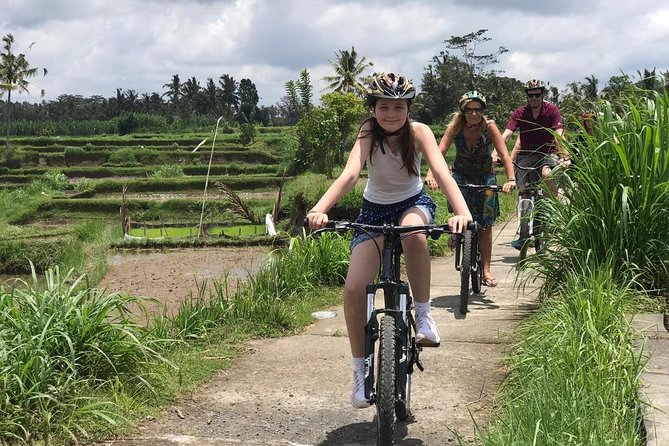
I like how the day feels organized without feeling stiff: you start with a safety rundown, then you’re let loose on mostly downhill roads and paths through the Abuan area. I also like the cultural pacing, because you’re not only chasing views—you visit a Balinese home, stop at a village temple, and learn what you’re seeing along the way. The biggest potential snag is fit-to-route reality: parts can get narrow around locals, so if you want wide, empty lanes the whole time, you might feel a little tense.
Plan for a full morning/early afternoon block. The meeting time is 7:00 am, and the total duration is about 7 to 8 hours including transfers, stops, breaks, and lunch.
In This Review
- Key things I’d mark on your mental map
- Manual bikes, hotel pickup, and the value at $33
- Getting to Abuan: morning timing and how transfers shape the day
- Tegallalang and Bayung Gede: photo stops plus the safety talk
- Abuan Balinese house visit: where the cultural part becomes real
- Taro Village Experience and coffee in the palm gardens
- Bresela rice fields and irrigation: what to pay attention to while you’re riding
- Payangan finish in Klusa Payangan, then lunch at Greenkubu
- How hard is the ride on a manual bike?
- Rain, roads, and what to bring
- Guides you might meet: Ben, Yoga, Darma, and more
- Price and logistics: what you should confirm before you go
- Who this Ubud cycling tour is for
- Should you book Greenbike Adventure’s half-day cycling tour?
- FAQ
- What time does the tour start in Ubud?
- How long does the cycling tour take?
- What’s included in the $33 price?
- Is this tour on an electric bike?
- Do you pick up from hotels?
- Can I cancel for free?
Key things I’d mark on your mental map
- Hotel pickup plus insurance included, so you’re not scrambling for logistics
- Mostly downhill manual ride, so it stays cruisy for many people
- Cultural stops in Abuan, including a Balinese house and a temple visit
- Lunch at Greenkubu Restaurant and Swing, built into the ride day
- Small group size (max 20), which helps with safety and timing
- Coffee and rice-paddy breaks, so you’re not just pedaling for hours
Manual bikes, hotel pickup, and the value at $33
At $33 per person, what makes this tour feel like good value is the bundle. You’re not just paying for a bike and a route. You get a helmet, bottled water, snacks, an air-conditioned vehicle for transfers, and insurance included in the package.
That matters because cycling days fall apart when you’re missing one of those pieces: no helmet, no water, no cover, or a long, unplanned transfer grind. Here, those basics are handled. It’s also why this can work for a wide age range, since the ride style is designed to be easy-going.
One more practical point: this is billed as a manual bike tour. If you’ve been picturing an electric-assisted ride, adjust expectations before you go. A small number of people have flagged confusion around electric bikes, but the setup here is manual, with assistance coming from the route being largely downhill.
You can also read our reviews of more cycling tours in Ubud
Getting to Abuan: morning timing and how transfers shape the day
The day starts at 7:00 am. That early start isn’t random; it’s how you fit a full loop with cultural stops and lunch into a half-day-style schedule. Even though the name is half day, the day stretches to about 7 to 8 hours, largely because you’ll be picked up, driven, and making multiple stop-and-go breaks.
Pickup is offered, and round-trip transfers from your hotel are included. If you’re staying outside the Ubud area—places like Kuta, Seminyak, Legian, Sanur, or Nusa Dua—plan for a longer ride to the start point (about 2 hours each way). That can turn “half-day” into a longer day in your personal schedule, even if the cycling portion stays similar.
The vehicle is air-conditioned and used for transfers, but one caution from past experiences: some people have said the transfer vehicles can feel tight and condition may vary. If you’re sensitive to cramped seating, bring patience and keep your expectations realistic.
Tegallalang and Bayung Gede: photo stops plus the safety talk
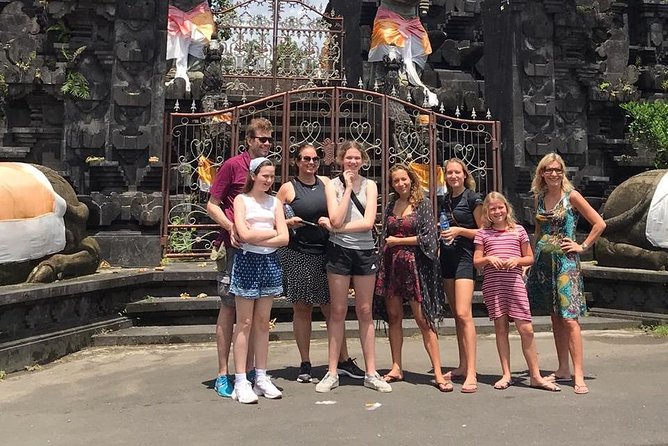
Your route begins with a quick stop around Tegallalang. Think of this as a coffee-break-style pause with time to grab photos. It’s short—about 15 minutes—so you’re not going out of your way. This is more about setting the mood and getting you pointed in the right direction before you settle into riding.
Then you head toward Bayung Gede and the start point in the Abuan village area (Kintamani). This is where the guide sets the tone. You’ll get the safety standard explained, plus water and a helmet. That first stage is more than admin. It helps you relax into the ride so you’re not trying to figure out braking, intersections, and local road habits on the fly.
From what people report, the guides are also attentive with group control—keeping crossings safer and guiding you when paths get busy. You’ll see a mix of scenery and small community moments as you move into the more “local backstreets” feel.
Abuan Balinese house visit: where the cultural part becomes real
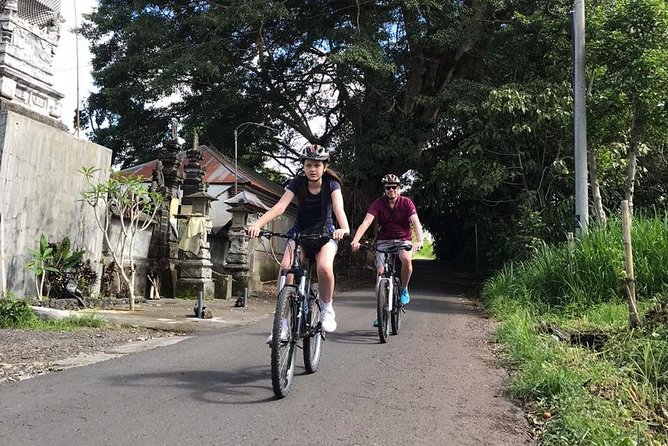
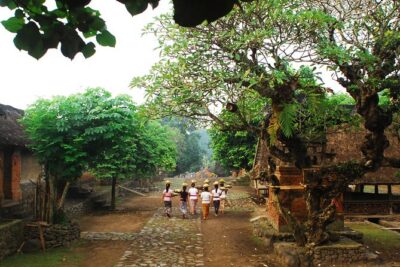
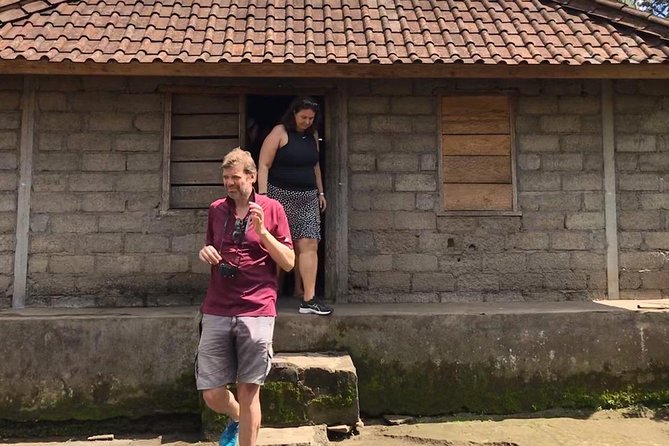
The heart of the cultural side happens in Abuan village with a visit to a Balinese house. About 45 minutes is set aside here. This isn’t just a quick look from the outside. The time is long enough for your guide to explain daily life and what parts of the household mean within Balinese culture.
I like this stop because it shifts the day from scenery-hunting to understanding. When you later see irrigation channels and rice growing, you can connect the dots with how people live around agriculture and community rhythms.
You’ll also have a temple stop along the route. The itinerary mentions it as part of the day’s cultural stops, so you can expect a brief moment to step in, look around, and learn what you’re seeing rather than just passing by.
Taro Village Experience and coffee in the palm gardens
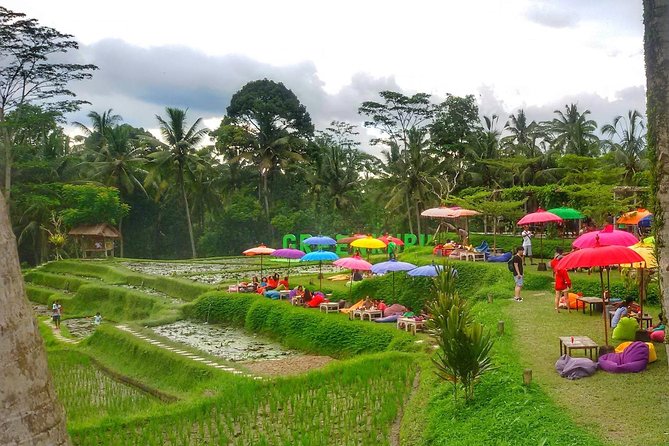
Next comes Taro Village Experience, where you’ll get a coffee break in a palm-tree garden setting. The stop is about 45 minutes, and it includes the admission for that break stop.
This is the point in the morning when your legs start to know the plan. If the ride so far has felt like a “warm-up,” this break resets you. You can sip something, take photos, and check in with the group before rolling on.
Also, one of the nice things here is you’re not stuck with a single flavor of food all day. Lunch is later, but coffee and snacks are already part of the day flow, so you’re less likely to feel hungry and rushed.




Bresela rice fields and irrigation: what to pay attention to while you’re riding
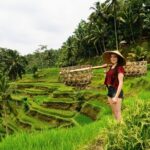
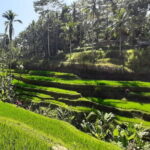
At Bresela, the tour includes a stop in a rice-field area to see how rice grows and how water irrigation works in Bali. This is about 30 minutes and is one of the more educational stops of the cycle loop.
When you’re actually on the bike, you’ll likely notice the rhythm of water channels and the way fields are shaped around them. That’s where the stop helps: you get language for what you’re seeing instead of just admiring it.
If you love “small details”—channels, field patterns, how water moves—this will keep you engaged. If you only want big photo moments, you’ll still get great scenery, but the irrigation angle is what turns this into a more memorable stop.
Payangan finish in Klusa Payangan, then lunch at Greenkubu
As the ride winds down, the day finishes around Klusa Payangan with a short 15-minute stop. After that, you move into the lunch portion.
Your lunch is at Greenkubu Restaurant and Swing for about 1 hour, and it’s included. Greenkubu is where the day becomes comfortable and social. You’ve worked up an appetite from cycling and breaks, and you can finally slow your pace without rushing for the next stop.
One practical suggestion: after the bike portion, give yourself a few minutes to cool down and drink water before you eat. The cycle is designed to be easy for many people, but you’re still outside in Bali’s warmth.
How hard is the ride on a manual bike?
The biggest misconception to clear up: this doesn’t feel like intense mountain biking.
People describe the route as mostly downhill, with a braking-heavy rhythm rather than constant pedaling. One person estimated it as around 99% downhill, with only limited paddling needed. Another described the cycling distance as about 22 km, also mostly downhill.
That said, easy doesn’t mean risk-free. You’re riding around real villages where traffic and pedestrians exist. One past experience flagged narrow paths where you need to thread through people and local movement. It’s manageable, but it helps to ride with awareness and not treat every section like a bike path in a park.
So how should you judge fitness level?
- If you’re comfortable on a regular bike and can control speed with brakes, you’ll likely be fine.
- If you’re nervous about small crossings or shared narrow spaces, choose this only if you’re okay going slow and listening to the guide.
Rain, roads, and what to bring
Bali weather can change fast. One important plus: the team has been prepared for heavy rain and provided raincoats, which helps keep the day from turning miserable. Still, rain changes how surfaces feel on a bike, so ride slower when roads get slick.
Also, roads and paths can vary between paved and smaller village routes. The guide work matters here. People mention the guides helping with safe intersections and keeping the route smooth for the group.
Pack like it’s an active outdoor morning:
- light rain layer (even if raincoats may be provided)
- sun protection (hat, sunscreen)
- comfortable closed shoes you’re okay getting dusty
If you’re bringing a phone, consider a simple pouch or bag. You’ll be stopping for photos often, including quick picture time at Tegallalang and scenic moments throughout the ride.
Guides you might meet: Ben, Yoga, Darma, and more
A cycling tour lives or dies on the guide. This one tends to do well, with several guide names showing up in positive past experiences: Ben, Yoga, Darma, Gede, Made, Ahmed, and Gita.
What you’ll want from your guide is clear safety instruction at the start, plus flexible group pacing when the route gets busy. People also highlight patience, professionalism, and information-sharing—so you’re not just watching and following, you’re learning what you’re seeing along the way.
Even if the bike portion is “easy mode,” the guide is what keeps it safe and makes the cultural stops feel human instead of staged.
Price and logistics: what you should confirm before you go
Before booking, confirm three simple things so there are no surprises:
- You’re joining the manual bike version (not electric).
- Your pickup timing and total travel time from your hotel area, especially if you’re outside Ubud.
- What’s included for you in food: lunch is included, along with bottled water, snacks, and helmet.
It helps to show up a little early on pickup day. The meeting time is 7:00 am, and the day’s flow depends on everyone starting together so the safety briefing and first stops stay on track.
Who this Ubud cycling tour is for
This is a strong match if you want:
- countryside riding without technical stress
- a mix of rice paddies plus villages
- cultural stops that include a Balinese home and a temple moment
- included meals (lunch) rather than hunting food afterward
It’s also a good family-style activity if everyone can handle shared roads and a slower pace when paths get narrow.
If you want a silent, private, high-speed ride, this probably isn’t your match. This is more about shared discovery: group timing, photo breaks, and cultural pauses.
Should you book Greenbike Adventure’s half-day cycling tour?
I’d book this tour if you’re coming to Ubud for the kind of day that blends movement with local context. For $33, the value is in the package: helmet, insurance, water, snacks, air-conditioned transfers, and lunch—plus a route that’s largely downhill and focused on villages and rice fields.
Skip it (or at least adjust expectations) if you need an electric bike, want a fully traffic-free route, or dislike being on a shared narrow path around real life.
If you’re ready to pedal a little, brake a lot, and take in the daily rhythm of Bali from the seat of a bike, this one is a practical win.
FAQ
What time does the tour start in Ubud?
The meeting time is 7:00 am.
How long does the cycling tour take?
The total duration is about 7 to 8 hours, depending on your hotel location and the stops along the way.
What’s included in the $33 price?
Lunch, bottled water, snacks, a helmet, air-conditioned vehicle transfers, and insurance are included.
Is this tour on an electric bike?
No. This experience is described as a manual bike tour, and it is not presented as electric-bike.
Do you pick up from hotels?
Yes. Round-trip transfers from your hotel to the start point are included.
Can I cancel for free?
Yes. You can cancel up to 24 hours before the experience’s start time for a full refund.