REVIEW · UBUD
Myth of Pejeng Walking Tour
Book on Viator →Operated by Ubud Story Walks · Bookable on Viator
Myths in Pejeng feel close to the stone. You’ll walk through older Balinese sacred sites with special access and a chance to see the bronze kettle drum tied to local belief. It’s a small-group route that turns history-sounding names into real places you can stand inside and look at.
I like that the pace is built for people who want meaning, not just photos. You’ll cover four stops over about two hours, with a guide who keeps the stories connected to what you’re seeing in front of you. Dress help is included too, since you’ll get a sarong and sash.
One watch-out: the walking is around temples and older lanes, so expect uneven stairs and steep bits. There’s also no pickup or drop-off from your accommodation, so you’ll need to get to the meeting point on your own.
In This Review
- Key things to know before you go
- Why Pejeng’s myth route feels more local than a typical Ubud walk
- Price and value: what $21.40 buys you in real-world terms
- Meeting point and timing: start at 8:30 AM and plan to be ready
- Temple dress code: sarong rules that apply to everyone
- Walking conditions: you’ll be fine if you can handle stairs
- Stop 1: Pura Penataran Sasih and the bronze kettle drum
- Stop 2: Pura Pusering Jagat and the idea of a spiritual center
- Stop 3: Kebo Edan Temple and the Bhairawa statue
- Stop 4: Arca Building Archaeological Museum and pre-Hindu sarcophagi
- The stories you’ll hear: moon of Pejeng and tantra in plain language
- Coffee, tea, a snack, and the donation moment
- Weather, ceremonies, and why mornings can surprise you
- Tips that make the tour easier (and more comfortable)
- Who should book this walk (and who should pass)
- Should you book the Myth of Pejeng Walking Tour?
- FAQ
- How long is the Myth of Pejeng Walking Tour?
- What time does the tour start?
- Where do I meet and where does it end?
- What’s included in the price?
- Do I need to bring a sarong for the temples?
- Is pickup from my accommodation included?
- What happens if it rains?
Key things to know before you go
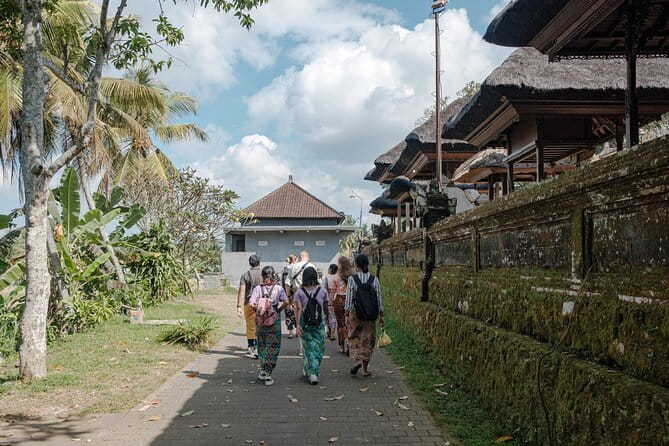
- Small group size (max 8) keeps the questions coming and the visit feeling calmer.
- Four stops in about 2 hours means you get variety without feeling rushed.
- Special access to a Balinese compound adds a sense of being inside the everyday sacred world.
- Temples + pre-Hindu museum gives you both story and deep time.
- Sarong and sash included makes temple etiquette easier to handle.
- Rain or shine with a call only in severe downpours keeps your morning plan realistic.
Why Pejeng’s myth route feels more local than a typical Ubud walk
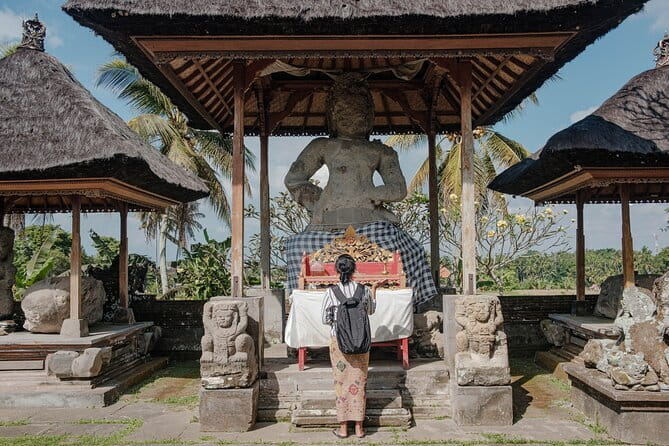
Ubud is great, but it can start to feel like a bubble if you’re there long enough. This walk takes you into Pejeng (Bedulu), where the temple compounds and lanes feel like part of daily Balinese life rather than a staged sightseeing strip. The whole experience is built around the Myth of Pejeng, so the guide doesn’t treat the sites like checkboxes.
What makes it interesting is the mix of spiritual sites and older material culture. You’re not only hearing temple stories—you’re also seeing the physical remnants that help explain why people still connect to these places.
You can also read our reviews of more walking tours in Ubud



Price and value: what $21.40 buys you in real-world terms
At about $21.40 per person, this tour is one of those deals that makes you pause and think: that includes a guide, admissions, and more. You’ll get:
- an English-speaking local guide
- admission tickets at each stop
- temple donations (Rp 60,000)
- balinese coffee, tea, and a snack
- a sarong and sash
- special access to a Balinese compound
In other words, you’re paying for a guided route that avoids the usual add-ons headache. You still handle your own extra personal spending, but the core costs are already covered.
Meeting point and timing: start at 8:30 AM and plan to be ready
The tour starts at 8:30 am. You’ll meet at Indomaret Pejeng on Jl. Raya Dr. Ir. Sukarno No.552 (Bedulu, Blahbatuh, Gianyar). It ends at Museum Arkeologi (F7JV+563) in the same area.
There’s no pickup or drop-off from your hotel. If you’re staying in central Ubud, build in transport time so you’re not sprinting across Bedulu’s lanes. Also, this is one of those tours where going a little early can pay off—there’s time to catch the local market vibe before you meet your guide.
Temple dress code: sarong rules that apply to everyone
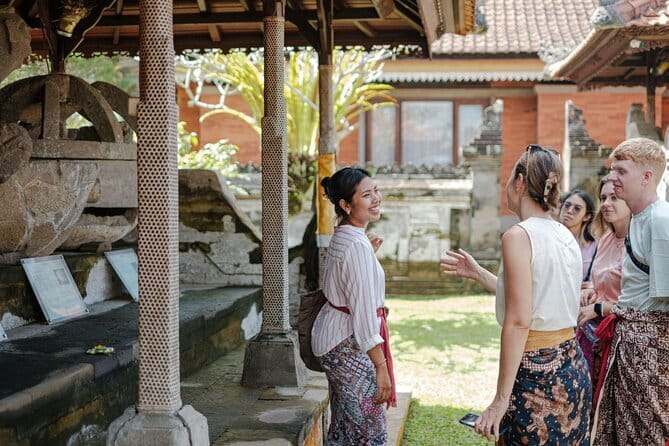
Balinese temples are sacred places, so you’ll be asked to dress modestly. That means both men and women must wear a sarong that covers the legs below the knee.
Good news: you’ll get a sarong and sash provided. Still, it’s smart to show up already comfortable with the idea of tying and adjusting it on arrival. It’s one of those small things that keeps the visit smooth and respectful from minute one.
Walking conditions: you’ll be fine if you can handle stairs

This walk happens around historic landmarks, and the operator is upfront about what they can’t change: uneven temple stairs, steep gradients, and patchy sidewalks.
So here’s the practical line: if you can climb temple steps and walk around an urban area for up to about 2 hours, you’ll likely be comfortable. If your mobility is limited, I’d take that warning seriously and consider a different format.






Stop 1: Pura Penataran Sasih and the bronze kettle drum
Your first temple stop is Pura Penataran Sasih. You’ll enter wearing traditional sarongs and sashes, and you’ll get access to one of Bali’s older sacred spaces.
The standout detail here is the Southeast Asia’s largest bronze kettle drum. Your guide’s job is to connect that object to local myth and meaning, so you’re not just staring at metal. You’ll also have some time (about 20 minutes) to settle in, look closely, and ask questions.
One practical note: this is a temple site, so expect that the pace inside won’t feel like a museum line. You’ll want to listen, watch, and move when your guide signals.
Stop 2: Pura Pusering Jagat and the idea of a spiritual center

Next comes Pura Pusering Jagat, one of Bali’s six main Kahyangan (directional) temples. The theme here is geography with a spiritual twist—this temple complex is believed to sit at the center of the island.
You’ll get about 20 minutes here, with your guide explaining how the carvings and temple layout link to belief. Even if you don’t know Balinese Hindu concepts, you’ll leave with a clearer mental map of how sacred direction and placement show up in everyday life.
This is also where the walk becomes more than sightseeing. The guide ties the myth theme back to what you see around you, which helps the story land.
Stop 3: Kebo Edan Temple and the Bhairawa statue

Your third stop is Kebo Edan Temple, often described as the Temple of the Crazy Buffalo. The focus is an imposing 13th-century Bhairawa statue.
What makes it memorable is the story of its return: the statue was reportedly recovered from nearby rice fields. Your guide will walk you through theories about its unusual origins, and this is one of the places where the myth theme can feel especially alive.
If you like when a guide answers deep questions, this stop is a good bet. In past groups, guides like Joe and Bagus have been praised for welcoming complex questions and keeping the explanations clear without talking down.
Stop 4: Arca Building Archaeological Museum and pre-Hindu sarcophagi
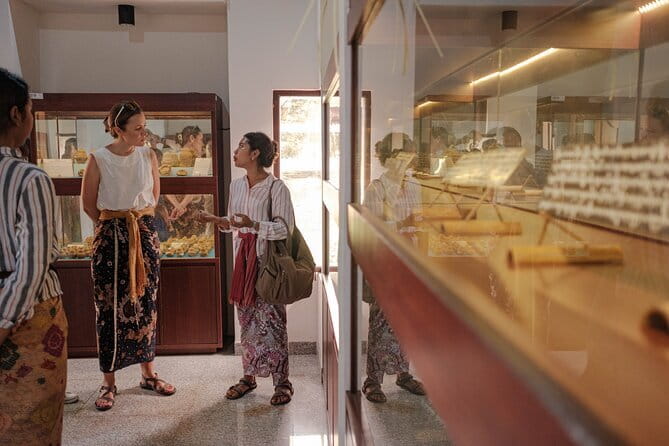
The final stop shifts gears into pre-Hindu Bali, which changes the whole feel of the morning. At the Arca Building Archaeological Museum, you’ll explore an open courtyard with giant sarcophagi—big, physical evidence of older ways of life.
You’ll spend about 30 minutes here, and that extra time matters. It lets you stop rushing and actually look at how these objects sit in the space. It’s the kind of ending that helps you connect myths to material culture, not just legends.
If the phrase pre-Hindu Bali sounds vague to you, don’t worry. The guide’s explanations are built to make it concrete with what you can see on-site.
The stories you’ll hear: moon of Pejeng and tantra in plain language
The title of the tour matters: this is the Myth of Pejeng. That means you’ll hear about key elements of local belief, including the moon of Pejeng. You’ll also get references to tantra, explained in a way that connects to the temples you’ve just visited.
The best part is how the guide uses the sites as anchors. When you connect a myth to an object in front of you—or a belief to the way a temple space is arranged—it stops being abstract. It becomes something you can remember long after your coffee cools off.
Coffee, tea, a snack, and the donation moment
Half-day tours can feel stingy if they only give you a bottle of water and a prayer. This one includes Balinese coffee, tea, and a snack, which is a simple but smart detail for an 8:30 am start.
You’ll also include a temple donation (Rp 60,000) as part of the visit. Even if you don’t fully grasp the ritual side, the donation piece signals that you’re participating with respect, not just watching.
Weather, ceremonies, and why mornings can surprise you
The tour runs rain or shine, but if conditions are severe—like an intense downpour—the team will call you before the start. So you’re not guessing what happens next the night before.
One more thing: the area sometimes has ceremonies. You might catch a local ceremony during your visit, which can change the mood and make the temples feel even more alive. That’s not something you can plan for, but it’s worth keeping an open mind when you arrive early.
Tips that make the tour easier (and more comfortable)
Based on what the experience emphasizes—temple etiquette, uneven paths, and early timing—here’s what I’d do:
- Wear shoes you trust on stone and slopes.
- Bring a reusable bottle for water refills. The operator specifically asks you to help reduce plastic in Bali’s rivers.
- Use sun and bug protection. In at least one group, the guide Win was praised for bringing sunblock and bug repellent, which is exactly the kind of thoughtful help that makes outdoor walking less annoying.
Who should book this walk (and who should pass)
This tour is a strong fit if you want:
- religion and history explained through the places themselves
- a quiet-feeling route compared with busier tourist strips
- a guide who handles questions well and keeps the pacing relaxed
- a mix of sacred sites plus a museum stop
It may not be your best choice if you:
- can’t handle stairs and steep gradients
- need hotel pickup (because there is none)
- want a fully flat, stroller-friendly walk
Also, the maximum group size is 8 travelers, so it’s a good choice if you like personal attention but don’t want a huge crowd.
Should you book the Myth of Pejeng Walking Tour?
If you’re in the Bedulu/Pejeng area and you care about culture that feels real—not just postcard temples—this is a good use of a morning. The value stands out because the price includes admissions, a donation, a snack, and sarong help, plus the experience stays focused on meaning.
I’d book it if you’re comfortable with uneven temple steps and can show up for an 8:30 am start. If stairs are an issue, or you need someone to handle transportation from your hotel door, you’ll likely feel limited.
FAQ
How long is the Myth of Pejeng Walking Tour?
The tour lasts about 2 hours.
What time does the tour start?
The start time is 8:30 am.
Where do I meet and where does it end?
You meet at Indomaret Pejeng (Jl. Raya Dr. Ir. Sukarno No.552, Bedulu, Blahbatuh, Gianyar Regency). The tour ends at Museum Arkeologi (F7JV+563, Bedulu, Blahbatuh, Gianyar Regency).
What’s included in the price?
The tour includes a local English-speaking guide, the guided walking experience, temple donations (Rp 60,000), Balinese coffee/tea and a snack, special access to a Balinese compound, and a sarong and sash. An Indonesian guide is also available.
Do I need to bring a sarong for the temples?
You must dress modestly with a sarong covering the legs below the knee, and you can bring your own or use one provided. The tour provides a sarong and sash.
Is pickup from my accommodation included?
No. Pickup and drop-offs are not provided.
What happens if it rains?
The tour operates rain or shine. If there’s severe weather (like an intense downpour), they will call you before the start.