REVIEW · KUTA
PADI Open Water Course
Book on Viator →Operated by Neptune Scuba Diving · Bookable on Viator
Scuba certification should feel clear, not chaotic. This PADI Open Water Course in Kuta focuses on the skills you’ll reuse for life, with real water practice in Padang Bai and Tulamben across three days. On top of that, I like that Neptune keeps the group small, so you’re not squeezed into a crowd, and the instruction is hands-on. Names that show up in the experience include instructors Julian and Muli, plus water support from guides like Gede Ariawan and Agus.
Two other things I really appreciate: the course is built around step-by-step phases (class-style knowledge, pool skills, then open-water training), and you also get practical logistics like hotel pickup/drop-off and an air-conditioned minivan. One possible drawback: you’ll need to be medically fit and ready for a health questionnaire, and local conditions can affect how smoothly the training schedule runs.
In This Review
- Quick take: key things that matter
- PADI Open Water in Bali: what you’re actually buying for $530
- Three days, three phases: knowledge, pool skills, then open-water work
- 1) Knowledge Development
- 2) Pool Training
- 3) Four open-water training sessions
- Padang Bai and Tulamben: why these spots fit a course
- The instructor team and small-group feel
- Price and included extras: where the $530 goes
- Included
- Not included
- Getting to Neptune: meeting point, timing, and day flow
- Health checks and flight timing: the stuff that prevents problems
- Skills tips that make the course easier (and calmer)
- Who should book this PADI Open Water course?
- Should you book it? My take for Kuta and first-time certification
- FAQ
- How long is the PADI Open Water Course?
- What does the $530 price include?
- Where does the course start and end?
- What is the minimum age to join?
- Is pickup available?
- Do I need a health check before diving?
Quick take: key things that matter
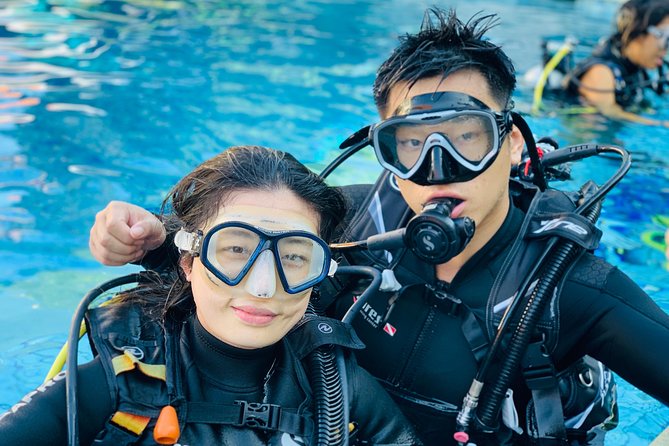
- Three-phase structure keeps you from guessing: knowledge work, pool practice, then open-water training in Padang Bai and Tulamben
- Small group size (max 3 travelers) means more feedback and less waiting around
- Real support team is part of the package, with experienced instructors such as Julian and Muli and guidance from Gede Ariawan and Agus
- All the basics included (transport, lunch, snacks, coffee/tea, bottled water, taxes/fees) help you budget cleanly
- Souvenir photos cost extra, so if you want them, plan for that upfront
PADI Open Water in Bali: what you’re actually buying for $530
The PADI Open Water Course is the entry ticket to becoming a certified diver, with a training goal of safe independence to a maximum depth of 18m. You’re not just doing a couple of “fun swims.” This course is designed to teach the mental checklists, buoyancy basics, and safety habits you’ll need later when conditions get more interesting.
At $530 per person, the value is strongest when you look at what’s included: taxes and handling fees, lunch, snacks, bottled water, coffee/tea, a driver/guide, a professional instructor, and air-conditioned transport with hotel pickup and drop-off. In plain terms, it’s a package that reduces the usual Bali friction of coordinating rides, meals, and gear handoffs.
There’s also a smart detail: you’ll get mobile ticket support and confirmation at booking. That matters because certification courses run on timing. You want everything set before you arrive.
You can also read our reviews of more tours and experiences in Kuta.

Three days, three phases: knowledge, pool skills, then open-water work
This course runs for about 3 days and is organized into three main parts:
1) Knowledge Development
You’ll learn the concepts that explain what’s happening underwater and why safety rules exist. This is the part many people underestimate because it can feel “classroom-ish,” but it’s exactly what makes future dives easier. If you’re new, the goal is to understand the logic behind procedures, not just memorize steps.
One useful prep tip: some students prefer to do PADI theory online before traveling. If you can handle a bit of screen time, that can reduce your stress once you land.
2) Pool Training
Pool work is where skills become automatic. You practice the “body air spaces” and breathing control mindset, plus buoyancy and basic handling. If you’ve ever felt tense in water, pool sessions give you a safe place to build calm. Good pool coaching also helps you avoid frustration later.
3) Four open-water training sessions
You’ll complete 4 open-water training sessions split between Padang Bai and Tulamben. The course is structured so you apply what you learned, with instructors and guides there to help you keep things safe and controlled.
A small but important practical point: the experience schedule is within a stated daily window (7:00 AM to 6:00 PM). Still, tropical weather can shift timing. If you’re the type who hates being flexible, plan on a little wiggle room.


Padang Bai and Tulamben: why these spots fit a course
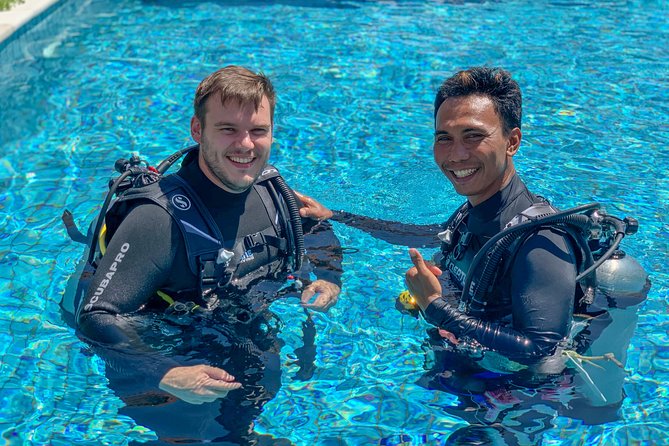
For Open Water certification, your training sites need to be forgiving enough for learning, but still interesting enough to keep you motivated. The course uses Padang Bai and Tulamben, which is a solid pairing for beginners because you can practice core skills in real conditions without feeling like you’re thrown into the deep end.
Here’s what you should look for, regardless of day or guide:
- Clear communication: if your instructor explains the why behind each skill, you’ll move faster
- Calm technique over speed: certification is about control, not performance
- Buoyancy habits early: the sooner you stabilize, the less tiring the whole course becomes
Even if you’re not chasing scenery right now, these sites help you start building a diver’s eye: the feeling for depth, water movement, and how gear behaves.
The instructor team and small-group feel
Neptune runs with a maximum of 3 travelers, which I think is a big deal for a course like this. When you’re in a larger class, you can spend time waiting while someone else gets coached. In a small group, you’re more likely to get quick corrections and specific feedback.
From the names associated with the experience, you might meet:
- Instructor Julian
- Instructor Muli
- Water support including Gede Ariawan
- Guide support like Agus
I like that the course design supports teamwork: instructor instruction plus guide attention. That combination usually means you don’t just learn the skills—you also learn how to use them with real-world support around you.
Price and included extras: where the $530 goes
Let’s break down the value in the real-world way you’ll care about as a traveler.
Included
You get a lot that usually costs extra or requires separate coordination:
- Hotel pickup and drop-off
- Transport by air-conditioned minivan
- Professional guide and driver/guide
- All taxes, fees and handling charges
- Lunch, plus snacks
- Coffee and/or tea
- Bottled water
That package approach is helpful if you don’t want to manage meals and rides while learning new skills.
Not included
- Souvenir photos are available to purchase, but not bundled
If you’re photo-driven, ask about timing and delivery before the course starts, so you don’t feel surprised at the end.
Getting to Neptune: meeting point, timing, and day flow
The meeting point is listed at a center in Sanur area:
Neptune Scuba Diving Bali, Jl. Suka Merta, Sanur Kauh, Denpasar Selatan, Kota Denpasar, Bali 80228, Indonesia.
The activity ends back at the meeting point, so you’re not stuck hunting transport afterward.
Also, the center’s stated hours run Monday–Sunday, 7:00 AM–6:00 PM. Since the course has multiple parts across multiple days, the best move is to plan your Bali days around that window rather than squeezing in long beach-hopping between sessions.
Health checks and flight timing: the stuff that prevents problems
This course comes with the right kind of “real talk” for scuba training. You’ll complete a health questionnaire prior to diving, and you may be prevented from participating if you have certain issues. The rules you should take seriously include:
- Don’t dive if you’re dealing with a current cold or congestion
- Avoid diving with asthma, heart conditions, coronary disease, epilepsy, or other severe medical problems (you’ll be asked to consult your doctor)
- Don’t dive if you’re under the influence of alcohol or drugs
- Your respiratory and circulatory systems need to be in good health
- All air spaces must be normal and healthy
There’s also timing guidance: diving within 18 hours of flying is not recommended. If you’re flying into Bali and want this course immediately, give yourself a proper buffer.
If any of this is even slightly unclear for you, I’d rather you treat it like a “pause and check” moment than hope it works out.
Skills tips that make the course easier (and calmer)
You don’t need to be a strong swimmer to start, but you do need a willingness to learn and stay relaxed. Here are practical ways to make the experience feel easier without overthinking it:
- Treat buoyancy like your main job. If you can stay calm and controlled, everything else becomes less stressful.
- Listen first, then repeat. If your instructor (whether Julian or Muli) explains a procedure, try not to rush to the next part until it clicks.
- Bring a calm mindset for the pool. Pool sessions are about building habits. Getting frustrated slows you down.
- Ask your guide questions early. The support structure matters most when you use it.
- Plan your off-hours energy. After training days, your body may be tired even if you enjoyed it. Keep the next morning easy.
Also, if you’re pairing up for the course, you’ll usually get matched in a way that helps you train together. Solo travelers have been supported, but your comfort still improves when you’re clear about your experience level upfront.
Who should book this PADI Open Water course?
This is a strong fit if you:
- Want a full PADI certification path, not just one-off underwater fun
- Prefer a small-group course with more coaching time
- Want to learn with experienced instruction and supportive guidance from a team
- Are ready to do the knowledge work and take health rules seriously
You might want a different format if you:
- Hate scheduling flexibility (tropical conditions can affect timing)
- Have medical concerns and don’t want to go through health screening
- Are trying to squeeze the course right after long flights
Should you book it? My take for Kuta and first-time certification
If you’re planning your Bali trip and you want a straightforward way to become certified, I’d consider this course a smart booking. The biggest reasons are the small group size, the clear three-phase structure, and the fact that the price covers the usual headaches (transport, meals, taxes/fees).
My only caution is practical: make sure you’re medically good to go and plan your flight timing with the 18-hour recommendation in mind. If you handle that and show up ready to learn, you’ll likely leave with more confidence than you expected.
If you want, tell me your travel dates and whether you’re a strong swimmer or a bit nervous in water. I can help you plan the best order for this course in your Bali schedule and what to pack for training days.
FAQ
How long is the PADI Open Water Course?
It runs for about 3 days.
What does the $530 price include?
It includes taxes/fees, bottled water, lunch, coffee and/or tea, snacks, a driver/guide and professional guide, hotel pickup and drop-off, and transport by air-conditioned minivan.
Where does the course start and end?
It starts at Neptune Scuba Diving Bali on Jl. Suka Merta in Sanur (Denpasar Selatan) and ends back at the meeting point.
What is the minimum age to join?
The minimum age is 10 years.
Is pickup available?
Yes. Hotel pickup and drop-off are included.
Do I need a health check before diving?
Yes. You’ll complete a health questionnaire, and diving within 18 hours of flying is not recommended. Some medical conditions can prevent you from participating, so it’s important to review the health requirements.