REVIEW · UBUD
Bali Cooking Class with Culture Experience
Book on Viator →Operated by Lobong Culinary Experience · Bookable on Viator
A morning market can change how you cook. This Ubud class mixes ingredient shopping, a family-style welcome, and a chef-led lesson that turns into a full meal you make yourself. I love the small-group feel (max 12) and how the day keeps moving from fresh produce to hands-on cooking, then lands with a take-home booklet you can actually use.
The two best parts for me are the early market visit with a Family Host and the way you get guided through Balinese ingredients like herbs and spices instead of just following a recipe. One consideration: it starts early at 7:30am, so this is not the kind of activity for a slow breakfast kind of day.
In This Review
- Key Highlights You’ll Feel Fast
- Market Shopping With a Family Host and Pisang Goreng Snacks
- Coffee Break Stories About Home Shrines and Balinese Life
- The Cooking Pavilion: Small-Group, Hands-On Structure
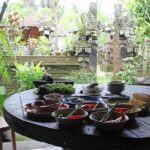
- Your Balinese Menu: Appetizers, Multiple Entrees, Sides, Dessert
- Lunch on the Table and a Gratitude Ritual
- The Take-Home Illustrated Booklet for Cooking Later
- Price, Pickup, and Morning Logistics in Ubud
- Who This Class Suits Best (and Who Might Prefer Something Else)
- Should You Book Lobong Culinary Experience?
- FAQ
- Where is this Bali cooking class located?
- What time does the experience start and how long is it?
- Is pickup from central Ubud hotels included?
- Do you visit a market before cooking?
- What food and drinks are included?
- How many people are in the group?
- What do you receive to help you cook at home later?
Key Highlights You’ll Feel Fast
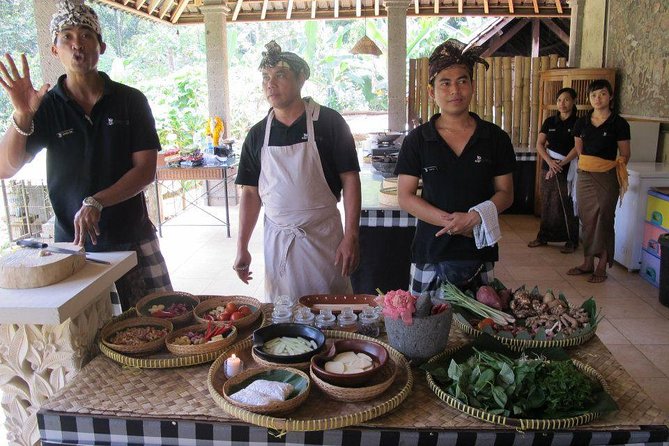
- Market-first shopping: You’ll buy and talk through fresh herbs, spices, fruits, and vegetables.
- Pisang Goreng welcome: Coffee or tea (or mineral water) plus crispy banana fritters sets the tone.
- Chef-led small group: The cooking pavilion lesson is built for real participation, not watching only.
- Full menu output: Appetizer, multiple entrees, side dishes, and dessert.
- Home-cooking support: You leave with an illustrated instructional booklet with recipes, directions, photos, and notes space.
- A gratitude moment after eating: The day can include a ritual of thanks after your meal.
Market Shopping With a Family Host and Pisang Goreng Snacks
The day starts with a local morning market. This matters because Balinese cooking is ingredient-driven. You’re not just learning techniques; you’re learning what goes in the food and why. A Family Host buys the herbs, spices, fruits, and vegetables used in the menu and explains what you’re looking at. That gives you a mental map you can bring home when you’re standing in your own kitchen searching for something similar.
Before the cooking pavilion, you’ll get a warm drink and a snack. The welcome includes a hot cup of coffee or tea (with mineral water as an option) plus Pisang Goreng, the famous crispy banana fritters. The snack is more than a perk. It helps you settle in, taste something local right away, and get your appetite going before you start chopping, grinding, and assembling.
One small detail I appreciate: the staff stays on top of readiness behind the scenes. You’ll watch the day shift smoothly from market talk into cooking mode, with staff double-checking that the pavilion is ready.
You can also read our reviews of more cooking classes in Ubud
Coffee Break Stories About Home Shrines and Balinese Life
After the market, you’re welcomed at the family home compound. The person leading the welcome is named Dewa, who serves the hot drinks and banana fritters. While you eat and sip, you’ll hear about Balinese life, including how families live and the role of home shrines.
This cultural pause is one of the smartest parts of the experience. Food lessons can be purely procedural, like mixing ingredients and calling it done. Here, the context is part of the cooking. When you understand that ingredients and preparation fit into daily rituals and beliefs, the recipes don’t feel random. They feel intentional.
You’ll also get time to settle in and ask questions before cooking starts. That’s especially helpful if you’re nervous about following steps in a kitchen. By the time you’re working, you’re not starting from zero—you’ve already tasted something, shopped for ingredients, and heard how the food connects to daily life.
If you’re the type who likes to know the story behind what you eat, this is the section that clicks.
The Cooking Pavilion: Small-Group, Hands-On Structure
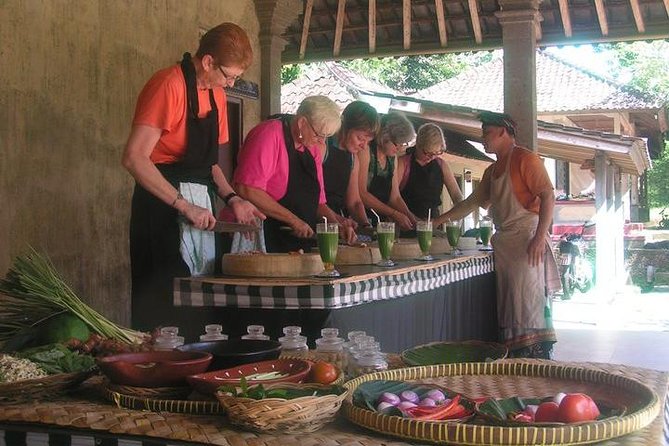
Once the drinks and snack are done, you move to the cooking pavilion. This is where the lesson goes from cultural talk to hands-on work, and the structure is what makes it feel manageable.
You’ll cook with a professional chef, and the class is limited to a maximum of 12 travelers. That size is important. In a large class, you often get stuck watching and hoping the instructor notices your confusion. Here, you’re more likely to get real guidance while you’re working.
You can expect the cooking session to cover a complete Balinese menu, including appetizer, multiple entrees, accompanying side dishes, and dessert. The pacing is set up so you have a job at each stage. Even if you’re a beginner, this kind of organized flow helps you stay focused instead of flailing with knives and bowls.
Also, you’ll be using ingredients you shopped for earlier. That makes a difference. It’s one thing to read about spices. It’s another to handle the herbs and spices you picked out in the morning, then see them transformed into the dishes on your plate.
Your Balinese Menu: Appetizers, Multiple Entrees, Sides, Dessert
Here’s what I like about the menu design: it isn’t a one-dish class. You’re working through a full spread. That means you learn the breadth of Balinese home cooking, not just how to make one impressive plate.
You’ll prepare:
- An appetizer
- Multiple traditional entrees (more than one main dish)
- Accompanying side dishes
- Dessert
That menu matters for value. For $62, you’re not paying only for the chef’s time. You’re paying for a complete meal education—ingredients, timing, and how different dishes fit together on one table.
It also means your technique toolbox grows. Even without going into exact recipes, the variety typically forces you to practice different kinds of chopping, mixing, cooking methods, and assembly. If you’ve ever tried to cook one dish from a class and realized you still can’t build a meal, this menu format is what you want.
If you like to host at home, this is also a practical win. After one cooking session, you’ll be able to put together a more coherent food plan instead of just repeating a single recipe.
Finally, you’ll get to enjoy the dessert you make. That’s not just sweet payoff. It gives you feedback on what the chef was guiding you toward so you can recognize flavors you should aim for later.
Lunch on the Table and a Gratitude Ritual
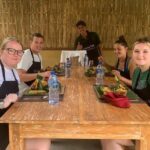
Lunch isn’t just something you’re fed during the class—it’s the point where the work becomes real. After cooking, you’ll eat the meal you prepared. This is also the moment where the day’s cultural tone shows up again.
One standout detail: the experience can include a ritual of gratitude after the meal. That kind of moment is small, but it changes how the food lands. It’s not about performing for photos. It’s about recognizing the process—ingredients, people, and time—before moving on.
The meal itself tends to feel fresh and not overly heavy, partly because the menu is built on herbs, spices, and balanced sides rather than one-note frying. That matters in Bali heat. You’ll likely leave feeling satisfied, not stuffed.
If you’re food-motivated, you’ll leave with the most important thing you can get from a cooking class: proof that you can replicate the end result, not just the steps.
You can also read our reviews of more tours and experiences in Ubud

The Take-Home Illustrated Booklet for Cooking Later
This is where a lot of cooking classes either win or fall apart at home. The good news here: you’ll leave with an illustrated instructional booklet that’s designed for actual use later.
You get a take-home guide that includes:
- the menu
- recipes
- directions
- photos
- tips
- and plenty of space for personal notes
That last part is underrated. Cooking is trial and error. Having space to mark what you changed—more spice, less heat, longer cook time—helps you build your own version instead of treating the booklet as a fixed script.
My advice: use the booklet the same week you take the class. Your memory of flavors and textures will be sharper, and you’ll notice details you’d otherwise forget. Then, when you cook again, you’ll know exactly where you hesitated and how to fix it.
If you’ve ever done a workshop and then lost the will to recreate anything, this kind of structured booklet is the difference between a fun day and a skill you keep using.
Price, Pickup, and Morning Logistics in Ubud
At $62 for about 6 hours (starting around 7:30am), this class prices itself as a full morning/early lunch experience. The value is in three places:
1) You’re getting a market visit plus a chef-led class
2) You’re eating what you cook (including dessert)
3) You’re leaving with detailed instructions you can use again at home
That’s not a typical format for a cheap cooking demo. You’re paying for time, ingredients shopping, and the work of translating culture and technique into something you can repeat.
Logistics are also handled. You can get pickup with round-trip transfers from central Ubud hotels, and you’ll receive a mobile ticket. The start is early, so plan your day around being done around late morning/early afternoon depending on pacing.
One more practical note: it’s listed as near public transportation. So even if you’re not using the pickup option, you should have options to get there.
And yes, if your plans shift: free cancellation is available up to 24 hours before the experience starts for a full refund, subject to the usual minimum-traveler rule.
Who This Class Suits Best (and Who Might Prefer Something Else)
This Bali cooking class fits you if you want more than a recipe. It’s built for people who like to understand ingredients, ask questions, and leave with a full meal’s worth of techniques.
You’ll likely enjoy it most if:
- you’re visiting Ubud and want a food-and-culture activity that feels local
- you like learning from a chef, but also appreciate the family and daily-life context
- you want a realistic way to cook Balinese dishes again at home (with a booklet)
- you’d rather do a small-group experience than a large busload
You might consider another option if you hate early starts. The 7:30am start can be a dealbreaker if your energy runs late in the day. Also, if you’re only interested in one dish and nothing else, the full menu might feel like a lot.
Still, for most food lovers, the variety and the market-to-meal flow is exactly the point.
Should You Book Lobong Culinary Experience?
I’d book it if you want a morning that’s structured, hands-on, and actually teaches you how to recreate Balinese flavors later. The combination of market shopping, a chef-led cooking pavilion session, and the illustrated take-home booklet makes this feel like a skill-builder, not just a one-off meal.
A couple of quick decision tips:
- If you can handle an early start, this is one of the most satisfying ways to spend half a day in Ubud.
- If you like thoughtful cultural context, the stories around daily life and home shrines add real meaning to the cooking.
- If you want value, the fact that you cook a full spread and eat it—plus dessert—makes the price easier to justify.
If you’re still on the fence, book with the knowledge that you can cancel for free up to 24 hours before it begins, as long as the date still meets the minimum traveler requirement.
FAQ
Where is this Bali cooking class located?
It takes place in Ubud, Indonesia, at the Lobong Bali Cooking Class.
What time does the experience start and how long is it?
The start time is 7:30am, and the duration is about 6 hours.
Is pickup from central Ubud hotels included?
Yes. Round-trip transfers from central Ubud hotels are offered.
Do you visit a market before cooking?
Yes. You start with a local morning market where a Family Host purchases and explains the fresh ingredients used in the class.
What food and drinks are included?
You’ll have a hot drink (coffee or tea) or mineral water, plus banana fritters (Pisang Goreng). After cooking, you’ll enjoy the lunch you prepared and dessert.
How many people are in the group?
The group is limited to a maximum of 12 travelers.
What do you receive to help you cook at home later?
You receive an illustrated instructional gift booklet with the menu, recipes, directions, photos, tips, and space for personal notes.