REVIEW · UBUD
Balinese Authentic Cooking Class in Ubud
Book on Viator →Operated by Lesung Bali · Bookable on Viator
Cooking in Bali beats just watching it. You start in a local market, then move through a Balinese house and farm before you cook and eat. It’s a half-day plan (about 5 hours) built for small groups, with morning, afternoon, or evening classes so you can match it to your Ubud rhythm.
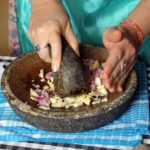
My favorite part is how the day teaches you the why, not just the what. You learn Balinese techniques like pounding spices with a Lesung, and you cook with ingredients you gathered from the farm. The other big win is the cultural stops: the market tour and the house visit add context that makes the food taste more meaningful.
One thing to keep in mind: the pace can feel a bit quick for some people during the cooking steps, and in at least one menu, you might not do every single item yourself (for example, rice may not be the part you cook).
In This Review
- Key Highlights You’ll Actually Notice
- A Half-Day Plan That Starts With Real Food Shopping
- The Itinerary: Market, House, and the Farm-First Cooking Setup
- Traditional Market Tour (morning classes only)
- A Local Balinese House Visit
- The Farm Harvest and Spice Collection
- Inside the Cooking Lesson: Lesung Spice Work and Real Technique
- You’ll cook (not just watch)
- Expect guided steps, but ask if the pace feels fast
- What the chef teaches beyond the recipe
- Regular, Vegetarian, or Vegan: Your Menu Choice Shapes the Whole Day
- What You’ll Eat: More Food Than You Expected
- Price and Value: Why $39.71 Makes Sense Here
- Getting There: Free Shuttle Inside Ubud, Extra Outside It
- Group Size and Personal Attention: The Best Part You Can Feel
- A Few Practical Considerations Before You Book
- Should You Book Lesung Bali’s Balinese Cooking Class in Ubud?
- FAQ
- What’s the duration of the Balinese cooking class in Ubud?
- Where does the class take place?
- Are there different class times?
- Is the traditional market tour included?
- What dietary options are available?
- How many people are in the group?
- What’s included in the price?
- Is pickup available?
- When is the experience canceled due to weather?
- What’s the cancellation policy?
Key Highlights You’ll Actually Notice
- Market first (morning class only): shop spices and ingredients at a traditional morning market before cooking
- Balinese house visit: see a local compound and learn how homes are set up and used
- Farm harvest: pick what you’ll use, then cook with fresh ingredients you helped gather
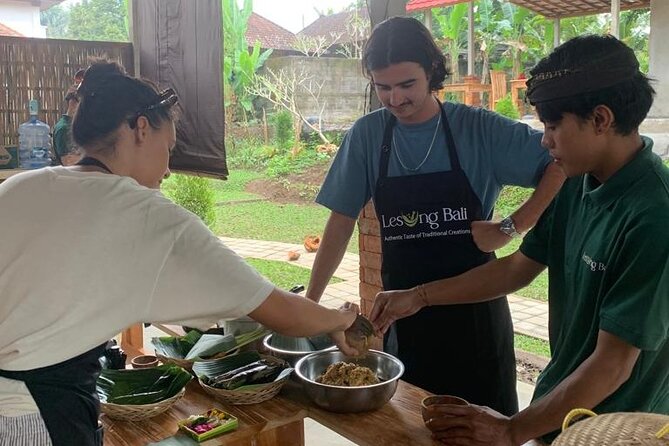
- Hands-on Balinese spice work: use a Lesung (mortar and pestle) and learn traditional chopping and grinding
- Real menu choices: regular, vegetarian, and vegan options, tailored to your picked menu
- Small-group feel: capped at 15 travelers, with strong instructor support during prep
A Half-Day Plan That Starts With Real Food Shopping
Ubud has no shortage of cooking classes, but this one has a clear flow that helps you connect the ingredients to the culture. Instead of arriving straight to a kitchen, you begin with shopping and observing: the traditional market tour (for morning sessions) and the Balinese house stop give you the background behind the dishes. Then the day shifts to the farm, where you harvest the spices and ingredients you’ll cook with.
The value is that it’s not only a cooking demo. You’re learning methods and food logic you can repeat later at home. The reviews that stand out repeatedly mention patient teaching and hands-on guidance, from hosts like Ron and Putri to instructors named Don, Gustie, and Begul. That variety matters because it suggests the quality isn’t tied to one single guide, even if certain people are especially memorable.
Duration is about 5 hours, which is a sweet spot in Ubud. You get a full experience without losing a whole day. And if you’re trying to balance tours with downtime, the option to pick morning, afternoon, or evening makes it easier to plug in.
You can also read our reviews of more cooking classes in Ubud

The Itinerary: Market, House, and the Farm-First Cooking Setup
This class is built around three “input” stops before you ever touch the stove.
Traditional Market Tour (morning classes only)
On morning departures, you visit a traditional market and buy spices from local stalls. This isn’t just window shopping. You see where ingredients come from and you learn what to look for, especially spices. Some people also mention trying local fruits during this part of the day, which is a nice bridge into the cooking session.
Why it’s worth it: market time teaches you how Balinese cooking starts with ingredient selection. When you later grind spices yourself, it makes more sense because you’ve already seen them in context.
Practical drawback: if you book an afternoon or evening class, you won’t get the market component. The listing is explicit that the market tour is morning-only, so plan accordingly if that’s a priority for you.
A Local Balinese House Visit
After the market (or after pickup for non-morning classes), you go to a local Balinese house to learn about Balinese culture and lifestyle. You also get to see how the building and placement are set up within the home.
Some reviews emphasize that the house visit can be focused on the grounds and compound layout rather than a full inside tour. That’s still useful. You’re learning the way families live and structure spaces, which connects directly to how food and daily routines fit into community life.
Why it matters: Balinese cooking is not only about flavors. It’s also about routines, resources, and how families work together. This stop gives you that context without being preachy.
The Farm Harvest and Spice Collection
Next comes the farm. You decide your menu first, then you explore the farm and harvest the spices and ingredients that match what you’re going to cook. The cooking starts after that, with fresh ingredients you picked yourself.
This is a big quality signal. When ingredients come from the farm on the day, you tend to get better freshness and better aromatics. It also changes your mindset in the kitchen. Instead of being handed a pre-made basket, you recognize the plants and understand what you chose.
You can also read our reviews of more tours and experiences in Ubud




Inside the Cooking Lesson: Lesung Spice Work and Real Technique
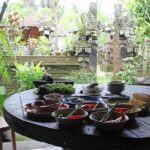
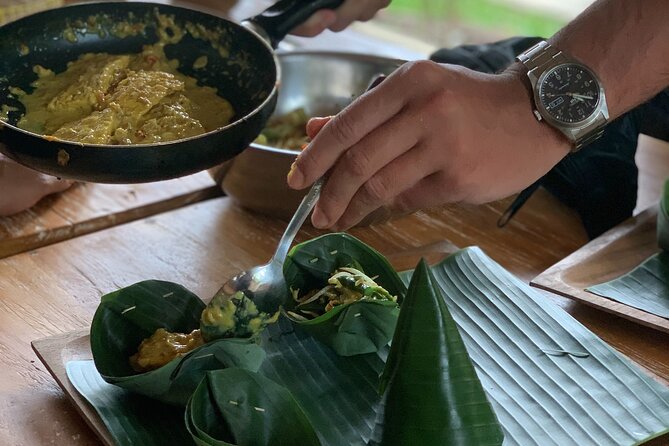
The heart of the experience is the hands-on cooking with a Balinese chef. You learn techniques used in Balinese cooking, including chopping and pounding spices with a Lesung (mortar and pestle). If you’ve never done spice grinding this way, it’s one of those skills that feels simple but instantly upgrades your cooking.
You’ll cook (not just watch)
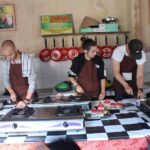
Most of the class is structured so you’re involved: you choose your menu, learn steps, and prepare dishes during the lesson. Reviews mention people using a giant mortar and pestle and getting guidance at each step.
Also, the instructors are described as patient and supportive. Names that come up include Ron and Putri, plus others like Don and Gustie. Even when someone is very enthusiastic or very funny, the key point stays the same: you’re not left guessing.
Expect guided steps, but ask if the pace feels fast
One possible downside shows up in a review about feeling slightly rushed during some steps. Another mentioned that small spices were added without enough explanation, so they had questions they wanted answered. The takeaway for you is simple: if something doesn’t make sense, ask right then. The whole point of doing it in a small group is that the chef can slow down for you.
What the chef teaches beyond the recipe
From what’s shared, the chef explains how many ingredients will go in, what you need besides the obvious items, and the cooking logic tied to your menu. That’s the difference between collecting recipes and actually learning how Balinese food works.
Regular, Vegetarian, or Vegan: Your Menu Choice Shapes the Whole Day
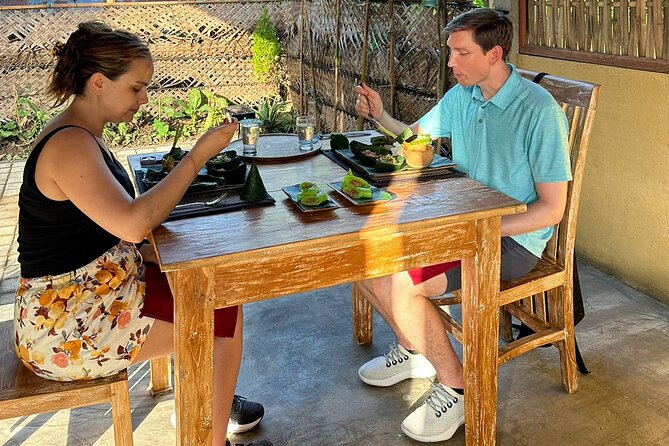
You can select regular, vegetarian, or vegan options. That matters because it changes your ingredient path during the farm harvest and how your dishes are built. You’re not being stuck with a plain substitution.
In practice, this choice also affects your comfort level. If you eat vegetarian or vegan at home, you’ll likely appreciate knowing your class menu is not an afterthought. Reviews mention people specifically loving the way dishes felt authentic under vegetarian and vegan options.
If you’re flexible, you’ll still get value. The technique is the lesson. You’ll learn how spice mixes are built, how ingredients are treated, and how each dish’s flavors come together. Even if you’re not cooking the exact same dishes you’d normally order in a warung, you’ll leave with a working sense of the style.
What You’ll Eat: More Food Than You Expected
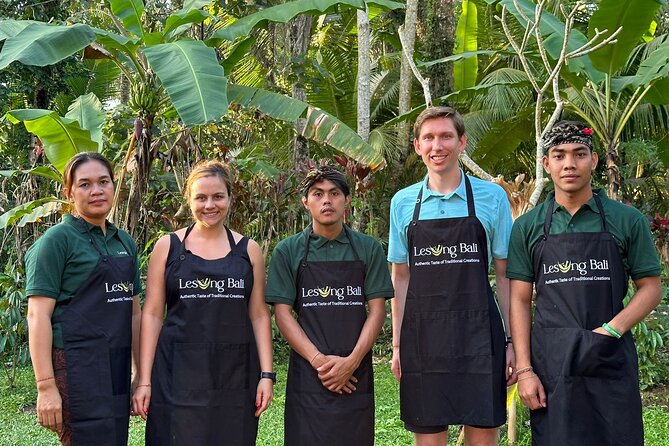
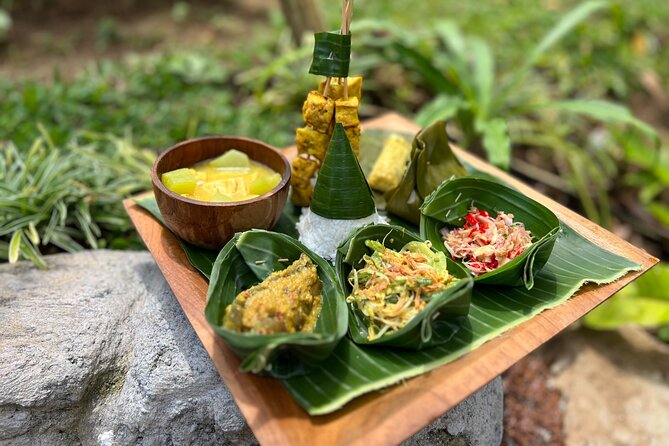
This class isn’t a tiny tasting. You cook dishes and then enjoy them after the lesson.
Several reviews mention a menu with around six dishes plus dessert, and people repeatedly stress that there’s a lot to eat. One person says come on an empty stomach. Another notes they ended with more food than they could finish.
That’s a good sign for value. At $39.71 per person, you’re paying for the day’s whole experience: ingredient sourcing, cultural stops, teaching, and the meal you eat afterward. If you typically spend money on Ubud food tours or paid tastings, this class can feel like a better deal because you’re fed and taught in one package.
Price and Value: Why $39.71 Makes Sense Here
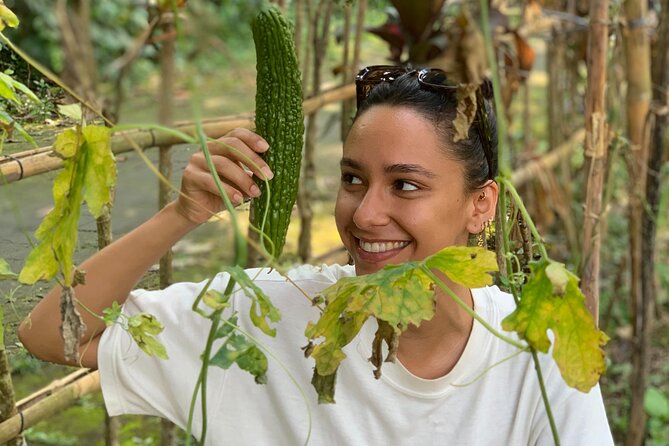
Let’s talk value in a practical way.
You’re paying for:
- a full half-day structure (about 5 hours)
- an air-conditioned vehicle
- mineral water
- coffee and/or tea and a Balinese cake
- all fees and taxes
- and a free shuttle service within the Ubud area only
The cultural stops are not a quick drive-by. You actually go to the market (morning), a Balinese house, and a farm. Then you cook with your chosen menu option and eat what you make.
Could it be more expensive than a simple workshop? Maybe. But you’re not just buying a cooking demonstration. You’re paying for ingredient selection, teaching time, and a bigger meal than most classes deliver.
Getting There: Free Shuttle Inside Ubud, Extra Outside It
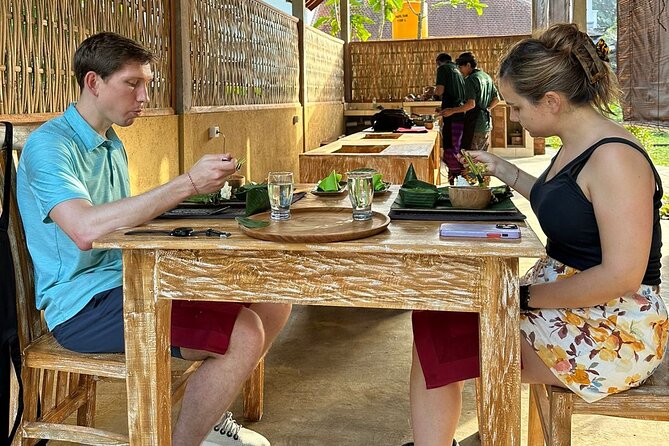
The included transportation is free shuttle service in the Ubud area only, plus transfers offered by the experience. If you’re staying outside Ubud, you may need to pay extra transportation fees for nearby zones.
The listing gives specific add-on prices by area:
- Nusa Dua and Jimbaran: IDR 500,000 per car
- Uluwatu: IDR 550,000 per car
- Kuta, Seminyak, Sanur, Canggu: IDR 450,000 per car
Also, pickup and drop-off outside of Ubud area aren’t included, so don’t assume your hotel can be handled without a supplement.
For most people staying central Ubud, this is easy. Reviews mention pick up timing and clear communication being solid, which reduces stress on the day.
One more thing: the class uses a mobile ticket, which is convenient if you’re trying to keep paperwork to a minimum.
Group Size and Personal Attention: The Best Part You Can Feel
This experience caps at 15 travelers. That’s small enough for real interaction without turning into a private tour for everyone.
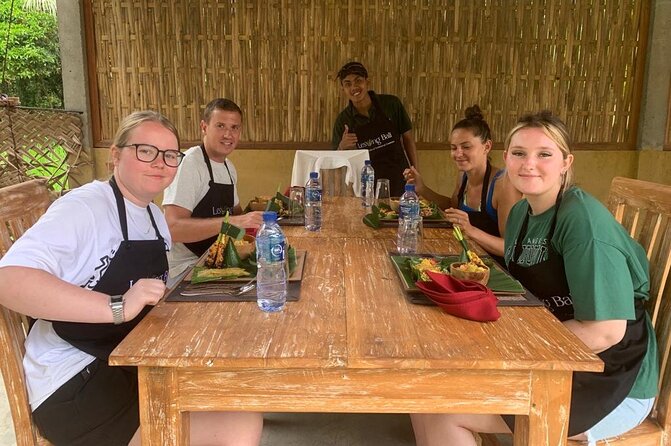
Reviews repeatedly describe personal attention and supportive instruction. In a small group, you can actually get help while you’re chopping, grinding spices, or figuring out timing for multiple dishes.
Small-group size also changes the feel of the cultural stops. You spend less time herding people and more time listening and asking questions at the house and during the cooking.
If you’re the type who likes asking, this style fits you well.
A Few Practical Considerations Before You Book
Here are the main “watch-outs” based on the information and feedback you provided.
- Class time changes the itinerary: morning includes the market tour; afternoon/evening don’t. Pick based on what you want most.
- Pace may vary by menu and group: one person felt rushed during cooking steps. If you prefer slow, ask questions early and stay flexible.
- Not every component may be cooked by you: at least one reviewer mentioned they didn’t cook the rice. If you want full control over every item, you might want to ask what participants typically prepare for your chosen menu.
- You need good weather: the experience requires good weather, and if it’s canceled for poor conditions, you’ll be offered another date or a full refund.
Should You Book Lesung Bali’s Balinese Cooking Class in Ubud?
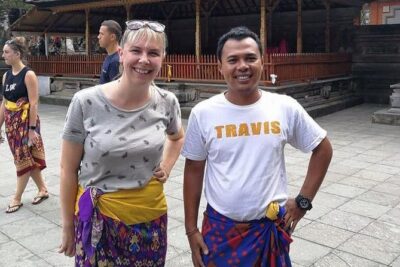
I think you should book this if you want the Ubud version of cooking that starts with ingredients and ends with a real meal. It’s a strong choice for food lovers who like hands-on work, and it’s also a great cultural add-on because the day includes a market and a Balinese house visit, not just a kitchen session.
Choose it if:
- you want a small group and more help from the chef
- you care about traditional spice technique like using a Lesung
- you want regular, vegetarian, or vegan dishes with real attention
- you’re okay with spending about 5 hours and eating well
I’d consider a different option if:
- you only want a cooking lesson and not cultural stops
- you’re extremely sensitive to pacing and want everything slow and perfectly explained
- you’re booking for an afternoon/evening slot but you really want the market tour (since that’s morning-only)
If you do book, come ready to be hands-on and hungry. This isn’t a snack-and-send-you-home workshop. It’s a full half-day meal-and-method experience.
FAQ
What’s the duration of the Balinese cooking class in Ubud?
The experience runs about 5 hours (approx.).
Where does the class take place?
It’s in Ubud, Indonesia.
Are there different class times?
Yes. You can choose from morning, afternoon, or evening classes.
Is the traditional market tour included?
The traditional morning market tour is included only for the morning class.
What dietary options are available?
You can choose regular, vegetarian, or vegan options.
How many people are in the group?
The class has a maximum of 15 travelers.
What’s included in the price?
Included items are coffee and/or tea, mineral water, a Balinese cake, an air-conditioned vehicle, all fees and taxes, and a free shuttle service within the Ubud area only.
Is pickup available?
Pickup is offered within Ubud via free shuttle service. Pick up and drop off outside of Ubud area is not included, and extra transportation fees apply to some areas.
When is the experience canceled due to weather?
The experience requires good weather. If canceled due to poor weather, you’ll be offered a different date or a full refund.
What’s the cancellation policy?
You can cancel for a full refund up to 24 hours in advance of the experience start time. If you cancel less than 24 hours before, the amount paid is not refunded.