REVIEW · KUTA
Surf Lesson with a Personal Instructor at Kuta Beach
Book on Viator →Operated by Odysseys Surf School · Bookable on Viator
Kuta’s break teaches you fast. This lesson is built for total beginners, with a 1-instructor-per-person approach and a short on-land intro before you hit the water. You’ll learn the basics—paddling, turning, and getting your feet under you—at one of Bali’s most famous surf spots.
I especially like the beginner-safe equipment: soft-top boards, leg rope, and helmet, plus rash vests. It feels like the school is set up for learning, not just showing up and hoping for the best, and the coaching style is often described as patient—names like VJ and Riko come up in past lessons.
The one thing to plan around is timing. Your surf session runs on a schedule that shifts with the tide, so the time you start can feel different day to day.
In This Review
- Key things to know before you book
- Why Kuta Beach works so well for your first surf
- Odysseys Surf School on Jl. Pantai Kuta: easy start, clear basics
- Gear that matches beginner reality (soft board, rope, helmet, rash vest)
- The 10–15 minute intro that saves you from wasted effort
- In the waves: what you’ll practice during the ride attempts
- Paddling and positioning
- Standing up: the move that decides everything
- Falling (yes) and getting back to it fast
- Wet-season reality: Kuta can be messy, and that’s okay
- Photos for your socials: worth it, but not included
- Price and value: why $50 can make sense for beginners
- Who should book this lesson (and who might want a different plan)
- Final verdict: should you book Odysseys for Kuta surfing?
- FAQ
- Is this lesson private?
- How long is the surf lesson?
- What equipment and safety items are included?
- Are souvenir photos included?
- What’s the minimum age?
- Does the lesson time stay the same each day?
Key things to know before you book

- 1 instructor per person means you get focused feedback, not vague group advice
- Soft-top boards + safety gear are part of the “learn fast” setup
- A short beginner briefing (10–15 minutes) gets you moving before you struggle in the water
- 2 hours total is enough to practice, but you’ll still feel it in your legs and core
- Action photos cost extra if you want something polished for your socials
- Beach conditions can be messy in wet season (Oct–Apr), though lessons still run
Why Kuta Beach works so well for your first surf
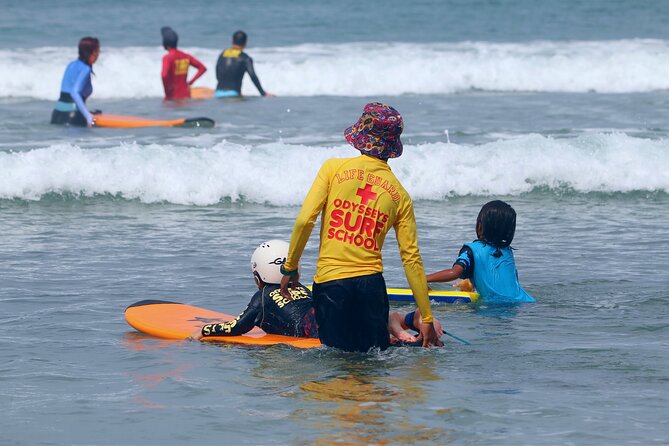
Kuta Beach is busy, famous, and oddly perfect for beginners. When you’re learning, you don’t just need waves—you need consistency and a shore area where you can practice without turning every mistake into panic. Kuta’s setup makes it easier to get multiple tries in the same general area, which is exactly what you want during your first lesson.
You’re also on the “classic Bali” coast here. Even if you’re not surfing yet, you’ll be surrounded by the sights and sounds of the beach culture—shops, scooters, beachgoers—so the whole thing feels like Bali, not a remote training camp.
One smart detail: your instructor spends the first part of the lesson on basics. That usually matters more than people expect. If you can manage paddling and board control, you’ll spend far less time getting dragged around and far more time practicing getting up.
You can also read our reviews of more tours and experiences in Kuta


Odysseys Surf School on Jl. Pantai Kuta: easy start, clear basics
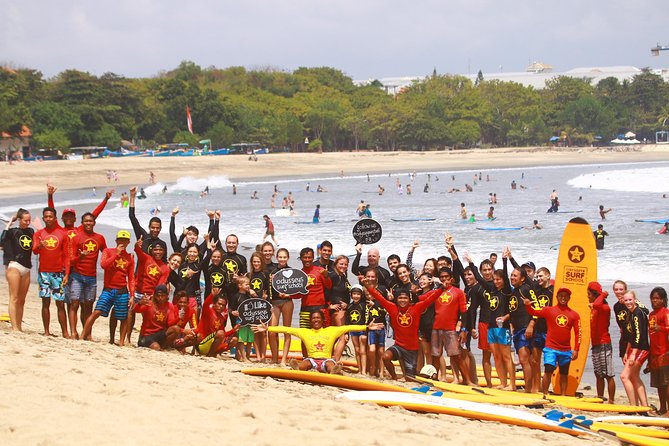
Your lesson begins at Odysseys Surf School, on Jl. Pantai Kuta, Kuta (near Kuta’s main strip). The school has operating hours from 8:00 AM to 4:00 PM, and the activity ends back at the same meeting point, which keeps logistics simple.
The practical side here is what you’re really buying with a reputable surf school. You show up, you get geared up fast, and you don’t have to hunt down towels, showers, or safe storage. This one includes:
- Changing rooms, showers, and towels
- Safety lockers (so you’re not carrying valuables all afternoon)
- Mineral water and shower gel after
One small note from lesson culture: you might run into a deposit for secure locker use or towel handling. The exact amount isn’t guaranteed by the main tour info, but it has shown up in past feedback. If you want to be extra safe, bring a card or cash just in case the school requests it.
Gear that matches beginner reality (soft board, rope, helmet, rash vest)
Let’s talk about the equipment, because it changes the whole experience.
You get a soft-top board, which is the right call for first timers. These boards are designed to reduce the sting when you fall (you will fall), and they’re easier to handle while you learn to balance. You also get:
- Leg rope
- Helmet
- Rash vest
That helmet detail is worth appreciating. Many people treat surfing as a casual activity until they’re standing up and the board suddenly feels like a stubborn shopping cart. With a helmet, you can focus on learning instead of worrying about injuries.
You’ll also notice the approach is safety-forward without feeling stiff. There’s extreme sport insurance included, but it’s specifically noted as medical coverage for ages 6–60. If you’re outside that range, double-check coverage details before you go.
Overall, this gear package helps you do the thing beginners need most: repeat attempts.
The 10–15 minute intro that saves you from wasted effort
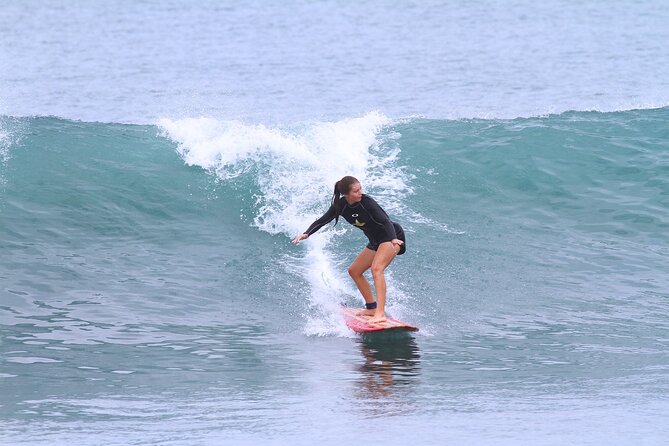
The lesson starts with a short intro—about 10–15 minutes—on land. You’ll go over what to do and why, including how to:
- Paddle effectively
- Control the board
- Stand up into the shore direction
The goal isn’t to make you “surf” immediately. It’s to get your body into the right rhythm. For most people, the first lesson mistakes are predictable:
- paddling too late
- paddling without direction
- trying to stand up before the board is stable
- forgetting to look where you’re going
This is where the instructor earns their keep. In earlier lessons, instructors like VJ and Riko are specifically praised for being supportive and for making beginners feel like it’s actually possible to learn. That confidence matters, because fear makes you tense up—then everything gets harder.
After the intro, you move into the water and start practicing for real.
In the waves: what you’ll practice during the ride attempts
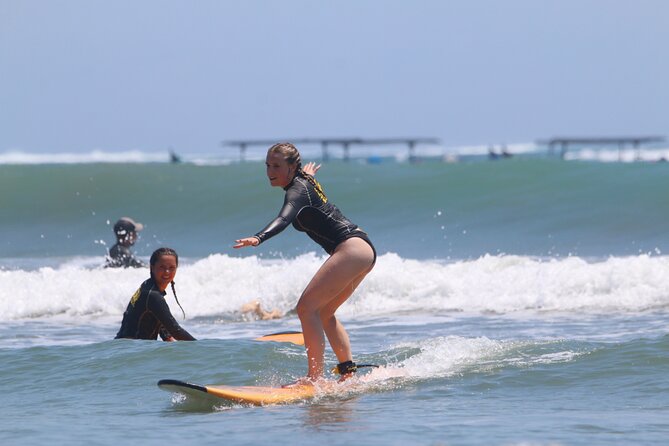
You’re in the ocean learning a few core movements, and you’ll repeat them until they start feeling less awkward.






Paddling and positioning
You’ll learn how to paddle so you can meet the wave at the right moment. This is often the first “aha” moment. The board starts to feel like it has a front and a back, not just a floating object that mocks your effort.
Standing up: the move that decides everything
You’ll practice getting into a standing position that lets you ride into shore. Your instructor will coach you on timing and posture—usually the biggest difference between staying upright and wiping out.
Falling (yes) and getting back to it fast
A first surf lesson is a cycle: try, fall, adjust, try again. With a soft board, you’ll still feel bumps, but it’s far more manageable. The goal is to keep the momentum of learning instead of spending the whole session stuck on one mistake.
Your physical fitness level matters, but not in the gym way. The info notes you should have moderate physical fitness. That usually means you can swim enough to handle the board and paddle for short bursts without going totally empty.
Also, prepare for the “first-time soreness” effect. One past lesson was described as exhausting but amazing, which is exactly how surfing often feels the first time—your body works in new ways.
Wet-season reality: Kuta can be messy, and that’s okay
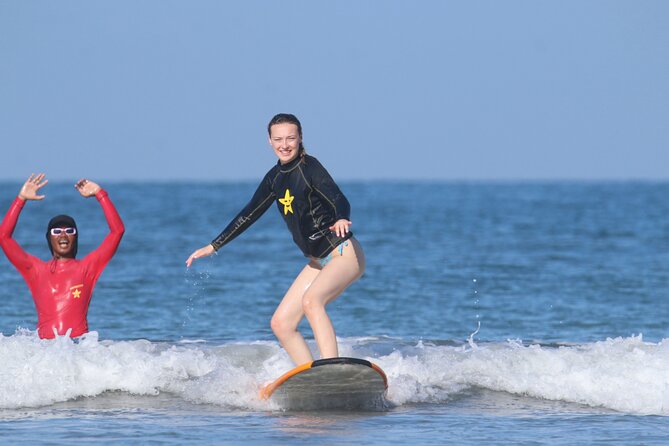
If you’re visiting between October and April, note the beach can have more trash than you’d expect. The tour info says this is common during the wet season, and local residents work to clean the beach every day.
Two practical takeaways:
- Don’t let a bit of ocean mess derail your mindset. The lesson still runs daily.
- Keep your expectations grounded. You’re learning to surf, not photographing a postcard at all times.
The upside is you’re doing it on a beach that works year-round for learning.
Photos for your socials: worth it, but not included
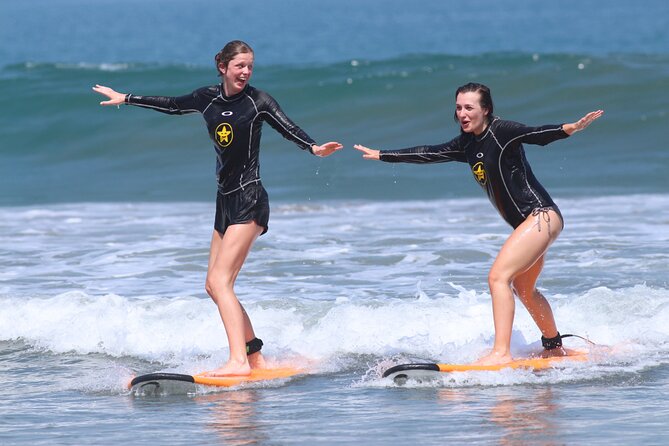
You can buy high-resolution action shots as an add-on. This is one of those “pay for convenience” extras: if you want proof you actually made it up on the board (even briefly), it can be fun to have photos that look good without you juggling your phone in wet conditions.
But since souvenir photos aren’t included, you’ll decide on the day based on what you want from the experience. If you’re the type who loves a post-lesson brag post, plan a budget. If not, you’ll still get plenty out of the training itself.
Price and value: why $50 can make sense for beginners
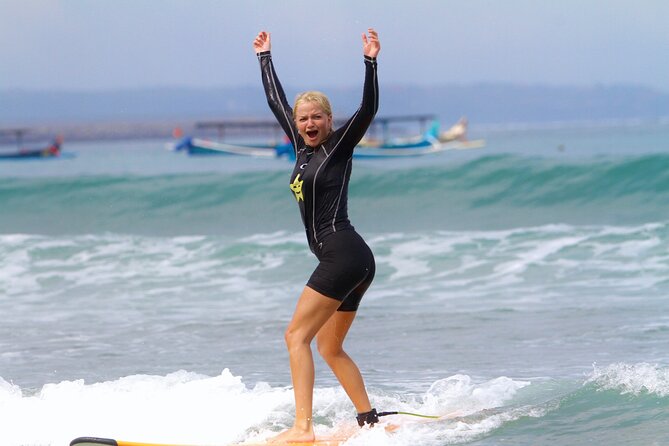
The price listed is $50 per person for an approximately 2-hour lesson, with mobile ticketing and group discounts.
On paper, surf lessons can look pricey until you break down what’s included:
- soft board + leg rope + helmet
- rash vest
- lockers and facilities (changing rooms, showers, towels)
- mineral water
- extreme sport insurance (medical, ages 6–60)
- coaching tailored to basics
For a beginner, the value is mostly about time and supervision. You’re paying to reduce trial-and-error and to get corrections early, when your technique is still forming.
Two cost notes to keep in your planning:
- There’s a high season surcharge of IDR 130,000/person during specific periods (June 1–Sept 30 and Dec 24–Jan 5).
- Photos cost extra if you want them.
So the real question is: do you want someone helping you learn faster and safer? If yes, this price structure can be fair.
Who should book this lesson (and who might want a different plan)
This lesson is a great fit if:
- You’re a complete beginner (the soft-board setup is designed for you)
- You want a personal instructor who can correct your stance and timing
- You like having everything handled: gear, safety, water, and shower facilities
You might think twice if:
- You need a perfectly fixed start time. The schedule varies daily and depends on tide conditions.
- You’re very concerned about beach conditions in wet season (trash can be present in the ocean area, though lessons still operate).
- You’re outside the insurance age window for medical coverage (the info specifies 6–60).
Also, the lesson notes an age guideline of min. age 6 years for the 1 instructor: 1 person setup, but it also states no minimum age elsewhere. If you’re traveling with kids, confirm what applies to your specific booking so expectations match reality.
Final verdict: should you book Odysseys for Kuta surfing?
If you’re learning from zero, I’d lean yes. The combo of beginner-safe gear, focused 1-on-1 coaching, and practical facilities makes this a low-stress way to try surfing in Bali. You’re not paying for hype—you’re paying for instruction that helps you progress faster.
Book it if you want your first surf session to feel organized and safe, even if you still end up wiped out by hour two.
Skip or re-think if your schedule is too tight for tide-driven timing, or if you’re sensitive to wet-season beach conditions. In those cases, it can still be worth surfing—but you’ll want a backup plan for timing and expectations.
If you do book: wear something you can move in, keep water handy after the lesson, and remember the real win here isn’t standing up for a full minute. It’s getting your body coordinated enough to keep trying.
FAQ
Is this lesson private?
Yes. It’s listed as a private tour/activity, and only your group will participate. The lesson also notes one instructor per person.
How long is the surf lesson?
It’s about 2 hours.
What equipment and safety items are included?
You get a beginner surfboard (soft top board), leg rope, helmet, and rash vests. It also includes safety lockers, changing rooms, showers, towels, mineral water, and shower gel. Extreme sport insurance (medical) is included for ages 6–60.
Are souvenir photos included?
No. Souvenir photos are available to purchase, including an option for high-resolution action shots, but they are not included in the price.
What’s the minimum age?
The info notes a min. age of 6 years for the 1 instructor:1 person setup, but it also states no minimum age. If you’re booking for a child, it’s smart to confirm which rule applies to your specific booking.
Does the lesson time stay the same each day?
No. The surf schedule varies by day, and the timing is fixed depending on tide conditions. The info suggests checking the surf schedule on the website before booking.