REVIEW · UBUD
Authentic Balinese Cooking Class in Ubud
Book on Viator →Operated by Bali Natural Tours · Bookable on Viator
Fresh spices start the day in Ubud. What I like most is the small-group setup that keeps things hands-on, plus the full flow from market and culture to cooking at the farm. The only thing to weigh is timing: the morning option adds extra stops (market plus home), so it can affect how you plan the rest of your day.
The experience is built for practical learning, not just watching. You’ll grind spice pastes using lesung (mortar and pestle), learn Balinese cooking techniques, and choose a menu that can be vegetarian or regular.
I also like that the day feels thoughtfully arranged: you pick ingredients from the farm, cook with what you harvested, and leave with a recipe PDF plus an apron and utensils to help you repeat it later. Since it runs in good weather, have a little flexibility if conditions change.
In This Review
- Key points before you go
- Balinese cooking in Ubud with a small-group, hands-on focus
- Getting there: Ubud pickup, A/C comfort, and the countryside feel
- The morning schedule: market shopping and a real Balinese home visit
- Farm harvest to ingredient prep: where your lunch starts
- Cooking techniques you’ll actually use: lesung, chopping, and banana-leaf style
- Menu choice: vegetarian and regular meals with a clear path
- Lunch, recipes, and the souvenir you can keep
- Price and value: why $49 can make sense (or not)
- What it feels like on the ground: small details that improve the day
- Who should book this Balinese cooking class in Ubud
- Should you book it? My take
- FAQ
- How long is the Balinese cooking class in Ubud?
- Is pick-up and drop-off included?
- Does the class include lunch?
- Can I choose a vegetarian menu?
- Is a traditional market visit included?
- What happens if the weather is bad?
Key points before you go
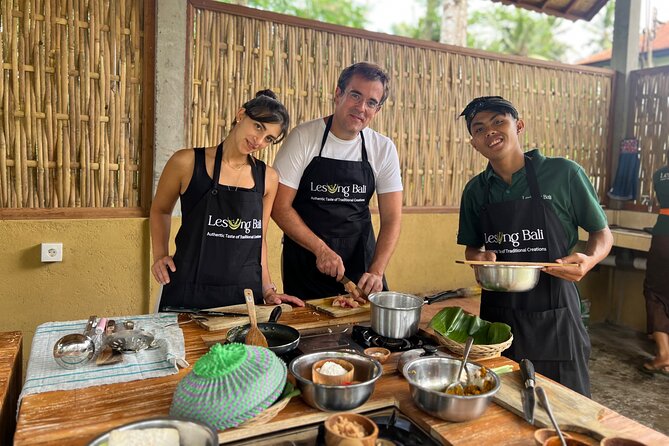
- Small-group cooking (max 15) keeps the class focused and makes it easier to ask questions.
- Morning classes add a local market and a typical home visit for more culture alongside the food.
- Farm harvest time means you start with fresh spices, not bagged ingredients.
- Hands-on technique includes chopping and pounding with lesung and cooking methods tied to Balinese tradition.
- Ubud pickup and drop-off are arranged from your Ubud-area address with an air-conditioned vehicle.
Balinese cooking in Ubud with a small-group, hands-on focus
This is the kind of Balinese cooking class that makes you work with your hands from the start. You’ll learn how Balinese cooks build flavor—often by grinding spice pastes and using fresh ingredients—rather than relying on shortcuts.
I especially like that the class is small enough to feel personal. With a maximum of 15 people, you’re more likely to get clear guidance as you chop, pound, and assemble dishes. That matters because Balinese recipes are technique-driven, not just ingredient lists.
And if you care about learning something you can actually cook again, you’ll appreciate the way the day is structured. You don’t just receive a demonstration; you participate, choose your menu (vegetarian or regular), and then cook the meal you’ll have for lunch.
You can also read our reviews of more cooking classes in Ubud

Getting there: Ubud pickup, A/C comfort, and the countryside feel
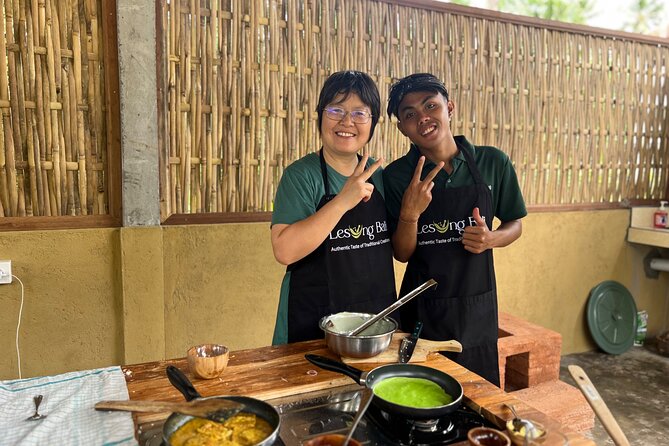
The tour includes pick-up and drop-off in the Ubud area, which saves you the stress of figuring out local transport. You’ll ride in an air-conditioned vehicle, and the plan is designed around direct movement between stops.
The class location is on the west side of Ubud, in an area that feels more like countryside than town. That shift is part of the value: it gives you a break from traffic, and it sets you up for a farm-and-ingredient mindset before you start cooking.
One practical consideration: if you’re staying outside Ubud, there can be an extra car fee. Sanur costs extra 400k IDR/car, Kuta/Seminyak/Canggu extra 450k IDR/car, Nusa Dua/Jimbaran extra 550k IDR/car, and Uluwatu extra 700k IDR/car.
The morning schedule: market shopping and a real Balinese home visit
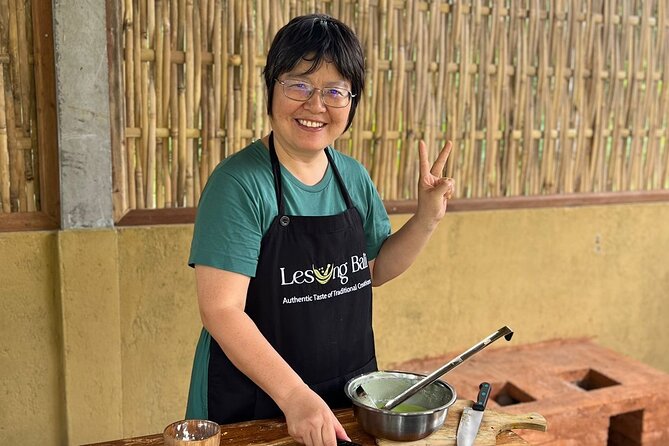
If you pick the morning departure, you get more than cooking. You’ll start with a visit to a traditional market and buy spices directly from local vendors.
This matters for two reasons. First, it turns spices into something you recognize—what they look like, how they’re sold, and which ones you’ll use later. Second, market time makes the whole class feel grounded in everyday life, not staged for tourists.
After the market, you’ll visit a local house to see how a Balinese home is arranged and learn about Balinese culture and lifestyle. One of the more memorable moments people mention is witnessing a ceremony happening that day in the home, connected to the Balinese calendar. That kind of context is hard to replicate elsewhere in Bali, and it’s a big reason the morning option is so popular.
If you’re mainly after food and don’t want extra stops, choose the departure time that fits your day. The trade-off is simple: morning = more culture and market time, while later slots focus more tightly on cooking.
Farm harvest to ingredient prep: where your lunch starts
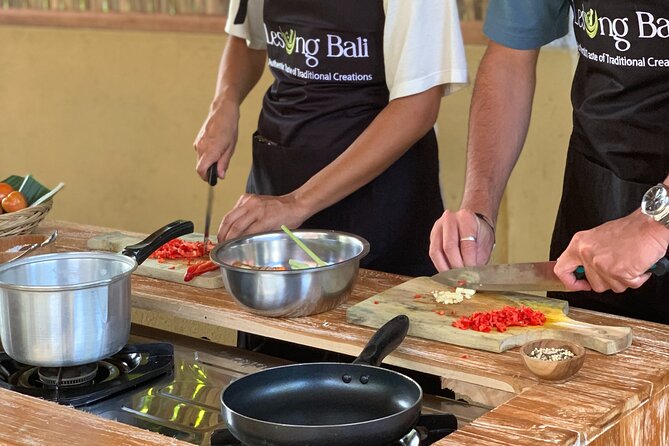
Once you’re at the farm, you’ll pick the menu option you’ll cook, then explore the farm and harvest the spices you’ll use in class. This is one of those details that changes everything. When you pick the ingredients yourself, you pay closer attention to how they smell, how they’re used, and how they transform when cooked.
You’ll also get a look at the farm atmosphere—green, quiet, and slower than Ubud streets. It’s a nice pacing reset before the learning gets hands-on.
From a practical standpoint, this also means your cooking lesson is built around freshness. You’re not translating from memory; you’re cooking with ingredients that were collected for this meal.
Cooking techniques you’ll actually use: lesung, chopping, and banana-leaf style
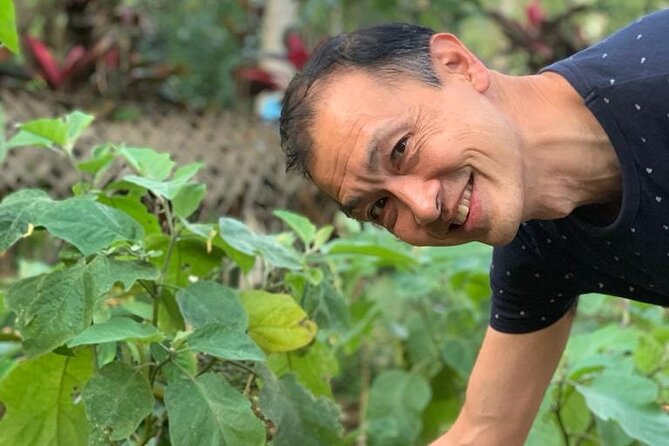
Here’s where the class earns its title as authentic. The chef explains Balinese cooking techniques and demonstrates how the dishes come together using the ingredients you selected.
A key skill you’ll practice is using lesung to chop and pound spice pastes. Even if you’ve cooked before, this is different from what many of us do at home. It’s more physical, more method-based, and it changes the texture of the paste in a way that affects the finished dish.
You’ll also learn how to prep ingredients based on the menu you chose. The chef goes over what ingredients are needed, and what else you’ll use during cooking, so you understand the logic—not just the steps.
And you may cook using Balinese traditions such as wrapping or cooking in banana leaves, which is highlighted as part of the authentic methods in this class style. You get that signature Balinese food presentation without it being the only focus. The goal is skill, not just a photo.
You can also read our reviews of more tours and experiences in Ubud



Menu choice: vegetarian and regular meals with a clear path
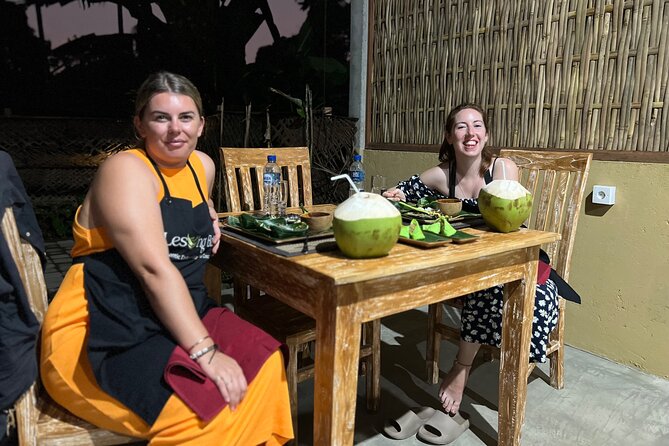
You can choose between a vegetarian menu and a regular menu during the class. For me, that flexibility is a real value add because it lets the experience stay inclusive without turning the cooking portion into a compromise.
Once you’ve picked your menu, the class is designed to follow that choice through market ideas, farm ingredients, and then the cooking steps. That consistency helps you remember what you made and why each part matters.
If you’re traveling with people who eat differently, this is a good setup compared with classes that force everyone into one menu. It keeps the experience shared while still being practical for dietary preference.
Lunch, recipes, and the souvenir you can keep
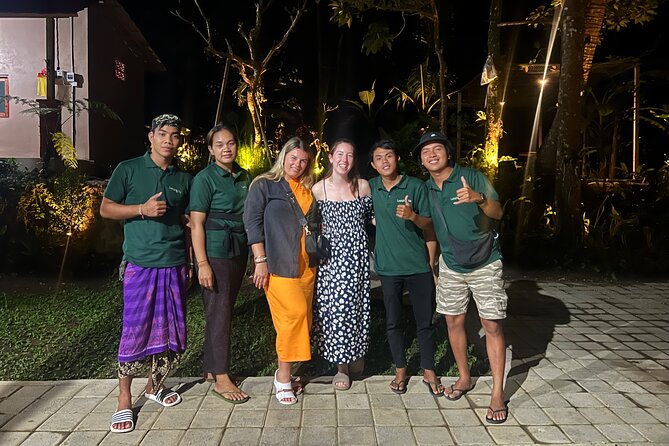
Lunch is included, so you’ll eat what you cooked. That’s a big deal because it closes the loop: you cook with guidance, then you taste the final result while the method is still fresh in your mind.
You’ll also get coffee or tea and bottled water, so you’re not scrambling for drinks midway through the day. Small comforts, but they matter when you’ve been handling spices, pounding pastes, and chopping ingredients.
The recipe PDF is another high-value inclusion. It’s not just a nice touch; it’s what turns the class from a memory into something you can repeat later. Add the fact that you’ll get an apron and cooking utensils, and you’ve got the gear to make your future home cooking easier.
Price and value: why $49 can make sense (or not)
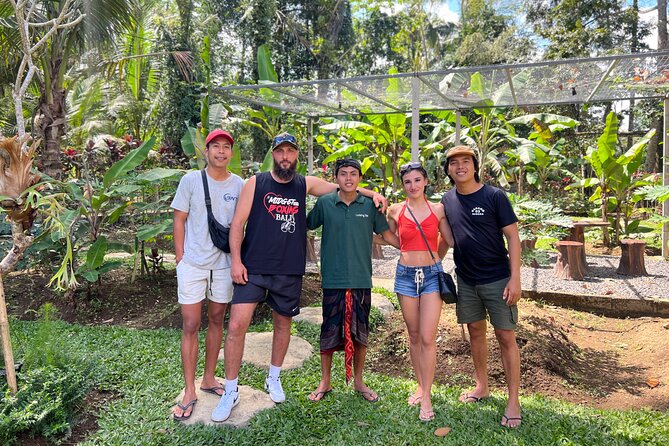
At $49 per person for a roughly 5-hour experience, the value depends on what you want from the day. This price is easier to justify if you care about technique, want culture alongside food, and appreciate included meals.
Here’s what’s included:
- Pick-up and drop-off in the Ubud area
- Lunch
- Bottled water
- Coffee and/or tea
- Air-conditioned vehicle
- Recipe (PDF)
- Cooking utensil
- Apron
If you’re comparing against classes that feel like a short demo plus a snack, this one is longer, includes lunch, and includes more structured learning. It’s also built around small-group instruction (max 15), which usually makes a class more effective.
Cost note for location: the tour includes Ubud-area pickup, but the extra car fees can apply if you’re outside Ubud (Sanur/Kuta-Seminyak-Canggu/Nusa Dua-Jimbaran/Uluwatu). If you’re planning to book, factor that in so you’re not surprised at the final total.
What it feels like on the ground: small details that improve the day
A class is only as good as its flow, and this one is designed to keep the day moving without feeling rushed. The countryside setting helps, but the real win is the order of operations: market ideas, home/culture context (morning), then farm harvesting, then cooking.
Also, the human factor matters. One review highlights a driver named Ron who stood out as a highlight, and another mentions the cooking teacher Putri as a delight. In a class like this, the instructor’s calm, clear teaching style affects how much you absorb.
If you like asking questions, you’ll likely appreciate that culture stops are not just sightseeing. The home visit is meant to explain lifestyle and house placement, and the market stop is about buying spices that you’ll cook with later.
Who should book this Balinese cooking class in Ubud
This experience is a strong fit if you want:
- Hands-on cooking skills (especially spice pastes and lesung-style pounding)
- A balance of food and culture, not only recipes
- A meal you can eat right after cooking
- The option to select vegetarian or regular menu
It’s also a good family-style activity in the sense that it’s interactive and structured, though the day is still about cooking and time outdoors at the farm. If you’re sensitive to heat or want lots of downtime, you might prefer a shorter or more indoor-focused experience.
And if it’s your first trip to Bali, this style of day gives you a practical souvenir: not just photos, but a method for making Balinese flavors at home.
Should you book it? My take
I’d book this class if you’re serious about learning real Balinese cooking techniques and you like the idea of starting from farm ingredients. The combination of market (morning), a typical home visit, and spice harvesting makes it feel more authentic than the usual cook-and-collect style.
I would think twice only if your schedule can’t handle a 5-hour block, or if weather uncertainty would stress you out. Since it requires good weather, it’s best when you’re in Bali with at least a little flexibility.
FAQ
How long is the Balinese cooking class in Ubud?
The experience runs for about 5 hours.
Is pick-up and drop-off included?
Yes. Pick-up and drop-off are included for the Ubud area, with an air-conditioned vehicle.
Does the class include lunch?
Yes. Lunch is included, along with bottled water and coffee and/or tea.
Can I choose a vegetarian menu?
Yes. There is a choice between vegetarian and regular menu options during the class.
Is a traditional market visit included?
It depends on the departure time. The morning class includes a visit to a traditional market where you can buy spices.
What happens if the weather is bad?
The experience requires good weather. If it’s canceled due to poor weather, you’ll be offered a different date or a full refund.
If you’d like, tell me which month you’re going and where you’re staying (Ubud vs. Sanur/Canggu/etc.), and I’ll help you choose the best departure time.