REVIEW · UBUD
Exclusive Authentic Balinese Cooking Class at Family home
Book on Viator →Operated by Nipala cooking class by Kedongding · Bookable on Viator
Spices have a backstory here. This private Balinese cooking class links a stop at Payangan Market with a hands-on lesson in a family home kitchen near Ubud. You’re not just watching from the side—you’re working at the cutting boards and learning the spice logic behind Balinese flavors.
I especially love the stone mortar and wooden-block approach to spice prep. It’s practical, old-school, and it makes it easy to understand why sauces taste the way they do. I also love that the meal isn’t a token bite—you cook your own lunch or dinner, and vegetarian options are available if you flag it ahead of time.
One thing to consider: the experience depends on good weather, since this is meant to run outdoors in an open-kitchen setup. If conditions are rough, you may be offered another date (or a full refund).
In This Review
- Key highlights worth penciling in
- A real Balinese market-to-kitchen flow near Ubud
- Payangan Market: where your shopping shapes the meal
- The Balinese compound home and open-kitchen setup
- Spice prep: the part that makes Balinese sauces make sense
- Your menu: multiple dishes and a full feast
- Coffee, snacks, and the small comforts that prevent a long day drag
- Price: what $75 buys you, and why it feels fair
- Who should book this class (and who might want a different option)
- Should you book Nipala cooking class by Kedongding?
- FAQ
- How long is the cooking class?
- Where does the class start and where does it end?
- Is hotel pickup included?
- Is this a private tour?
- What group size is it limited to?
- Can I request a vegetarian meal?
- What dishes will we cook?
- What is the minimum age for kids?
Key highlights worth penciling in
- Payangan Market stop for a real look at what people buy before cooking
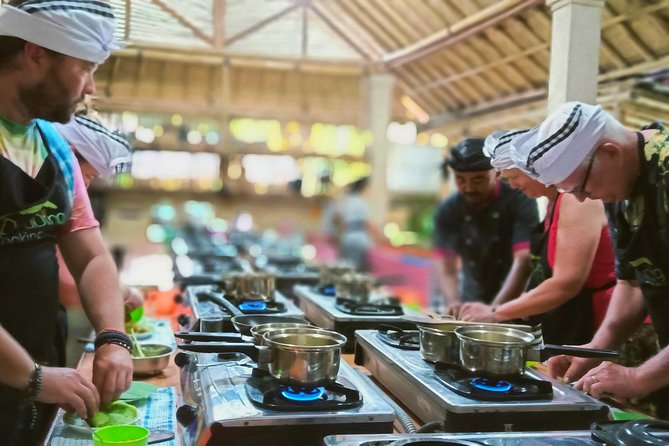
- Family compound open kitchen where you work at your own station
- Traditional spice prep using wooden chopping blocks and stone mortars
- Hands-on, student-led cooking while the chef explains every step
- A full menu you finish and eat with multiple Balinese dishes
- Extra value included: welcome coffee or tea, cake, snacks, recipe book, and a certificate
A real Balinese market-to-kitchen flow near Ubud
This class is built like a day you’d piece together yourself: start with ingredients, learn the method, then eat what you made. Pickup and drop-off are included in the Ubud area, which matters because driving around Payangan and back can be its own little adventure.
The “private” part is a big deal for value. Your group stays together (minimum 1, maximum 12), and each person gets a cooking station. That keeps things from turning into a rushed show-and-tell where one person does all the chopping.
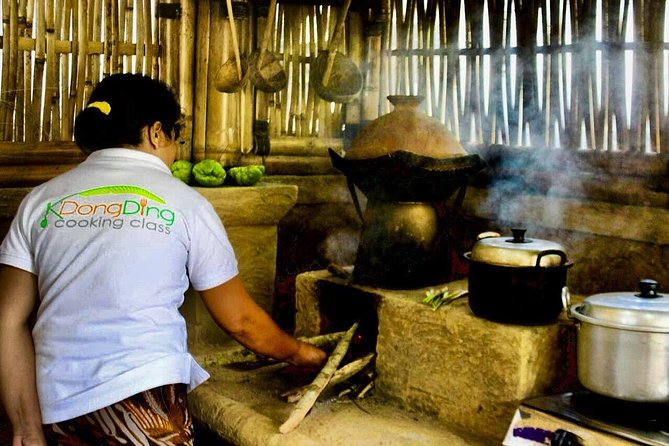
The vibe is also family-forward. The cooking is held in a Balinese compound house setting, with an open kitchen style that feels more like learning in someone’s world than performing for tourists.
You can also read our reviews of more cooking classes in Ubud
Payangan Market: where your shopping shapes the meal
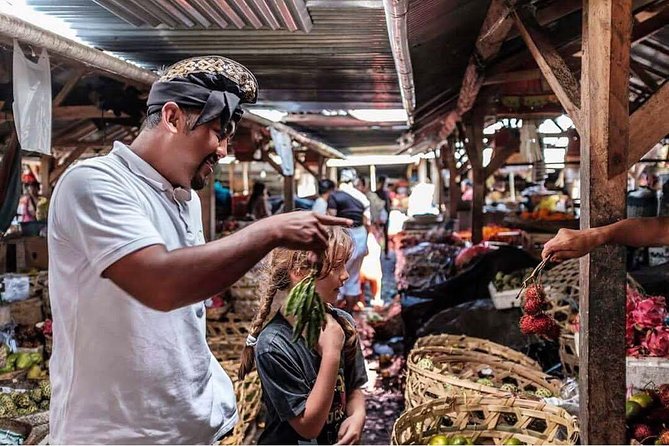
Your day starts at Payangan Traditional Farmer Market. This is where Balinese cooking stops being abstract. You’ll see ingredients at the source—then you’ll return to the kitchen knowing what you’re holding and why it belongs in the dishes.
What I like about this market stop is how it sets your expectations for flavors. Balinese cooking isn’t just spicy. It’s built around spice pastes, sauces, and careful processing—so when you get to the kitchen, the “why” clicks faster.
Morning vs. night can change the feel. The class offers both a morning market (morning class) and a night market (afternoon class), and the meal timing matches: lunch for the morning option, dinner for the afternoon option. If you prefer a cooler, slower start, go morning. If you like a later, more social energy, go afternoon.
The Balinese compound home and open-kitchen setup
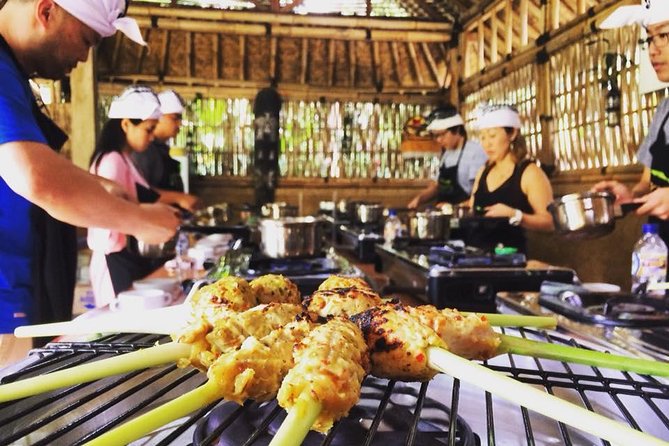
After the market, you go to a Balinese compound house where you get welcomed with Balinese coffee or tea plus Balinese cake. It’s a small detail, but it helps you switch gears from shopping mode to cooking mode without feeling dropped into a classroom.
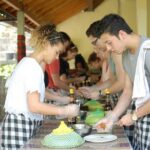
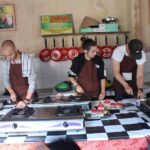
The kitchen is set up for hands-on learning. Tools and ingredients are provided, and you cook at your own station rather than hovering around one shared pan. That’s how you actually learn. When you pound, chop, grill, and assemble yourself, the technique sticks.
One detail that makes the whole experience feel “real” is the compound context. You’re not only cooking food; you’re seeing how the family organizes daily life around the space. Some visitors have also noticed extra personal touches on the grounds—so if the family mentions anything like their beekeeping or a rescued pet, take it in. Those stories are part of why this class works.
Spice prep: the part that makes Balinese sauces make sense
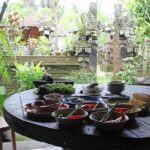
Balinese cooking takes spice work seriously. In this class, one of the biggest focuses is paste and sauce preparation, and that’s where your hands-on time really pays off.
You’ll learn two core spice-processing ways:
- Chopping spices on a wooden chopping block
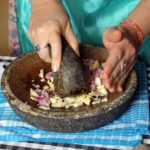
- Grinding spices in a stone mortar before cooking
If you’ve ever wondered why one sauce tastes smoother, darker, or more layered than another, this is where you’ll see the connection. Grinding versus chopping changes texture fast, and texture affects how flavors blend with heat and fat.
You’ll also do the kinds of tasks that build confidence quickly: chopping, pounding, and processing ingredients the traditional way. The chef guides the steps, but you’re the one doing the prep and cooking. One of the best signs that this is well run is that the instruction is “hands-on” rather than “hands-off.” You should leave knowing what to do, not just what you ate.
Your menu: multiple dishes and a full feast
You’ll cook a menu (not just one dish), and the dishes listed include both vegetarian and tofu-friendly options. Vegetarian meals are available—just tell them in advance so they can prepare properly.
Common menu items include:
- Jukut Urab (V)
- Tahu Mesanten (V)
- Dadar Gulung (V) (ala kdongding)
- Sate Lilit Ayam (V/TOFU)
- Calon Be Siap with Chayote Soup (V/TOFU)
A note on the chayote soup: the information provided describes chayote as low in calories and rich in fiber, and it mentions anti-inflammatory properties and potential support for issues like digestion and kidney stones. I’d treat that as general wellness info rather than medical advice—but it’s useful context for why that ingredient shows up in Balinese everyday cooking.
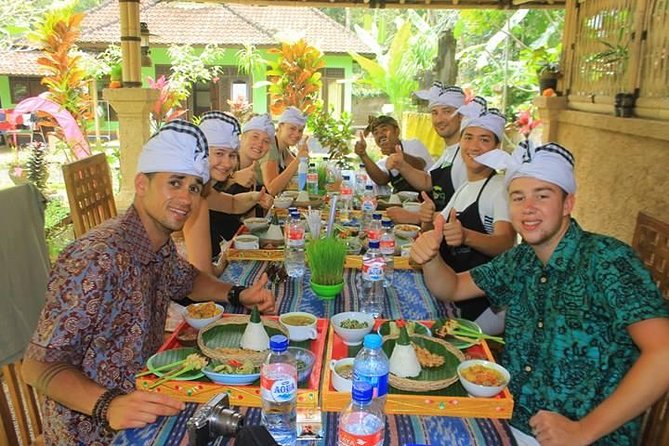
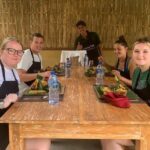
At the end, you sit down for what you made. Lunch or dinner is served after you finish cooking, so there’s no awkward wait while someone else plates. You also get the satisfaction of tasting your own spice work, which is the fastest way to learn what “right” feels like.
You can also read our reviews of more tours and experiences in Ubud

Coffee, snacks, and the small comforts that prevent a long day drag
This is a 6-hour experience, so pacing matters. You’ll have a welcome drink (Bali coffee or tea) with cake, and you can refill water during the class for free.
Snacks are included as well, which helps if you’re the type who gets cranky when you smell food but can’t taste yet. It also means you don’t have to hunt for a snack between market and kitchen.
Everything is supported by the included cooking setup: kitchen tools, cooking-station equipment, ingredients, and an air-conditioned vehicle for transport. In Bali heat, that A/C ride can be the difference between relaxed learning and feeling drained before you even start chopping.
Price: what $75 buys you, and why it feels fair
At $75 for about 6 hours, the value comes from what’s included, not just the cooking lesson. You’re paying for:
- market visit (ingredient education)
- private class format (minimum 1 to maximum 12)
- hands-on instruction and individual stations
- ingredients and tools
- your own lunch or dinner
- recipes book and a culinary workshop certificate
- pickup and drop-off within the Ubud area
That combination is why it often feels better than cheaper classes that only teach one dish or that require you to buy ingredients separately.
One practical point on transport: the car can fit up to 6 passengers. If your group is bigger (7–12), there’s an extra per-person transport cost. It doesn’t change the class experience itself, but it’s good to know early if you’re planning with friends or family.
Who should book this class (and who might want a different option)
This cooking class is ideal if you want a grounded, hands-on introduction to Balinese flavor building—especially spice processing. It’s also a smart pick if you don’t have a cooking background. The format is step-by-step, with expert explanation while you do the actual work.
It can also work well for families, since the minimum age is 12 and children must be accompanied by an adult. If you’re traveling with teens who like food experiments, this is the kind of activity they can actually participate in.
The main mismatch is weather dependency. If you’re visiting during a rainy stretch, you might need flexibility on your date. Also, if you’re hoping for a super-fast “see and sample” food crawl, this is a working class first. You’ll be cooking, not just tasting.
Should you book Nipala cooking class by Kedongding?
I’d book it if you want the best kind of Bali souvenir: skills you can repeat at home. The market-to-kitchen structure, the compound-house open kitchen setting, and the traditional spice work are exactly the parts that tend to create long-lasting memories.
You should also book if you care about vegetarian options. Just make the request when you reserve, so they can prepare the vegetarian or tofu-friendly menu properly.
Skip it only if you can’t handle weather uncertainty or if you’re only interested in eating without doing. This class is built for people who want their hands on the food—and that’s where the value lives.
FAQ
How long is the cooking class?
The experience runs about 6 hours.
Where does the class start and where does it end?
It starts at Payangan Market and ends back at the meeting point.
Is hotel pickup included?
Yes, free pickup and drop-off is provided in the Ubud area. If you stay outside Ubud and Payangan, there may be extra return-transfer charges depending on where your hotel is.
Is this a private tour?
Yes. It’s private and only your group participates.
What group size is it limited to?
It has a minimum of 1 person and a maximum of 12 people per booking.
Can I request a vegetarian meal?
Yes. Vegetarian meal options are available, but you need to let them know in advance for preparation.
What dishes will we cook?
The class lists dishes such as Jukut Urab (V), Tahu Mesanten (V), Dadar Gulung (V) ala kdongding, Sate Lilit Ayam (V/TOFU), and Calon Be Siap with Chayote Soup (V/TOFU).
What is the minimum age for kids?
The minimum age is 12 years, and children must be accompanied by an adult.