REVIEW · UBUD
Jambangan Bali Cooking Class
Book on Viator →Operated by Jambangan Bali Cooking Class with market tour · Bookable on Viator
A Bali cooking class is never just about dinner. What makes Jambangan Bali special is the market-first ingredient shopping and the hands-on open-kitchen cooking in a local home, not a studio. The only real catch: the earlier market schedule matters, so the experience can feel different if you book the evening option.
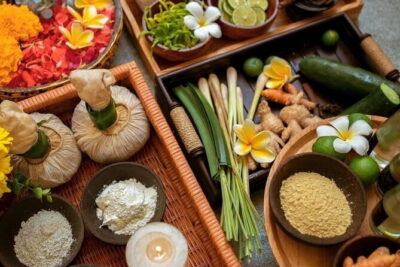
I especially like how this class treats food like culture. You pick fresh herbs and spices, learn what goes into Balinese flavor, and then sit down to the meal you made in a garden setting.
One drawback to think about: if you’re doing the dinner class, you may not get the same market timing as the lunch option, since markets close and the plan can adjust.
In This Review
- Key things you’ll notice right away
- Why a Ubud market-first cooking class works better than a restaurant meal
- 5 hours in a small group: the pace and the logistics that matter
- Your start at Warung JB Jambangan Bali, then straight into ingredient choosing
- The early market hunt: herbs, spices, and meat-and-veg decisions
- Rice paddies and a glimpse at daily farming routines
- Inside the Balinese home: open kitchen cooking with English-led chefs
- Cooking hands-on: what you’ll actually do (and why it’s worth your time)
- Lunch in the garden: eat what you cooked, not someone else’s menu
- The Balinese offering moment: coconut oil, daily rituals, and what you learn by watching
- A short Balinese music lesson with rindik bamboo notes
- Price and value: why $34 can feel like a bargain here
- Who this class is best for (and who might want something different)
- Practical tips so your day goes smoothly
- Should you book Jambangan Bali Cooking Class?
- FAQ
- FAQ
- What is the location of the Jambangan Bali Cooking Class?
- How long is the cooking class?
- What class options are available?
- Is lunch included in the price?
- Does the price include alcohol?
- Is the class taught in English?
- How many people are in the group?
- Do I need a printed ticket?
- What will I do during the class?
- Is the class affected by weather?
- Can I cancel for a full refund?
Key things you’ll notice right away

- Market shopping you actually control: choose herbs, spices, and even your cut of meat and vegetables
- Small group feel (up to 15): more hands-on time, less waiting around
- English instruction with Balinese chefs: you’ll cook and talk through ingredients and culture in plain language
- More than cooking: you can watch coconut oil processing and learn how to make a simple offering
- Hands-on Balinese music time: a short lesson on rindik, bamboo music
- Take-home recipes: you’ll leave with the recipes so you can repeat the flavors later
Why a Ubud market-first cooking class works better than a restaurant meal
If you’ve ever eaten Balinese food at a restaurant and thought, I like this, but how do I recreate it, this is the fix. The big difference here is that you start with the ingredients themselves, not a pre-plated menu.
In Ubud, it’s easy to get sightseeing-heavy. This class shifts the day toward something practical: you learn what goes into the dishes, why certain ingredients matter, and how the flavors build from start to finish.
And because the cooking happens in a home kitchen, you’re not just watching a demo. You’re working side by side with Balinese chefs who explain what you’re using and how it fits into daily life. That’s the kind of learning that actually sticks.
You can also read our reviews of more cooking classes in Ubud
5 hours in a small group: the pace and the logistics that matter
The class runs for about 5 hours and keeps things simple: you start at the meeting point in Tegallalang/Ubud area and end back there. You’ll also get a mobile ticket, which is a small but useful detail when you’re juggling tours in Bali.
The group size caps at 15 travelers, and that helps a lot. In a class this hands-on, smaller numbers mean you’re more likely to get time at the prep stations and questions answered in the moment.
You can choose lunch or dinner, and that choice changes the flow of the day. Morning tends to pair best with market time, while later sessions can mean some activities adjust once market hours are over.
Your start at Warung JB Jambangan Bali, then straight into ingredient choosing
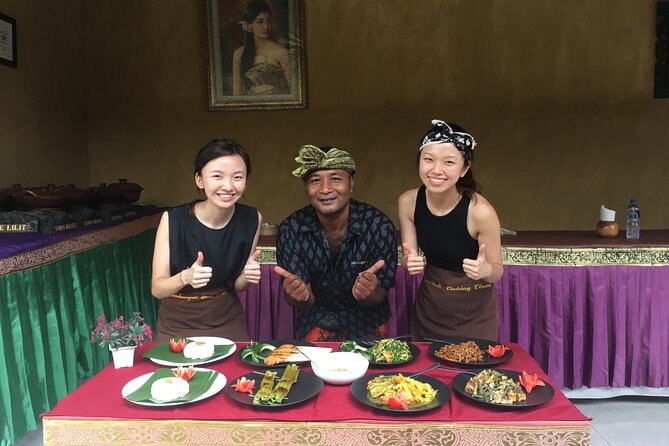
The action begins at Warung JB Jambangan Bali, on Jln Kelabang Moding No. 713 in Tegallalang (Ubud, Bali). If you’re coming from Ubud center, give yourself buffer time. In Bali traffic can swing fast, and your day is built around getting to the market when it’s active.
From there, the rhythm is direct:
- you head into the traditional market
- pick your ingredients
- then move to the home where cooking happens
This format matters because it makes the cooking class feel like a real process. You’re not just learning recipes; you’re learning sourcing.
The early market hunt: herbs, spices, and meat-and-veg decisions
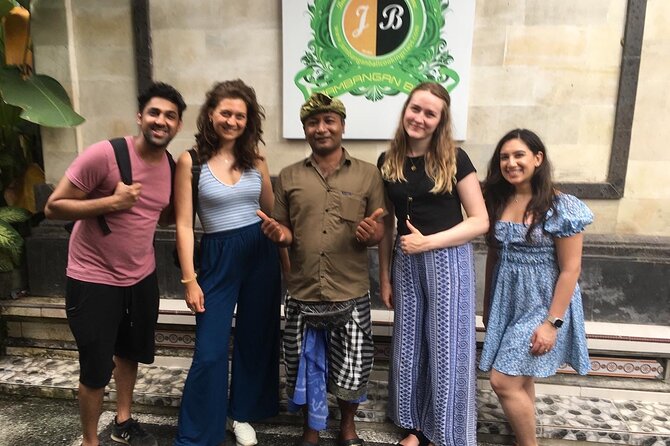
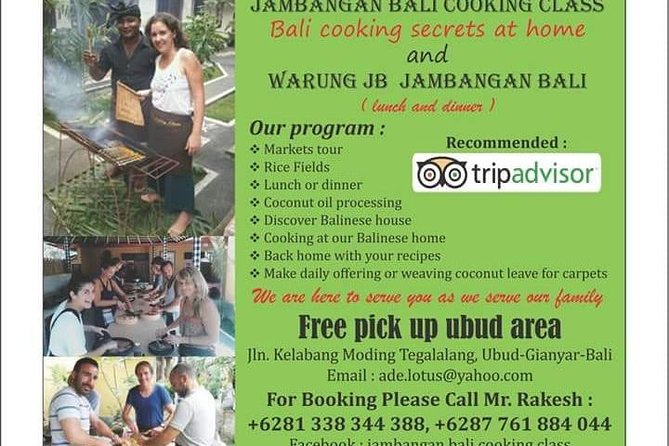
The market stop is one of the most valuable parts of the entire experience. You’ll get to select fresh herbs and spices, and you also choose what goes into your meal, including the type of meat and vegetables you want to work with.
That’s great value because it answers a common problem at home. Most people don’t know which ingredients are essential, which are flexible, and what alternatives work if you can’t find an exact item.
One more plus: the market time sets the tone for the rest of the day. You’ll start noticing Balinese cooking through ingredients first, then flavors, then technique.
Rice paddies and a glimpse at daily farming routines
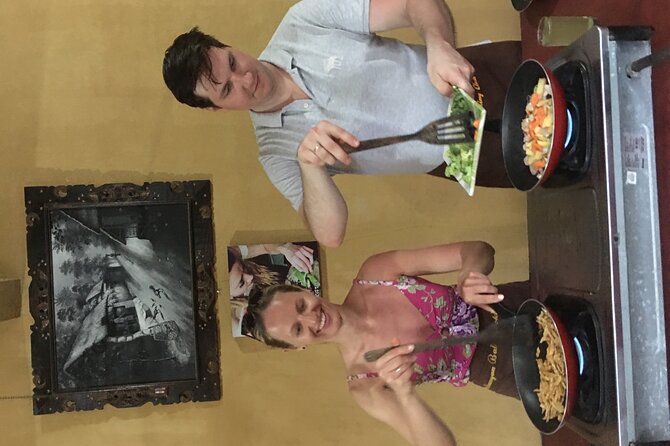
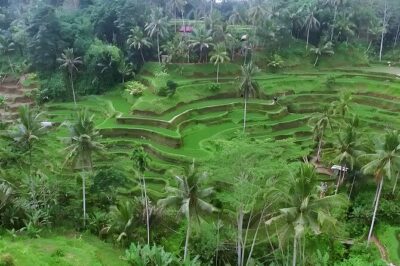
After ingredient shopping, the day includes a look at rice farming. You’ll see a rice farmer doing their daily activities, which gives context for why rice matters so much in Balinese meals and household life.
This isn’t just scenery. It connects the food to the land that grows it, which makes the cooking lessons feel less like a tourist activity and more like you’re stepping into how local people think about meals.
If you’re the kind of traveler who likes to connect food to place, this part can be surprisingly satisfying even if you’ve done rice-field photos elsewhere in Bali.
You can also read our reviews of more tours and experiences in Ubud


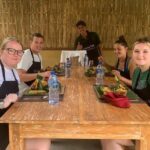
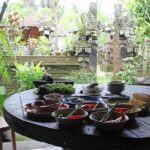

Inside the Balinese home: open kitchen cooking with English-led chefs
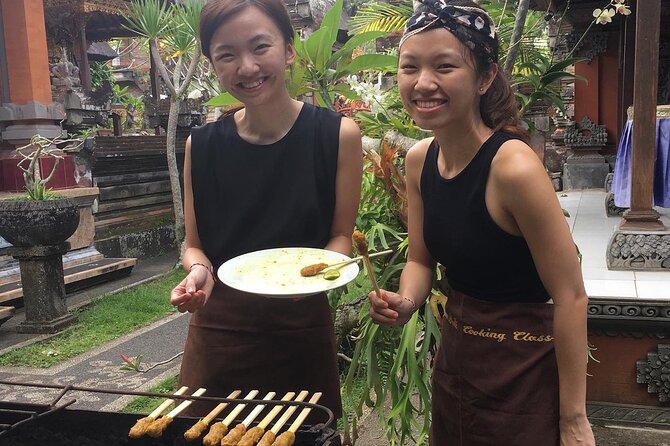
The cooking class happens at a Balinese house with a homey setting and an open kitchen. This is where the experience shifts from learning ingredients to learning the way Balinese families actually work in the kitchen.
Classes are conducted in English, and the chefs fully conversant with Balinese cuisine and culture. In practice, that means you’re not stuck translating on your own. You can ask questions while you cook and understand what you’re doing, not just copy steps.
The family-life angle is a big deal. You may get a chance to learn about daily home routines and how food fits into that rhythm, and you can see the kitchen style up close, not from behind a barrier.
In the names people mention most often, you’ll hear guides like Putu, Wayan, and Made. Having a human face behind the lesson makes it easier to relax, ask for help, and learn without feeling rushed.
Cooking hands-on: what you’ll actually do (and why it’s worth your time)
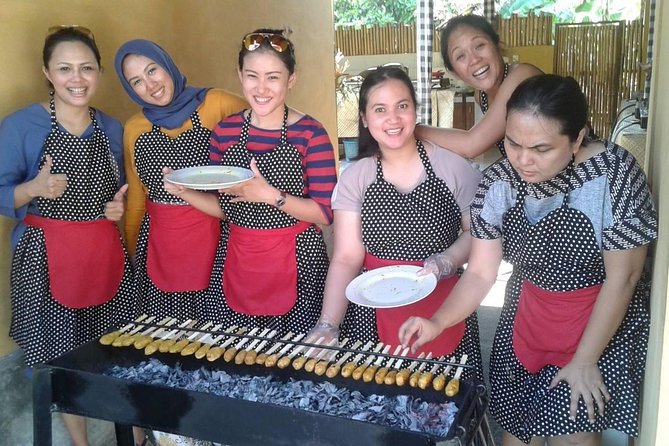
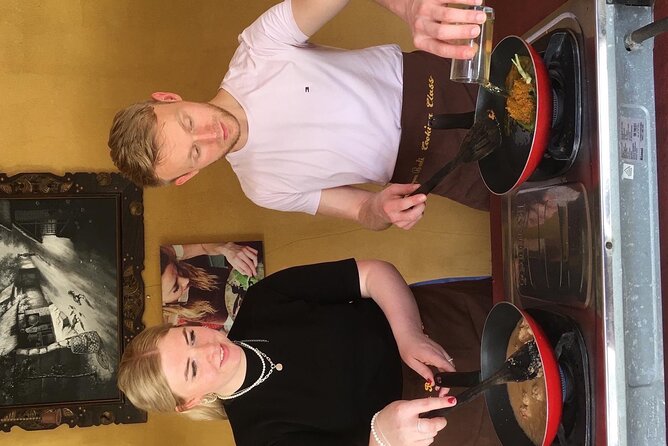
This isn’t a sit-and-watch class. You make the recipes yourself, and that matters because Balinese cooking relies on specific handling of ingredients and timing.
Depending on the menu and your group flow, you may prepare multiple dishes. One group reported making eight dishes, and another said everything felt well organized from start to finish. Even if the number varies, the structure is consistent: select ingredients, prep, cook, and then taste what you created.
You’ll also get helpful guidance during cooking. People highlight that the teachers explain ingredients clearly and talk through alternatives if something isn’t available or fits your preferences.
One practical advantage for you: cooking with the equipment and ingredients you’re using here gives you a better chance of recreating the flavors later. At home, most people struggle because they don’t know how to substitute or which ingredient impacts the taste most.
Lunch in the garden: eat what you cooked, not someone else’s menu
Once cooking wraps up, you’ll enjoy lunch in the garden. This is one of those simple details that improves the whole experience. You’re not waiting for a separate meal service, and you’re not eating food that might not match what you learned.
Meal time also helps you slow down. It’s easy to feel “on” all day in Ubud. Here, the food you made gives you an excuse to sit back, talk with your group, and actually taste the results of the lesson.
Alcohol isn’t included, so if that’s part of your normal dinner style, plan to skip or budget separately.
The Balinese offering moment: coconut oil, daily rituals, and what you learn by watching
Food in Bali isn’t only flavor. It’s also daily ritual, especially around Hindu offerings.
This class gives you a hands-on version of that context. You’ll learn how to make a simple offering and also witness the household’s daily offering. It’s one of the few times in Bali tourism where you don’t just see something from a distance—you learn how it’s made and why it matters.
On top of that, you can experience traditional coconut oil processing. Coconut oil shows up in a lot of island cooking, and seeing how it’s made connects the kitchen to local craft rather than treating it like an ingredient from a supermarket shelf.
If you like experiences that feel respectful and grounded, these ritual elements are a big part of why people rate this class so highly.
A short Balinese music lesson with rindik bamboo notes
Yes, you can cook, and yes, you can learn music too. A highlight in the experience is playing traditional Balinese music called rindik, made from bamboo.
It’s usually not about becoming a musician. It’s about getting a taste of local sound and culture during the day, which keeps the experience from turning into one long cooking session.
If you’re traveling with kids or you want a break from continuous hands-on prep, this kind of small cultural add-on is a welcome rhythm changer.
Price and value: why $34 can feel like a bargain here
At about $34 for a class that runs around 5 hours, includes lunch, and includes an ingredient market stop, the value is easier to see than with many cooking classes.
Here’s what you’re really paying for:
- ingredient shopping with selection control
- cooking instruction in a local home, in English
- a meal you made
- extra cultural moments like offerings and coconut oil processing
- small-group size (up to 15), which improves hands-on time
You also get recipes to take home, which extends the usefulness past the day itself. Even if you only recreate one dish later, that makes the price easier to justify.
The one thing to watch: alcohol isn’t included, so your total cost may rise if you want drinks alongside lunch or dinner.
Who this class is best for (and who might want something different)
This is a strong fit if you:
- like food-focused days that also teach culture
- want a market experience without turning it into a shopping spree
- enjoy hands-on learning over watching
- are traveling as a family—this is described as family-friendly and designed for food lovers
It may be less ideal if you want a purely restaurant-style lesson with minimal movement. The day is structured around early market timing, walking, and working at home stations.
If you’re traveling with dietary needs, the information provided doesn’t list specific menus. Still, the chefs do explain ingredient choices and alternatives, so it’s smart to mention your preferences when you book.
Practical tips so your day goes smoothly
- Book the time that matches your ideal market experience. If you care most about market shopping, prioritize the class timing that lines up with market hours. One person noted that the evening version can change when the market closes, so plan accordingly.
- Wear shoes you can walk in. Markets and home paths aren’t usually designed for slick sandals.
- Bring a light layer. Morning sessions can feel cooler, and you’ll be moving between spaces.
- Expect good weather to matter. The experience requires good weather, and if it gets canceled due to weather you’ll be offered another date or a refund.
- Eat slowly and ask questions. With small groups, you can get real answers while you cook.
Should you book Jambangan Bali Cooking Class?
If your goal is to understand Balinese cooking instead of just eating it, I think this is an easy yes. The market ingredient selection, the English-led chefs, and the home-kitchen setting make it feel like an actual day in Bali, not a scripted show.
Book it if you like food, but also if you want the cultural pieces that come with Balinese daily life—offerings, coconut oil processing, and even rindik music.
If you’re choosing between lunch and dinner, base the decision on your priorities. Want the full market vibe? Go earlier. If later timing works better for your schedule, just know the market portion may run differently once evening arrives.
FAQ
FAQ
What is the location of the Jambangan Bali Cooking Class?
The meeting point is Warung JB Jambangan Bali, Jln Kelabang Moding No. 713, Tegallalang, Kecamatan Ubud, Kabupaten Gianyar, Bali 80571, Indonesia. The activity ends back at the meeting point.
How long is the cooking class?
It lasts approximately 5 hours.
What class options are available?
You can choose between a lunch or a dinner class.
Is lunch included in the price?
Yes. Lunch is included.
Does the price include alcohol?
No. Alcohol is not included.
Is the class taught in English?
Yes. All classes are conducted in English by Balinese chefs.
How many people are in the group?
The maximum group size is 15 travelers.
Do I need a printed ticket?
No. The tour includes a mobile ticket.
What will I do during the class?
You’ll explore a traditional market to select ingredients, then cook Balinese recipes yourself in a local home’s open kitchen, and enjoy the lunch in the garden.
Is the class affected by weather?
Yes. The experience requires good weather. If it’s canceled due to poor weather, you’ll be offered a different date or a full refund.
Can I cancel for a full refund?
Yes. You can cancel up to 24 hours in advance of the experience start time for a full refund.