REVIEW · UBUD
authentic Balinese organic cooking class in Ubud
Book on Viator →Operated by Amara Bali Family Tour · Bookable on Viator
Organic cooking in Ubud starts on a farm. This organic Balinese cooking class sends you from your accommodation to a family farm for real ingredient lessons, not just recipe talk, in a small group setting. I liked that the whole experience is built around what you can pick and use fresh.
What I loved most was the hands-on teaching style: your chef guides you on which ingredients to choose, how they work in Balinese dishes, and even shares practical uses (including medicinal ones) along the way. I also appreciated the almost entirely manual cooking tools, which makes the class feel like traditional kitchen time, not a demo.
One thing to consider: a big chunk happens outdoors, and the experience requires good weather, so plan to be flexible with timing if conditions are rough.
In This Review
- Key highlights worth planning for
- An Ubud organic cooking class that starts with ingredients, not recipes
- Pickup, welcome drink, and meeting your chef team
- The farm and garden part you’ll actually remember
- Harvesting time and what it means for your cooking
- Cooking with manual tools like it’s a real kitchen
- Lunch with the right kind of view: rice terrace energy
- Optional swing and natural waterfall time (if conditions allow)
- Price and value: why $47 can be a good deal here
- Who this Ubud organic cooking class is best for
- Quick practical tips before you go
- Should you book Amara Bali Family Tour for organic cooking?
- FAQ
- How long is the organic cooking class in Ubud?
- Is pickup from my accommodation included?
- What’s included besides cooking?
- How many people are in each group?
- Where does the class take place?
- What happens if the experience is canceled due to weather?
Key highlights worth planning for
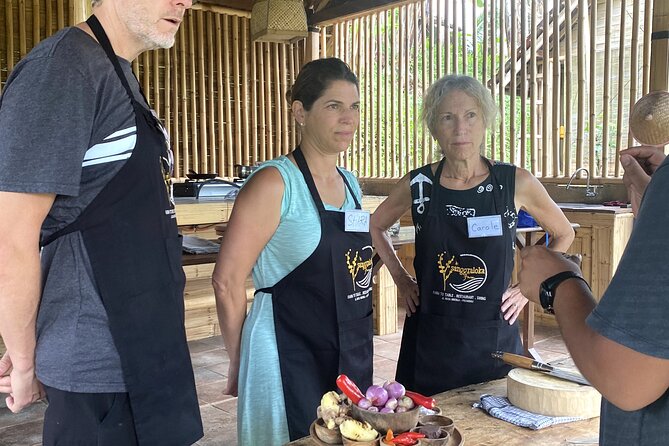
- Organic picking, not pretend ingredients: you’ll gather staples during planting/harvesting time when available
- Chef-led ingredient lessons: you learn what each item does in Balinese cooking
- Garden tour while you learn: spices and staples come from the garden beds you’ll see
- Small group experience (max 10): more hands-on help when you’re chopping and mixing
- You cook, then you eat what you made: lunch is part of the class, not an afterthought
An Ubud organic cooking class that starts with ingredients, not recipes
If you’ve done a cooking class before, you know the pattern: watch a chef, stand back, cook a simplified version, eat, smile, leave. This one feels different because it’s built from the ground up—literally. You’re learning how Balinese cooking changes when the ingredients are organic, fresh, and grown right on the property.
The price is $47 per person for about four hours. That sounds straightforward, but the value is in what it buys you: guided farm time, real ingredient selection, and instruction that connects the plant to the dish. You’re not just memorizing steps. You’re learning why those steps work.
And it’s done for a small group—maximum 10 travelers—so you’re less likely to feel like a spectator. The pace also tends to stay friendly. You’re not getting rushed through a checklist.
You can also read our reviews of more cooking classes in Ubud
Pickup, welcome drink, and meeting your chef team
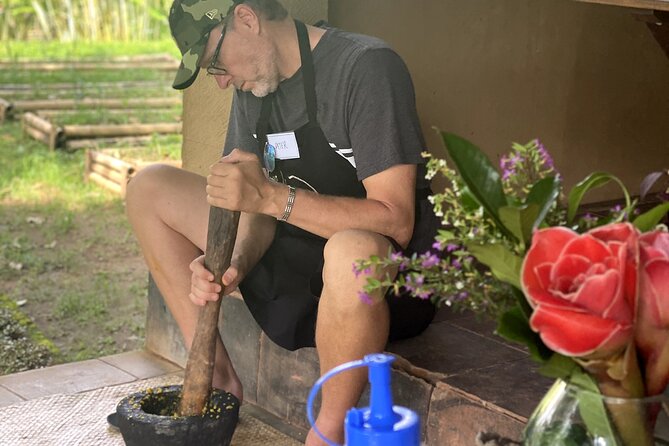
Most of the trip starts with convenience. Pickup is offered from your accommodation, then you’re driven to the farm area. This matters in Ubud, where traffic can turn a simple outing into a stress test. Here, the schedule is built around letting you arrive without doing logistics math.
Once you get there, you’ll have a welcome drink and get a clear intro to how the class runs. Then the chef explains the overall flow before you start cooking. The tone is practical—what you’ll cook, what ingredients matter, and what to pay attention to as you move through the process.
One name that comes up in the experience is Ninek, who teaches with a mix of warmth and authority. If you’re looking for a class where someone actually helps you understand ingredients instead of just telling you to stir, that teaching style is a big part of the appeal.
The farm and garden part you’ll actually remember
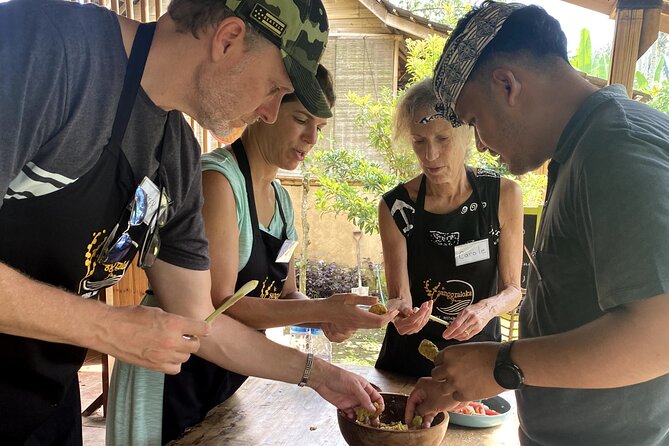
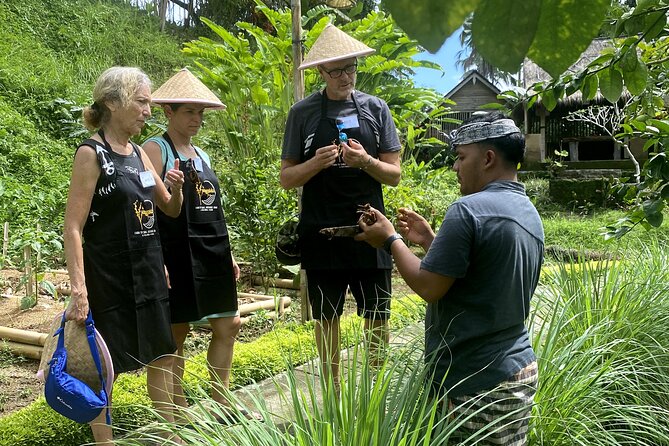
After the intro, you move to the garden area where plants are grown for spices and staple ingredients. This isn’t just a scenic add-on. It’s part of the learning.
Here’s how it works in a way that makes sense: your chef introduces Balinese food ingredients from the start, then you watch how those ingredients are harvested and processed. When it’s harvesting time, you directly pick staples from the farm. That’s a small detail with big impact. Freshly picked ingredients behave differently, smell stronger, and feel more real than anything you’d buy in a shop.
You also learn what the ingredients do. That might sound vague until you’re in the garden seeing the plant and then later using it in a dish. The connection is what turns it from a fun photo stop into a skills-based experience.
Harvesting time and what it means for your cooking
When your class includes active harvesting, you’ll do the work of selecting staples at the right moment. The experience is built around picking during the plantation’s harvesting time, then processing the ingredients right in the kitchen.
That matters because it affects texture and flavor. In practical terms, you’ll notice stronger aroma from fresh herbs and a more intense taste from ingredients picked for their season. Even if you’re not a food science person, you’ll feel the difference once you’re cooking.
Also, this setup supports a calmer rhythm. Instead of arriving and immediately jumping into cutting, you go step by step: learn the ingredient, pick it, then use it. It’s easier to retain what you’re doing when you experience it in sequence.
Cooking with manual tools like it’s a real kitchen
A big promise of the class is that the tools used are almost all manual. That shifts the experience away from modern, gadget-driven cooking and toward the traditional flow of preparing food step by step.
In the kitchen, you’ll be guided through making Balinese dishes using the organic ingredients you learned about. The class also focuses on your chef’s explanation of ingredients and their functions, so you understand what’s happening rather than copying motions.
In one part of the instruction, you’re guided through creating multiple dishes—six different dishes is specifically mentioned in feedback. You’re not just making one simple bowl. You’re getting a broader sense of Balinese flavors and how different ingredients show up across dishes.
If you’re the type who likes “I made this myself” satisfaction, this is that. You’ll cook and then eat your own lunch, which gives you a quick reality check on whether the flavors worked and why.
You can also read our reviews of more tours and experiences in Ubud
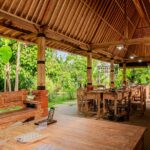

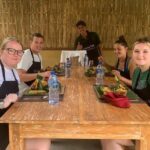
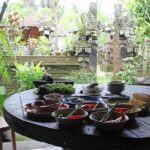

Lunch with the right kind of view: rice terrace energy
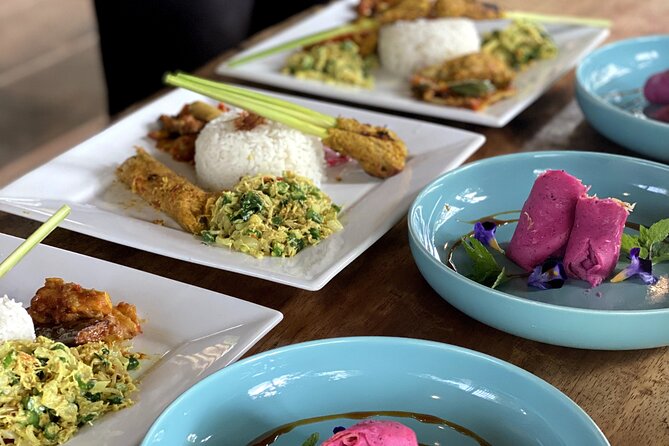
The finish line is lunch—your original cooking lunch. You’ll eat what you prepared, which is honestly the best way to judge a class. A cooking lesson isn’t about perfection. It’s about whether you can produce something tasty with guidance.
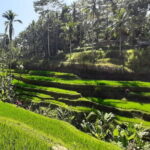
One of the most memorable elements from feedback is eating with views tied to a rice terrace setting. That kind of scenery makes the meal feel like part of the day, not a stopover between activities. Even better: since you worked for the ingredients, you’re likely to taste more detail than you would in a typical restaurant meal.
As you eat, you can reflect on the ingredient lessons. For example: if you learned what a specific plant does in Balinese cooking, you’ll start spotting its flavor role in your dishes. That’s the payoff of linking farm, garden, cooking, and eating.
Optional swing and natural waterfall time (if conditions allow)
Some versions of this outing include optional add-ons such as a swing and a natural waterfall. These are not described as the core of every class, so think of them as possible bonus time if the schedule and conditions work out.
This is worth knowing because outdoor activities can be weather-dependent. If it’s raining or too hot, you might find the main priority stays on the cooking portion and the walkways in the garden. In general, you’ll get the best experience when you’re open to small changes.
Price and value: why $47 can be a good deal here
At $47 per person for about four hours, you’re paying for more than “a meal with instruction.” You’re paying for:
- pickup and drop-off from your accommodation
- farm and garden time centered on organic ingredients
- chef teaching (including ingredient explanations)
- hands-on cooking using mostly manual tools
- the lunch you cook and eat
In Ubud, many cooking classes cost similar amounts but focus more on a cooking demo and less on ingredient sourcing. Here, the organic ingredient picking and the emphasis on what plants do in Balinese cooking are the differentiators.
Also, the maximum group size of 10 helps the experience feel guided rather than rushed. When there are fewer people, you typically get more attention and more chance to ask questions while you cook.
Who this Ubud organic cooking class is best for
This experience fits you best if you want one (or more) of these:
- a hands-on cooking class tied to farm-grown ingredients
- a small group setting where you can actually learn
- ingredient understanding, not just recipe steps
- an outdoor, nature-based Ubud morning that ends with lunch
It may not be your top pick if you dislike outdoor walking and farm-like environments. Since good weather is important, if you’re traveling during rainy season and hate being flexible, you’ll want to plan mentally for schedule adjustments.
Quick practical tips before you go
You’re going to a farm and garden, then cooking. That means you should think like a gardener and a kitchen helper:
- wear comfortable shoes you don’t mind getting a little dusty
- bring a light layer if it’s breezy near the garden areas
- expect hands-on prep, so keep your hair tied back if needed
- be ready to follow the chef’s instructions on ingredient handling and timing
If you’re sensitive to heat, plan to start hydrated. Ubud can feel warm even when mornings look cool.
Should you book Amara Bali Family Tour for organic cooking?
If you want a cooking class that feels authentic and ingredient-focused, I’d say yes. The big reason is simple: you’re learning from organic farm picking and a garden where spices and staples are grown for cooking. Then you cook and eat what you made, with the process supported by a real chef-led explanation style (including names like Ninek showing up in the teaching).
Book it if you’re excited by the idea that the plant matters as much as the recipe. You’ll likely leave with both a full stomach and a clearer sense of how Balinese flavors work.
Skip it only if you strongly prefer indoor, low-activity classes—or if you know you’ll be unhappy with outdoor plans that depend on good weather.
FAQ
How long is the organic cooking class in Ubud?
It runs for about 4 hours.
Is pickup from my accommodation included?
Yes, pickup is offered, and you’re also dropped back to your accommodation at the end.
What’s included besides cooking?
You’ll visit the farm, have a welcome drink, learn about organic Balinese ingredients, and then enjoy the lunch you cook. The class also includes garden time with plants grown for ingredients.
How many people are in each group?
The group size is capped at a maximum of 10 travelers.
Where does the class take place?
It’s in Ubud, Indonesia, with farm and garden areas used for the ingredient picking and cooking.
What happens if the experience is canceled due to weather?
If it’s canceled because of poor weather, you’ll be offered a different date or a full refund.
If you want, tell me your travel dates and whether you prefer early mornings or a slower day pace, and I’ll help you decide if this fits well with the rest of your Ubud plan.