REVIEW · UBUD
Crafting Heritage Batik Painting Workshops
Book on Viator →Operated by Five Art Studio · Bookable on Viator
Batik here feels hands-on, not staged. In a mellow studio outside Ubud (inside a family compound), you learn the core method of hot-wax batik and make a souvenir you actually earned. I especially like how you can choose your comfort level, doing parts yourself or getting closer help when you want it, and how the studio experience stays relaxed while still walking you step by step.
The one catch: batik is more fiddly than it looks. Patience matters, because wax work and color choices take steady hands and some willingness to accept happy accidents.
In This Review
- Quick highlights
- Where Five Arts Studio fits in a Ubud day
- The batik method you’ll learn (and why it works)
- Inside the Five Arts Studio: comfort, guidance, and a real working compound
- Step-by-step: from tracing your motif to your finished batik piece
- 1) Arrival and studio intro
- 2) Pick a motif and sketch your design
- 3) Draw with hot wax (the part that tests your patience)
- 4) Dye selected areas
- 5) Wash off the wax and reveal the outlines
- Snacks, coffee, and what the $29 really buys you
- Who should book this batik workshop (and who might not love it)
- Book it if you want a traditional skill, not just a photo stop
- Book it if you’re a beginner who likes structured creativity
- Book it if you like calm, local studio vibes
- Practical tips for your 3-hour batik session in Ubud-area Bali
- Should you book Five Arts Studio batik painting?
- FAQ
- How long is the batik painting workshop?
- What’s included in the $29 ticket price?
- Where do I meet, and does the class end there too?
- Can I work independently or do I get close tutor help?
- Is lunch or alcohol included?
- Can I cancel for a full refund?
Quick highlights
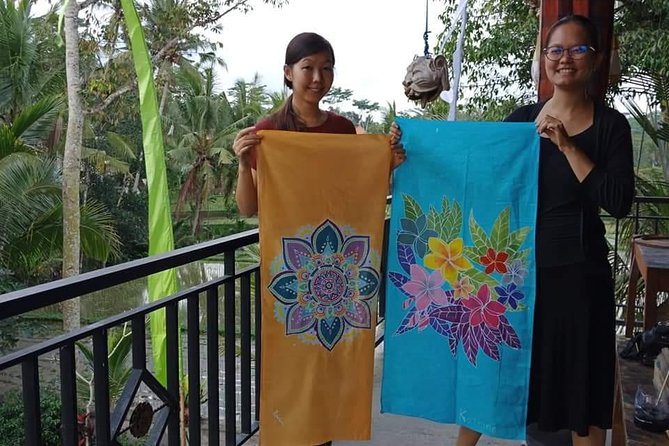
- Hot wax + selective dyeing: you draw with wax, dye over it, then wash it off for crisp outlines.
- Family-studio setting near Ubud: a casual, local compound vibe instead of a big, polished workshop space.
- You choose how you participate: work independently or get more tutor guidance as you go.
- Materials and refreshments included: snacks, coffee/tea, and mineral water are part of the $29 ticket.
- Small-group feel: capped at a maximum of 30 people, so you’re not lost in a crowd.
Where Five Arts Studio fits in a Ubud day
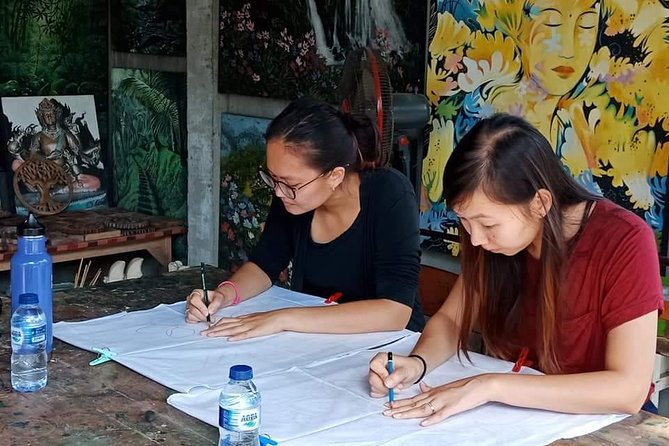
If your Ubud schedule is already heavy on temples and short scooter rides, this is the kind of activity that balances the brain. You’re not just watching batik being made behind glass. You’re sitting down in a comfortable, casual studio and learning the process in a real family-work environment outside the Ubud center.
The location also helps. The class starts at Five Arts Studio in Keliki, Tegallalang (Gianyar Regency), which means you get that calmer side of the Ubud region without feeling like you’re trapped in traffic for hours. It’s also easy to structure around other plans, since the session runs about 3 hours.
One more nice detail: this isn’t positioned as only for artists. It’s for beginners too. If you like creative projects but worry you will be bad at them, batik is still a great match, because you’re guided through each stage.
You can also read our reviews of more historical tours in Ubud


The batik method you’ll learn (and why it works)
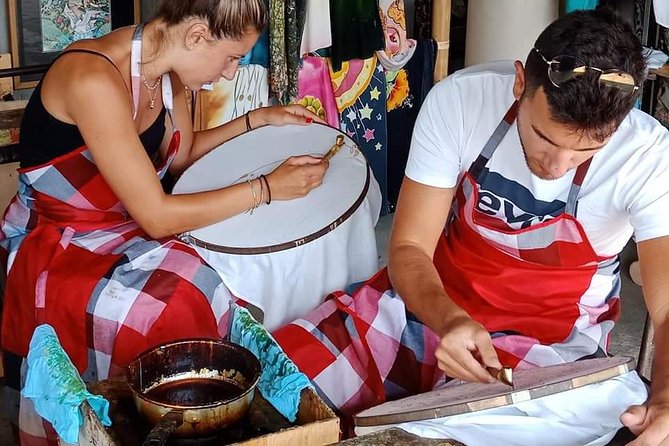
Batik is basically controlled resistance. You apply hot wax to parts of your fabric design, then dye the fabric. The wax blocks dye from reaching those areas. When you wash the wax out, the design appears as colored lines and shapes, with the wax acting like a temporary barrier.
Here’s the key flow you’ll follow:
- Sketch out a design idea.
- Draw that design onto fabric using hot wax.
- Paint or dye selected areas so the color only lands where you want it.
- Wash off the wax so the original fabric color remains in the traced outline areas.
This is why it’s such a satisfying souvenir project. Even if you’re not trying to make something museum-perfect, the technique itself creates visual structure. You get that classic batik look because the process builds it for you.
Inside the Five Arts Studio: comfort, guidance, and a real working compound
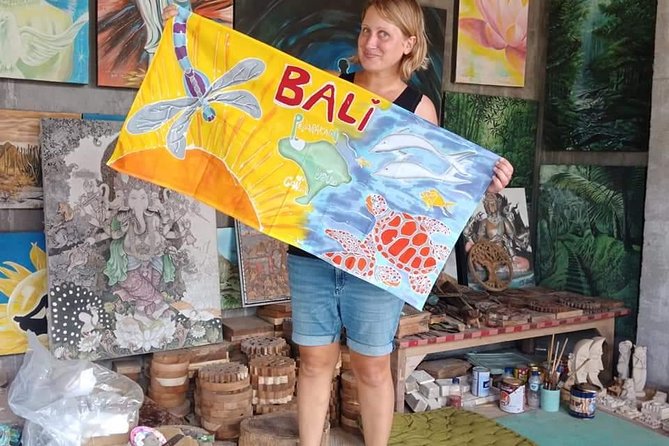
The workshop happens in a casual studio set within a family home compound. That matters more than it sounds. A family-run space tends to feel steady and unhurried, and the class vibe stays mellow rather than frantic.
You’ll also see how Balinese artists live and work, not just how they teach. That gives context for why batik is treated like more than a craft for tourists.
Instruction style is another highlight. Past students highlighted that staff are patient and helpful, and that the teaching includes both explanation and real-time correction. In particular, names like Dika and Agong show up in feedback as instructors who made the steps easier to follow.
That doesn’t mean you’ll do everything perfectly on the first try. Wax and dye don’t forgive rushed movement. But the support is there so you can steer your project back on track when things get messy.
And since the class capacity is limited to 30 travelers, you shouldn’t feel like a number. It should feel more like a working table with guidance, especially if you’re the kind of person who likes to ask questions.
Step-by-step: from tracing your motif to your finished batik piece
The session is built around the batik stages, and the best part is that you can choose your level of involvement. The workshop gives you the tools and materials, then guides you through each phase so you can create your own original piece.
1) Arrival and studio intro
You meet at Five Arts Studio in Keliki, Tegallalang. When you arrive, you’ll settle in and get an intro to the craft. The class includes an explanation of batik and its role in Indonesian culture, so you’re not just making a pretty design with no meaning.
You’ll also get oriented to how the studio works and what your options are for design.
You can also read our reviews of more tours and experiences in Ubud





2) Pick a motif and sketch your design
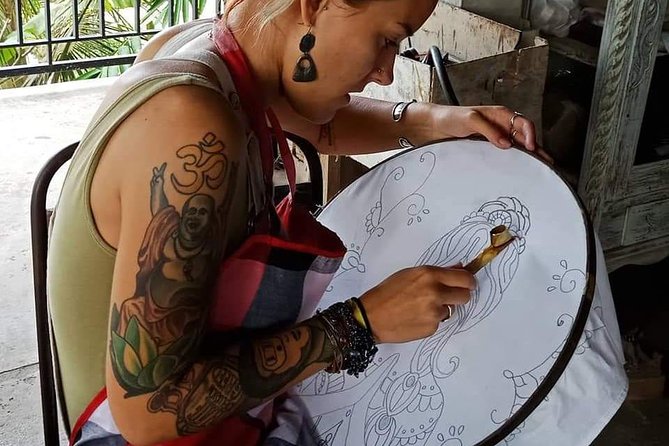
Next comes the design stage. You can work independently or lean in for more direct guidance from your tutor. You’ll sketch out your design idea first, then plan how it will translate onto fabric.
Motif choices can go two ways:
- Use your own idea or motif.
- Choose from suggested stencils/motifs offered in the studio.
In feedback, people praised the stencil options and how the studio supports creativity rather than forcing a single pattern. That means your final result should feel like your taste, not a cookie-cutter template.
3) Draw with hot wax (the part that tests your patience)
Then you draw your design on the fabric with hot wax. This is the part where the craft feels surprisingly challenging, even for people who thought they were good at art.
Wax control takes steady timing and careful placement. If you accidentally drop wax where it doesn’t belong, you’re not automatically ruined. The teaching approach is aimed at helping you pivot. That mindset matters: batik rewards correction and adaptation.
4) Dye selected areas
After your wax lines are in place, you apply dye to selected areas. You’re essentially painting inside boundaries created by the wax barrier. This stage is where your design starts to “show up” visually, and it’s also where you get to experiment with color intensity.
In many classes, this is where students loosen up. You’re already committed to the wax design, so your job becomes thoughtful coloring rather than starting over from scratch.
5) Wash off the wax and reveal the outlines
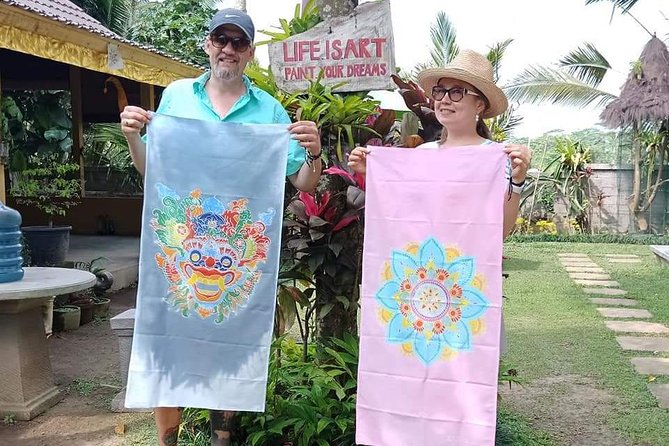
Finally, you wash the wax off. This reveal step is the payoff: when the wax is removed, the outlines stay in the original fabric color, and the dyed areas form the pattern.
That reveal moment is why this is such a popular hands-on Bali activity. You end up with something you can fold, carry home, and hang up as a real souvenir of learning a traditional technique.
Snacks, coffee, and what the $29 really buys you

At $29 per person for about 3 hours, the price is doing something important: it’s covering a full materials-and-instruction package, not just a venue rental.
Your ticket includes:
- Snacks
- Coffee and/or tea
- Mineral water
- All materials needed to make your own original batik
That last point is huge for value. Many “craft experiences” in tourist areas charge you for supplies separately or limit hands-on work. Here, the class is set up so you can actually complete your piece.
Lunch isn’t included, but local food can be ordered. Alcohol is also available to purchase, not included. For most people, this is fine because the session is short and sits cleanly as an afternoon or morning activity.
Also note: the experience uses a mobile ticket, and you get confirmation after booking. That reduces day-of stress when you’re trying to coordinate Ubud time with everything else.
Who should book this batik workshop (and who might not love it)
I think this workshop is strongest for three kinds of people.
Book it if you want a traditional skill, not just a photo stop
If you enjoy learning a process—how a finished result is actually created—batik is the right kind of craft. You walk away with a physical item and a sense of how the technique works.
Book it if you’re a beginner who likes structured creativity
The class is relaxed, and you can work independently or get extra help. That flexibility matters. You’ll still need patience, but you won’t be left floundering.
Book it if you like calm, local studio vibes
This is not a loud, warehouse-style class. The family compound environment is part of the value, and it helps the time feel peaceful.
Who might not love it:
- If you want zero mess or zero “trial and error,” batik will test you. Wax and dye are inherently hands-on and a bit unpredictable.
- If you’re rushing through Bali and hate slower craft activities, you might prefer something more straightforward.
The operator also lists a strong physical fitness level. You’re not doing athletic feats here, but plan for some movement around a studio compound and sit-work that can still feel long if you have mobility issues.
Practical tips for your 3-hour batik session in Ubud-area Bali
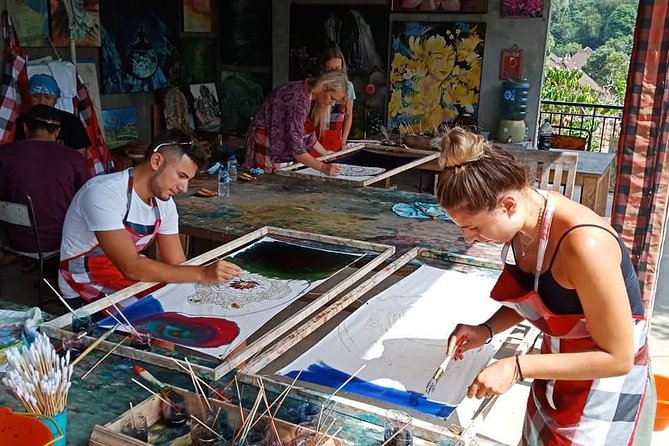
Because you’ll be working with hot wax and dyes, treat this like a craft session, not a dressed-up outing. Wear clothes you’re comfortable getting a little color on. Keep your hands clean when you need to, and don’t be shy about asking for help early, before wax hardens or dyeing becomes harder to control.
A few other practical points:
- The class is in Keliki, Tegallalang. Plan timing so you’re not late, because the experience runs for about 3 hours.
- You’ll get snacks and drinks, so you don’t need to worry about water or caffeine. Still, bring a small personal water bottle only if it helps your routine.
- The group size is capped at 30 travelers, which helps, but if you’re the type who likes one-on-one attention, arrive ready to ask questions right away.
If you see names like Dika or Agong associated with your class, that’s a good sign for clear guidance. They show up in feedback as helpful, supportive instructors who helped both adults and kids through the steps.
Should you book Five Arts Studio batik painting?
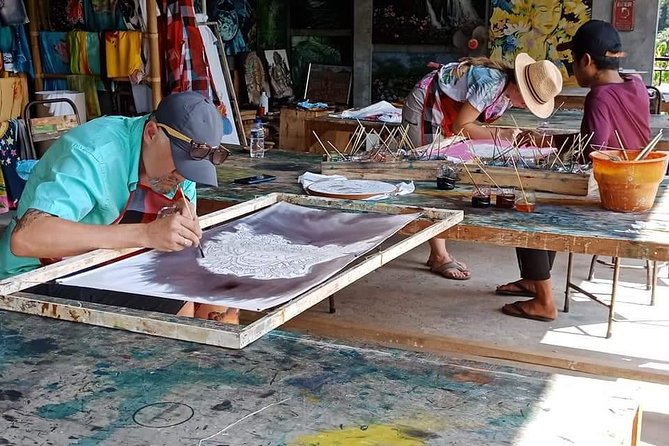
Yes, I’d book it if you want a real craft experience outside central Ubud. For $29, you’re getting more than a souvenir. You’re getting guided instruction in a traditional technique, plus the materials, plus refreshments, in a calm family compound setting.
I’d think twice only if:
- You hate anything that asks for patience.
- You’re looking for a fast, effortless activity with minimal hands-on work.
- You need a fully hands-off option and don’t want to participate.
If you fit the first group, this is one of the better ways to spend a few hours in the Ubud region. You’ll leave with a finished piece and a better understanding of why batik is still a living part of Balinese culture.
FAQ
How long is the batik painting workshop?
The workshop lasts about 3 hours.
What’s included in the $29 ticket price?
The ticket includes snacks, coffee and/or tea, mineral water, and all materials you need to create your own original batik.
Where do I meet, and does the class end there too?
You start at Five Arts Studio on Jl. Raya Keliki, Keliki, Kec. Tegallalang, Kabupaten Gianyar, Bali 80561, Indonesia. The experience ends back at the meeting point.
Can I work independently or do I get close tutor help?
You can choose to work independently or more closely with the tutor during the class.
Is lunch or alcohol included?
Lunch is not included. Local food can be ordered, and alcohol is available to purchase.
Can I cancel for a full refund?
Yes. You can cancel up to 24 hours in advance for a full refund. If you cancel within 24 hours of the start time, the amount paid is not refunded.
If you want, tell me when you’re planning to go (morning or afternoon) and what else is on your Ubud day, and I’ll suggest a good timing plan around this 3-hour workshop.