REVIEW · KUTA
Kuta Beach Bali, 1 on 1 Surfing Lesson Orange Surf Bali
Book on Viator →Operated by Orange Surf School Bali · Bookable on Viator
Two hours of surf lessons, zero guesswork. In Kuta, Orange Surf School Bali runs a 1 on 1 format with local, experienced instructors who coach you on the basics on shore first, then help you get going in the water. Two things I really like about this setup: the coaches stay in the sea to help you start, and you get personalized advice that fits what your body and balance can actually do right now. One thing to consider: there’s no hotel pickup, so you’ll want to plan your own way to the school at Orange Surf School Bali in Kuta.
This lesson is built around a simple rhythm: learn, go out, reset, go out again. You’re looking at about two sessions in the ocean (each around 45–50 minutes) with a break in between, so you don’t burn out before you’ve properly found your footing.
The gear list is refreshingly practical for a first timer: a surfboard, rash guard, and zinc for sun protection, plus a photo and a chair. The only “fitness” requirement is moderate comfort with being active—nothing extreme, but you are moving, paddling, and getting up repeatedly.
In This Review
- Key Highlights You’ll Feel Quickly
- Orange Surf School Bali in Kuta: Start Here, No Pickup
- A 1-on-1 Surf Plan That Starts on the Sand
- Safety Briefing First: How They Keep It Calm in the Water
- Two Surf Lessons in the Sea, With a Real Break
- For Beginners: Stand, Balance, Then Catch Your Rhythm
- For Intermediate Surfers: More Feedback, Not More Chaos
- What’s Included: Gear, Sun Support, and a Photo
- Coaches Who Teach Like Kuta Locals
- Price and Value: What $18.49 Gets You in Real Terms
- Timing and Weather: Surf Lessons Live or Die by Conditions
- Who This Lesson Fits Best (And Who Might Want Another Option)
- Should You Book Orange Surf School Bali in Kuta?
- FAQ
- How long is the 1 on 1 surfing lesson?
- Where do I meet the instructor?
- Is hotel pickup or drop-off included?
- What equipment is included in the lesson?
- Is this lesson private?
- Do they teach beginners on shore first?
- What happens if the weather is poor?
- What is the cancellation window?
Key Highlights You’ll Feel Quickly
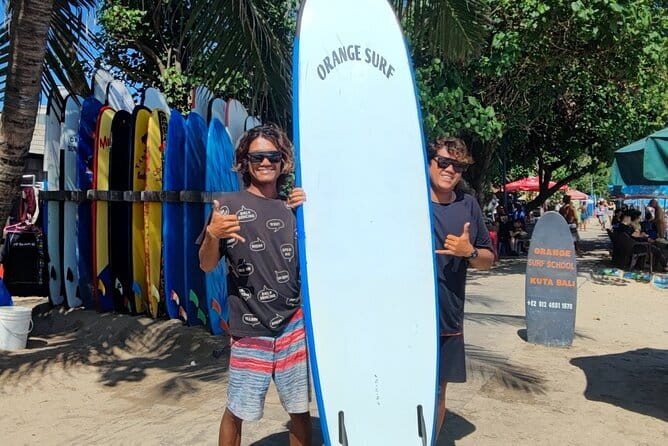
- 1-on-1 coaching so the instructions match your level, not the average group
- Shore teaching before the water, which helps you get balance faster
- Coaches in the sea to support your first starts (a huge confidence builder)
- Two surf blocks (about 45–50 mins each) with a short break to recover
- Gear included: surfboard, rash guard, zinc, plus photo and chair
Orange Surf School Bali in Kuta: Start Here, No Pickup
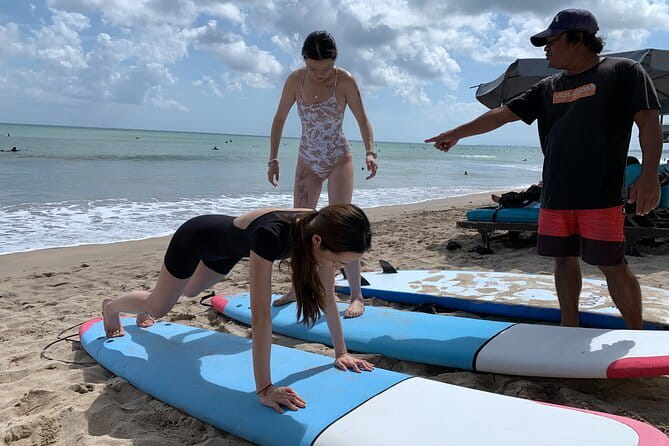
Your lesson begins at Orange Surf School Bali in Kuta (Badung Regency), right by where you’ll be surfing. The activity ends back at the same meeting point, so you’re not dealing with drop-off logistics after you’re wet and sandy.
Because hotel pickup/drop-off isn’t included, I’d treat this as a do-it-yourself arrival. If you’re staying anywhere in the Kuta area, that’s usually straightforward with local transport or a short ride. If you’re farther out, give yourself extra time and don’t assume you can “wing it” right before start.
The good news: the school is described as near public transportation. So even if your hotel doesn’t have the perfect shortcut, you likely won’t be stranded. Also, the lesson is private for your group, which means you’re not waiting for other people to finish getting sorted.
You can also read our reviews of more tours and experiences in Kuta



A 1-on-1 Surf Plan That Starts on the Sand
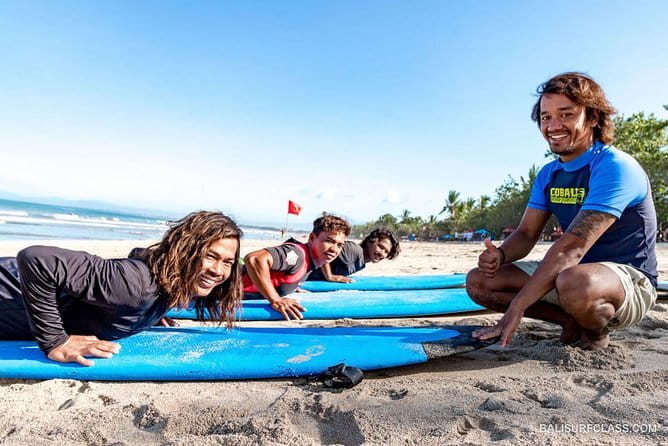
The best beginner lessons don’t start in the ocean—they start on the sand. Here, you’ll get a safety briefing and basic instruction while you’re still onshore. Expect the fundamentals of how to stand and balance on the surfboard, then how to translate those motions when the board is actually moving.
For first-timers, this order matters. When you practice the theory and the “what do I do with my feet?” part before you paddle out, your brain stops panicking the moment you hit the water. In fact, the lesson format is designed so many students can stand during lesson one because they’re taught the mechanics first, not guessed at from the shore.
A small but meaningful detail: since it’s private, you can ask questions and adjust immediately. If your stance feels unstable, you’ll likely get correction right away instead of waiting your turn like you would in a larger group.
Safety Briefing First: How They Keep It Calm in the Water
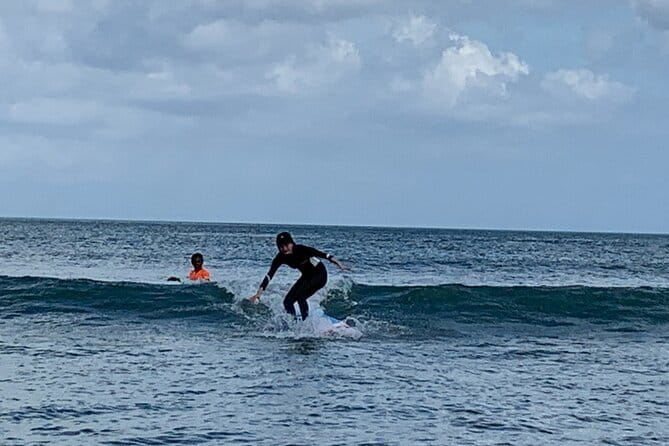
Safety isn’t treated like paperwork—it’s part of the session. The lesson includes an initial safety briefing (often around 15 minutes), and the instructors use a professional, friendly approach. You’ll also have insurance for emergencies, which is the kind of grown-up detail you’ll appreciate when you’re learning something new.
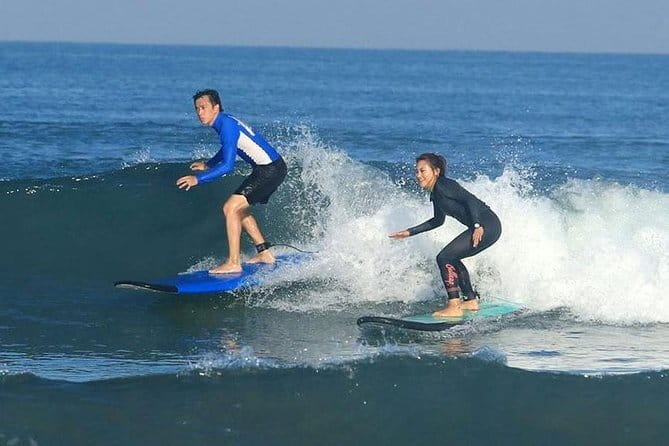
You’ll also notice that the coaching style is supportive. One of the most praised parts is that instructors stay out in the water to help you start. That’s not just nice. It reduces the time you spend flailing alone and speeds up the moment you start understanding how the surfboard responds to you.
The takeaway for you: this is a good option if you want instruction that feels steady, not chaotic. Surfing is naturally unpredictable; safety-first coaching helps you handle that reality without getting discouraged.
Two Surf Lessons in the Sea, With a Real Break

The lesson runs about 2 hours total, usually structured like this:
- Safety briefing: ~15 minutes
- Surf lesson: ~45 minutes
- Break: ~10–15 minutes
- Surf lesson: ~45 minutes
That break is important. You’ll be in and out of the ocean, paddling and standing repeatedly. A short reset keeps your energy up, gives you a moment to catch your breath, and helps you keep learning instead of just surviving the first attempt.
Each surf block is long enough to make progress. Many beginner lessons are so short that you spend more time waiting than trying. Here, the time is used for repetition—balance practice, getting into position, then getting a feel for timing and wave catching.
And because it’s private, instructors can focus on what you’re doing during those attempts. If your problem changes between the first and second session, they can adapt without you feeling rushed.
For Beginners: Stand, Balance, Then Catch Your Rhythm
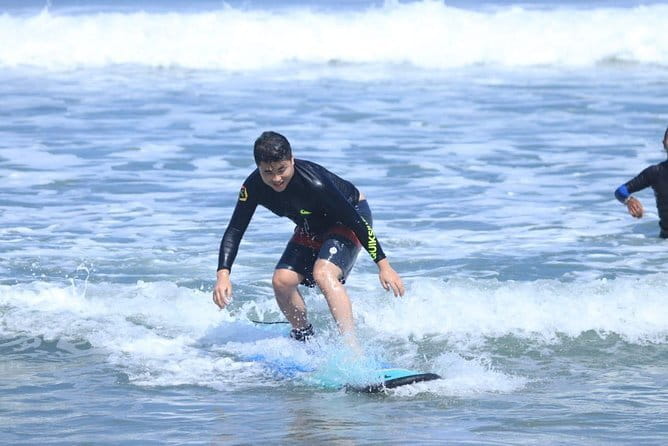
If you’re learning from zero, your first win is usually body control. You’ll work on standing and balance while still onshore, then you’ll go into the sea with your instructor coaching your movement.
The “on the sand first” approach helps you know what to do with your feet and posture before you’re dealing with water motion and waves. Most beginner surfers struggle with two things: fear of falling and confusion about where weight should go. Shore coaching tackles that before it becomes a bigger problem out at sea.
As you transition into the ocean, you’ll still get guidance right when you need it. The coaches staying in the sea to help with your starts is a big deal here—it reduces the hardest part of learning, which is getting from paddling to standing when you’re not fully confident.






For Intermediate Surfers: More Feedback, Not More Chaos
If you’ve surfed before, you’re not stuck repeating the first lesson basics. The instructors will adjust based on your level and needs, and they use different support methods for intermediate and above.
The lesson description notes that intermediate (and above) surfers will have their instructor use a board to go to the beach with you. That detail matters because it changes how you move through the session—less “figure it out yourself,” more structured assistance while you refine technique.
In practice, that means you’ll get feedback tuned to what you’re trying to improve. If your goal is smoother starts, better positioning, or a more confident stance, a 1-on-1 lesson makes it easier to isolate what to fix.
What’s Included: Gear, Sun Support, and a Photo
This is one of those lessons where the included extras genuinely help. You get:
- Guide and instruction
- Surfing equipment: surfboard
- Rash guard
- Zinc (sun protection)
- Photo
- Chair
The rash guard and zinc are practical because Kuta sun can be intense, and when you’re wet and paddling, normal sunscreen can get messy fast. The chair is a quiet comfort detail too—you’ll be tired between sessions, and having a place to sit makes the break actually useful.
A photo is a nice bonus. When you’re learning something new, you often don’t notice your progress in real time. Having a picture gives you a simple reminder of where you started and what you looked like when you finally got moving.
Coaches Who Teach Like Kuta Locals
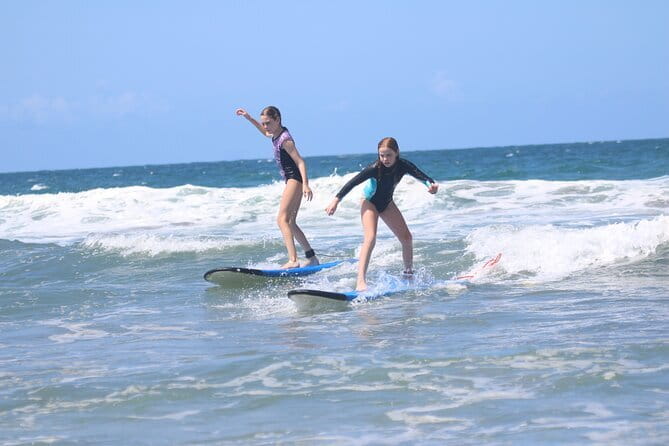
The instructors are described as Kuta beach locals with experience teaching surfing. That local knowledge is useful in small ways you might not think about: where you stand, how you enter the water, and how you manage the session flow so beginners don’t get overwhelmed.
But the biggest, most praised coaching approach is simple: they stay in the sea to help you start. That reduces your “waiting time” and boosts confidence, especially for first-timers. If you’ve ever tried to learn from an off-site instructor who mostly watches from shore, you’ll understand why this matters.
Also, there’s a helpful language note from the experience feedback: Japanese-speaking staff can be available. If you’re more comfortable asking questions in Japanese, that’s a genuine comfort factor and can make the instruction feel easier to follow.
Price and Value: What $18.49 Gets You in Real Terms
At $18.49 per person for about two hours, the headline number looks like a deal. But the real value is what’s wrapped into the session:
- 1-on-1 time (not group hopping)
- Two meaningful ocean attempts (two surf blocks)
- Equipment included, plus rash guard and zinc
- A photo and a chair
When you break it down, you’re paying for instruction time plus the practical “learning tools.” That’s the difference between renting gear and actually learning technique.
One caution on value: because hotel pickup isn’t included, your total cost might rise slightly depending on how you get there. Still, if you’re already in Kuta, this lesson is priced like a great entry point into Bali surf without paying for a bunch of extras you won’t use.
Timing and Weather: Surf Lessons Live or Die by Conditions
Surf is weather-dependent, and this experience requires good conditions. If it’s canceled due to poor weather, you’ll be offered a different date or a full refund.
For you, the practical advice is simple: keep your schedule flexible. If you’re visiting during a season where rain is common, plan this for a day you can adjust. Surf instruction works best when you’re not rushing around or trying to fit it into an inflexible itinerary.
Also, remember that you’re in water twice with a break. If conditions are rough enough to cancel, they likely wouldn’t be fun to push through anyway.
Who This Lesson Fits Best (And Who Might Want Another Option)
This lesson is a strong match if:
- You’re a beginner and you want structured basics with shore coaching first
- You want a private experience with direct feedback
- You like instructors who actively support you in the water
- You want included gear and simple sun protection
It may be less ideal if:
- You can’t or don’t want to travel to the meeting point on your own (no pickup)
- You’re expecting a long, multi-day surf progression—this is a short, focused lesson, not a full surf camp
If you’re someone who learns best with calm repetition—watch, practice, try, reset—this style will feel friendly and efficient.
Should You Book Orange Surf School Bali in Kuta?
I’d book it if you want a straightforward, confidence-building way to start surfing. The biggest reasons are the ones that matter on day one: shore basics first, then two real ocean sessions with a break, plus coaching support where you actually need it—help with your starts in the water. For $18.49, you’re getting more than “board rental.” You’re getting guided time that helps you stand, not just paddle around.
I’d pass or look for another option if your plan relies on included pickup. Otherwise, this is exactly the kind of beginner-friendly activity that turns a scary new skill into something you can understand in a single session.
If you’re even slightly curious, book a time when weather looks good and arrive ready to learn your stance. You’ll leave with a clearer body feel—and a better idea of what to practice next.
FAQ
How long is the 1 on 1 surfing lesson?
The lesson is about 2 hours (approx.), with two surf sessions of about 45–50 minutes each and a 10–15 minute break in between.
Where do I meet the instructor?
You meet at Orange Surf School Bali in Kuta, Badung Regency, Bali 80361. The activity ends back at the meeting point.
Is hotel pickup or drop-off included?
No. Hotel pickup and drop back to your hotel are not included.
What equipment is included in the lesson?
You’ll get surfing equipment including a surfboard, plus a rash guard and zinc, along with a photo and a chair.
Is this lesson private?
Yes. It’s a private tour/activity, and only your group participates.
Do they teach beginners on shore first?
Yes. You’ll receive instruction on the basics while still onshore, including how to stand and balance, before going into the sea.
What happens if the weather is poor?
The experience requires good weather. If it’s canceled due to poor weather, you’ll be offered a different date or a full refund.
What is the cancellation window?
You can cancel for a full refund if you cancel at least 24 hours in advance of the experience start time. If you cancel less than 24 hours before, the amount paid is not refunded.