REVIEW · KUTA
Sanur Open Water Course learn diving in 3 Days – Get certified & Dive everywhere
Book on Viator →Operated by Bali Diving Academy · Bookable on Viator
Sanur is a smart place to start scuba certification. This 3-day PADI Open Water program keeps things small and structured, with training that starts in calm water and builds toward ocean skills. You’ll be in groups of up to 6, which helps you get real attention.
I love the focus on safety and professional instruction. You get a certified, insured instructor, and the school emphasizes reef familiarity and safe technique from day one. I also like that the theory is handled through the PADI e-learning platform and then reviewed with your instructor, so you’re not memorizing rules blindly.
One thing to consider: your day 3 location can shift based on conditions. You’ll either go to Padang Bai or Tulamben, and on some days Nusa Penida may be an option for an added cost.
In This Review
- Key things that make this course work in Bali
- Why Sanur fits a 3-day PADI Open Water course
- What you actually earn: PADI Open Water and the 18-meter limit
- Day 1 in Sanur: confined water practice that builds real comfort
- Day 2 in Sanur Bay: two ocean sessions that teach buoyancy in context
- Day 3 choices: Padang Bai or Tulamben, plus USS Liberty Shipwreck
- Instructor quality, small teams, and the kind of safety culture you want
- Price and value: what $480 covers (and what you might add)
- How to choose this course versus other Bali scuba options
- The short version: should you book it?
- FAQ
- What certification do I get?
- How is the 3-day schedule laid out?
- Where do the best underwater moments happen?
- Do I need to do theory before I arrive?
- What’s included in the price, and is anything extra?
- What happens if weather is poor or the group minimum is not met?
Key things that make this course work in Bali
- Small group size (max 6), so skills coaching stays personal
- PADI e-learning theory with instructor review, done before or during the course
- Day 1 confined water (Sanur) to build comfort before ocean sessions
- Sanur Bay + later ocean sites with two open-water days built into the schedule
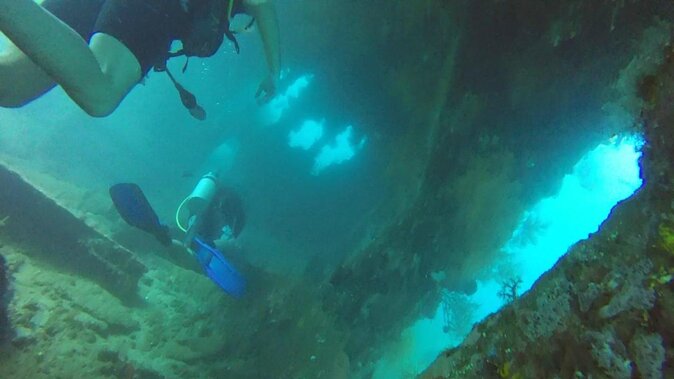
- USS Liberty Shipwreck included as a highlight stop on the program
Why Sanur fits a 3-day PADI Open Water course
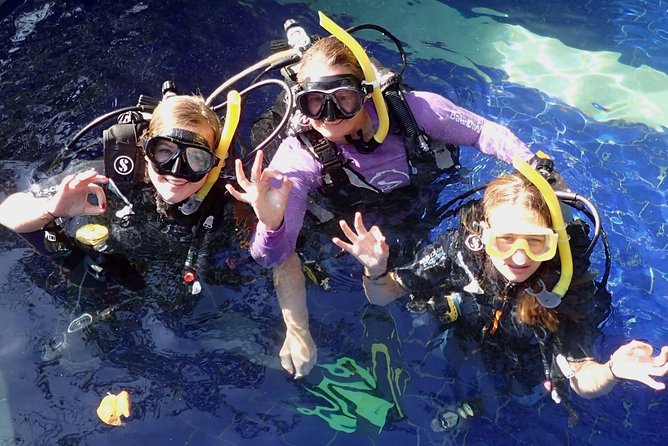
If you’re trying to earn your PADI Open Water certification, I like a course that doesn’t waste time. This one is built for momentum: Day 1 is controlled practice, and Days 2 and 3 are actual ocean skills sessions. That pacing matters because confidence doesn’t come from reading. It comes from doing the same task a few times until your body understands it.
You’ll also start from a straightforward meeting point near Sanur, with a 9:00 am start time. Hotel pickup and drop-off are included, which is a real quality-of-life win in Bali. The program runs about 3 days, but it doesn’t feel like you’re scrambling between random locations all day.
The course is also designed for a practical goal: by the end, you’re certified for safe scuba up to 18 meters. That depth limit isn’t just a number for your paperwork. It’s the boundary your training is built around, so you’re learning the right habits early.
You can also read our reviews of more scuba diving tours in Kuta
What you actually earn: PADI Open Water and the 18-meter limit
This is PADI Open Water, the first step certification that’s recognized globally. It’s the credential you’ll use if you want to keep renting gear and joining reef trips without starting over every time.
By completion, you’ll be able to scuba safely up to 18 meters. The whole course is built around that. That means you don’t just get taught how to breathe underwater. You’re trained on the fundamentals: how to manage buoyancy, how to handle basic situations, and how to think clearly when you’re weightless and underwater.
You’ll also receive the PADI manual and certification as part of what’s included. That matters because some courses advertise a certification but make you buy the materials separately. Here, the course package covers the essentials.
Day 1 in Sanur: confined water practice that builds real comfort
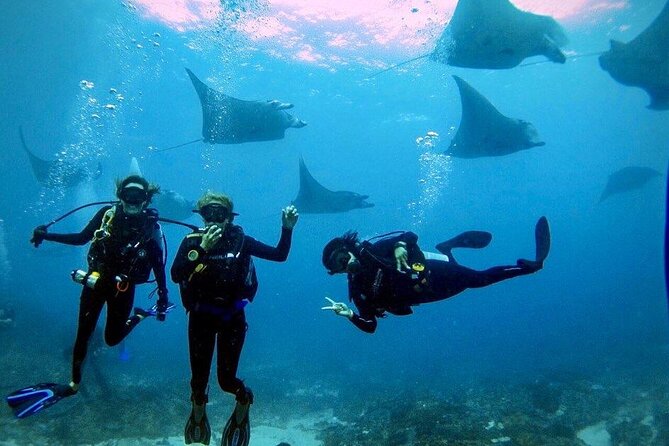
Day 1 is your confined water session in Sanur. Think pool work plus calm-water coaching, where you can learn the mechanics without wind, waves, or surprise conditions.
The course also has a theory component. Theory is done online using the PADI e-learning platform, then reviewed with the instructor. The timing is flexible: you can do it before you arrive or during the 3 days. That’s useful if you’re traveling and you want less stress on day one.
Why I like starting with confined water: it lets your brain get used to the “feel” of scuba. Your breathing rhythm changes. Your posture changes. Your sense of up and down changes. Confined water practice is where you get to fix those things without having to also think about tides, currents, or navigating reef edges.
In the reviews, instructors stood out for being patient and professional, including one instructor named Astama. Another instructor mentioned was Benny Wiratno Bunadji, described as easygoing but still clearly focused on proper technique. If you’re lucky enough to get an instructor with that teaching style, your day 1 usually feels less intimidating.
Day 2 in Sanur Bay: two ocean sessions that teach buoyancy in context
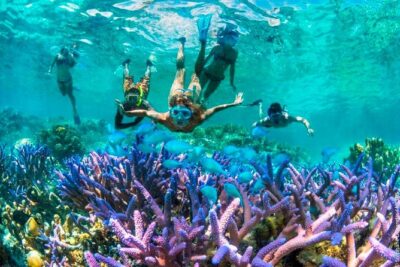
Day 2 shifts from controlled water to open ocean practice in Sanur Bay. You do two open-water sessions. This is where your pool habits are tested against real water.
The goal isn’t to impress anyone. It’s to help you translate technique into a moving-environment. Even if the water isn’t dramatic, you’ll start noticing how your body reacts to natural conditions: how your buoyancy changes with subtle movement, how you hold your breathing steady, and how you communicate and follow instructions while underwater.
Sanur Bay is a common starting point for beginners because it tends to be accessible for early training. For you, that means less chaos and more chances to repeat skills until they become automatic.
The school keeps the team structure tight, with professional staff and equipment handled to standard. In the feedback you’ll find emphasis on feeling safe and supported during training, not just “getting wet and hoping for the best.”
Day 3 choices: Padang Bai or Tulamben, plus USS Liberty Shipwreck
Day 3 includes two open-water sessions and the location depends on daily conditions: Padang Bai or Tulamben. This flexibility is practical. Sometimes one site is simply calmer or more workable that day, and the course tries to match conditions to the training needs.
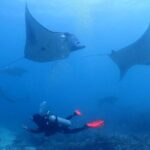
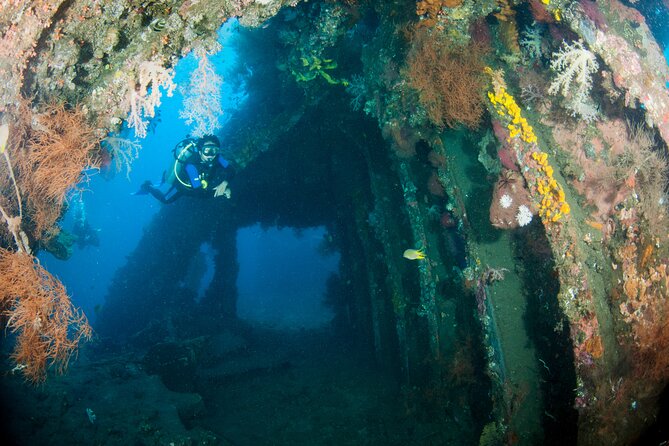
One of the standout sites on the program is the USS Liberty Shipwreck. That shipwreck is an easy-to-understand highlight: it’s visually dramatic, and it also gives structure to the learning experience. You’re not just swimming around looking at random coral. You’re following training goals near a real-world underwater landmark.
If Nusa Penida is available, day 3 can also include Nusa Penida options for an added price (the program notes it as possible for certain days). That can be attractive if you’ve got extra time and want to see more variety. Just remember that added options usually come with more variability day-to-day, so it’s best if your schedule has some give.
The best part about day 3 being adaptable: you’re less likely to get a training experience that feels forced. Instead, you’re more likely to get the right conditions for learning.
You can also read our reviews of more tours and experiences in Kuta

Instructor quality, small teams, and the kind of safety culture you want
You’re not just buying a certification card. You’re buying time with an instructor who will correct your habits while you’re learning. This program emphasizes that instructors are certified and insured, and that they’re familiar with reefs and local habitats.
A “good safety culture” in a training course shows up in details. Here, that shows as an insistence on correct equipment use and on keeping the pace manageable for the students. Reviews also point to instructors communicating clearly and adjusting to your learning speed. One instructor noted for strong English and even Italian-speaking support was Benny Wiratno Bunadji, which can matter a lot if you want to fully understand what you’re being asked to do.
You’ll also see names mentioned in feedback for staff coordination and teaching support, including Kadex for prompt responses during booking, plus instructors such as Astama and others including Aan, Aang, and Made. When you see that kind of consistent team presence in a small operation, it usually means fewer gaps in communication and fewer last-minute surprises.
And with a maximum of 6 travelers, you’re less like a number on a spreadsheet. You get more chances to ask questions and get immediate corrections.
Price and value: what $480 covers (and what you might add)
At $480 per person for a roughly 3-day course, you’re paying for a full training package, not just boat transport. What’s included matters here:
- lunch
- use of scuba equipment
- hotel pickup and drop-off
- PADI manual and certification
- PADI certified instructor
That’s solid value because many “cheap” courses cut corners by making you pay separately for materials, gear, or instructor time. Here, the essentials are bundled.
What’s not included: a camera. The program notes camera rental is available, which is a helpful add-on if you want shipwreck and reef memories without bringing your own housing.
Also, the course mentions group discounts and a mobile ticket, which can simplify the day-of experience. If you’re traveling with friends, that group angle can help stretch your budget.
How to choose this course versus other Bali scuba options
This course is best if you want a clean, beginner-focused path to certification and you like the idea of learning in a small group. If you’re the type who prefers structure—pool skills first, then open-water practice on consecutive days—you’ll probably feel comfortable with how it’s built.
It also suits you if your goal is to get certified to dive elsewhere. The training is designed for the Open Water outcome, including the 18-meter certification limit, so you’ll leave with a credential that works internationally.
What might not fit you is if you have a very rigid schedule tied to one exact day and one exact site. Day 3 can land in Padang Bai or Tulamben depending on conditions. That’s normal for outdoor water training, but it can matter if you’re connecting flights or tours.
The short version: should you book it?
I’d book this course if you want a straightforward PADI Open Water pathway in Bali with small group training, professional instruction, and a realistic progression from confined water in Sanur to ocean sessions. The inclusion of equipment, pickup, lunch, and the PADI manual/certification makes the $480 price feel more like a complete package than a bare-bones promo.
Skip it only if your schedule doesn’t handle site changes on day 3. For everyone else, this looks like a solid way to earn your certification without turning learning into a stressful circus.
FAQ
What certification do I get?
You’ll complete the PADI Open Water course. It’s recognized worldwide and allows you to scuba safely up to 18 meters.
How is the 3-day schedule laid out?
Day 1 is a pool session in Sanur. Day 2 includes 2 open-water sessions in Sanur Bay. Day 3 includes 2 open-water sessions in Padang Bai or Tulamben depending on conditions.
Where do the best underwater moments happen?
A noted highlight stop is the USS Liberty Shipwreck. Day 3 is the day when you’ll be sent to either Padang Bai or Tulamben, with that shipwreck included as part of the program’s experience.
Do I need to do theory before I arrive?
Theory is done online using the PADI e-learning platform, then reviewed with your certified instructor. You can do it before the start or during the 3 days.
What’s included in the price, and is anything extra?
The price includes lunch, use of scuba equipment, hotel pickup and drop-off, the PADI manual and certification, and a PADI certified instructor. A camera is not included, but it can be rented.
What happens if weather is poor or the group minimum is not met?
The experience requires good weather. If it’s canceled due to poor weather, you’ll be offered a different date or a full refund. If it’s canceled because the minimum number of travelers isn’t met, you’ll be offered a different date/experience or a full refund.