REVIEW · UBUD
Small-Group Farm Tour & Balinese Cooking Class in Ubud with Kadek
Book on Viator →Operated by Traveling Spoon · Bookable on Viator
Spice-stained hands beat most Ubud dinners. This experience pairs a real farm-ingredient walk with hands-on Balinese cooking taught in an outdoor community kitchen, with Kadek helping set the tone. I also love the personal attention vibe for the cooking part, plus the payoff: you eat what you make and you take home a recipe book for later.
One thing to keep in mind: it’s outdoors on a working farm, so you’ll deal with heat, mud, and insects even with a straw hat and wet towels waiting.
In This Review
- Key highlights to know before you go
- A Farm Walk in Ubud With Kadek: Where the meal starts
- Traditional outdoor cooking: 2 hours, 2–3 Balinese dishes
- What you’ll eat (and how the ritual affects timing)
- Why this costs $49 and still feels like a real deal
- Timing and transport: how the day fits around Ubud life
- What to bring (so the heat and mud don’t ruin your mood)
- Who this suits best (and who may want a different kind of Bali day)
- Should you book Kadek’s farm tour and cooking class?
- FAQ
- Is hotel pickup included?
- How long is the experience?
- What will I cook during the class?
- Is there a vegetarian option?
- Do I need to bring anything?
- Is local alcohol included?
Key highlights to know before you go
- Farm walk for actual ingredients: 30–45 minutes picking produce and spices you’ll use later (beans and lemongrass are specifically called out).
- Outdoor cooking in a traditional community kitchen: the class happens outside, not in a neat show-kitchen bubble.
- 2–3 dishes, taught step by step: you learn a manageable set of dishes during about two hours.
- You eat right after cooking: plus kolak dessert and Balinese coffee or lemongrass tea.
- Small group size (max 10): enough structure for attention without turning it into a crowded bus ride.
- Apung and Kadek roles: one guide may handle your day flow (Apung is named in one account), while Kadek leads the cooking.
A Farm Walk in Ubud With Kadek: Where the meal starts
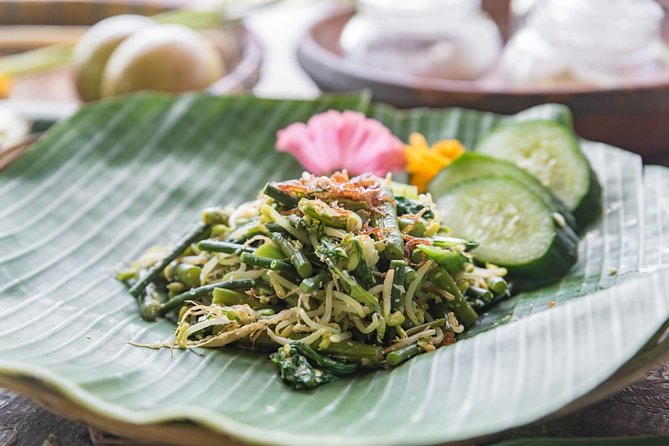
The day kicks off on a working organic farm in the Ubud area, led by Kadek and supported by a guide who helps keep things moving (in at least one account, that guide is Apung). Expect a warm welcome, then quick orientation so you know what you’re looking for and why it matters. This isn’t a quick photo stop. You’re gathering ingredients with purpose.
What I like here is the practical mindset. You’re walking through tall bushes and muddy ground, learning how a local farm actually functions. The tour lasts about 30–45 minutes, and you’ll collect ingredients tied directly to the dishes you’ll cook later. That means you don’t just memorize names. You connect the food to the plant and the process.
You’ll get straw hats for sun and glare, which is a thoughtful touch for a place where the light can be intense. After the walk, you’re not sent off to fend for yourself. You’ll get a refreshing drink and wet towels to wipe your face before cooking. That little reset helps you keep your energy for the next stage.
The drawback? You’re on a farm. Mud is part of the deal, and you’ll want footwear you don’t mind getting dirty. If you’re sensitive to strong sun or bugs, plan for it rather than hoping for ideal conditions.
You can also read our reviews of more cooking classes in Ubud
Traditional outdoor cooking: 2 hours, 2–3 Balinese dishes
After you’ve gathered your ingredients, you shift into a traditional Balinese-style community kitchen outdoors. This is where the day turns from scenery into skill-building. The cooking class runs about two hours, and the focus is on learning 2–3 authentic dishes instead of trying to do everything at once.
The teaching style is where this tour earns its high marks. One review highlighted that the young guys involved had both fun energy and real cooking ability. In practice, it means you’re not standing around watching someone else do the work. You learn how dishes come together in an approachable way—how to handle spices, how to assemble ingredients, and how to cook to the flavors Balinese home cooks recognize.
Even if the overall experience is described as a small shared group (max 10 travelers), the class is also described as private-style or geared to give personalized instructor attention. Translation: you can ask questions without shouting across a crowd.
You might cook dishes like:
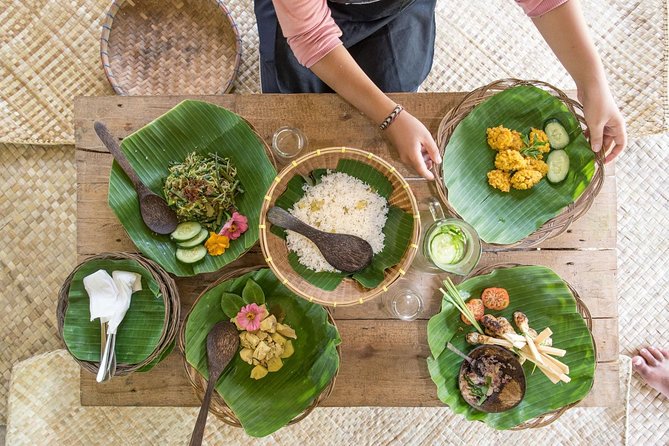
- Nasi sela (rice with sweet potato)
- Garang asem (chicken cooked with Balinese spices)
- Tuna satay (fish kebabs, Balinese-style)
- Sayur urab (green vegetables with coconut and spices)
You’ll finish the class with a meal that matches your work, plus kolak dessert and Balinese coffee or lemongrass tea. That combination matters. It’s not just lunch. It’s the full flavor arc of the cooking lesson.
What you’ll eat (and how the ritual affects timing)
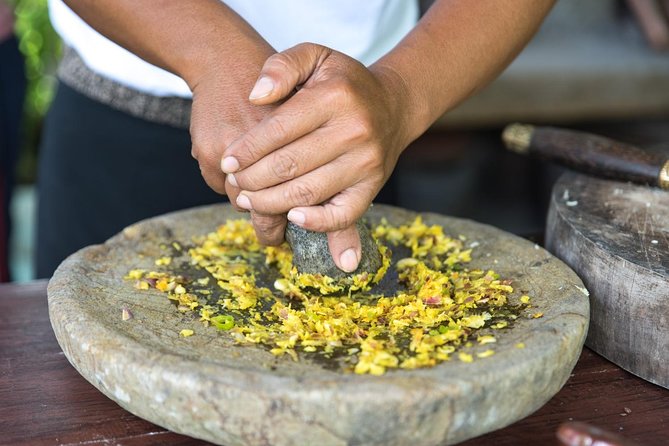
The big win is simple: you cook, then you eat what you cooked. That’s the best kind of feedback loop. You can actually taste the choices you made—spice level, texture, seasoning balance—and connect it to what you learned.
One timing detail is worth knowing up front. Kadek may not join you for the meal immediately, because he first offers the meal to what’s described as mother nature. In other words, you start eating before that ritual wraps up. Don’t worry—you still get served and you still eat well. It’s just a cultural rhythm you’ll notice during the flow of the day.
The dishes you might see are classic Balinese comfort food with spice-forward identity. For example, garang asem is known for its tangy, aromatic sauce base, while sayur urab leans into coconut-spice coating for greens. Tuna satay brings a smoky, kebab-style element, and nasi sela gives a sweet-potato comfort note alongside rice.
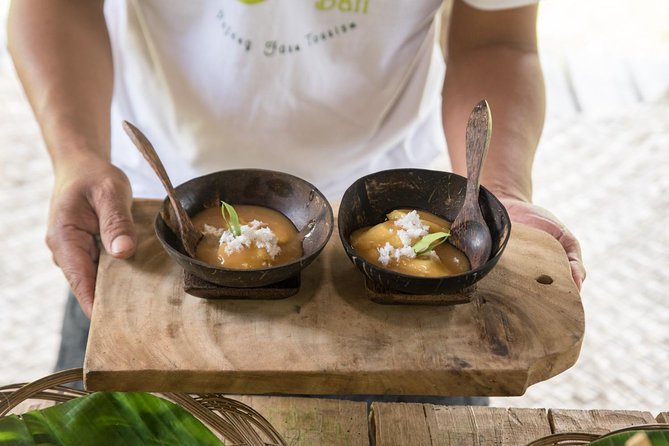
Dessert is kolak, a banana-based sweet finish, followed by either Balinese coffee or lemongrass tea. That choice of drink is practical too: tea is a nice palate reset after spicy dishes, and coffee fits the warmer, more dessert-friendly pacing of the meal.
Why this costs $49 and still feels like a real deal
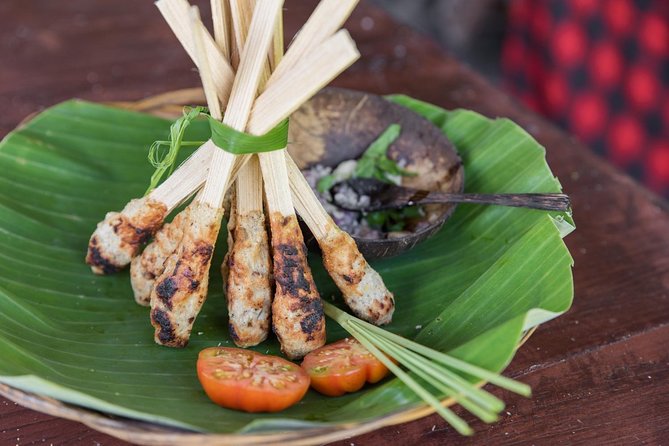
At $49 per person, this tour can look like a steal or like a mystery—until you break down what’s included.
You’re not just paying for a cooking class. You’re paying for:
- a farm walk where ingredients are gathered for the meal
- an outdoor cooking session lasting about two hours
- a home-cooked meal served at the end
- a small recipe book so you can repeat the dishes later
- round-trip transfers from Ubud hotels (with pickup coverage noted for areas like Hanoman Street, Monkey Forest Street, and Jl. Raya Ubud)
There’s also local alcohol (1–2 glasses) included. That’s not huge, but it’s a friendly add-on when it’s already bundled into the price.
So the value isn’t just that you get food. It’s that the food comes from ingredients you handled, in a kitchen you learned to use, with a guide who can explain what’s going on. The recipe book helps too. Even if you only recreate one dish at home, you’re walking away with something concrete rather than a souvenir.
The one caution on value: if you’re not staying in Ubud, pickup changes. The experience says transfers are included only if you’re staying in Ubud; if you’re outside those areas, you’ll meet at a specific spot (in front of Maybank Gianyar on Jl. Raya Ubud). That doesn’t make it bad—it just means your total time and convenience depend on where you’re based.
Timing and transport: how the day fits around Ubud life
This experience runs about 5 hours total. The structure is pretty clear: farm walk first (30–45 minutes), then cooking (around two hours), then eating and relaxing long enough to digest what you made.
Pickup is offered for hotels in Ubud. If you’re staying in the common Ubud pickup zones (Hanoman Street, Monkey Forest Street, and Jl. Raya Ubud), it’s straightforward. If you’re outside those areas, the meeting point shifts to in front of Maybank Gianyar on Jl. Raya Ubud No. 115 in Petulu. Either way, the activity ends back at the meeting point.
There’s also a mobile ticket, which usually means less fuss on arrival. The location is near public transportation, so even if you’re running on a tight schedule, you’re not trapped.
Weather matters. This experience requires good weather, and if it’s canceled due to poor conditions, you’ll be offered another date or a full refund. Since the cooking and farm portions are outdoors, this is exactly the kind of tour where the forecast can affect your comfort.
You can also read our reviews of more tours and experiences in Ubud

What to bring (so the heat and mud don’t ruin your mood)
This is the kind of tour where preparation actually pays off. The farm part is outdoors and can get hot. You’ll be walking through muddy land, and the kitchen is also outdoors.
You’ll already get a straw hat, but you should still bring:
- sunscreen
- bug spray
- a hand towel or tissues
- shoes and clothes appropriate for walking and cooking in a working farm
I’d also suggest wearing something breathable. You’re moving, you’re in sun, and you’ll be wiping your face later. The tour gives wet towels after the farm walk, but you’ll still want to stay comfortable for the cooking stage.
If you have allergies or strong dietary preferences, tell the operator at booking. The experience states that allergies, dietary restrictions, and cooking preferences should be advised at the time of booking, and it also notes a vegetarian option is available if you request it.
Who this suits best (and who may want a different kind of Bali day)
This tour is ideal if you like your Bali experiences to be hands-on and practical. You want more than a tasting menu. You want to understand what goes into Balinese cooking and then eat it right away.
It also makes sense for:
- couples who want a memorable non-beach activity (this kind of day was described as a honeymoon highlight in one account)
- food-minded travelers who enjoy learning how a dish is built
- people who like culture that shows up in daily life, not only in performances
It may be less ideal if you:
- hate getting dirty or dealing with mud
- can’t handle outdoor heat and insects even with prep
- expect a fully indoor, hands-off cooking class
The strong reviews point to the same theme: the experience feels like a community setup, not a staged show. Even if you’re not chasing cultural depth, you’ll probably appreciate that it’s functional, friendly, and focused on real cooking.
Should you book Kadek’s farm tour and cooking class?
Yes, if you want a serious cooking day that still feels warm and human. The combination of farm ingredient gathering, an outdoor community kitchen, and a finished meal you helped make is a rare trifecta in Ubud.
Book it especially if you value convenience (Ubud pickup, about 5 hours total, recipe book included) and if you’re okay with outdoors time in the heat. If you’re allergy-aware, vegetarian, or picky, booking becomes even more worthwhile because you can flag your needs early.
Skip it if your ideal day is air-conditioned comfort from start to finish. The farm and cooking parts are outdoors, and your feet will probably get a bit acquainted with Bali’s mud.
If your goal is to leave Ubud with skills you can actually reuse, this one has a clear path from spice garden to dinner plate—and that’s a great use of a single day.
FAQ
Is hotel pickup included?
Hotel pickup and drop-off are included only if you’re staying in Ubud. If you’re staying outside Ubud, pickup is not included and you’ll meet at Maybank Gianyar (Jl. Raya Ubud No.115, Petulu).
How long is the experience?
It lasts about 5 hours total.
What will I cook during the class?
You’ll learn to make 2–3 Balinese dishes during the cooking class. Examples may include nasi sela, garang asem, tuna satay, and sayur urab.
Is there a vegetarian option?
Yes. A vegetarian option is available if you advise the team at the time of booking.
Do I need to bring anything?
Wear clothes and shoes appropriate for walking and cooking in a working farm. You’re advised to bring bug spray, sunscreen, and a hand towel or tissues. Straw hats are provided.
Is local alcohol included?
Local alcohol is included (1–2 glasses).